
In a world that thrives on multitasking and demands your attention at every turn, productivity can often feel like an elusive goal. We find ourselves bouncing from task to task, checking emails, answering calls, writing reports, attending meetings, all while trying to keep up with a constant stream of notifications. This frenetic pace can leave us exhausted, overwhelmed, and wondering why we never seem to get as much done as we’d hoped.
But what if there was a way to cut through the noise, regain control of your time, and not just check off your to-do list, but dominate it? Enter the concept of batching—a deceptively simple yet profoundly effective approach to managing your tasks that could be the key to unlocking a new level of productivity.
The Batching Breakthrough: A Deep Dive into the Concept
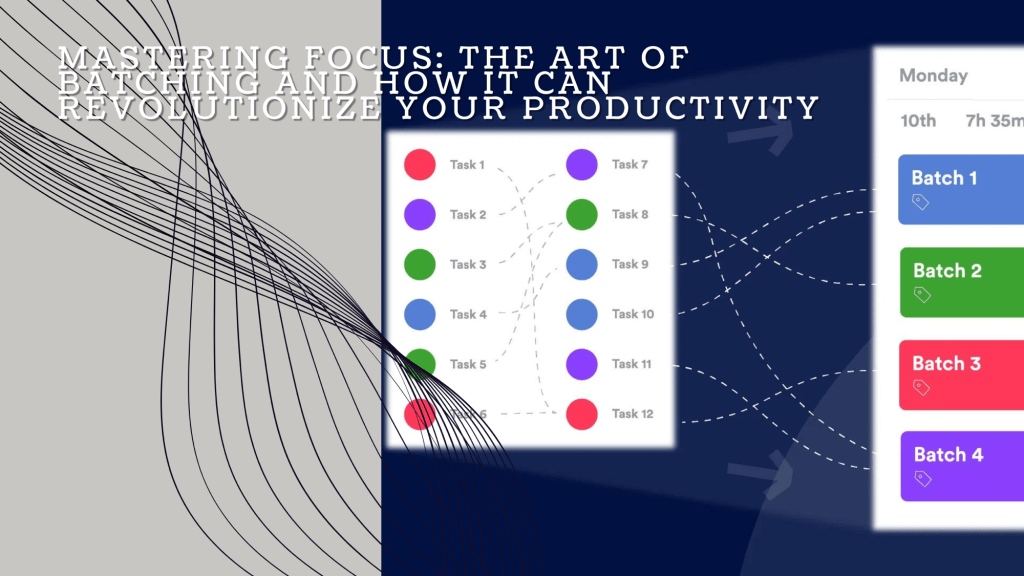
Batching is more than just a productivity hack; it’s a mindset shift. At its core, batching involves grouping similar tasks together and tackling them in one focused burst, rather than spreading them out throughout your day or week. This method leverages the power of singular focus, allowing you to fully immerse yourself in one type of activity without the mental drain that comes from constantly switching gears.
The principle behind batching is simple: when you focus on one kind of task for an extended period, your brain becomes more efficient at performing that task. It’s like how athletes train by repeating the same movements until they become second nature. Batching builds that same kind of momentum, enabling you to complete tasks faster and with greater precision.
Why Batching Works: The Science of Focus and Efficiency
To understand why batching is so effective, let’s delve into the concept of “context switching.” Each time you shift your attention from one task to another, your brain needs to refocus, recalibrate, and get back up to speed. This cognitive process, known as context switching, is both time-consuming and mentally exhausting. Research suggests that it can take up to 25 minutes to fully regain focus after an interruption. If you’re constantly switching between tasks, those minutes add up quickly, chipping away at your productivity.
Batching circumvents this problem by allowing you to stay in the same mental mode for longer periods. For example, if you dedicate an hour to answering emails, you’ll likely find yourself in a rhythm where you can process each message more quickly. Contrast this with the typical approach of checking emails sporadically throughout the day, where you’re forced to continually reorient yourself to the task.
The result? Less time wasted on context switching, more time spent in a state of deep work—a term popularized by productivity expert Cal Newport, which refers to the periods of focused, undistracted work that lead to significant progress.
Batching in Action: Real-Life Applications and Project Management
Let’s bring this concept to life with some practical examples:
Email Management: Instead of letting your inbox dictate your day, set specific times to check and respond to emails. By batching this task, you can prevent your inbox from becoming a constant distraction and maintain focus on more critical work during the rest of the day.
Content Creation: If you’re a writer, marketer, or content creator, you know the challenge of switching between brainstorming, drafting, editing, and publishing. By batching these activities—such as dedicating one day to brainstorming, another to writing, and another to editing—you can streamline your creative process and produce higher-quality content.
Administrative Work: Filing, invoicing, scheduling, and other administrative tasks can eat up your day if left unchecked. Batching these activities into a specific block of time each week allows you to power through them quickly, freeing up mental space for more strategic work.
But the power of batching doesn’t stop at individual tasks. It can have a profound impact on how you manage projects as well.
Batching for Project Management: Streamlining Complexity
Projects, by their nature, involve a myriad of tasks, often spread across different phases and requiring input from various team members. Managing these tasks effectively can be a challenge, particularly when team members are constantly pulled in different directions. This is where batching can offer significant benefits.
1. Phase-Based Batching: One effective approach is to batch tasks according to the phase of the project. For example, during the planning phase, focus solely on tasks related to research, resource allocation, and timeline development. By batching all planning-related activities together, you can create a strong foundation for the project, reducing the likelihood of oversights that could derail progress later.
2. Role-Based Batching: Projects often require contributions from team members with different roles—designers, developers, marketers, etc. By batching tasks by role, you ensure that each team member can work uninterrupted on their specific contributions. For instance, all design tasks could be batched into one or two weeks, followed by a development phase. This approach not only improves efficiency but also fosters better collaboration, as team members can focus on delivering their best work within their domain.
3. Feedback Batching: One of the biggest productivity killers in project management is the constant flow of feedback and revisions. Instead of addressing feedback piecemeal, batch it into specific review sessions. This allows the team to focus on implementing changes all at once, rather than being constantly interrupted by ongoing revisions.
The Benefits of Batching: Beyond Efficiency
The advantages of batching extend beyond just getting more done in less time. Here’s how batching can transform your approach to work:
Enhanced Focus: By eliminating the need to switch between tasks, you can maintain a higher level of concentration, allowing you to complete tasks with greater accuracy and creativity.
Better Time Management: Batching helps you structure your day or week more effectively, ensuring that you allocate enough time to high-priority tasks without getting bogged down by less important activities.
Reduced Stress: When you know that similar tasks are grouped together, you can approach your work with a sense of order and control, rather than feeling overwhelmed by a disorganized to-do list.
Increased Satisfaction: Completing a batch of tasks provides a tangible sense of accomplishment, which can boost your motivation and drive to tackle the next challenge.
A Call to Action: How to Implement Batching Today
The concept of batching is simple, but implementing it effectively requires a deliberate approach. Here’s how to get started:
1. Identify Batchable Tasks: Start by making a list of your regular tasks and identifying those that can be grouped together. Look for tasks that are similar in nature, require a similar type of thinking, or can be completed in a single session.
2. Create a Batching Schedule: Allocate specific blocks of time in your daily or weekly schedule for your batches. For example, you might dedicate Monday mornings to content creation, Wednesday afternoons to meetings, and Fridays to administrative work.
3. Minimize Distractions: During your batching sessions, eliminate distractions as much as possible. Turn off notifications, close unrelated tabs, and let others know you’re unavailable. This will help you maintain focus and get into a flow state.
4. Review and Adjust: After a few weeks of batching, take the time to review your process. Are you seeing improvements in your productivity? Are there tasks that could be batched more effectively? Adjust your approach as needed to maximize the benefits.
Conclusion: Take Control of Your Productivity
In a world where distractions are constant and time is precious, batching offers a powerful solution for those looking to regain control of their productivity. By grouping similar tasks together and focusing on them in dedicated blocks of time, you can reduce the mental load of context switching, improve your focus, and ultimately, get more done in less time.
The next time you find yourself overwhelmed by a never-ending to-do list, remember the power of batching. Start small, experiment with different approaches, and see how this simple yet effective strategy can transform the way you work. Whether you’re managing personal tasks or leading a complex project, batching has the potential to elevate your productivity to new heights.
So why not give it a try? Start batching today and take the first step toward a more focused, efficient, and satisfying workday.
 Sebastian Strobl
Leave a comment