
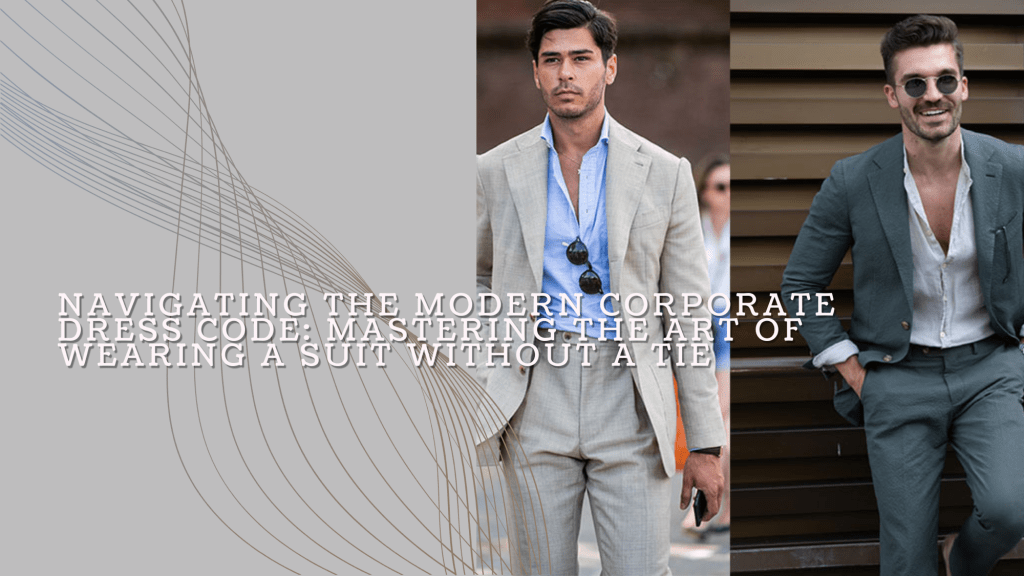
In today’s evolving corporate world, where dress codes have loosened in response to the rise of remote working, professionals are finding themselves with more sartorial freedom than ever before. The suit without a tie has emerged as a versatile option that effortlessly bridges the gap between formal and casual, allowing you to maintain a polished appearance while embracing a more relaxed style. But how do you master this look without compromising your professionalism? Here’s your guide to wearing a suit without a tie, tailored for the modern corporate professional, with tips for transitioning from the office to after-work activities.
The Corporate Office: When to Go Tie-Free
As the lines between formal and casual continue to blur, knowing when to ditch the tie is crucial. The tie-less suit is ideal for:
Business Casual Days: Meetings with internal teams or clients in creative industries where a full suit and tie might feel overly formal.
Casual Fridays: When your office dress code eases up at the end of the week.
Office Socials: Events like networking mixers or after-work drinks, where you want to appear approachable yet refined.
In more formal scenarios — like presenting to the board or meeting high-profile clients — sticking with a tie might still be the safest choice.
How to Perfect the Look
- Choose the Right Suit:
Fabric and Fit: Opt for suits made from softer, less structured fabrics like cotton, linen, or a lightweight wool blend. These materials lend themselves well to a tie-less look, offering a relaxed yet refined silhouette. Fit is paramount—ensure your suit is well-tailored, particularly around the shoulders and waist.
Color Considerations: Navy, charcoal, and lighter grays are versatile choices that adapt well to both formal and semi-formal settings. For a more relaxed vibe, consider earth tones like olive or tan. - Shirt Selection:
Collar Style: Shirts with spread or cutaway collars are ideal as they maintain their structure without the support of a tie, framing your face and ensuring your look remains polished.
Patterns and Textures: While white and light blue remain safe bets, experimenting with subtle patterns or textured fabrics can add depth to your outfit without overpowering it. - Accessorize Wisely:
Pocket Square: A pocket square can add a splash of personality to your ensemble. Stick to classic folds and patterns—think simple white linen for the office, or a muted print for something slightly more daring.
Watch & Footwear: A classic wristwatch and polished leather shoes are non-negotiables. They convey a sense of detail-oriented professionalism, rounding off your look with finesse. - Grooming and Presentation:
Neckline Grooming: A clean shave or a well-maintained beard ensures that your open collar looks intentional rather than unfinished. Pay attention to your hairstyle as well—neat and styled is the way to go.
Confidence: Confidence is your best accessory. Standing tall and owning your look is essential when opting for a suit without a tie. Remember, the tie-less look is as much about attitude as it is about clothing.
After-Work Elegance: Transitioning from Office to Evening
The beauty of the tie-less suit lies in its versatility—it transitions seamlessly from the office to evening engagements. Here’s how to adapt your look for various after-work activities:
Date Night: When heading out for dinner or drinks after work, consider swapping your office shirt for something more relaxed—like a dark, patterned button-down or a knit polo. Loosen up your pocket square fold for a touch of nonchalance and switch to a more casual shoe, like a suede loafer.
Wedding Guest: A tie-less suit can work beautifully for weddings, particularly those with a more relaxed dress code. Opt for a suit in a richer color—like deep burgundy or navy—and pair it with a crisp white shirt and a subtle pocket square. A boutonniere or a stylish lapel pin can add a festive touch.
Weekend Events: For social gatherings like brunches or garden parties, consider a suit in lighter shades, such as beige or light grey, paired with a printed shirt. A pair of stylish sunglasses and leather loafers will keep you looking effortlessly cool and collected.
A Way Forward: Experimenting with Your Personal Style
The suit without a tie is more than just a fashion statement; it’s an invitation to experiment with your personal style. Start small—perhaps by trying different collar styles, playing with subtle patterns, or introducing new colors into your wardrobe. Pay attention to how different combinations make you feel and how they are received in various settings. The goal is to find a balance that feels authentic to you while remaining appropriate for your professional environment.
As corporate dress codes continue to evolve, so too should your approach to style. Embrace the change by experimenting with your attire, and remember that a well-executed tie-less suit can communicate confidence, modernity, and sophistication in equal measure. Whether you’re in the boardroom, out on a date, or attending a wedding, this look has the potential to become a cornerstone of your sartorial repertoire.
 Sebastian Strobl
Leave a comment