
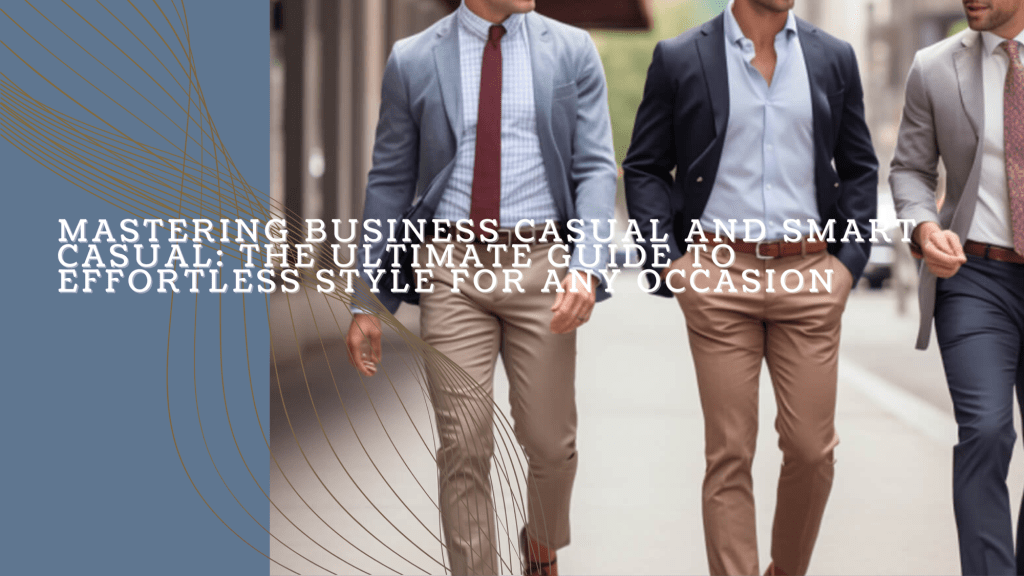
The term “business casual” has seen an evolution over time, often leaving people uncertain about its precise definition. While some workplaces are clear on what it entails, others have left it open to interpretation, causing confusion between business, business casual, and smart casual. In this guide, we’ll break down these dress codes and help you master both the classic business casual and smart casual looks, providing tips on how to tailor them to your workplace and personal taste.
Understanding the Difference: Business vs. Business Casual
The business look is the traditional style of professional attire that usually involves a full suit, tie, dress shoes, and a polished, formal appearance. It’s still prevalent in conservative industries such as finance, law, and certain corporate environments.
On the other hand, business casual originated as a way to balance professionalism with comfort. It traditionally included a full suit or suit separates, a well-tailored shirt, and leather shoes (usually black Oxfords), but notably without a tie. The idea was to create a relaxed yet professional appearance. Over time, however, business casual has become more flexible and laid-back.
The Evolution of Business Casual
Today’s business casual has shifted to include more leisure-inspired pieces, while still maintaining a polished look. You’ll find workers pairing suits with loafers or even chinos with blazers, and dress codes that are less rigid about sticking to classic suit fabrics. This evolution is often due to the rise of creative and tech industries, where individuality and comfort are prioritized over strict formality.
Smart Casual: The More Relaxed Alternative
Often confused with business casual, smart casual takes the comfort factor a step further, blending casual wear with upscale elements. While you’ll still look put together, this style allows for more flexibility with items like chinos, jeans, pullover sweaters, and leather sneakers. Smart casual is great for settings that aren’t too formal but still require some effort, such as dinner parties, date nights, or laid-back office environments.
How to Master Business Casual
- Suit Separates
Opt for a well-fitted blazer and trousers in complementary colors. Pair this with a crisp dress shirt and leather loafers. You can choose to tuck the shirt in for a polished look or keep it untucked for a more relaxed appearance.
When to wear it: Perfect for client meetings, presentations, or semi-formal events where professionalism is key without the full formal attire. - Blazer and Chinos
Swap the trousers for tailored chinos in neutral tones like navy or beige, and combine them with a structured blazer. Add a pair of brown brogues or loafers and a belt for a coordinated look.
When to wear it: Great for casual Fridays, networking events, or even a lunch meeting where you want to appear polished but comfortable. - Polo Shirt and Suit Trousers
A polo shirt in a high-quality fabric (like wool or cotton blend) paired with suit trousers offers a fresh take on business casual. This keeps things sharp without being overly formal.
When to wear it: Ideal for casual office days or even a business-casual dinner.
How to Master Smart Casual
1. Button-Down Shirt with Chinos
A lightweight button-down shirt paired with chinos strikes the perfect balance between smart and casual. You can tuck the shirt in for a sharper look or keep it untucked for more ease. Finish it off with leather sneakers or desert boots.
When to wear it: This outfit works well for Sunday brunch, a casual date night, or even meeting friends after work.
2. Pullover Sweater and Jeans
Layer a well-fitted pullover sweater over a casual button-down shirt, and pair it with dark wash jeans. Add Chelsea boots or clean sneakers to keep it on the smarter side.
When to wear it: Great for meeting the parents, a casual day at the office, or running errands while still looking put together.
3. Blazer and Jeans
A structured blazer with dark denim jeans offers a perfect mix of smart and casual. You can pair this look with a turtleneck or crew-neck T-shirt underneath, depending on the season. Add loafers, Chelsea boots, or even stylish leather sneakers.
When to wear it: This outfit is excellent for date nights, casual weddings, or even after-work drinks.
Choosing the Right Style for Your Work Setting
When deciding between business casual and smart casual, the key is to consider your workplace culture and your personal taste. If you work in a more traditional or corporate environment, lean more toward business casual with suit separates and leather shoes. For industries that allow more creativity, such as tech or design, smart casual may be more appropriate, giving you the flexibility to express your personal style while remaining polished.
Ultimately, it’s about finding a balance between what makes you feel comfortable and what fits the occasion. Having a few versatile outfits for both business casual and smart casual will allow you to easily transition between formal and more relaxed settings.
Bringing It All Together
Mastering the classic business casual look is all about understanding its roots and knowing how it has evolved. While business casual leans more on formal pieces like suits and separates, smart casual lets you play around with comfort-driven items like chinos and pullovers. By curating the right wardrobe and understanding the nuances of each style, you can confidently approach any situation—whether it’s a high-stakes meeting or a weekend brunch—with effortless style.
 Sebastian Strobl
Leave a comment