
The Modern Professional’s Dilemma
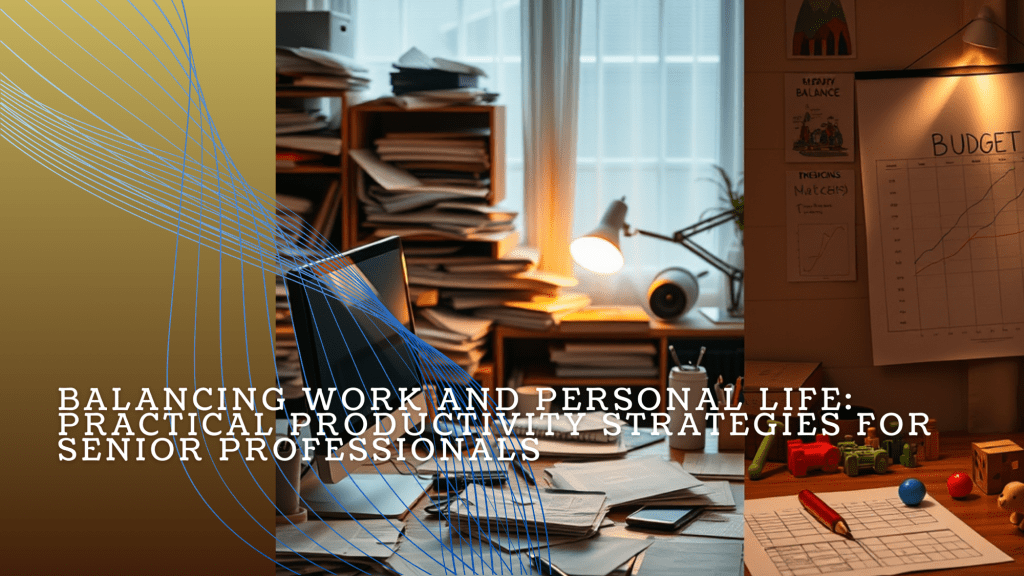
It’s 7 PM, and you’re still at your desk, reviewing a report while your phone buzzes with reminders about a parent-teacher meeting and the family dog needing a walk. Meanwhile, your kid appears at the door with a masterpiece they’ve drawn—on your quarterly budget sheet. Welcome to the life of a senior professional balancing a demanding career and a lively household.
We’ve all been there, and the key isn’t about doing more but about doing better. In this guide, we’ll share actionable strategies to boost productivity, protect your personal time, and laugh a little along the way.
1. Setting the Foundation for Balance
1.1. Define Priorities and Values
Before we dive into fancy strategies, take a moment to ask yourself: What truly matters? Is it delivering stellar work or being present for family milestones? For most professionals, the answer is both—but achieving balance requires intentional effort.
Start with a simple system like the Eisenhower Matrix:
- Important + Urgent: Major deadlines, family emergencies.
- Important + Not Urgent: Long-term goals like career growth or planning a family trip.
- Not Important + Urgent: Delegate these (e.g., “urgent” emails about printer toner).
- Not Important + Not Urgent: Just… don’t (hello, endless scrolling on social media).
Funny enough, realizing what doesn’t matter is as liberating as finding a great babysitter.
1.2. Establish Boundaries
Let’s be honest: boundaries are hard when work demands attention, and family sees your home office as open season. But boundaries protect your sanity. Communicate your “do not disturb” times clearly at work and home.
One of my friends taped a sign to his home office door: “Unless there’s blood, fire, or chocolate cake, please wait until 5 PM.” Surprisingly, it works. For both his kids and his colleagues.
2. Mastering Time Management
2.1. Time Blocking for Work and Family
Ever feel like your day disappears in a blur of emails, meetings, and snack breaks for your kids? Enter time blocking. Dedicate specific times for deep work, meetings, family activities, and self-care.
Example: Mornings for focused tasks, afternoons for collaboration, and evenings for family. Use apps like Google Calendar to color-code your schedule. Your life will go from chaos to organized chaos—progress!
2.2. Embrace the 80/20 Rule
The Pareto Principle—80% of results come from 20% of your efforts—is a lifesaver. For work, focus on high-impact tasks like client presentations or strategic planning. For personal life, skip elaborate birthday parties and prioritize meaningful moments (unless your kid insists on a unicorn theme).
2.3. Create a Weekly Planning Ritual
Set aside 30 minutes each week to map out work tasks, family events, and personal goals. Involve your partner if possible—it’s amazing how many double-bookings you can avoid with a quick sync. Bonus: Add buffer time for unexpected chaos (looking at you, last-minute science projects).
3. Enhancing Productivity at Work
3.1. Prioritize Deep Work
Senior roles require focus, so carve out uninterrupted time for strategic tasks. Block off hours for “deep work” and protect them like your favorite coffee mug at the office.
3.2. Delegate and Automate
Not everything needs your touch. Delegate repetitive tasks and automate wherever possible—think scheduling tools, automated expense reports, or a meal delivery service that keeps your fridge stocked.
3.3. Take Breaks to Recharge
We’ve all hit that 3 PM slump where caffeine isn’t cutting it. Take regular breaks to recharge. A 10-minute walk or stretch can do wonders for your focus. And yes, stepping on a stray LEGO counts as cardio.
4. Nurturing Personal Life and Well-Being
4.1. Schedule Quality Family Time
Make family time sacred. It doesn’t have to be elaborate—a weekly movie night or tech-free dinner works wonders. One colleague of mine swears by 15-minute “one-on-one” chats with each family member every day. (His dog got jealous, so now she gets her own walk-and-talk session.)
4.2. Prioritize Self-Care
Fitness, nutrition, and mental health aren’t optional—they’re survival tools. Even 20-minute workouts or a daily mindfulness practice can keep you sharp and energized. Pro tip: A quick workout beats a frustrated sigh at your inbox any day.
4.3. Stay Present in the Moment
Whether you’re on a Zoom call or building a LEGO castle, focus on that moment. Mindfulness techniques like deep breathing or gratitude journaling can help you stay grounded, even when chaos looms.
5. Practical Tips for Senior Professionals
5.1. Use Technology Wisely
From shared family calendars to project management apps, technology can streamline both work and personal life. Just don’t let it dominate your day—turn off notifications after hours.
5.2. Learn to Say No
Overcommitment is the enemy of balance. Decline tasks that don’t align with your priorities. Remember, saying no to one thing means saying yes to something else—like family time or sleep.
5.3. Build a Support System
Lean on your network. Whether it’s a mentor, spouse, or friend, having someone to share the load with can make all the difference. And yes, hiring help (cleaners, tutors, or even a dog walker) is not cheating—it’s smart.
Share Your Story
Balancing work and personal life isn’t about perfection—it’s about progress. Small, intentional steps can lead to meaningful change. Whether it’s implementing boundaries, scheduling family dinners, or finally saying no to that endless email chain, you have the tools to thrive.
Now it’s your turn: How do you juggle work and family? What’s one system or habit that’s been a game-changer for you? Share your stories in the comments—I’d love to hear what works for you and your family!
 Sebastian Strobl
Leave a comment