Author: Sebastian Strobl

  • The Mother of All Training Splits: Push/Pull/Legs (PPL)

    The Mother of All Training Splits: Push/Pull/Legs (PPL)

    When it comes to finding a workout routine that balances effectiveness with efficiency, few splits can match the Push/Pull/Legs (PPL) split. For the natural athlete juggling a demanding career, family, and the relentless grind of daily life, this split might just be your ticket to making serious progress in minimal time. Let’s dive into the why, the how, and whether PPL deserves its “mother of all training splits” reputation.

    What Is the Push/Pull/Legs Split?

    The PPL split is simple yet genius. It breaks down your training into three categories:

    • Push: Chest, shoulders, and triceps.
    • Pull: Back, biceps, and rear delts.
    • Legs: Quads, hamstrings, glutes, and calves.

    You cycle through these workouts, typically training 3 to 6 days a week, depending on your schedule and recovery capacity. The beauty? You can adjust the intensity and frequency to fit your lifestyle while hitting every major muscle group effectively.

    Pros of the PPL Split for Busy Professionals
    1. Time-Efficient: Each session is focused and concise. You can be in and out of the gym in under an hour.
    2. Versatility: Whether you have 3, 4, or 6 days to train, the PPL split works. Can only manage three days? Perfect—train Monday, Wednesday, and Friday. Have extra time? Double up and go six days.
    3. Balanced Recovery: Each muscle group gets ample rest before being worked again, which is ideal for natural lifters relying on proper recovery rather than performance-enhancing aids.
    4. Simplifies Progression: With fewer muscle groups to focus on each session, you can channel your energy into progressive overload (adding weight, reps, or improving form).
    5. No Overlap: Unlike the “Frankenstein Split” (e.g., chest on Monday, arms on Tuesday, etc.), PPL minimizes overlapping muscle engagement, reducing fatigue.
    Cons of the PPL Split
    1. Monotony Risk: Repeating the same three workouts can get repetitive unless you mix up exercises regularly.
    2. Not Optimal for Absolute Beginners: If you’re new to the gym, mastering compound lifts and balancing training volume might be overwhelming.
    3. Requires Planning: Hitting the gym consistently 3-6 days a week takes discipline, especially when life gets busy.
    Comparison to Other Popular Training Regimens
    1. 5-Day Bodypart Split (“Frankenstein Split”)
    • Pros: Great for advanced athletes focusing on lagging body parts.
    • Cons: Inefficient for time-starved individuals. Each muscle group gets hit only once a week, leading to suboptimal frequency for naturals.
    2. Three Times a Week Total Body Routine
    • Pros: Simple, great for beginners, and ensures full-body stimulation each session.
    • Cons: Limited volume per muscle group per session; can be draining due to high systemic fatigue.

    Compared to these, the PPL split strikes a golden balance—enough frequency to drive growth without overloading your schedule.

    Progression Schemes

    Progression is the key to consistent muscle growth and strength development. With the PPL split, you have several effective progression schemes to choose from:

    1. Linear Progression: Add weight to the bar or dumbbells each session or week, focusing on steady incremental overload.
    2. Double Progression: First aim to increase the number of reps within a given range (e.g., 6-8 reps). Once you hit the upper end of the range, increase the weight and repeat.
    3. Volume Progression: Gradually increase the number of sets over time, particularly on accessory exercises, to build additional workload without overtaxing recovery.

    Combining these methods intelligently can ensure steady progress while minimizing plateaus.

    Sample Push/Pull/Legs Routine

    Here’s a practical PPL plan for the busy professional aiming for efficiency and gains:

    Push Day
    • Bench Press: 3 x 6-8
    • Overhead Press: 3 x 6-8
    • Incline Dumbbell Press: 3 x 8-12
    • Lateral Raises: 3 x 12-15
    • French Press or Skullcrushers: 3 x 8-12
    • Barbell Overhead Triceps Extensions: 3 x 15-20
    Pull Day
    • Pull-Ups (or Lat Pulldown): 3 x 6-8
    • Barbell Rows: 3 x 6-8
    • Dumbbell Rear Delt Flys: 3 x 12-15
    • Barbell Curls: 3 x 8-12
    • Barbell Reverse Curls: 3 x 12-15
    • Wrist Curls: 3 x 15-20
    Leg Day
    • Squats: 3 x 6-8
    • Romanian Deadlifts: 3 x 8-10
    • Walking Lunges: 3 x 12 (per leg)
    • Calf Raises: 4 x 15-20
    • Hanging Leg Raises 4 x 15-20
    How to Make It Effortless
    • Warm-Up Smart: Limit warm-up time by doing dynamic stretches or light sets of your first compound lift.
    • Track Progress: Use an app or notebook to log weights, sets, and reps—seeing progress will motivate you to keep going.
    • Stay Consistent: Treat gym time as non-negotiable—just like a meeting or family time.
    • Recover Well: Optimize sleep, nutrition, and hydration to maximize gains.
    The Verdict

    The Push/Pull/Legs split is the Goldilocks of training routines for the natural athlete with limited time: it’s not too demanding, not too light, but just right. Unlike the 5-day bodypart split, which demands significant gym time for diminishing returns in frequency, or the 3-times-a-week total body plan, which can overwhelm recovery with systemic fatigue, PPL strikes a perfect balance.

    Its modular structure accommodates various schedules, making it adaptable for the busiest professionals. You hit each muscle group with optimal frequency and volume while leaving room for recovery and life outside the gym. Whether your goal is building strength, gaining size, or just staying fit, this split offers a sustainable, effective path forward.

    Give it a shot, and watch your progress soar — effortlessly.

  • Achieving Success: 12 Books That Impacted My 2024 Reading Journey

    Achieving Success: 12 Books That Impacted My 2024 Reading Journey

    At the start of 2024, I set a goal to read one book per month. I’m thrilled to say that I achieved my target, discovering a diverse range of insights and perspectives along the way. These 12 books not only enriched my understanding of leadership, resilience, and personal growth but also provided practical lessons to apply in daily life. Here’s a recap of the books I read this year and why I believe they’re worth your time.


    1. Extreme Ownership by Jocko Willink

    This book dives deep into the principles of leadership and accountability, drawing from Willink’s experiences as a Navy SEAL. Each chapter is anchored by gripping war stories and followed by practical applications for everyday life and business. The core message is simple but powerful: leaders must take complete ownership of their actions and outcomes.

    For me, Willink’s lessons on discipline and accountability resonate strongly. It’s a book I return to repeatedly because it encourages me to evaluate where I’m thriving and where I’m falling short. The principles are invaluable for anyone looking to lead with greater clarity and integrity.

    2. Tools of the Titans by Tim Ferriss

    A compilation of wisdom from top performers across various industries, Ferriss’s book distills interviews into actionable insights. From fitness routines to productivity hacks and mental resilience strategies, it’s a treasure trove of ideas designed to inspire and motivate.

    I found this book particularly valuable for its diversity of perspectives. The bite-sized advice is perfect for implementing small but impactful changes. It’s a resource I continually revisit to refine both my habits and my mindset.

    3. Antifragility by Nassim Nicholas Taleb

    Taleb introduces the concept of antifragility—systems and individuals that grow stronger under stress and chaos. Through a mix of philosophy, economics, and practical anecdotes, he demonstrates how to embrace volatility and use it to your advantage.

    Reading this challenged me to rethink my approach to uncertainty. Instead of fearing chaos, Taleb’s insights inspire me to see it as an opportunity for growth. This book is a thought-provoking call to build resilience and adaptability in every facet of life.

    4. I Will Teach You to Be Rich by Ramit Sethi

    Sethi’s book is a step-by-step guide to managing finances, from automating savings to making smart investments. His conversational tone and practical examples make the often-daunting topic of personal finance accessible and even fun.

    This book transformed how I approach money management. It’s not just about saving — it’s about designing a system that lets you enjoy life while securing your future. Sethi’s practical advice feels attainable and empowering, encouraging a proactive approach to financial health.

    5. Ikigai by Héctor García and Francesc Miralles

    García and Miralles explore the Japanese concept of Ikigai—one’s reason for being. Through research and interviews with the residents of Okinawa, they highlight the principles of living a long, purposeful, and happy life.

    This book left me reflecting on what truly brings meaning to my life. Its insights into balance, gratitude, and the pursuit of passion make it a profound read for anyone seeking to align their daily choices with their core values.

    6. About Face by David Hackworth

    This memoir chronicles Hackworth’s journey from a teenage soldier to one of the most decorated military leaders in U.S. history. It’s packed with raw, unfiltered accounts of war and the lessons he learned about leadership, adaptability, and courage.

    For me, Hackworth’s story is a powerful reminder of the value of integrity and leading by example. His experiences inspire me to tackle challenges head-on and continuously strive for excellence, both in work and in life.

    7. Total Recall by Arnold Schwarzenegger

    Schwarzenegger’s autobiography spans his incredible journey from an Austrian farm boy to a global icon. It’s a candid, inspiring tale of relentless ambition, goal-setting, and reinvention across multiple careers.

    Schwarzenegger’s story serves as a testament to the power of determination and hard work. It’s an inspiring read that encourages bold goal-setting and reinforces the importance of embracing change and pushing boundaries.

    8. Whiskey Tango Foxtrot by Lynne Black

    This book offers a riveting account of covert operations by Special Forces, with vivid storytelling that brings high-stakes missions to life. It’s a testament to teamwork, decision-making under pressure, and the human spirit.

    Black’s experiences remind me of the critical importance of trust and adaptability. His stories resonate far beyond military contexts, illustrating lessons on resilience and collaboration that are universally relevant.

    9. The Power of Your Subconscious Mind by Dr. Joseph Murphy

    Murphy explores how the subconscious mind influences our actions and outcomes, offering techniques to harness its power for success. The book blends science and spirituality, providing practical exercises to reprogram your thinking.

    I’ve found this book to be a valuable resource for cultivating a positive mindset. It’s a guide to unlocking untapped potential and breaking free from self-limiting beliefs—a compelling read for anyone looking to elevate their personal and professional life.

    10. Beyond Brawn by Stuart McRobert

    This guide to strength training focuses on sustainable, effective methods rather than quick fixes. McRobert emphasizes discipline, consistency, and mastering the basics, making it a timeless resource for fitness enthusiasts.

    Revisiting this book always reignites my training motivation. Its principles mirror the value of sticking to fundamentals in other areas of life. For anyone serious about long-term improvement, this book is an invaluable guide.

    11. The Art of Laziness by Library Mindset

    This unexpected find challenges the hustle mentality, advocating for strategic laziness to maximize efficiency. It’s a concise, thought-provoking read that questions traditional approaches to work and productivity.

    This book resonated deeply with me as a reminder to work smarter, not harder. It encourages me to prioritize outcomes over busyness, reclaiming time and energy for what truly matters.

    12. Atomic Habits by James Clear

    Clear provides a practical framework for building good habits and breaking bad ones. With actionable steps and compelling examples, he demonstrates how small changes compound over time to create significant results.

    This book has been instrumental in helping me make sustainable changes. It’s a straightforward yet profound guide to improving daily routines and achieving long-term goals, proving that small actions truly lead to big outcomes.


    Looking back, 2024 was a rewarding year of reading. Each of these books brought unique perspectives and practical takeaways that enriched my journey. From leadership to resilience, financial empowerment, and personal growth, these titles have profoundly influenced how I approach life and work. I wholeheartedly recommend exploring these books—they might just spark the inspiration and insights you’ve been looking for.

  • Empathy in Leadership: How Compassion Can Propel Your Career and Team Forward

    Empathy in Leadership: How Compassion Can Propel Your Career and Team Forward

    Empathy in leadership is often underestimated in the corporate world, yet it is a powerful driver of success. Leaders who cultivate compassion can build stronger teams, foster trust, and enhance overall productivity. But how does empathy truly benefit leaders, and how can you develop it? Let’s dive into the why and the how of empathetic leadership.

    The Benefits of Empathy in Leadership

    Empathy is more than a “nice-to-have” quality—it’s a crucial component of effective leadership. Here’s how it can benefit you and your team:

    1. Fosters Trust and Loyalty

    When leaders actively listen and show genuine understanding, team members feel valued. This strengthens trust and encourages loyalty, making employees more likely to stay committed to their roles and the organization.

    2. Enhances Communication

    Empathetic leaders are better communicators. By understanding different perspectives, they can tailor their messages to resonate with their audience, reducing misunderstandings and promoting clarity.

    3. Boosts Team Morale

    A leader who recognizes and validates their team’s emotions creates a positive workplace culture. This increases morale and motivates employees to perform at their best.

    4. Encourages Innovation

    Empathy allows leaders to understand the unique strengths and challenges of their team members. This understanding fosters an environment where employees feel safe to share new ideas, driving innovation.

    5. Improves Conflict Resolution

    In times of disagreement, empathy helps leaders mediate effectively by understanding both sides of the issue and finding a fair resolution.

    How to Assess Your Empathy Levels

    Before improving your empathy, you need to evaluate where you stand. Here are some questions to reflect on:

    • Do I listen actively, or do I often think about my response while others are speaking?
    • Can I put myself in someone else’s shoes to understand their perspective?
    • How often do I acknowledge and validate others’ feelings?
    • Do my team members feel comfortable sharing their thoughts and concerns with me?

    Honest answers to these questions will give you insight into your current level of empathy as a leader.

    Training and Expanding Your Empathy

    The good news is that empathy can be developed. Here’s how:

    1. Practice Active Listening

    Focus entirely on the speaker without interrupting or formulating your response. Summarize what they’ve said to confirm understanding and show that you’re engaged.

    2. Seek Diverse Perspectives

    Expose yourself to viewpoints and experiences different from your own. This could involve reading, traveling, or simply having meaningful conversations with people from varied backgrounds.

    3. Show Genuine Curiosity

    Ask open-ended questions that encourage others to share more about their thoughts and feelings. This demonstrates your interest and deepens your understanding.

    4. Cultivate Emotional Awareness

    Pay attention to non-verbal cues like tone of voice and body language. These often reveal emotions that words might not.

    5. Practice Self-Compassion

    Empathy starts with yourself. Be kind to your own mistakes and struggles, as this will help you extend the same compassion to others.

    A Daily Exercise to Build Empathy

    Set aside five minutes each day to practice this simple exercise:

    1. Reflect on a recent interaction: Recall a conversation where you could have been more empathetic.
    2. Identify emotions: Consider what the other person might have felt and why.
    3. Plan a response: Think about how you could approach a similar situation with greater empathy in the future.
    Final Thoughts: Take Action Now

    Empathy isn’t just a buzzword; it’s a transformative tool for any leader aiming to inspire and succeed. By practicing compassion, you’re not only enhancing your team’s well-being but also setting yourself apart as a leader who genuinely cares.

    Take a few minutes right now to assess your empathy levels. Pick one strategy from this article and commit to trying it today. Whether it’s active listening or reflecting on a recent interaction, small steps can lead to big changes. Let’s make empathy the cornerstone of your leadership journey—because a compassionate leader is an effective leader.

    Remember, success starts with understanding. Go ahead and make it effortless!

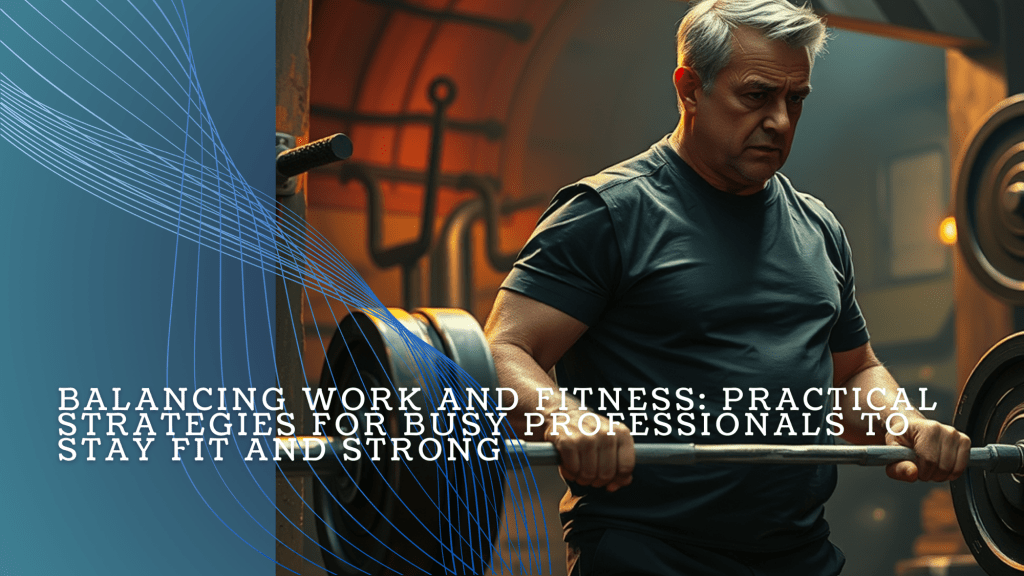
  • Balancing Work and Fitness: Practical Strategies for Busy Professionals to Stay Fit and Strong

    Balancing Work and Fitness: Practical Strategies for Busy Professionals to Stay Fit and Strong

    In the fast-paced world of demanding careers and tight schedules, it’s easy to push fitness to the sidelines. However, staying active is more than a health goal; it’s a cornerstone for productivity, mental clarity, and long-term well-being. The good news? You don’t need to spend hours in the gym to achieve incredible results. With the right strategies, you can integrate fitness seamlessly into your busy life.

    Let’s explore how you can prioritize strength training and movement, even with a packed schedule, and create a sustainable routine that keeps you strong and energized.

    1. Strength Training: The Backbone of Fitness

    For busy professionals, efficiency is key, and strength training delivers. With just two or three total-body sessions per week, you can build muscle, improve your metabolism, and enhance your overall health.

    Focus on Multijoint Barbell Movements

    To get the most bang for your buck, prioritize multijoint barbell exercises such as:

    • Squats: Develop lower body strength and core stability.
    • Deadlifts: Build posterior chain power and full-body strength.
    • Bench Press: Strengthen your chest, shoulders, and triceps.

    These compound movements recruit multiple muscle groups, making them incredibly effective for maximizing results in minimal time.

    Adapt to Your Schedule

    If your week is unpredictable, don’t stress. Here’s how to stay flexible:

    • Shift Days: Move workout sessions around as needed.
    • Simplify Workouts: If time is short, focus on one or two big lifts and skip minor assistance exercises.
    • Weekend-Only Training: Can’t train midweek? No problem. Two intense sessions on Saturday and Sunday can still yield great results.

    Consistency and effort matter far more than perfection. Even a brief session can be highly productive if you give it your all.

    2. Supplement Strength Training with Daily Movement

    Strength training builds muscle, but daily movement keeps your body active and healthy. Aim to walk at least 8,000 steps a day, and you’ll reap numerous benefits:

    Physical Health Benefits
    • Improved cardiovascular health.
    • Enhanced recovery between strength-training sessions.
    • Boosted calorie burn to complement your fitness goals.
    Mental Health Benefits
    • Reduced stress levels.
    • Increased focus and mental clarity.
    • Improved mood and overall well-being.
    Optional Cardio

    If walking isn’t enough, consider light running or cycling for variety. Remember, fitness should feel enjoyable. Choose activities that excite you and keep you coming back.

    3. Make Fitness Fun and Sustainable

    The secret to long-term success? Enjoy what you do. When workouts feel like a chore, it’s harder to stick with them. Instead, frame fitness as an opportunity to grow stronger, relieve stress, and improve your quality of life.

    Tips for Making Fitness Fun
    • Experiment: Try different training styles or exercises to find what you love.
    • Celebrate Progress: Track strength gains, improved energy, or even step counts.
    • Simplify: Keep your routine straightforward so it’s easy to pick up and stay consistent.

    When fitness feels approachable and rewarding, it’s much easier to stay the course.

    4. Practical Strategies for Staying Consistent

    Life is unpredictable, but with a little planning, you can make fitness a non-negotiable part of your routine.

    Time Management Hacks
    • Morning Workouts: Start your day with a quick strength session. You’ll feel accomplished and energized.
    • Lunch Breaks: Use this time for a short walk or workout. It’s a great mental reset.
    • Combine Activities: Turn family outings into active adventures or take calls while walking.
    Building Habits
    • Begin small. Even one workout a week is better than none.
    • Focus on consistency over intensity. Showing up regularly builds momentum.
    • Create a routine that fits seamlessly into your life.
    5. The Long-Term Payoff

    Balancing work and fitness isn’t just about looking good; it’s about feeling strong and capable in every area of life. Here’s what you stand to gain:

    Physical Benefits
    • Increased strength and endurance.
    • Reduced risk of chronic illness.
    • Improved posture and energy levels.
    Mental Benefits
    • Lower stress and anxiety.
    • Enhanced focus and productivity.
    • A sense of accomplishment and resilience.

    Fitness is a long-term investment that pays dividends in both your personal and professional life. Prioritize it, and you’ll notice the difference in everything you do.

    Start Today, Stay Consistent

    Your busy schedule doesn’t have to be a barrier to fitness. With a focus on strength training, daily movement, and flexibility, you can create a routine that fits seamlessly into your life. Pick up a barbell, take a walk, or try a quick workout — the key is to start and stay consistent.

    Remember, fitness isn’t about being perfect; it’s about making progress. Every step, every lift, and every workout is a step closer to a stronger, healthier you. So why wait? Your barbell is calling — let’s get started!

  • Top 10 Features Every Project Management Tool Needs in 2025: Streamline Task Tracking, Reporting, and Collaboration

    Top 10 Features Every Project Management Tool Needs in 2025: Streamline Task Tracking, Reporting, and Collaboration

    The world of project management moves fast—and so does technology. In 2025, project management tools aren’t just about keeping everyone on the same page; they’re about enabling seamless collaboration, boosting productivity, and making your job as a project manager a whole lot easier.

    So, what features should you look for in a project management tool this year? Let’s dive into the 10 must-haves that will help you lead your team like a pro.

    1. User-Friendly Interface

    Let’s start with the basics: your tool has to be easy to use. If it takes a PhD to figure out how to assign a task, your team won’t stick around long enough to see the benefits. Look for intuitive designs that reduce the learning curve and ensure everyone—from tech-savvy developers to less-than-techie stakeholders—can use it effortlessly.

    Pro Tip: Tools with drag-and-drop functionality are game-changers.

    2. Advanced Task Tracking

    Task tracking is the bread and butter of project management tools. In 2025, you want features that go beyond basic checklists. Think real-time updates, dependencies, and prioritization tools that ensure no task gets lost in the shuffle.

    Pro Tip: Kanban boards are still king, but having options like Gantt charts doesn’t hurt.

    3. Seamless Collaboration Tools

    Gone are the days when collaboration meant endless email threads. Your tool should have integrated chat, file sharing, and video conferencing—basically a one-stop shop for all team communication. The less your team has to juggle multiple platforms, the better.

    Pro Tip: Look for tools that let you tag teammates and link conversations directly to tasks.

    4. Customizable Dashboards

    Project managers love dashboards—and for good reason. A great dashboard gives you a snapshot of your project’s health at a glance. Customizable options mean you can tailor the view to what matters most, whether it’s budget tracking, team workload, or milestone progress.

    Pro Tip: Widgets make dashboards way more fun and functional.

    5. Robust Reporting and Analytics

    Reports aren’t just for your boss—they’re for you too. A tool with robust reporting lets you spot bottlenecks, measure team performance, and plan smarter. Bonus points for customizable templates that make generating reports a breeze.

    Pro Tip: Heatmaps and visual data representations make numbers way less intimidating.

    6. Cross-Platform Accessibility

    In a world where remote work is here to stay, your project management tool must work wherever you do. Cloud-based solutions with apps for desktop, mobile, and tablet are a must. And don’t forget offline mode for those pesky internet outages.

    Pro Tip: Test mobile versions for functionality before committing.

    7. Integration with Popular Tools

    Your project management tool should play well with others. Look for integrations with apps your team already uses, like Slack, Microsoft Teams, and Google Workspace. API support is a nice bonus for those who need custom setups.

    Pro Tip: The fewer times your team has to copy-paste between tools, the happier they’ll be.

    8. Automated Workflows and Reminders

    Repetitive tasks are the enemy of productivity. A great tool automates workflows, sends reminders for deadlines, and even handles approvals. This way, you can focus on leading your team instead of micromanaging.

    Pro Tip: Recurring task options are a lifesaver for long-term projects.

    9. Scalability and Flexibility

    Your team may be small now, but what about next year? Choose a tool that grows with you. Scalability ensures it works for small teams and large enterprises alike. Flexible templates tailored to your industry also save you time.

    Pro Tip: Check if the pricing model supports scaling without breaking the bank.

    10. Strong Security and Compliance

    Finally, don’t overlook security. Your tool needs to protect sensitive data with encryption and comply with regulations like GDPR or HIPAA. After all, trust isn’t just for team members—it’s for the software you use too.

    Pro Tip: Multi-factor authentication is a must-have for 2025.

    Wrapping It Up

    The right project management tool can transform how your team works, from streamlining task management to fostering collaboration and ensuring security. As you evaluate your options in 2025, keep these 10 features in mind. Trust us, your future self will thank you when your projects run smoother than ever.

    Now, go out there and find the tool that fits your team’s needs—and make the hard things in life look effortless.