Author: Sebastian Strobl

  • The Critical Path Method (CPM) in Project Management: Origins, Application, and Evolution

    The Critical Path Method (CPM) in Project Management: Origins, Application, and Evolution

    Introduction

    Project management has evolved over the decades into a refined discipline, integrating complex methodologies that enable the efficient planning, execution, and completion of projects. One of the foundational methodologies in this field is the Critical Path Method (CPM). This article delves into the origins of CPM, its historical context, and its impact on project management. We will explore how it is taught in contemporary academic settings, provide a detailed explanation of its methodology, and discuss its evolution into the Critical Chain Method (CCM). Finally, we will offer practical advice on how to implement these methods effectively in various types of projects.

    Origins and Development of the Critical Path Method

    Remington Rand and Morgan R. Walker of DuPont. The genesis of CPM can be traced to the need for more efficient project management techniques during a time of rapid industrial growth in the United States. The method was initially created to address the scheduling challenges in large, complex projects, particularly in the construction and defense industries.

    James E. Kelley was an engineer and computer scientist who played a significant role in the development of project scheduling techniques. He was instrumental in applying mathematical models to project management, which laid the groundwork for the development of CPM. Morgan R. Walker, on the other hand, was a project engineer at DuPont, where he was involved in developing techniques to streamline production processes. Their collaboration led to the formalization of CPM, which quickly gained traction in industries requiring rigorous scheduling and resource management.

    Notable Applications:

    1. Polaris Missile Project (1960s): One of the most famous early applications of CPM was in the U.S. Navy’s Polaris missile project. The method helped manage the project’s complexity, involving numerous contractors and schedules, leading to its successful completion ahead of schedule.
    2. Construction of the World Trade Center (1970s): The construction of the World Trade Center in New York utilized CPM to coordinate the numerous contractors and tasks, ensuring that the project remained on schedule.
    The Critical Path Method in Modern Education

    Today, CPM is a staple in the curriculum of business schools and engineering programs. It is typically taught as part of project management courses, where students learn how to plan, schedule, and control projects using CPM. The method’s emphasis on identifying the longest sequence of dependent tasks (the critical path) that determines the project’s minimum completion time is a fundamental concept that students must grasp.

    Educational programs often integrate CPM with software tools like Microsoft Project or Primavera P6, allowing students to visualize and manage project schedules effectively. Case studies are commonly used to illustrate how CPM is applied in real-world scenarios, reinforcing the importance of this method in modern project management.

    Detailed Explanation of the Critical Path Method

    What is the Critical Path? The critical path is the longest sequence of tasks in a project that must be completed on time for the project to be completed by its deadline. This path determines the shortest possible project duration. If any task on the critical path is delayed, the entire project will be delayed.

    Steps to Identify and Visualize the Critical Path:
    1. Break Down the Project into Tasks: List all the tasks required to complete the project. Each task should have a clear beginning and end.
    2. Identify Dependencies: Determine which tasks depend on the completion of others. These dependencies will help in identifying the sequence of tasks.
    3. Estimate Duration: Assign an estimated duration to each task, typically in days or weeks.
    4. Draw the Network Diagram: Create a visual representation of the tasks and their dependencies. This can be done using arrows or lines to connect tasks in the sequence they need to be completed.
    5. Determine the Longest Path: The critical path is the longest path through the network diagram, meaning it has the longest duration. The tasks on this path are the ones that directly impact the project’s finish date.
    6. Monitor and Update the Critical Path: As the project progresses, it is essential to continuously monitor the critical path. Any changes in task durations or dependencies can affect the critical path, and consequently, the project’s completion date.
    Keeping Track of the Critical Path:
    • Gantt Charts: A Gantt chart is a popular tool for visualizing the project schedule, including the critical path. It allows project managers to see which tasks are on the critical path and monitor their progress.
    • CPM Software: Various software tools are available that can automate the process of identifying and tracking the critical path, such as Microsoft Project, Primavera P6, and others.
    The Critical Chain Method (CCM): Evolution of CPM

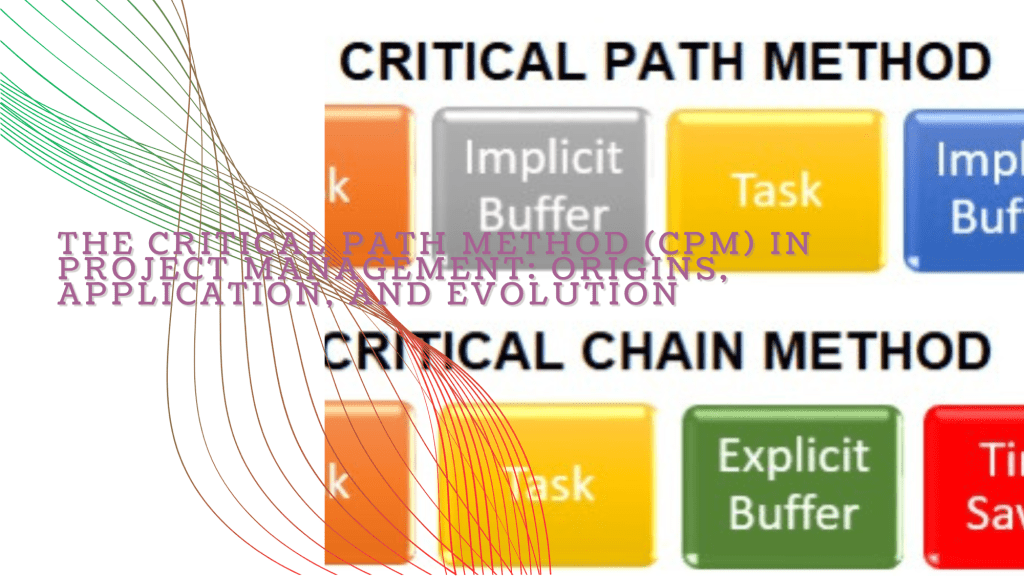
    The Critical Chain Method (CCM) was developed by Dr. Eliyahu M. Goldratt in the late 1990s as an enhancement to the Critical Path Method. While CPM focuses on task sequences and durations, CCM incorporates resource constraints and variability, making it more flexible and realistic in dealing with uncertainties.

    Key Differences between CPM and CCM:

    Resource Constraints: Unlike CPM, CCM takes into account the availability of resources, ensuring that tasks are scheduled based on when resources are actually available, rather than assuming they are always available.

    Buffer Management: CCM introduces the concept of buffers—additional time added to account for uncertainties in task durations. These buffers are placed strategically to protect the critical chain (the longest sequence of tasks considering resource constraints) from delays.

    Focus on Task Completion: While CPM focuses on starting tasks as early as possible, CCM emphasizes the importance of completing tasks as quickly as possible to avoid cascading delays.

    Applying the Critical Chain Method:
    1. Identify the Critical Chain: Similar to CPM, list all tasks, dependencies, and durations, but also consider resource constraints when identifying the critical chain.
    2. Add Buffers: Add project buffers at the end of the critical chain and feeding buffers at points where non-critical tasks intersect with the critical chain.
    3. Monitor Buffer Consumption: Track the use of buffers to identify potential delays before they impact the project’s completion.
    4. Prioritize Task Completion: Encourage teams to focus on completing tasks quickly, rather than simply starting them early, to minimize delays.
    Conclusion

    The Critical Path Method and its evolution into the Critical Chain Method are powerful tools in project management, particularly for complex, resource-intensive projects. CPM is best suited for projects where task sequences and dependencies are the primary constraints, such as construction or large-scale engineering projects. On the other hand, CCM is more appropriate for projects where resource constraints and variability are significant concerns, such as in software development or research and development projects.

    Tools for Implementing CPM and CCM:

    Software: Microsoft Project, Primavera P6, and Smartsheet for CPM; ProChain and Leankit for CCM.

    Step-by-Step Guide to Implementing CPM/CCM:

    1. Define the Project Scope: Clearly define the project’s objectives, deliverables, and constraints.
    2. Break Down the Project: Decompose the project into manageable tasks.
    3. Identify Dependencies: Determine the relationships between tasks.
    4. Estimate Durations and Resources: Assign time estimates and identify resource needs for each task.
    5. Select the Appropriate Method: Choose between CPM and CCM based on the nature of the project.
    6. Create the Schedule: Develop the project schedule, identifying the critical path or chain.
    7. Monitor Progress and Adjust: Continuously monitor the project’s progress, making adjustments to the schedule as needed to keep the project on track.
    8. Manage Buffers (for CCM): In the case of CCM, carefully manage and monitor buffers to ensure the project remains within its timeline.

    By understanding and applying these methods, project managers can significantly enhance their ability to deliver projects on time and within budget, regardless of the complexity and uncertainty involved.

  • Running and Strength Training for Men Over 35: A Synergistic Approach to Longevity and Performance

    Running and Strength Training for Men Over 35: A Synergistic Approach to Longevity and Performance

    For men over 35, integrating running with strength training provides a potent combination that enhances overall health, performance, and longevity. Both activities complement each other in ways that boost cardiovascular endurance, muscle strength, injury prevention, and metabolic health. Drawing from historical fitness practices and modern insights, this synergistic approach not only improves athletic performance but also supports a balanced, resilient physique that can withstand the demands of aging.

    The Synergy Between Running and Strength Training

    1. Enhanced Running Efficiency and Performance: Strength training plays a crucial role in improving running efficiency by increasing muscle strength and power. Historical fitness expert John McCallum emphasized the importance of strong legs for effective running. His advice still holds today: exercises like squats, lunges, and deadlifts strengthen the quadriceps, hamstrings, glutes, and calves, which are the primary muscles involved in running. Additionally, a strong core helps maintain proper running form, reducing the risk of injury and improving endurance.

    2. Improved Muscle Strength and Bone Density: As men age, maintaining muscle mass and bone density becomes critical. While running contributes to cardiovascular fitness, it doesn’t provide the resistance needed to prevent age-related muscle loss (sarcopenia). This is where strength training becomes essential. According to the insights of Jack LaLanne, a pioneer in combining aerobic exercise with strength training, building muscle through resistance exercises like weightlifting not only counters muscle loss but also strengthens bones, reducing the risk of osteoporosis.

    3. Enhanced Metabolic Rate and Fat Loss: Running is excellent for burning calories during the activity, particularly with high-intensity interval training (HIIT). However, strength training increases muscle mass, which in turn boosts your resting metabolic rate (RMR). This means you burn more calories even at rest. The combination of running and strength training, as described by fitness experts like Fred Grace, provides an optimal strategy for fat loss and weight management. Grace’s advice on mixing aerobic and resistance training emphasizes that this dual approach leads to a more defined, lean physique.

    4. Balanced Hormonal Response: Running, especially at high intensities, can elevate cortisol levels, a stress hormone that can lead to muscle breakdown if not managed. Strength training, particularly when it involves compound movements like squats and deadlifts, stimulates the release of anabolic hormones like testosterone and growth hormone. These hormones are crucial for muscle repair, growth, and recovery—especially important as natural testosterone levels decline with age​. By balancing these hormonal responses, you can optimize muscle gain and fat loss.

    5. Injury Prevention and Recovery: Regular strength training helps correct muscle imbalances and strengthens the connective tissues that support the joints. This is particularly beneficial for runners, who are prone to injuries such as shin splints and runner’s knee. As highlighted in historical fitness literature, incorporating exercises that target stabilizing muscles and improve joint stability can significantly reduce injury risk​. Furthermore, a balanced strength training regimen enhances recovery times, allowing for more consistent running without the setbacks caused by overuse injuries.

    6. Cardiovascular and Muscular Endurance: Running improves cardiovascular endurance, which is not only essential for overall health but also enhances performance in strength training. Improved cardiovascular fitness means better blood circulation and oxygen delivery to muscles, leading to improved performance during strength training sessions. Conversely, strength training improves muscular endurance, allowing you to sustain running for longer periods without fatigue. This dual benefit ensures that you maintain a high level of fitness across both disciplines​.

    Integrating Running and Strength Training into Your Routine

    To achieve the best results from both running and strength training, it’s important to plan your workouts carefully to avoid overtraining and ensure adequate recovery. Here’s a suggested weekly plan inspired by the routines of past fitness icons and modern training principles:

    Running Days:
    Monday, Wednesday, Friday: Moderate-intensity runs (30-45 minutes) or interval training (20-30 minutes). These sessions focus on improving cardiovascular endurance and running performance, following the advice of fitness pioneers like John McCallum​.

    Strength Training Days:
    Tuesday, Thursday: Full-body strength workouts that include compound exercises such as squats, deadlifts, bench presses, and rows. These workouts emphasize exercises that target the lower body, core, and stabilizing muscles to support running. Jack LaLanne’s philosophy of integrating strength with aerobic exercises can guide this balanced approach​.

    Rest and Recovery:
    Saturday or Sunday:
    Rest day or active recovery (such as walking, light cycling, or yoga) to promote muscle recovery and reduce the risk of overtraining. Fred Grace’s advice on low-intensity aerobics can be incorporated here to aid recovery without adding strain​.

    Cross-Training and Flexibility:
    Adding a day of cross-training (e.g., swimming, cycling) provides variety and enhances cardiovascular fitness without the impact stress of running. Incorporate flexibility training or yoga to improve range of motion and prevent stiffness, as recommended by historical fitness practitioners​.

    Final Thoughts

    For men over 35, the combination of running and strength training offers a holistic approach to fitness that not only improves physical health but also boosts mental well-being, productivity, and longevity. Start by scheduling your workouts into your weekly routine, gradually increasing the intensity and duration as your fitness levels improve. Consistency is key—by maintaining a balanced approach, you’ll enjoy the full spectrum of benefits these activities offer.

    Inspired by the practices of fitness legends and modern insights, now is the time to take action. Lace up your running shoes, pick up those weights, and commit to a routine that will support your body and mind for years to come. The journey to better health and longevity begins with a single step—or rep.

  • The Wheel of Life Assessment: A Comprehensive Guide for Busy Professionals

    The Wheel of Life Assessment: A Comprehensive Guide for Busy Professionals

    The Wheel of Life is a powerful self-assessment tool designed to help individuals evaluate and achieve balance across different areas of their lives. Originating from life coaching and personal development practices, this tool visualizes life balance as a wheel with each segment representing a key area of life. By assessing these areas, you can identify where you’re thriving and where you may need to focus more attention, ultimately guiding you towards a more balanced and fulfilling life.

    Origins and Concept of the Wheel of Life

    The Wheel of Life assessment is rooted in holistic approaches to self-improvement. While its precise origins are unclear, it has gained widespread use in coaching, personal development, and therapy. The concept is simple yet profound: life is divided into various segments or categories, each representing a critical aspect of our existence. The wheel is balanced only when these areas receive appropriate attention and effort, allowing it to roll smoothly.

    What is the Wheel of Life?

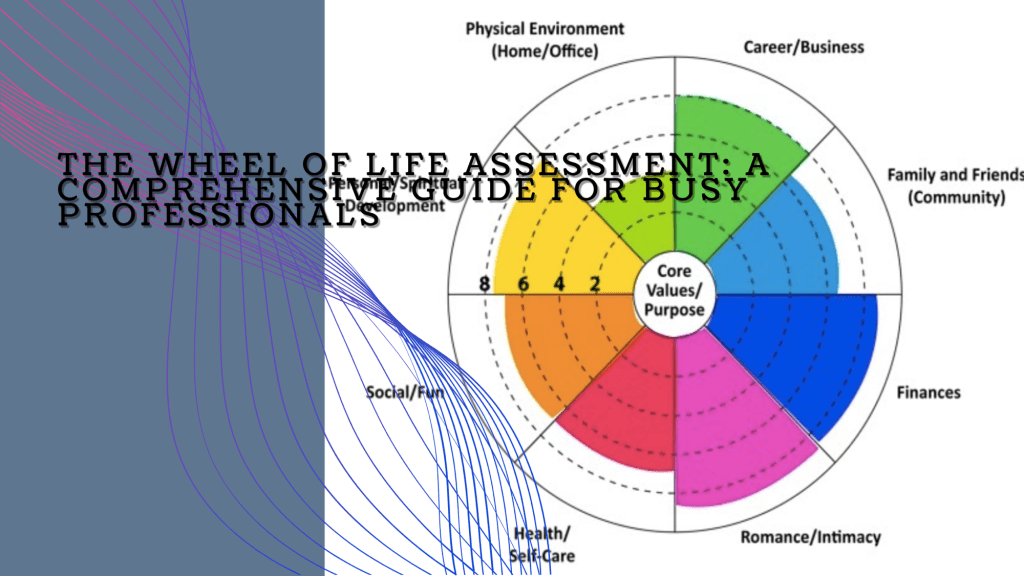
    The Wheel of Life typically includes 8 to 10 segments, each representing a significant area of life such as:

    • Career
    • Family and Friends
    • Significant Other/Romance
    • Health
    • Finance
    • Personal Growth
    • Fun and Recreation
    • Physical Environment

    These categories can be customized to reflect your unique life circumstances. For instance, if you’re an entrepreneur, you might add segments like “Business Growth” or “Leadership.” The goal is to rate your satisfaction in each area on a scale of 1 to 10, creating a visual representation of your life balance​ (Quenza, Scott Jeffrey).

    Conducting the Wheel of Life Assessment: A Step-by-Step Guide
    Step 1: Determine Your Categories

    Begin by defining the categories that are most relevant to your life. While there are standard categories like Career and Health, your personal circumstances might require custom segments. For example, if you’re a busy professional with a family, you might include categories such as “Parenting,” “Spouse Relationship,” “Career,” “Health,” “Finances,” “Personal Growth,” and “Leisure” ​(Scott Jeffrey).

    Step 2: Assess Your Current Situation

    Next, evaluate your satisfaction level in each category using a scale from 1 to 10, where 1 represents complete dissatisfaction and 10 signifies full contentment. Be honest in your assessment—this is crucial for identifying where improvements are needed. Consider what a “10” would look like in each category. For example, in “Health,” a 10 might mean regular exercise, a balanced diet, and overall well-being​ (Quenza, Scott Jeffrey).

    Step 3: Plot Your Ratings on the Wheel

    Once you’ve rated each category, transfer these scores onto the Wheel of Life template. This will give you a visual representation of your life balance. Ideally, the wheel should be evenly rounded, indicating balance. However, if it appears uneven, this highlights the areas of your life that require more attention ​(Quenza).

    Step 4: Analyze and Reflect

    Take time to reflect on your completed wheel. Ask yourself questions like:

    • Are there any surprises in the scores?
    • Which areas need the most improvement?
    • How do these imbalances affect other areas of your life?

    This reflection is crucial for understanding the interconnectedness of different life areas. For example, neglecting your health might lead to reduced productivity at work and strained relationships​ (Quenza).

    Deriving Topics to Work On Over the Year
    Step 5: Set SMART Goals

    After identifying the areas that need improvement, set SMART (Specific, Measurable, Achievable, Relevant, Time-bound) goals for each one. For example:

    • If your “Health” score is low, a goal might be: “Exercise three times a week for 30 minutes to improve overall energy and well-being.”
    • If your “Relationship” score is low, a goal could be: “Plan a date night with my spouse once a week to strengthen our connection.”

    Choose 2-3 key areas to focus on each quarter, ensuring that you don’t overwhelm yourself by trying to improve everything at once​ (Quenza, Scott Jeffrey).

    Step 6: Create an Action Plan

    Develop a clear action plan for each goal. Break down your goals into daily, weekly, and monthly tasks to make them more manageable. For example:

    • Daily Habits: Incorporate small, consistent actions like drinking more water or taking short walks.
    • Weekly Check-ins: Set aside time to review your progress each week. Are you staying on track? What obstacles are you facing?

    This structured approach helps ensure steady progress without becoming overwhelming ​(Scott Jeffrey).

    Measuring Success and Tracking Progress
    Step 7: Regular Reviews and Adjustments

    Tracking your progress is key to maintaining motivation and ensuring you’re on the right path. Here’s how to measure success:

    • Monthly Reviews: At the end of each month, revisit your Wheel of Life and reassess your scores. Have you made progress? This will indicate whether your efforts are effective.
    • Quarterly Reviews: Every three months, conduct a more thorough review. Adjust your goals and strategies based on any changes in your life circumstances or priorities ​(Quenza, Scott Jeffrey).
    Tools for Tracking

    Consider using a journal, an app, or a simple spreadsheet to log your activities and monitor your progress. This allows you to track patterns over time and stay accountable to your goals.

    Keeping Track and Staying on Course

    Consistency is essential for maintaining balance. Here’s how to stay on track:

    • Accountability Partner: Share your goals with someone you trust, like a partner, friend, or coach. This adds accountability and increases your likelihood of following through.
    • Adapt and Adjust: Life is dynamic, and your priorities may shift. Be flexible with your goals and willing to adjust your action plan as needed. Regularly revisiting your Wheel of Life ensures your actions remain aligned with your evolving circumstances​ (Scott Jeffrey).
    Conclusion

    The Wheel of Life is more than just an assessment tool — it’s a guide for ongoing personal development and life balance. By regularly assessing your life, setting SMART goals, and tracking your progress, you can maintain productivity while ensuring that all areas of your life receive the attention they deserve. Remember, the goal is not perfection but continuous improvement and balance across all aspects of your life.

  • Harnessing the Power of Kanban for Enhanced Productivity and Project Management

    Harnessing the Power of Kanban for Enhanced Productivity and Project Management

    In the relentless pursuit of productivity, professionals are constantly seeking methodologies that offer clarity, efficiency, and a sense of control over their workflows. Enter Kanban, a method that has stood the test of time, evolving from a simple inventory management system to a powerful tool for managing projects across various industries. But what exactly is Kanban, and how can it transform the way you approach work and productivity? This article explores the fascinating origins of Kanban, its application in modern project management, and how you can implement its principles to enhance your daily life, increase visibility, and reduce stress.

    The Origins of Kanban: From Factory Floors to Global Workspaces

    The roots of Kanban stretch back to post-World War II Japan, where the economy was rebuilding, and efficiency was paramount. Toyota, under the visionary leadership of industrial engineer Taiichi Ohno, was looking for ways to streamline production and eliminate waste. Ohno was inspired by a surprising source—American supermarkets. He observed how shelves were restocked only when items were purchased, leading to a lean, demand-driven inventory system. This insight led to the development of Kanban, a word that translates to “signboard” or “visual card” in Japanese, which would become the backbone of Toyota’s just-in-time (JIT) production system.

    Kanban was initially used to control the logistical chain from production through to the delivery of finished products, ensuring that nothing was produced until it was needed. This revolutionary approach reduced costs, minimized waste, and maximized efficiency, propelling Toyota to the forefront of the global automotive industry. Over time, the principles of Kanban have transcended manufacturing, being adopted by knowledge workers in industries as diverse as software development, healthcare, and marketing.

    What is Kanban? A Visual Symphony of Workflow Management

    At its essence, Kanban is a visual workflow management tool designed to help teams visualize work, balance demands with available capacity, and optimize the flow of work items. Picture a board divided into columns that represent different stages of a process—this is the heart of Kanban. Tasks, often represented by cards, move across the board from left to right as they progress through stages such as “To Do,” “In Progress,” and “Done.”

    But Kanban is more than just a board with sticky notes. It embodies a set of core principles that guide how work is approached and completed:

    1. Visualizing the Workflow: The visual aspect of Kanban is perhaps its most powerful feature. By creating a visual map of your tasks and their statuses, you gain immediate insight into the progress and potential bottlenecks. This transparency fosters better communication and collaboration among team members, as everyone can see exactly what needs to be done and what is currently in motion.
    2. Limiting Work in Progress (WIP): One of the biggest productivity killers is multitasking. Kanban combats this by setting strict limits on how much work can be in progress at any given time. By focusing on a smaller number of tasks, you can ensure that each task receives the attention it needs, reducing the likelihood of errors and improving overall quality.
    3. Managing Flow: Kanban encourages a smooth and consistent flow of work. By closely monitoring how tasks move through the workflow, you can identify and address inefficiencies, ensuring that work is completed promptly without unnecessary delays.
    4. Making Process Policies Explicit: For a team to function effectively, everyone must be on the same page. Kanban promotes clarity by making the rules and processes explicit, so there is no confusion about how tasks should be handled or what the priorities are.
    5. Implementing Feedback Loops: Continuous improvement is a cornerstone of Kanban. Regular feedback loops, such as daily stand-ups or retrospective meetings, allow teams to review their progress, address challenges, and make incremental improvements to their workflow.
    6. Improving Collaboratively, Evolving Experimentally: Kanban is inherently flexible. It encourages teams to experiment with their processes, try new approaches, and learn from their experiences. This iterative approach fosters a culture of continuous improvement, where the focus is on finding the best way to achieve the desired outcomes.
    Kanban in Project Management: A Versatile Tool for Diverse Industries

    The adaptability of Kanban has made it a favored methodology in various fields, particularly in project management. Its principles are universal, making it an excellent fit for any industry where work can be visualized and broken down into discrete tasks.

    1. Software Development: In the fast-paced world of software development, where requirements often change mid-project, Kanban provides the flexibility to adapt without disrupting the flow of work. It complements Agile methodologies like Scrum by offering a continuous delivery model that emphasizes the steady flow of features, bug fixes, and updates. This ensures that development teams can maintain momentum without being overwhelmed by shifting priorities.
    2. Marketing: Marketing teams, often juggling multiple campaigns, content calendars, and social media strategies, benefit immensely from Kanban’s visual approach. By mapping out tasks on a Kanban board, teams can see at a glance what content is in the pipeline, what needs approval, and what’s ready to go live. This visibility reduces the risk of missed deadlines and helps ensure that all aspects of a campaign are aligned.
    3. Healthcare: In healthcare, where the stakes are high, and efficiency can impact patient outcomes, Kanban is used to manage everything from patient flow in hospitals to treatment plans. For example, a Kanban board can help a healthcare team track the status of each patient’s treatment, ensuring that critical steps are not overlooked and that care is delivered in a timely manner.
    4. Manufacturing: Kanban’s origins in manufacturing make it particularly well-suited to this industry. Whether managing production schedules, tracking inventory, or coordinating supply chain logistics, Kanban helps ensure that manufacturing processes are efficient, responsive to demand, and free from waste.
    Integrating Kanban Principles into Traditional Project Management

    Even in classically managed projects, which often rely on rigid structures and timelines, Kanban principles can bring significant benefits. The key is to incorporate Kanban’s flexibility and visual management into existing frameworks, enhancing overall efficiency and communication.

    1. Visualizing Complex Projects: Traditional projects often involve multiple teams and numerous interdependent tasks. By using Kanban boards to visualize these tasks, project managers can create a clear picture of the entire project landscape. This visualization helps identify potential bottlenecks, allowing managers to allocate resources more effectively and keep the project on track.
    2. Limiting Work in Progress Across Phases: In projects that follow a waterfall methodology, it’s common to have several phases (e.g., design, development, testing) running simultaneously. However, without proper controls, this can lead to overload and inefficiency. Applying WIP limits to these phases ensures that each stage of the project is fully completed before moving on to the next, reducing the risk of rework and delays.
    3. Enhancing Flow with Strategic Resource Allocation: Traditional project management often suffers from resource bottlenecks—when too many tasks are assigned to too few people. By adopting Kanban’s focus on flow, project managers can monitor task progress and adjust workloads in real-time, ensuring that resources are used effectively and that tasks move smoothly from start to finish.
    4. Incorporating Feedback for Continuous Improvement: In traditional projects, feedback is often limited to post-mortem reviews after the project has ended. However, by incorporating regular feedback loops, similar to Kanban’s retrospective meetings, project managers can make iterative improvements throughout the project lifecycle. This not only increases the chances of project success but also fosters a culture of learning and continuous improvement.
    Implementing Kanban for Personal Productivity: A Roadmap for High Performers

    For high achievers looking to optimize their personal productivity, Kanban offers a structured yet flexible approach to managing daily tasks. Here’s how you can leverage Kanban to boost your efficiency, reduce stress, and achieve your goals.

    1. Building Your Personal Kanban Board: Start by creating a simple Kanban board, either physically with sticky notes or digitally using tools like Trello or Asana. Begin with three columns: “To Do,” “In Progress,” and “Done.” Populate the “To Do” column with tasks that need your attention, and move them across the board as you work on them.
    2. Mastering Focus with WIP Limits: The beauty of Kanban lies in its ability to help you focus. Set a WIP limit for the “In Progress” column—perhaps two or three tasks at a time. This encourages you to concentrate on completing tasks before taking on new ones, reducing the cognitive load and the stress of multitasking.
    3. Conducting Regular Reviews: At the end of each day or week, take a few moments to review your Kanban board. Look for patterns—are there tasks that frequently stall in the “In Progress” column? Are you consistently underestimating the time required for certain tasks? Use these insights to refine your workflow, making adjustments that will enhance your productivity over time.
    4. Showcasing Your Progress: One of the most satisfying aspects of using Kanban is seeing tasks move into the “Done” column. This not only provides a visual representation of your accomplishments but also allows you to communicate your progress to others. If you’re working in a team or reporting to a manager, sharing your Kanban board can be a powerful way to demonstrate your productivity and ensure that your efforts are recognized.
    Leveraging Kanban for Visibility and Recognition

    In a competitive environment, making your contributions visible is crucial for career advancement. Kanban’s transparency can help you not only manage your work more effectively but also ensure that your efforts are noticed and valued by others.

    1. Proactively Share Your Board: Don’t wait for others to ask for updates. By regularly sharing your Kanban board with your team or supervisor, you take control of the narrative around your work. This proactive communication demonstrates your commitment to transparency and accountability, qualities that are highly valued in any professional setting.
    2. Use the “Done” Column as a Portfolio: The “Done” column of your Kanban board is more than just a record of completed tasks—it’s a showcase of your accomplishments. Regularly reviewing this column can help you prepare for performance reviews, project retrospectives, or even job interviews, providing concrete examples of the work you’ve completed and the impact you’ve made.
    3. Foster a Collaborative Environment: Kanban’s visual nature makes it easy for others to see where they can contribute. By maintaining an up-to-date board, you encourage team members to offer support, share insights, and collaborate more effectively. This not only enhances team performance but also positions you as a leader who facilitates open communication and teamwork.
    A Gradual Implementation Plan: Start Small, Scale Up

    If you’re ready to start using Kanban to transform your workflow, the key is to start small and gradually scale up as you become more comfortable with the methodology. Here’s a step-by-step plan:

    1. Begin with a Simple Board: Set up a basic Kanban board with three columns: “To Do,” “In Progress,” and “Done.” Start by adding a few tasks that you need to complete this week. Don’t worry about getting everything perfect—focus on getting started.
    2. Introduce WIP Limits: Once you’re comfortable with the basic board, introduce WIP limits. This could be as simple as deciding that you won’t work on more than three tasks at once. Observe how this affects your focus and productivity, and adjust the limits as needed.
    3. Regularly Review and Reflect: Make it a habit to review your Kanban board at the end of each day or week. Reflect on what’s working well and what could be improved. This practice will help you fine-tune your approach and ensure that you’re continuously improving your workflow.
    4. Gradually Expand the Board: As you become more comfortable with Kanban, consider expanding your board to include additional columns or categories. For example, you might add a “Backlog” column for tasks that are not yet ready to be started, or a “Blocked” column for tasks that are waiting on input from others.
    5. Scale Up and Share: Once Kanban has become an integral part of your workflow, consider scaling up by using it for more complex projects or by introducing it to your team. Sharing your board with others can help you align efforts, improve collaboration, and ensure that everyone is working towards the same goals.

    By following this plan, you’ll not only integrate Kanban into your daily work but also create a scalable system that grows with you. Over time, you’ll find that Kanban not only boosts your productivity but also reduces stress, enhances visibility, and makes your efforts more impactful.

    Kanban is more than just a tool—it’s a mindset that empowers you to take control of your work, continuously improve, and achieve your goals with confidence. Whether you’re managing a team, running a project, or simply looking to optimize your personal productivity, the principles of Kanban offer a path to success that is both effective and sustainable. Start small, stay committed, and watch as your productivity soars to new heights.

  • Unlock the Secret to Effortless Style: How a Minimalist Wardrobe Can Transform Your Professional Life

    Unlock the Secret to Effortless Style: How a Minimalist Wardrobe Can Transform Your Professional Life

    In a world where first impressions matter, your wardrobe can be your secret weapon. But what if I told you that looking sharp and professional every day doesn’t require a closet full of clothes or hours spent deciding what to wear? The answer lies in mastering the art of a minimalist wardrobe — a capsule collection of timeless, versatile pieces that can be mixed and matched to create endless outfit possibilities with minimal effort.

    Introducing The Capsule Code: Mastering a Minimalist Wardrobe for the Busy Professional — a game-changing guide that’s just been released on Amazon. This book is your ultimate resource for simplifying your wardrobe while maximizing your style.

    Why a Capsule Wardrobe?

    In today’s fast-paced world, the last thing you want to worry about is what to wear each morning. A capsule wardrobe takes the stress out of getting dressed by focusing on a small, carefully curated collection of clothing items that all work together. Imagine the freedom of opening your closet and knowing that whatever you choose, it will fit perfectly, look great, and be appropriate for any occasion.

    But a capsule wardrobe isn’t just about convenience; it’s also about making a statement. By carefully selecting high-quality, timeless pieces, you can create a wardrobe that reflects your personal style while ensuring you always look polished and put-together.

    The Power of Versatility

    As highlighted in The Capsule Code, even a small wardrobe can have a big impact. Here’s a sneak peek from the book:

    This small capsule wardrobe, consisting of just 2 pairs of shoes, 3 trousers, 5 shirts, and 2 jackets (using the navy suit jacket as a blazer), can generate an impressive 60 unique outfits. The beauty of this approach lies in its simplicity—by mixing and matching these key pieces, you can easily create a wide range of looks with minimal effort. And when you add in accessories like neckties, pocket squares, the full suit, and the sweater, the number of potential outfits skyrockets to over 300, making this wardrobe not only versatile but also incredibly efficient.

    This excerpt perfectly captures the essence of what The Capsule Code is all about — unlocking the potential of your wardrobe by focusing on versatility and quality over quantity. Whether you’re a corporate executive, a tech professional, or someone who simply wants to streamline their wardrobe, this book provides practical advice and actionable steps to help you build a capsule wardrobe tailored to your lifestyle.

    Who Is This Book For?

    *The Capsule Code* is designed for busy professionals who value efficiency and style. Whether you’re just starting your career or looking to refresh your current wardrobe, this book offers insights that will help you make smarter choices about what to wear. It’s perfect for anyone who:

    • Wants to save time and reduce decision fatigue in the morning
    • Is looking to simplify their wardrobe without sacrificing style
    • Wants to invest in high-quality pieces that offer maximum versatility
    • Is interested in building a wardrobe that reflects their personal and professional identity
    Take the First Step Toward Effortless Style

    If you’re ready to transform the way you think about fashion and simplify your life, The Capsule Code: Mastering a Minimalist Wardrobe for the Busy Professional is your ultimate guide. With step-by-step instructions, expert tips, and real-life examples, this book will show you how to build a wardrobe that’s both functional and stylish.

    Don’t let your wardrobe hold you back — embrace the power of a minimalist approach and discover how a few carefully chosen pieces can change the way you dress forever. 

    Grab your copy of The Capsule Code on Amazon today and start your journey toward effortless style!