Author: Sebastian Strobl

  • What type of suit should you get

    What type of suit should you get

    What different types are there

    There are three different main categories when it comes to suits. The most affordable ones, ready-to-wear or off the rack. This is your typical Hugo Boss, Joop! or MassimoDutti suit. Suitsupply also has ready to wear suits with much nicer fabric than the first two in the list.

    Next price range are the made to measure suits, where most part of the suit is pre-produced and will then be modified to fit your real measurements. Once again an example would be suitsupply.

    The there are bespoke suit, completely custom/ handmade to your stature. Those will be the most expensive ones, made by real experts.

    So let’s give you a in-depth breakdown of the main categories below.

    Ready-to-Wear (RTW)
    Description:
    • Ready-to-wear suits are pre-manufactured in standard sizes and are available for purchase off the rack in retail stores.
    Characteristics:
    • Available in a wide range of styles, fabrics, and sizes.
    • Immediate purchase and wear, with minimal wait time.
    Benefits:
    • Convenience: Easily accessible and can be tried on and purchased the same day.•
    • Trendy: Often follow current fashion trends and are updated regularly.
    • Cost-Effective: Generally more affordable than made-to-measure and bespoke suits.
    Drawbacks:
    • Fit: May not fit as perfectly as tailored options, requiring alterations.
    • Limited Customization: Limited options for fabric, design, and details.
    Made-to-Measure (MTM)
    Description:
    • Made-to-measure suits are created from an existing pattern that is adjusted to the customer’s measurements.
    Characteristics:
    • Semi-custom: Uses pre-existing templates adjusted to fit the individual.
    • Requires a fitting session where measurements are taken, and preferences are discussed
    Benefits:
    • Better Fit: More personalized fit than RTW, as adjustments are made to suit the individual’s body shape.
    • Customization: Offers choices in fabric, color, and some design elements (e.g., lapels, pockets, buttons).
    Drawbacks:
    • Time: Typically takes a few weeks to produce, as adjustments and customizations are made.
    • Cost: More expensive than RTW but usually less costly than bespoke.
    Bespoke
    Description:
    • Bespoke suits are entirely custom-made from scratch, based on the customer’s exact measurements and specifications.
    Characteristics:
    • Fully custom: No pre-existing patterns are used; everything is designed from the ground up for the individual.
    • Multiple fittings are usually required to ensure the perfect fit.
    Benefits:
    • Perfect Fit: The highest level of fit precision and comfort, tailored specifically to the individual.
    • Unlimited Customization: Full control over every aspect of the suit, from fabric and linings to buttons and stitch details.
    • Unique: Each suit is unique and can be designed to reflect personal style and preferences
    Drawbacks:
    • Cost: The most expensive option due to the extensive labor and high-quality materials involved.
    • Time: Takes the longest to produce, often several weeks to a few months, depending on complexity and tailor availability.
    Comparison Summary

    • Ready-to-Wear: Best for those who need a suit quickly, prefer cost-effective options, and are okay with standard fits.

    • Made-to-Measure: Ideal for individuals looking for a better fit and some level of customization without the higher cost of bespoke.

    • Bespoke: Perfect for those who desire the utmost in fit, personalization, and quality, and are willing to invest time and money.

    By understanding these differences, you can make an informed decision on the type of suit that best fits your needs, preferences, and budget.
  • The 80/20 rule

    The 80/20 rule

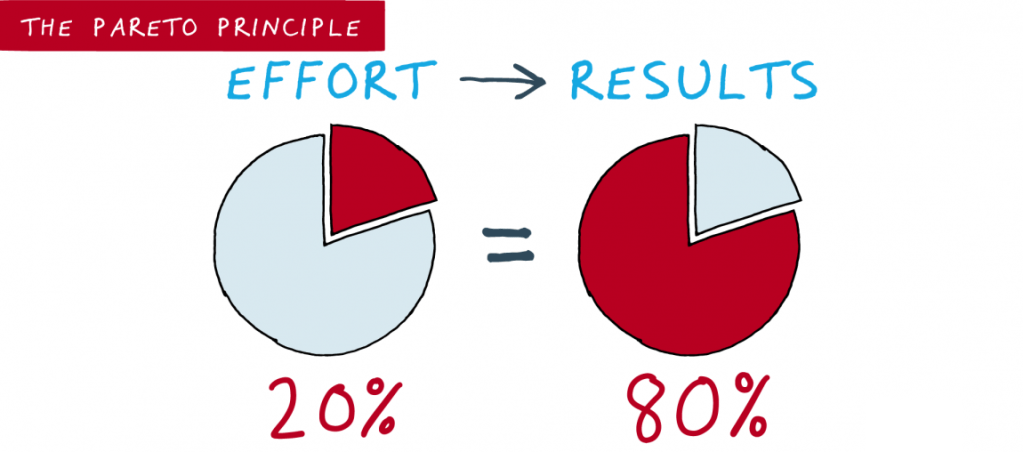
    The 80/20 Rule, also known as the Pareto Principle, is a principle that states that approximately 80% of the effects come from 20% of the causes. In other words, a small proportion of causes often leads to a large proportion of the results. This principle was named after the Italian economist Vilfredo Pareto, who observed that 80% of the land in Italy was owned by 20% of the population.

    Key Points of the 80/20 Rule
    • Inequality of Distribution: The principle highlights that not all inputs or efforts contribute equally to the outcomes.
    • Universal Application: The 80/20 rule can be applied across various fields and situations, including business, economics, software development, health, and personal productivity.
    • Focus on the Vital Few: By identifying and focusing on the critical 20% that contributes to the majority of the results, one can improve efficiency and effectiveness.
    Examples of the 80/20 Rule
    • Business: 80% of a company’s profits often come from 20% of its customers.
    • Sales: 80% of sales typically come from 20% of products or services.
    • Time Management: 80% of productive work is often achieved in 20% of the time.
    • Software Development: 80% of software bugs are usually found in 20% of the code.
    Practical Implications
    • Prioritization: Focus on the key areas that drive the most value or have the highest impact.
    • Efficiency: Allocate resources and efforts to the most influential activities.
    • Problem-Solving: Identify and address the root causes that lead to the majority of problems or defects.
    Summary

    In summary, the 80/20 rule is a powerful concept for understanding the disproportionate relationship between causes and effects, allowing individuals and organizations to optimize their efforts and resources for maximum impact.

    Implementation in Project Management

    Implementing the 80/20 rule in project management can significantly enhance efficiency and effectiveness by focusing on the most impactful activities. Here are some practical ways to apply the 80/20 rule in project management:

    1. Prioritizing Tasks
    • Identify Critical Tasks: Determine which 20% of tasks will produce 80% of the project’s results.
    • Focus Resources: Allocate more resources and time to these critical tasks to ensure they are completed effectively.
    2. Resource Allocation
    • Key Team Members: Assign the most skilled and experienced team members to the tasks that have the highest impact on the project’s success.
    • Budget Allocation: Direct a larger portion of the budget to the activities that drive the most value.
    3. Risk Management
    • Key Stakeholders: Identify the 20% of stakeholders who have the most influence over the project’s success.
    • Engagement Efforts: Prioritize communication and engagement efforts with these key stakeholders to ensure their support and alignment.
    5. Time Management
    • High-Impact Activities: Concentrate on the 20% of activities that will yield the most significant results.
    • Eliminate Wastes: Reduce or eliminate time spent on low-impact activities that do not contribute substantially to the project’s objectives.
    6. Quality Management
    • Critical Quality Metrics: Identify the 20% of quality metrics that impact 80% of the project’s deliverables.
    • Focus on Improvement: Prioritize quality improvement efforts on these critical areas.
    7. Performance Monitoring
    • Key Performance Indicators (KPIs): Track the 20% of KPIs that provide 80% of the insights into project performance.
    • Regular Reviews: Conduct regular reviews focused on these KPIs to ensure the project stays on track.
    Practical Steps for Implementation
    1. Data Analysis: Regularly analyze project data to identify high-impact tasks, risks, and stakeholders.
    2. Pareto Chart: Use Pareto charts to visually represent the most significant factors affecting the project.
    3. Continuous Review: Periodically review and adjust priorities based on new information and changing project dynamics.
    4. Training and Awareness: Train the project team on the 80/20 rule and its benefits to ensure they understand and apply it effectively.
    Example
    • Identifying: Determining that 20% of the features will provide 80% of the user value.
    • Prioritizing: Focusing development efforts on these high-value features first.
    • Allocating Resources: Assigning the best developers to these critical features to ensure they are implemented correctly and efficiently.
    • Risk Management: Identifying the top 20% of potential bugs that could cause 80% of the system failures and prioritizing their resolution.

    By applying the 80/20 rule in project management, project managers can optimize their efforts, enhance productivity, and increase the likelihood of project success.

  • Guarantee success in all your Projects

    Guarantee success in all your Projects

    A lot of literature and training in project management is mainly focusing on the planing phase, that becomes completely obsolete once the team starts working.

    The success of your project will most likely depend on the relationships you have built, to the team and to the stakeholders/ customers and on how well you are troubleshooting, course correcting and taking decisions.

    A key role in being able to really lead the project are your risk management capabilities.

    Throughout the project you should revisit the 6 steps show in the graphic and assess occurred and potential risks and mitigation actions.

    The better you can handle adversity as a project leader and as a project team, the better the performance of your project and your product will be and the easier it will be to keep a overall timeplan, budget and quality expectation.

    So what is Risk management?

    Risk management in a project refers to the systematic process of identifying, analyzing, assessing, and responding to potential risks that could affect the project’s success. It aims to minimize the impact of adverse events and maximize the opportunities by managing uncertainties. Here are the key components of risk management in a project:

    1. Risk Identification
    • Definition: Identifying and documenting potential risks that might affect the project.
    • Tools and Techniques: Brainstorming, interviews, SWOT analysis, checklists, and expert judgment.
    2. Risk analysis
    • Qualitative Analysis: Assessing the impact and likelihood of identified risks using a subjective approach.
    • Tools: Risk probability and impact matrix, risk categorization, risk urgency assessment.
    • Quantitative Analysis: Numerically analyzing the probability and impact of risks on project objectives.
    • Tools: Monte Carlo simulation, decision tree analysis, sensitivity analysis.
    3. Risk prioritization
    • Definition: Ranking risks based on their potential impact and likelihood to determine which risks need the most attention.
    • Tools: Risk matrix, Pareto charts.
    4. Risk response planning
    • Definition: Developing options and actions to enhance opportunities and reduce threats to project objectives.
    • Strategies:
      • Avoidance: Changing the project plan to eliminate the risk.
      • Mitigation: Taking steps to reduce the probability or impact of the risk.
      • Transfer: Shifting the impact of the risk to a third party (e.g., insurance, outsourcing).
      • Acceptance: Acknowledging the risk and not taking any action unless it occurs.
    5. Risk monitoring and control
    • Definition: Tracking identified risks, monitoring residual risks, identifying new risks, and evaluating the effectiveness of risk responses throughout the project lifecycle.
    • Tools: Risk audits, status meetings, risk reassessment, variance and trend analysis.
    6. Communication and Documentation
    • Definition: Ensuring that all stakeholders are aware of the risks and the actions taken to manage them. Keeping detailed records of the risk management process.
    • Tools: Risk register, risk reports, project management information systems.
    Benefits of Risk management in projects
    • Increased likelihood of project success: By proactively identifying and managing risks, the project is more likely to achieve its objectives.
    • Better decision-making: Provides a structured approach to decision-making by understanding the potential risks and their impacts.
    • Cost savings: Helps avoid costly issues and delays by addressing risks early.
    • Improved stakeholder confidence: Demonstrates a proactive approach to managing uncertainties, building trust among stakeholders.

    In summary, risk management is a critical aspect of project management, ensuring that potential issues are anticipated, prioritized, and addressed in a structured manner to increase the likelihood of project success.

  • 6 ways my life got easier through building a capsule wardrobe

    6 ways my life got easier through building a capsule wardrobe

    Are you tired of standing in front of your bursting closet before a big occasion, important presentation at work, or just your usual Friday date night with nothing to wear? Read below how building an interchangeable minimalist wardrobe influence my life for the better and who knows, some points may even apply to your life.

    Create your own personal brand

    So this is twofold, for once you will be able to have some kind of designated uniform for your work activities. This is going to make it easier for yourself, to separate work from your leisure, personal life. You change into your uniform in the morning, focus on performing in your workplace and when you come home, you slip out of it and cut the chords to work stuff. This is becoming more and more important, the more both parts of your day are blending together. Are you self-employed and using one mobile device for business & private matters? Do you have a job, where working from home is permitted and therefore a company notebook and a company phone are always accessible? It can get out of hand quickly with constant beeps and vibrations, since work is more and more globalized and you are co-creating across different time zones.

    The other big benefit is, you will be recognizable, people will be starting to get a good feeling of what they can expect from you. It will calm their minds, and give you more opportunities to take over additional, greater responsibilities or just being recognized for your work and successes. Even if next to no one would ever say it out loud in a workplace setting, your appearance is the first thing that gets recognized and you will be judged base on that. Maybe just unconsciously, but we all do it. You see someone walking around in dirty joggers with a little fluff around the waist, is your first impression that he or she is a top performing lawyer or doctor?

    Save time dressing & shopping

    Once you own several staple items, that go well together in any potential combination and for every setting you can think of. Be it a summer wedding, a day in the office or running errands around town. It will be quite easy picking a outfit, that generally is the same look you will always wear. Pick any one item for tops and one for bottoms, depending on time of the year and temperature slap an item for layering over it, grab any shoes heading out and you are good to go.

    As for shopping, once you know hat sizes and colors match your type and preference, it will be far easier to add to your wardrobe. If you are already in the position where you are completely happy with the items you own, it’s just a matter of replacing pieces that are beyond repair with similar things.

    Spend less money on clothes

    In general, once you developed a clear feeling for your own style, what you like to wear, what makes you feel great and doesn’t limit you in your daily activities, the need to go with the trend or buy the thing some influencer advertised will subside. Therefore you will spend less on clothes in general and the potential for buying sprees in online or physical shops will be minimized. Try to develop a healthy relationship with the stuff you buy. If every piece in your closet is an item you absolutely love and love to wear, why would you want to buy additional stuff?

    Mitigate decision fatigue

    As mentioned two paragraphs before, the more interchangeable the core of the wardrobe you build is, the easier it will become to pick outfits tailored to any occasion. Feel like wearing a suit, wear the suit, either with a dress shirt, an oxford or a t-shirt/ polo. It will look well composed if the patterns/ materials and colors match each other. There will be no thinking involved, just picking items based on gut feeling. Don’t want to wear a full suit, just use the jacked and go with jeans, or the other way round, pick the slacks from your suit, throw a plain white T over it and you are dress for nearly everything, even the modern office job. And you will stand out between all the functional clothes, jeans and running shoes outfits of your peers.

    Boost your self confidence

    Once you look good and feel good in the outfits you wear you will have a confidence boost. Even without any recognition from other persons. Not to say, that every compliment you receive, and you will receive a lot, once you are always slightly overdressed, will build additional confidence. Coming back on the (unconscious) judging of people based on first impression and appearance, if you get this right, people will start to talk to you differently. They might not be aware of it, but they will treat you more to your benefit compared to the peer showing up like pulled from his own ass and therefore looking not as well prepared as you will be looking.

    Make traveling and business trips easier

    The bigger the overlap between your professional outfits, your leisure outfits and the pieces you feel and move great in, the less items you will need to pack for a business or even holiday trip. This will save you time and mental energy while packing, while out and about and when you are coming back and need to wash, iron and put everything back away. Travel lightly and it will make traveling itself easier, less space occupied for luggage, maybe you can make do only with carry-on baggage, which will make processing through the airport easier and faster.

  • Clean & easy casual outfits for summer

    Clean & easy casual outfits for summer

    Finally the summer hit central Europe (kind of at least) so ditch the wool sweaters, the heavy wool or tweed suits and dress a bit more breathable.

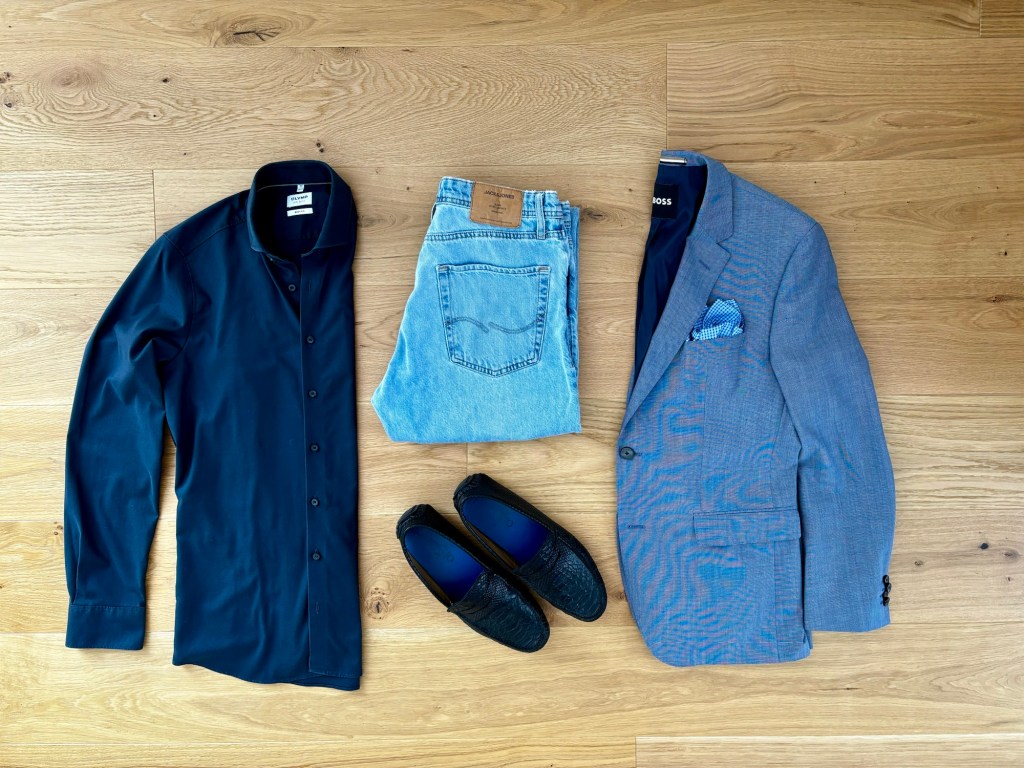
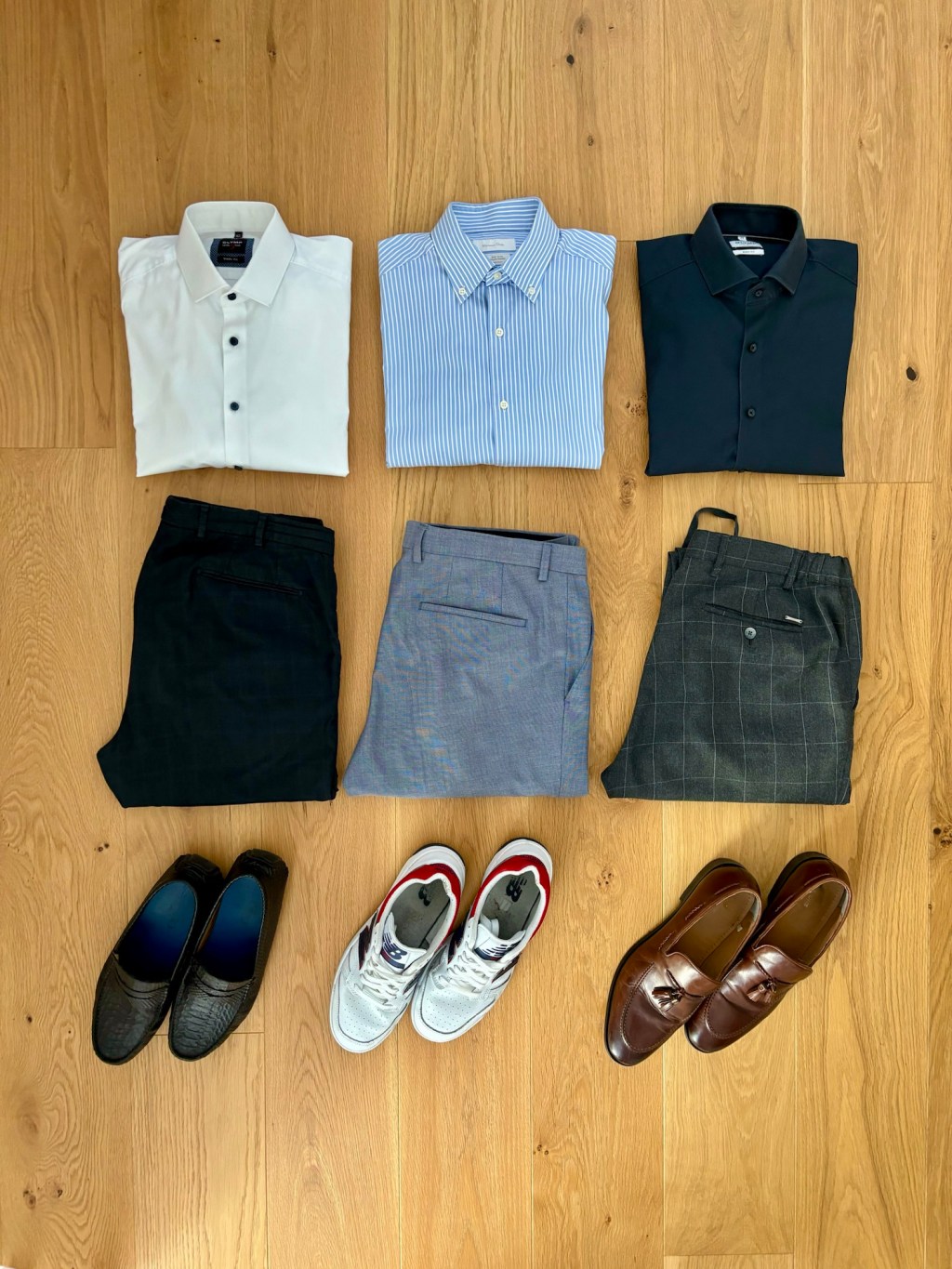
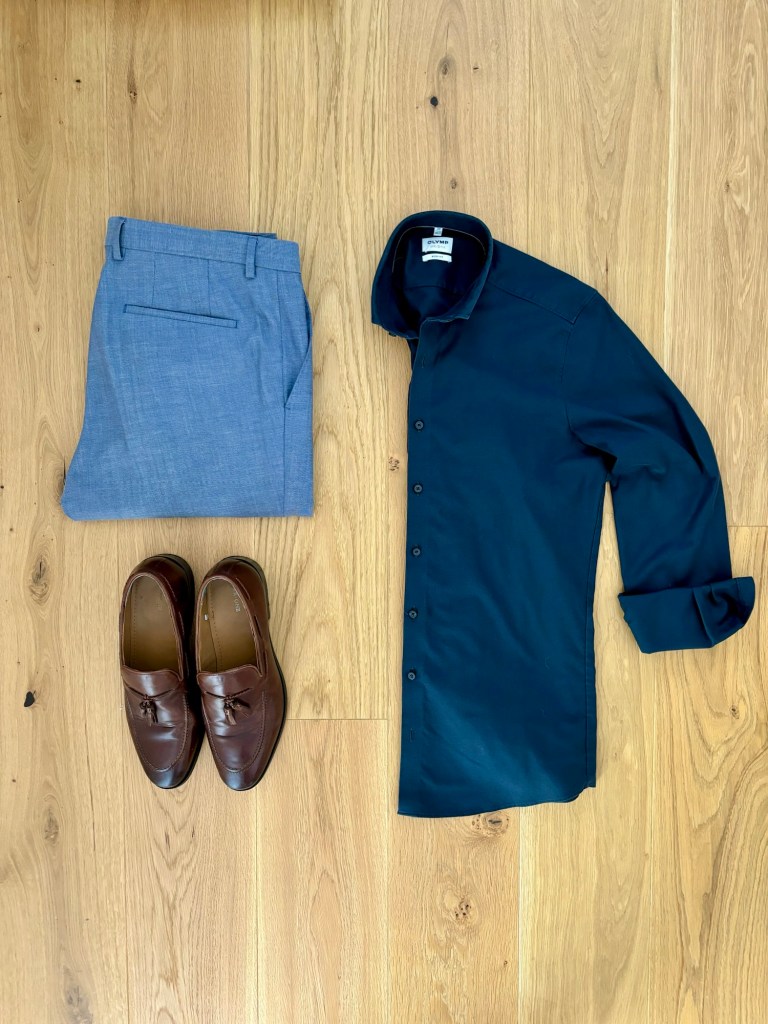
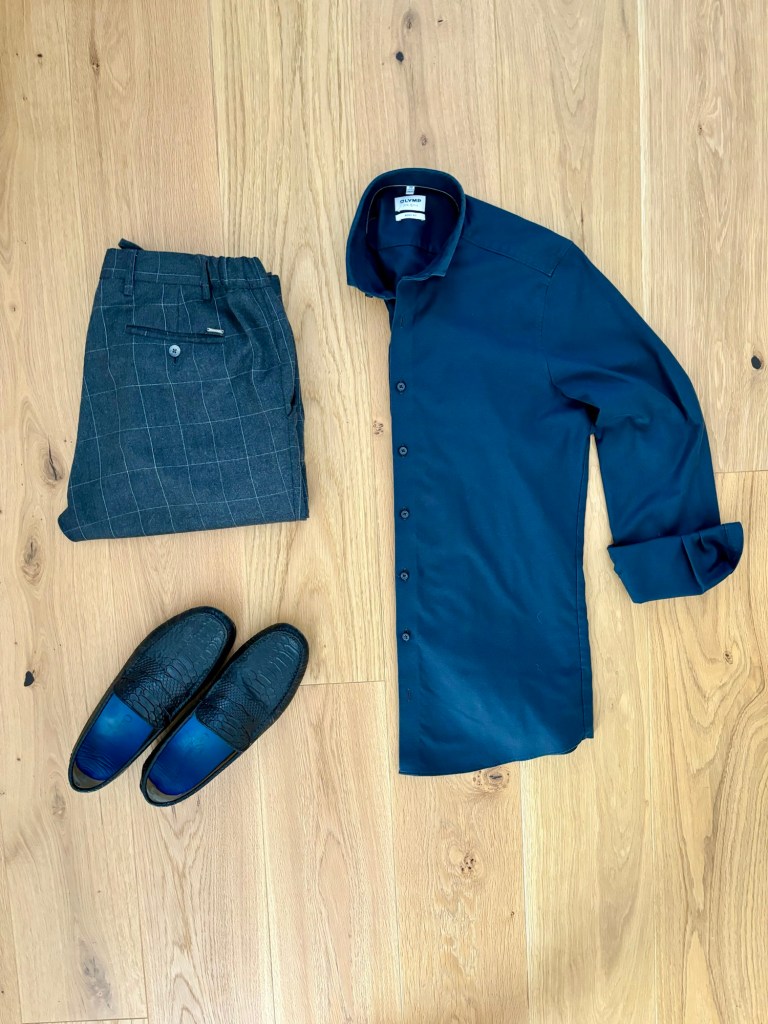
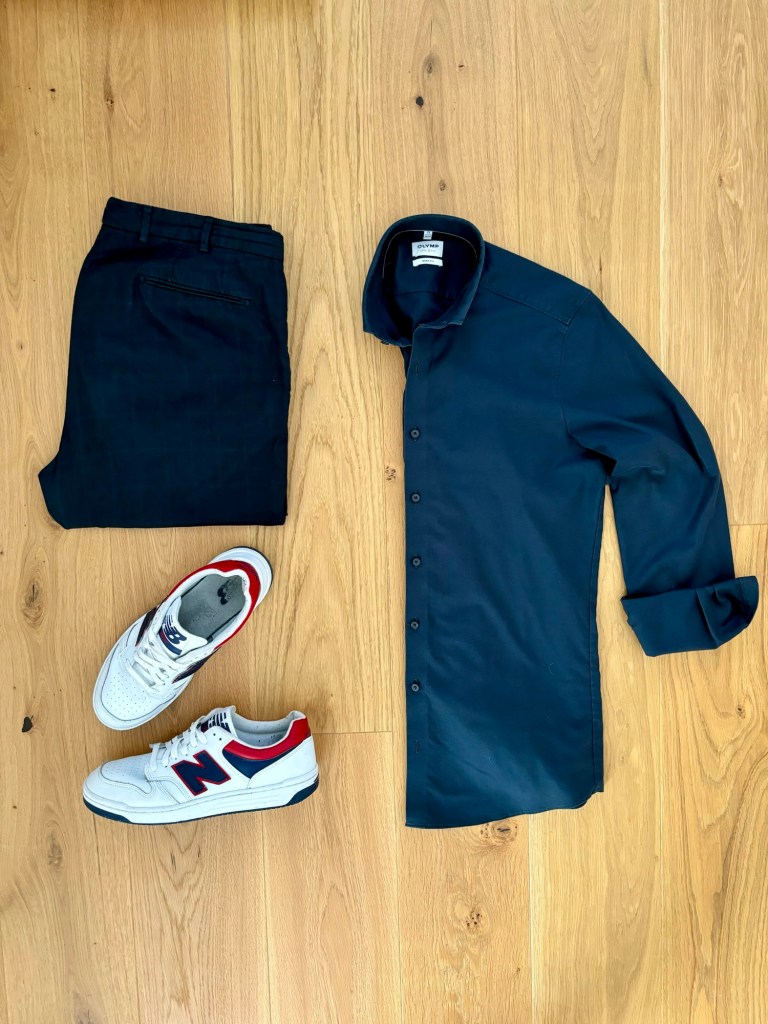
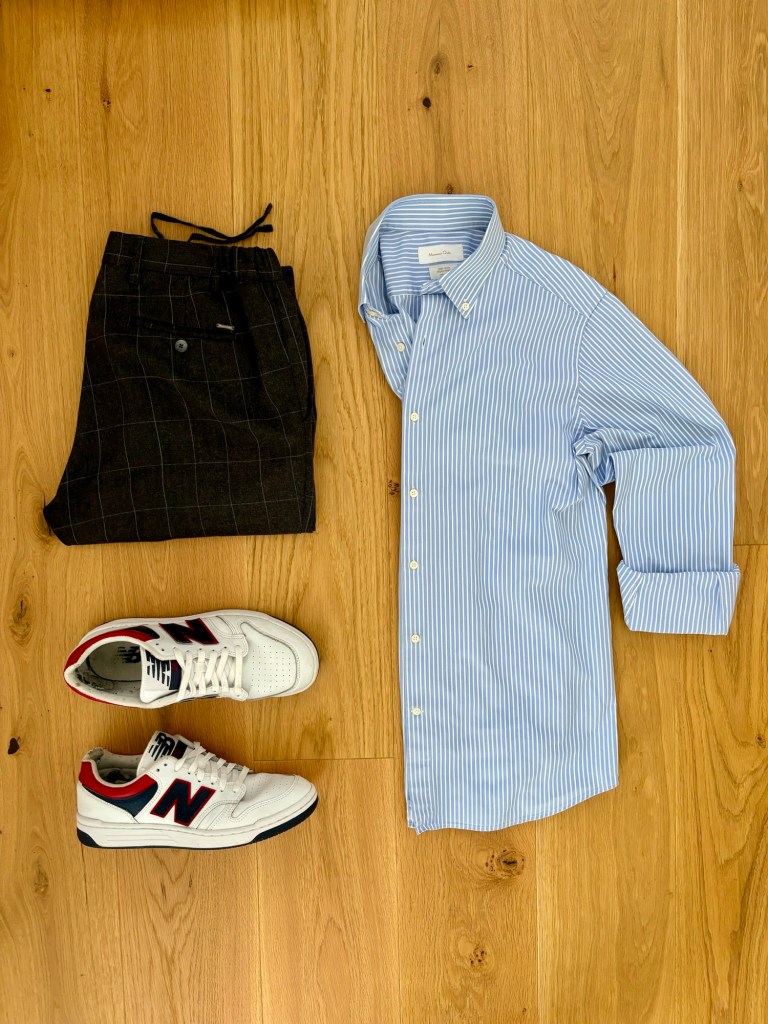
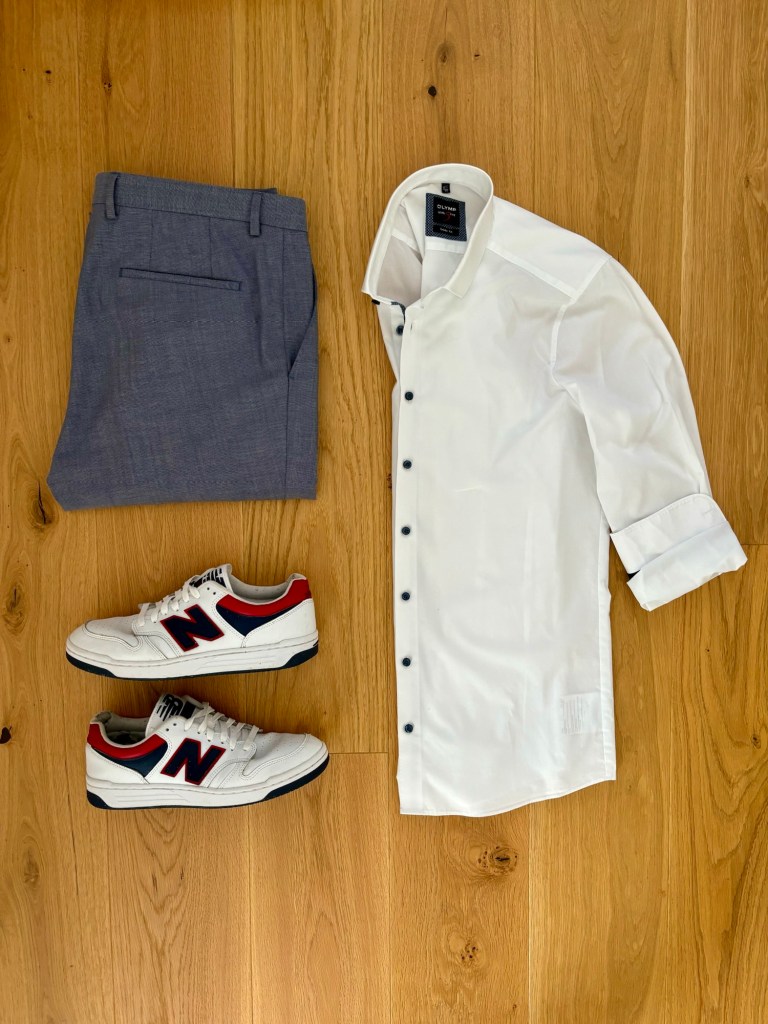
    All you need for sheer endless different outfits, that all have quite the same base and look to them is 3 pairs of trousers, 3 pairs of shoes and 3 different dress shirts. Pick colors that work well together like grey, blue and white, or tan, brown and white, tan, blue, white, or even tan, khaki and brown will also work quite nicely. If you make it really complex, pick different shades, dark, medium and light. If you mix those it will always look great. So let’s quickly expand on that. For example you can go with white sneakers (light) put over tan cotton chinos (medium/ mostly) and go for a navy shirt (dark). Or swap it around, dark blue chinos, brown loafers and a white or light blue shirt. You get the idea.

    Having a lot of nearly identical pieces that fit great will make picking a look for the day far easier. Just reach into the wardrobe and pull on thing for top and one for bottoms, if you designed your overall wardrobe interchangeable, it will be a match. On the way out slap some shoes on, if you only have 3-4 pairs you love and that go with every outfit, you won’t accumulate decision fatigue starting your day and you will look great, for what ever plans you might have.

    Have a look at the gallery below for some inspiration. Pictured are only a few outfits that can be put together with the above mentioned pieces. Every Shoe goes with every shirt & of course with every pair of trousers, so will have enough outfits for most weeks of summer, without wearing a combination twice.

    If you feel extra dapper, or your workplace doesn’t permit going without a jacket, even in summer, you can always swap a light linen/ cotton blazer over it. Can be a classic navy blazer, or a brown/tan hound’s-tooth sport jacket. Can be a pretty leisure seersucker blazer or even full suit or a tan linen blazer, a navy double breasted blazer does always look great. If you are the type you can also go with green or khaki or light blue. What ever you like and keep in mind, to mix light/medium/dark colors with each other or have at least on catch piece. Think dark shirt under a light suit or light shirt in a dark suit. Even in monochrome looks there should be some kind of variation in tone.