Author: Sebastian Strobl

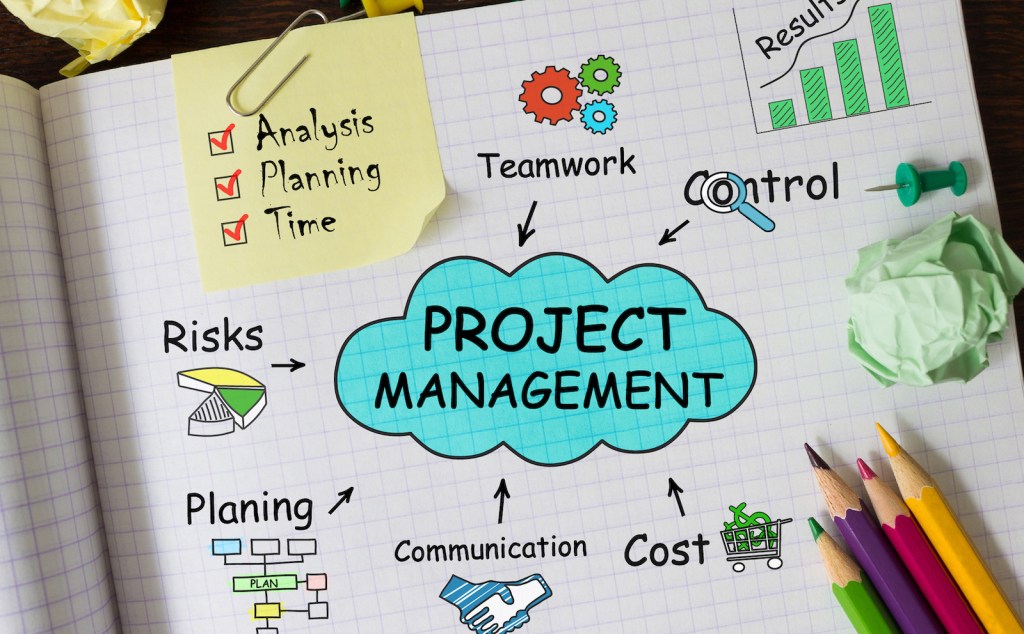
  • 11 things minimalism taught me about project management

    11 things minimalism taught me about project management

    Frist of all I’d like to state the obvious:
    If you want to even remotely complete any project in a reasonable time frame for reasonable costs, you have to lead the project and the team and not just manage it.

    1. Less is more

    No matter if documentation, meetings, status updates, action items, or even team members.
    80% of results will come from 20% of your efforts and 80% of progress will come from 20% of the contributors. There is always potential for cutting things away.

    2. Purposeful meetings

    The main purpose of any meeting should be connection, collaboration or co-creation. And every meeting without a clear decision is just another coffee break. Don’t use project meetings for mere status updates, action items and time plan reviews.

    3. Talk less & share responsibilities

    Listen more and talk less, if all your project meetings are one-man shows, where you do the presenting, note taking, moderation an decision making, let me tell you, you are doing it wrong. Don’t be lethargic but encourage and enable the team to move forward on their own. Some teams / colleague will need more guidance, some will want more autonomy balance it from individual to individual.

    4. Clear & concise communication

    Make all you communication clear, and crisp. Use less and better words to convey your message and be poignant. A C-suit executive won’t read much more than 2-3 short bullets, not because he’s not interested, he just won’t have the time.

    5. High level time planning is sufficient

    Don’t overcomplicate stuff, have less & bigger work packages, less bars in the Gantt. The plan will not stand the test of time. Think of major milestones and timing, not of granular efforts & interdependencies. Your team will know what to do and when, help them close tasks timely and lead discussions & decision taking.

    6. Don’t be cheap with recognition

    Be authentic and benevolent when it comes to recognition. Figure out if the person wants to be praised in a 1on1 setting or in front of the team. Always praise your team members in front of their managers, even if they just do the bare minimum. As long as they are contribution and not actively hurting your project, tell they are doing an outstanding job. Build trust with your team.

    7. Always improve

    Try looking at your project and the companies project work in general with an outside perspective. Streamline what you are doing, cut away what seems to be against common sense, redundant or excess. If the decision of minimizing was wrong you can always add back in. But in general first look what can be omitted.

    8. Get a course, watch a YouTube video on presenting

    All you job is communication, learn to engage your audience, be it your team, or stakeholders or customers, don’t just read your slides out aloud. Have less and more meaning full content on the slides, have less slides, you should be able to talk 5-7 minutes per slide at least.

    9. Risk “management” and mitigations

    Risks are neither qualifiable nor avoidable in general. The occurrence of potential risks can not really be derived from past experience and brainstorming alone, it is to a large degree volatile and random in nature. So focus on taking baby steps with decisions and course correct as long as the costs are low.

    10. Clear roles, responsibilities & expected performance

    Set the expectations early in a written document together with everybody involved. Hold you team accountable and lead with good example. But don’t tolerate slack. The overall performance will be based on what you tolerate, not what example you set (to a degree of course, you can’t slack off either).

    11. It’s all about relationships

    The perception and success of your project is directly tied to the relationships you built, not only with your team, but with their managers, the projects stakeholders, your manager & PMO colleagues. Do good and talk about it, embellish it to a degree.

  • 20 lessons from 20 years of lifting

    20 lessons from 20 years of lifting

    I started lifting weights back in 2004, the year I graduated school and my focus shifted from playing CounterStrike and StarCraft to girls and partying. Originally I started to lose the last bit off fluff around the waist (former fat kid syndrome) so I joined up in the next best gym and did your typical bro-split for the first few weeks and months to follow.

    Lucky me, the owner of the gym I joined was a former bodybuilding competitor and took my friends and me somewhat under his wings and showed us the ropes. 6 months to the future, I was fully immersed in the bodybuilding lifestyle, reading every piece of information I could get my hands on from team team-andro, to t-nation, to the tan tight slacks of dezso ban and a lot of books, from Stuart McRobert to Arnold’s encyclopedia. Bought creating, protein powders L-carnitin, BCAAs and mostly everything else that was marketed to give you an edge.

    That went on throughout my time in university, mainly focusing on bodybuilding, before getting a real life (aka 50+ hour job, a wife, two kids and a dog) when training time took a backseat. Then I started dipping into more of the low volume stuff, powerlifting, what the oldtimers did (e.g. odd lifts) and learned some olympic weightlifting (thanks to Dan John).

    So, if you made it this far into my blogpost. Here are the 20 lessons I learned and try to apply moving forward.

    1. Strength, the skill that compounds

    Being strong will make every other endeavor in life easier. Want to throw your kids around in the pool, be strong. Need to move, or help someone to move, be strong. Want to be able to play with your grandkids and great grandkids, stay strong as long as possible. Want to feel confident, be strong. Want clothes to fit you perfectly get stronger. You get the idea I guess.

    2. 10,000 hours to be truly competent

    No matter if it’s learning how to squat properly, feeling the muscles while training them, autoregulating frequency, intensity and overall volume. It will take time to learn those things, might be close or even over 10,000 hours. With 3 strength training sessions a week and round about 90 minutes per workout mastery will only come after 42 years. This does not mean, that you can only reach your dream appearance or strength level when turning 80.

    3. Start out young and you will get laid

    It will set you apart on the dating market, if you are carrying more muscle and are generally leaner. It might even make it easier to find your soulmate. All fluffy talk aside, attraction is always first and foremost based on outside appearance. You can have the greatest character of all time, if you look like the Hunchback of Notredam you will most likely not get the girl in the end of your personal fairytale.

    4. Motivation is overrated, so is having a plan

    Don’t get me wrong, use 5/3/1 or starting strength or Madcow’s 5by5 or any other linear periodization scheme you discovered in the interwebs. But 20 years down the road, it just will not matter. Consistency is the only thing, that will. So if you go full on CrossFit, but burn out after a year or two and never touch any weights ever again, the bro-split guy that did his thing for 20+ years will be fitter and looking better.

    5. Progress is not linear, at least not for long

    There will be periods of time where you can increase the weight on the bar from workout to workout or week to week and there will be time where you can see your arms growing in the mirror. Followed by a stretch of time where nothing at all happens, but looking back to old images of 2-5 years ago, the difference might be astonishing.

    6. Try the fad diet or fad workout

    If it keeps you going in the long run, try the “how Daniel Craig trained to be James Bond” workout or the 2 weeks pickled cucumber water fast. Try as many things out as you can, as long as you have fun with it and do it for 2 to 4 weeks, to see if it has any impact, be it positive or negative. Adjust from there.

    7. I tend to always come back to the basics

    There is a reason for squat, deadlift and benchpress being the core of any power lifting meeting and any sane training plan as well. Try stuff out, but come back to the tried and true exercises ever so often. Make adjustments dependent on your age, level of fitness or injury history.

    8. Prioritize rest as you get older

    You might not be able to train twice a day, seven days a week, once you have a career and a family and all the stress that goes with it. If your 22, only starting out and still in school, training or university, or if you have rich parents and will never need to work any real job, double down on training and eat like there is no tomorrow.

    9. You are rotting, try to stop or reverse it

    Once turning 40 it will become obvious, how is strength training and how is not. Posture, skin tone, cardiovascular capacity & general immune function will tell. Get strong, be strong, get even stronger, reverse aging & set yourself apart from your peers.

    10. Bodybuilding is 100% lifting and 100% diet

    This statement might be the best version of all the nuances regarding what is more important in the quest for size and strength. But only because the two are equally important does not mean, there is no room for errors or life to happen. 20% of your efforts will be getting you to 80% of outcomes, which is mostly enough. So instead of doing 123 exercises for biceps, do some pull ups, but with real effort. The 80/20 rule is reversible as well, so try to have >80% of your meals composed of the 20% of foods that will give you the protein and fat you need to thrive. Be committed 80% of the time, and life in the other 20%.

    11. No need to track everything all the time

    Track food and workouts for some periods in time and you will be able to eyeball it in periods where training and looking great naked is not the main focus of your time on earth. Don’t feel bad if you haven’t tracked anything and slacked off for quite some while. As long as you are making healthy choices in the kitchen and staying active with your workouts you are way ahead.

    12. Supplements make your wallet lean

    Coming back to 80/20, it’s just not worth it. Instead of mixing a protein shake, buy a ball of mozzarella or a slice of chickenbreast or what ever else will give you roughly 20g of protein. Eat real food, that our ancestors might have identified as food.

    13. Minimize friction as you age & priorities shift

    Homegym anyone? If you are already overcommitted chances are, you will not commute to the gym, get into your workout clothes, train there in the post-work crowdedness, shower and drive all the way home. If you equipment is already at home you can either have additional time training, or additional time for whatever else you enjoy doing. Hang a pull up bar somewhere in the house and do a couple of those every time you pass that door frame.

    14. Training will set you apart from your peers

    The difference might not be as visible in your 20, when everyone has been playing sports for the better part of their childhood, but it will be very noticeable once you are in your fourties and have kids and the difference will be enormous once you reach retirement age.

    15. Not everybody is a fitness model

    Once you start becoming interested in bodybuilding, powerlifting, strongmen or whatever, the algorithm will show you an endless amount of people that look like they were carved from stone. Don’t become discouraged, look around in university, in the office, workshop or on the construction site or wherever you might be reading this (I hope for you it’s a beach), if you train your are already looking better than >90% of the population

    16. Your “looking good naked” will evolve

    While you might be focused on having a sixpack in the beginning, like I was this will shift as you evolve, some will go down the powerbuilding routing trying to look as strong as possible, sacrificing leanness, some will want to look like their favorite Hollywood actor or maybe your are just happy if you have no cellulitis or dumps in your skin and everything is firm.

    17. Don’t buy into the lifestyle niche

    There is more to life than training and carrying Tupperware full of chicken and rice with you everywhere you go. Your time here is gone in the blink of an eye, enjoy the days you have. Have some fun, but try to stop the fun once it is severely impacting your health.

    18. Drink more water, beer also helps

    As Arnold mentioned, milk is for babies, if you want to grown, you have to drink beer. Jokes aside, chances are you need to drink a big glass of water right now, go and drink something.

    19. It’s not a religion, don’t become dogmatic

    Do some HIT, some CrossFit, some powerlifting, some odd object lifting, some bro split. Try everything and adopt what works for you. Don’t become engaged in discussion over the internet, what is the right cadence for what lift. You know, arguing over the internet is like starting in the Paralympics, even if you win, you are still disabled.

    20. Love the process and yourself

    Don’t expect wonders to happen over night, enjoy the huffing and puffing, the sweating the eyeballs pushing out of your skull during some heavy high intensity training. Become addicted to this feeling and to the pump afterwards. Stay training for as long as you are able to move, it will improve every other aspect of your life.

    Cut yourself some slack, not every nanosecond of your day needs to be optimized.

  • So you ran yourself into the ground?

    So you ran yourself into the ground?

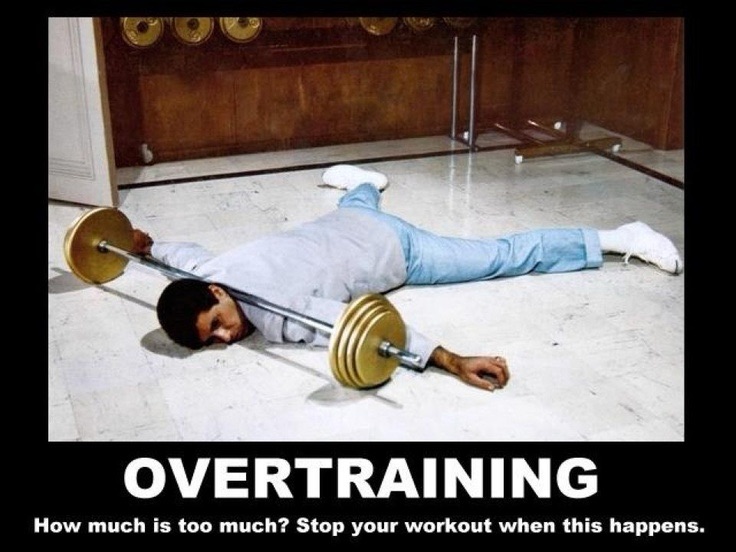
    So you wear eager on following through with your high intensity high volume approach, but somehow life got in the way. Kids birthday, working overtime, stressful projects, a vacation trip or even just a cold. Sometimes life has a habit of throwing panned or unplanned stuff at us, that tend to derail our efforts in the quest for size, strength and cuts.

    So maybe you tried really hard to workout 3-5 times a week, and everything was running smoothly for 2 or even 3 weeks, but for most of us, fully committed adults with kids one of the following things happens:

    • You run out of steam and get sick/tired
    • Your schedule implodes and training needs to take a setback

    But don‘t be to hard on yourself, those high commitment fitness routines are not really meant for you. Think of small spurts and enjoy them as long as they keep working. You can always throttle back a little, without losing progress and even continuing to progress along the way, if you change things up a bit and keep the effort high.

    I suggest you check out the writings of Stuart McRobert (Beyond Brawn) or Martin Berkhan form leangains.com or even Dan John’s blog. You can easily make progress no matter if on a diet or tying to bulk up, with just 2 to 3 short sessions in the week.

    High intensity, low volume training on an abbreviated routine that is. So for the zines when life is extra demanding, cut training days and training time but up the intensity and the weight lifted to get the most out of it.

    Exercise selection will be key, so I encourage you to look for one push and one pulling movement in the two major planes for upper and lower body and distribute those out evenly over two to three workout days.

    How does that look like? I‘ll give you two examples, so for a 3 day split routine, like leangains it might look somewhat like:

    Monday:

    • Deadlift 3 sets 5 to 8 reps
    • Standing Shoulder press 3 sets 8 to 12 reps

    Wednesday

    • Benchpress 3 sets 5 to 8 reps
    • Rowing movement 3 sets 8 to 12 reps

    Friday

    • Squat 3 sets 8 to 12 reps
    • Pullups (weighted) 3 sets 8 to 12 reps

    For me at least, I like to keep reps in deadlifts and benchpresses low, and the other exercises a bit higher, since it tends to feel good, but you might be different. Try it for 2 to 3 weeks, see if you can get stronger and how you feel, then adjust for the next 3 week block. High repetition benching hurts my rotator cuff more, than moving bigger weights for example. But low reps squats fry my my lower back completely, while I have no issue doing heavy singles in the deadlift. What can I say, touching 40 so maybe it’s good thing that nothing needed surgery just yet.

    If three days feel like a bit too Abiturient, even if you are only working out 30 minutes each session, you can always go with twice a week, think one of those days on the weekend, where you might have some time to yourself.

    Could look like this:

    Day one

    • Deadlift
    • Benchpress
    • Rowing movement

    Day two

    • Squat
    • Pull-up
    • Overhead press

    With 3 sets per exercise and 3 to 5 minutes rest, you should be out of the gym in under 45 minutes still.

    And of course, if you have a little extra time, or extra energy you can always add two exercises for arms per week, but don‘t let it impact the major movements!

    And with that, enjoy your lifting, give it a shot.

    There are a lot of ways to skin a cat. Main focus should be, to be in it for a lifetime!

  • Most things in life are like a marathon..

    Most things in life are like a marathon..

    ..they say at least.

    But I think that’s fundamentally wrong. Sure to everything that has some kind of outcome worthwhile, consistency is key. There is no doubt bout that. Even coming back to the marathon, how good will you be, if you did it once in a lifetime, unprepared?

    For sure you have to train consistently. But how do you train? Low intensity every day for an endless amount of time? I‘m not big on running but I suggest there is some kind of periodization, starting low volume low effort and peaking with maximum effort and huge volume, before some days of rest towards your competition.

    So I would argue everything worthwhile in life is like training for the 100m dash. High intensity, for short total daily duration over the course of a lifetime. Take rest before burning out, the ease back into the grind and give it your all every day for extended amounts of time.

    Be it a FIY project at home, crammed into a weekend or over the course of a vacation week. Be it the big project at work, the presentation you have to give to a customer, your sales pitch, that you have to deliver. You take spurts of deep focused work on the topic for some limited amount of time. Then your competition, evaluation, talk or whatever rolls around, you perform to the best of your abilities and your done, decompressing and resting before taking on the next major thing.

    This applies to mostly everything, think relationships, what’s more sustainable and will foster the deeper relationships? Small daily bursts of complete focus on the other person, or some shallow clinging to each other, while mindlessly scrolling the gram oder watching Netflix?

    And of course, more is oftentimes better, until it stops working or even backfires. Think minimum effective dose in training. Same principle can be used with everything you do. The meal you prepare will not be tasting better if you cram too much sophisticated sounding ingredients in it. Have some fat in it to carry the taste, some protein for being satiated and some seasoning/ spices and your good.

    Next time you start doing something, think of the sprint vs marathon analogy and then give it your all for a pre defined period. Afterwards give it your all to recover, rest or selfcare and then start refreshed into the next task.

    And please, don‘t take things too seriously!

  • Mix and match

    Mix and match

    The beauty of a simple capsule wardrobe in action. No thinking about outfits, no searching for matching unique pieces of clothing.

    Just go with your gut feeling, pull the first thing out of your closet and keep on pulling till you are fully dressed. Each and every item will go nicely with all the other ones.

    Enjoy the day!