Category: health and wellness

all things workout and diet related

  • Calculate Your Maintenance Calories and Optimize Your Diet for Fitness Success

    Calculate Your Maintenance Calories and Optimize Your Diet for Fitness Success

    Understanding your maintenance calories is the secret weapon to achieving any fitness goal, whether it’s sculpting rock-hard abs, shedding stubborn fat, or maintaining your lean physique. By using a simplified method, you can effortlessly estimate your maintenance calories and tailor your diet to meet your specific objectives. Read on to unlock the secrets of calorie calculation and discover how to optimize your nutrition for ultimate success!

    Estimating Maintenance Calories Made Easy

    Gone are the days of complicated equations! To calculate your maintenance calories, simply use this foolproof formula based on your body weight and activity level:

    Maintenance calories=Body weight in kg×30−35

    • Sedentary Lifestyle: (Little to no exercise) Multiply by 30.
    • Lightly Active: (Light exercise/sports 1-3 days/week) Multiply by 32.5.
    • Moderately Active: (Moderate exercise/sports 3-5 days/week) Multiply by 35.

    Example: If you weigh 75 kg and are moderately active: 75×35=2625 calories/day75 \times 35 = 2625 \text{ calories/day}75×35=2625 calories/day

    Voilà! You now know how many calories you need to maintain your current weight.

    Tracking Calories: Your Path to Precision

    Why guess when you can know for sure? Using apps to track your calorie intake ensures you hit your daily nutritional targets with laser precision. Check out these popular apps that make calorie tracking a breeze:

    • MyFitnessPal: Boasting a massive food database and user-friendly interface, this app is a favorite among fitness enthusiasts.
    • Lose It!: With barcode scanning and personalized recommendations, this app is both powerful and easy to use.
    • Cronometer: If you’re a detail-oriented person, you’ll love the micronutrient insights and in-depth tracking this app offers.
    Macronutrient Breakdown: Fuel Your Body Right

    A balanced diet isn’t just about calories; it’s about what’s in those calories. Here’s how to distribute your macronutrients for optimal health and performance:

    1. Protein Power: Aim for 1.2 to 1.7 grams of protein per kilogram of body weight. Protein is the building block for muscle repair and growth.
      • Example: Weighing 75 kg? You need 90 to 127.5 grams of protein daily.
    2. Fantastic Fats: They should make up 20-35% of your total daily calories. Choose heart-healthy fats like avocados, nuts, seeds, and olive oil.
    3. Carb Smart: Fill in the rest with carbohydrates, focusing on complex carbs such as whole grains, vegetables, and fruits for sustained energy.
    Tailoring Calories for Your Goals

    Achieving your fitness goals means tweaking your calorie intake. Here’s how to do it:

    1. Building Muscle: Boost your calorie intake by 10-15% above maintenance. This surplus fuels muscle growth and strength gains.
      • Example: Maintenance at 2625 calories? Up it to 2890 to 3015 calories for muscle gain.
    2. Losing Fat: Cut your calories by 10-20% below maintenance. This deficit promotes fat loss while helping preserve muscle mass.
      • Example: Maintenance at 2625 calories? Drop to 2100 to 2360 calories to trim down.
    3. Body Recomposition: Aim for a slight calorie deficit or maintenance level, combined with strength training, to lose fat and gain muscle at the same time. High protein intake is crucial here.
    IIFYM: Enjoy Your Favorite Foods Guilt-Free

    Ever heard of IIFYM (If It Fits Your Macros)? This flexible dieting approach allows you to enjoy the foods you love while still achieving your fitness goals. The concept is simple: as long as you hit your daily macronutrient targets (proteins, fats, and carbohydrates), you can indulge in your favorite treats. This means you don’t have to miss out on that slice of pizza, a scoop of ice cream, or your morning latte. By incorporating IIFYM, you can maintain a balanced diet without feeling deprived, making it easier to stick to your nutrition plan in the long run.

    High-Protein Foods: Your Muscle-Building Allies

    Packing your diet with high-protein foods is a surefire way to hit your protein goals. Here are some protein powerhouses to include in your meals:

    • Red Meat: Beef and lamb are excellent sources of protein, with around 25-30 grams of protein per 100 grams.
    • Organ Meats (Intestines, Liver, Kidney): Rich in protein and other nutrients, offering about 20-30 grams of protein per 100 grams.
    • Chicken Breast: A whopping 31 grams of protein per 100 grams.
    • Greek Yogurt: 10 grams of protein per 100 grams, plus gut-friendly probiotics.
    • Eggs: Each egg delivers about 6 grams of protein.
    • Tofu: Vegan-friendly with 8 grams of protein per 100 grams.
    • Lentils: A plant-based powerhouse with 9 grams of protein per 100 grams.
    • Tuna: Packs a punch with 25 grams of protein per 100 grams.
    • Cottage Cheese: 11 grams of protein per 100 grams, perfect for snacks.
    • Quinoa: Not just a carb, quinoa provides 4 grams of protein per 100 grams.
    Real Food vs. Supplements: The Nutritional Battle

    While supplements can seem like an easy solution to meet your nutritional needs, real, whole foods are far superior in most cases. Whole foods provide a complex array of nutrients that work synergistically to promote health and performance. Supplements often lack the additional vitamins, minerals, and fiber found in natural foods. Moreover, many supplements are unnecessary if you maintain a balanced diet, and they can be a waste of time and money. Focus on eating a variety of nutrient-dense foods to get the most out of your diet. Save supplements for specific needs, like protein powders when you’re in a pinch or vitamin D in the winter months.

    Final Tips for Success
    • Consistency is Key: Track your food intake regularly and adjust as needed based on your progress.
    • Stay Hydrated: Drink plenty of water throughout the day to support overall health and performance.
    • Monitor Progress: Regular weigh-ins and measurements help track changes in body composition.
    • Seek Professional Advice: A nutritionist or dietitian can provide personalized guidance tailored to your needs.

    By mastering your maintenance calories and optimizing your macronutrient distribution, you’re on the fast track to achieving your dream body. So, grab your smartphone, download a calorie-tracking app, and start fueling your body right today!
  • 20 lessons from 20 years of lifting

    20 lessons from 20 years of lifting

    I started lifting weights back in 2004, the year I graduated school and my focus shifted from playing CounterStrike and StarCraft to girls and partying. Originally I started to lose the last bit off fluff around the waist (former fat kid syndrome) so I joined up in the next best gym and did your typical bro-split for the first few weeks and months to follow.

    Lucky me, the owner of the gym I joined was a former bodybuilding competitor and took my friends and me somewhat under his wings and showed us the ropes. 6 months to the future, I was fully immersed in the bodybuilding lifestyle, reading every piece of information I could get my hands on from team team-andro, to t-nation, to the tan tight slacks of dezso ban and a lot of books, from Stuart McRobert to Arnold’s encyclopedia. Bought creating, protein powders L-carnitin, BCAAs and mostly everything else that was marketed to give you an edge.

    That went on throughout my time in university, mainly focusing on bodybuilding, before getting a real life (aka 50+ hour job, a wife, two kids and a dog) when training time took a backseat. Then I started dipping into more of the low volume stuff, powerlifting, what the oldtimers did (e.g. odd lifts) and learned some olympic weightlifting (thanks to Dan John).

    So, if you made it this far into my blogpost. Here are the 20 lessons I learned and try to apply moving forward.

    1. Strength, the skill that compounds

    Being strong will make every other endeavor in life easier. Want to throw your kids around in the pool, be strong. Need to move, or help someone to move, be strong. Want to be able to play with your grandkids and great grandkids, stay strong as long as possible. Want to feel confident, be strong. Want clothes to fit you perfectly get stronger. You get the idea I guess.

    2. 10,000 hours to be truly competent

    No matter if it’s learning how to squat properly, feeling the muscles while training them, autoregulating frequency, intensity and overall volume. It will take time to learn those things, might be close or even over 10,000 hours. With 3 strength training sessions a week and round about 90 minutes per workout mastery will only come after 42 years. This does not mean, that you can only reach your dream appearance or strength level when turning 80.

    3. Start out young and you will get laid

    It will set you apart on the dating market, if you are carrying more muscle and are generally leaner. It might even make it easier to find your soulmate. All fluffy talk aside, attraction is always first and foremost based on outside appearance. You can have the greatest character of all time, if you look like the Hunchback of Notredam you will most likely not get the girl in the end of your personal fairytale.

    4. Motivation is overrated, so is having a plan

    Don’t get me wrong, use 5/3/1 or starting strength or Madcow’s 5by5 or any other linear periodization scheme you discovered in the interwebs. But 20 years down the road, it just will not matter. Consistency is the only thing, that will. So if you go full on CrossFit, but burn out after a year or two and never touch any weights ever again, the bro-split guy that did his thing for 20+ years will be fitter and looking better.

    5. Progress is not linear, at least not for long

    There will be periods of time where you can increase the weight on the bar from workout to workout or week to week and there will be time where you can see your arms growing in the mirror. Followed by a stretch of time where nothing at all happens, but looking back to old images of 2-5 years ago, the difference might be astonishing.

    6. Try the fad diet or fad workout

    If it keeps you going in the long run, try the “how Daniel Craig trained to be James Bond” workout or the 2 weeks pickled cucumber water fast. Try as many things out as you can, as long as you have fun with it and do it for 2 to 4 weeks, to see if it has any impact, be it positive or negative. Adjust from there.

    7. I tend to always come back to the basics

    There is a reason for squat, deadlift and benchpress being the core of any power lifting meeting and any sane training plan as well. Try stuff out, but come back to the tried and true exercises ever so often. Make adjustments dependent on your age, level of fitness or injury history.

    8. Prioritize rest as you get older

    You might not be able to train twice a day, seven days a week, once you have a career and a family and all the stress that goes with it. If your 22, only starting out and still in school, training or university, or if you have rich parents and will never need to work any real job, double down on training and eat like there is no tomorrow.

    9. You are rotting, try to stop or reverse it

    Once turning 40 it will become obvious, how is strength training and how is not. Posture, skin tone, cardiovascular capacity & general immune function will tell. Get strong, be strong, get even stronger, reverse aging & set yourself apart from your peers.

    10. Bodybuilding is 100% lifting and 100% diet

    This statement might be the best version of all the nuances regarding what is more important in the quest for size and strength. But only because the two are equally important does not mean, there is no room for errors or life to happen. 20% of your efforts will be getting you to 80% of outcomes, which is mostly enough. So instead of doing 123 exercises for biceps, do some pull ups, but with real effort. The 80/20 rule is reversible as well, so try to have >80% of your meals composed of the 20% of foods that will give you the protein and fat you need to thrive. Be committed 80% of the time, and life in the other 20%.

    11. No need to track everything all the time

    Track food and workouts for some periods in time and you will be able to eyeball it in periods where training and looking great naked is not the main focus of your time on earth. Don’t feel bad if you haven’t tracked anything and slacked off for quite some while. As long as you are making healthy choices in the kitchen and staying active with your workouts you are way ahead.

    12. Supplements make your wallet lean

    Coming back to 80/20, it’s just not worth it. Instead of mixing a protein shake, buy a ball of mozzarella or a slice of chickenbreast or what ever else will give you roughly 20g of protein. Eat real food, that our ancestors might have identified as food.

    13. Minimize friction as you age & priorities shift

    Homegym anyone? If you are already overcommitted chances are, you will not commute to the gym, get into your workout clothes, train there in the post-work crowdedness, shower and drive all the way home. If you equipment is already at home you can either have additional time training, or additional time for whatever else you enjoy doing. Hang a pull up bar somewhere in the house and do a couple of those every time you pass that door frame.

    14. Training will set you apart from your peers

    The difference might not be as visible in your 20, when everyone has been playing sports for the better part of their childhood, but it will be very noticeable once you are in your fourties and have kids and the difference will be enormous once you reach retirement age.

    15. Not everybody is a fitness model

    Once you start becoming interested in bodybuilding, powerlifting, strongmen or whatever, the algorithm will show you an endless amount of people that look like they were carved from stone. Don’t become discouraged, look around in university, in the office, workshop or on the construction site or wherever you might be reading this (I hope for you it’s a beach), if you train your are already looking better than >90% of the population

    16. Your “looking good naked” will evolve

    While you might be focused on having a sixpack in the beginning, like I was this will shift as you evolve, some will go down the powerbuilding routing trying to look as strong as possible, sacrificing leanness, some will want to look like their favorite Hollywood actor or maybe your are just happy if you have no cellulitis or dumps in your skin and everything is firm.

    17. Don’t buy into the lifestyle niche

    There is more to life than training and carrying Tupperware full of chicken and rice with you everywhere you go. Your time here is gone in the blink of an eye, enjoy the days you have. Have some fun, but try to stop the fun once it is severely impacting your health.

    18. Drink more water, beer also helps

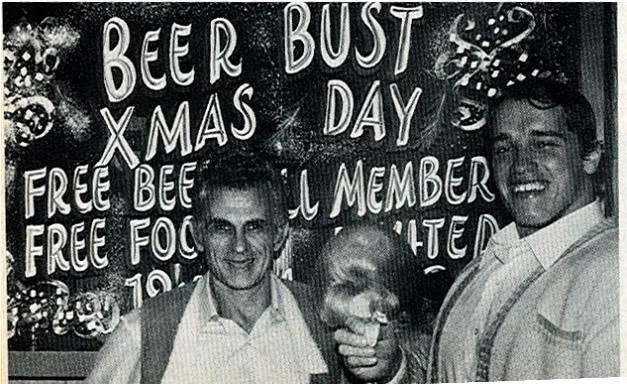
    As Arnold mentioned, milk is for babies, if you want to grown, you have to drink beer. Jokes aside, chances are you need to drink a big glass of water right now, go and drink something.

    19. It’s not a religion, don’t become dogmatic

    Do some HIT, some CrossFit, some powerlifting, some odd object lifting, some bro split. Try everything and adopt what works for you. Don’t become engaged in discussion over the internet, what is the right cadence for what lift. You know, arguing over the internet is like starting in the Paralympics, even if you win, you are still disabled.

    20. Love the process and yourself

    Don’t expect wonders to happen over night, enjoy the huffing and puffing, the sweating the eyeballs pushing out of your skull during some heavy high intensity training. Become addicted to this feeling and to the pump afterwards. Stay training for as long as you are able to move, it will improve every other aspect of your life.

    Cut yourself some slack, not every nanosecond of your day needs to be optimized.

  • So you ran yourself into the ground?

    So you ran yourself into the ground?

    So you wear eager on following through with your high intensity high volume approach, but somehow life got in the way. Kids birthday, working overtime, stressful projects, a vacation trip or even just a cold. Sometimes life has a habit of throwing panned or unplanned stuff at us, that tend to derail our efforts in the quest for size, strength and cuts.

    So maybe you tried really hard to workout 3-5 times a week, and everything was running smoothly for 2 or even 3 weeks, but for most of us, fully committed adults with kids one of the following things happens:

    • You run out of steam and get sick/tired
    • Your schedule implodes and training needs to take a setback

    But don‘t be to hard on yourself, those high commitment fitness routines are not really meant for you. Think of small spurts and enjoy them as long as they keep working. You can always throttle back a little, without losing progress and even continuing to progress along the way, if you change things up a bit and keep the effort high.

    I suggest you check out the writings of Stuart McRobert (Beyond Brawn) or Martin Berkhan form leangains.com or even Dan John’s blog. You can easily make progress no matter if on a diet or tying to bulk up, with just 2 to 3 short sessions in the week.

    High intensity, low volume training on an abbreviated routine that is. So for the zines when life is extra demanding, cut training days and training time but up the intensity and the weight lifted to get the most out of it.

    Exercise selection will be key, so I encourage you to look for one push and one pulling movement in the two major planes for upper and lower body and distribute those out evenly over two to three workout days.

    How does that look like? I‘ll give you two examples, so for a 3 day split routine, like leangains it might look somewhat like:

    Monday:

    • Deadlift 3 sets 5 to 8 reps
    • Standing Shoulder press 3 sets 8 to 12 reps

    Wednesday

    • Benchpress 3 sets 5 to 8 reps
    • Rowing movement 3 sets 8 to 12 reps

    Friday

    • Squat 3 sets 8 to 12 reps
    • Pullups (weighted) 3 sets 8 to 12 reps

    For me at least, I like to keep reps in deadlifts and benchpresses low, and the other exercises a bit higher, since it tends to feel good, but you might be different. Try it for 2 to 3 weeks, see if you can get stronger and how you feel, then adjust for the next 3 week block. High repetition benching hurts my rotator cuff more, than moving bigger weights for example. But low reps squats fry my my lower back completely, while I have no issue doing heavy singles in the deadlift. What can I say, touching 40 so maybe it’s good thing that nothing needed surgery just yet.

    If three days feel like a bit too Abiturient, even if you are only working out 30 minutes each session, you can always go with twice a week, think one of those days on the weekend, where you might have some time to yourself.

    Could look like this:

    Day one

    • Deadlift
    • Benchpress
    • Rowing movement

    Day two

    • Squat
    • Pull-up
    • Overhead press

    With 3 sets per exercise and 3 to 5 minutes rest, you should be out of the gym in under 45 minutes still.

    And of course, if you have a little extra time, or extra energy you can always add two exercises for arms per week, but don‘t let it impact the major movements!

    And with that, enjoy your lifting, give it a shot.

    There are a lot of ways to skin a cat. Main focus should be, to be in it for a lifetime!

  • On training down or how to get shredded for the summer

    On training down or how to get shredded for the summer

    With nearly endless information on the topic floating around the internet, why exactly should you bother reading yet another article on losing weight for the summer body and acquiring outstanding definition?

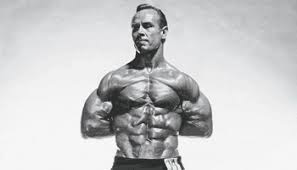
    Since there is nothing new under the sun, I want to recap a training regime that not only worked for hundreds of people including famous movie actors of several decades, but also worked quite well for me in different decades of my life. So let‘s start of with paying respects to the man who told Arnold the following straight to the face, right after Joe Weider brought him over to the US.

    You look like a at fuck to me

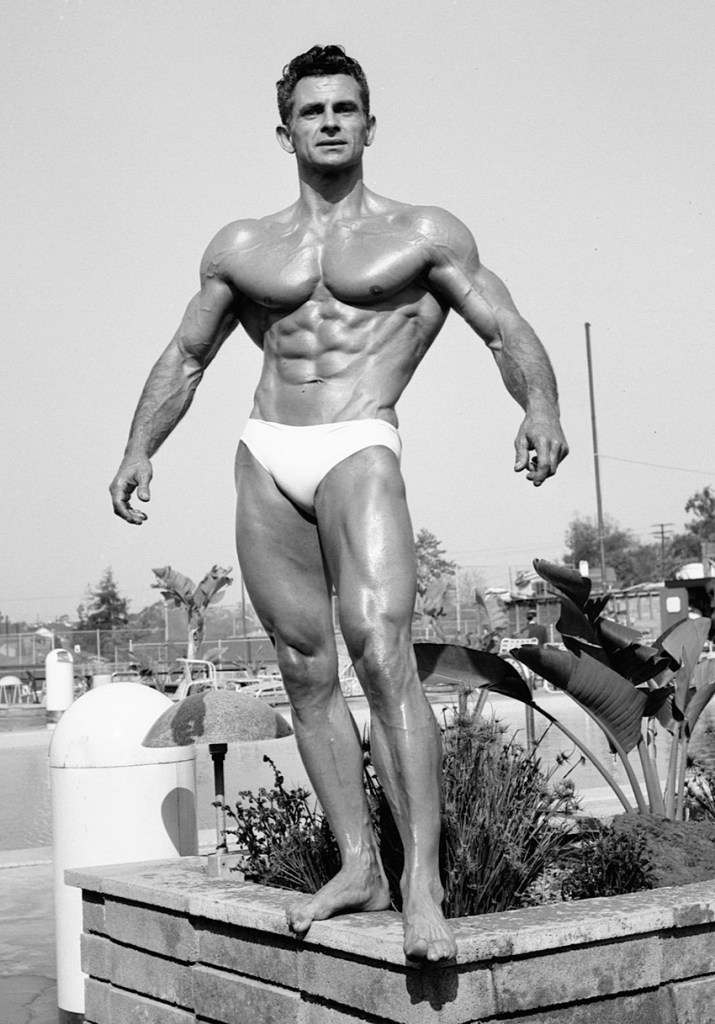
    I‘m obviously talking about the iron guru himself, Vince Gironda, how not only trained the first Mr. Olympia ever but a boatload of other bodybuilders and Hollywood actors and didn‘t look to shabby himself up till old age.

    So what’s the method, to get into shape the fastet way possible? Easy: train one exercise for every body part you want to improve with 8 repetitions for a total amount of 8 sets and repeat 3 times a week.

    There are nearly as many split schedules and exercise selections for 8by8 out there as there are fad diets, but I think the original schedule had you workout 5 days in a row, alternating upper and lower body days.

    Below is my selection of exercises, that is different from what Vince was prescribing, since I have limited choice (training from home) and I don‘t quite like the trap-less, v-shape look he was after.

    What to do

    Upper Body days (Monday, Wednesday and Friday)

    • Behind the neck press with a wide grip for triceps & shoulder girdle
    • Barbell Bicep Curls
    • Barbell Upright row with a very narrow grip (really feeling those in the traps during peak contraction)
    • Barbell Bench Press (narrower grip, arms nearly parallel to the torso, since wide grip is bothering my rotator cuffs)
    • Barbell Bent over Row (narrow or even underhand grip, try to feel it in the lower last, when the barbell hits your stomach)

    Lower body days (Tuesday and Thursday)

    • Barbell Squat (I‘m using front squats, since I don‘t have a squatrack in our new home yet)
    • Stiff-legged Deadlifts (try standing on a block for better stretch)
    • Standing Barbell Calf raises
    • Hanging Leg Raises

    How to do it

    As mentioned earlier , you will be doing 8 sets of every exercise for 8 reps, except for lower body days. Here Vince was suggesting 8 total sets per muscle group for 20 repetitions each.

    Choose a weight you can handle for 3 sets of 8 pretty comfortably. Move quickly and try to feel the muscles contracting, that you are working. No need for extreme yanking the weights, controlled movements with a full range of motion. But no need to think about timing or cadences. This isn‘t an overly scientific HIT workout!

    If you never trained some high volume program like 8×8, German Volume Training (10×10) or even a CrossFitesque schedule, I recommend easing into the workout by starting with 3 sets per exercise and moving up one set in each per workout for the first weeks.

    Once you are getting all the 8 reps in all the 8 sets, it‘s time to increase the weight slightly.

    Nutrition

    As for nutrition, you want to aim for maintenance calories or slightly less, stay active overall and maybe just reduce portion sizes a bit, or have less side dishes. You will need a whole lot of protein to really melt the fat but not overly loose the muscles you built during your personal winter arc. If you are over 30, I would recommend you do two easy runs a week, just for overall health benefits.

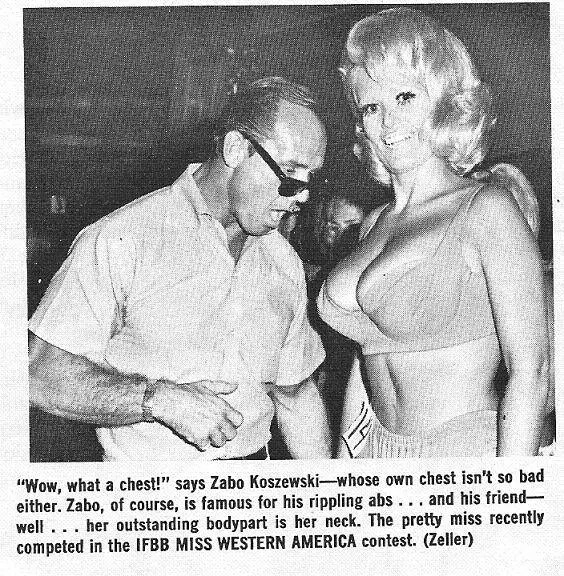
    And of course go easy on the drinking and partying, unless you are as legendary as Zabo Koszewski was in his days.

    Enjoy your lifting & enjoy your days, one never knows how many are left. Find bliss & happiness in the hardworking.

  • Nutrition for the busy adult

    Nutrition for the busy adult

    Who wants to look great, not only wearing a suit but also when hitting the beach.

    Where to start..?

    It‘s easy to dig yourself into a never ending rabbithole, when researching diet and nutrition. There are more diets and successful reviews of those, than anybody ever could count and even nutrition-styles are never ending, circling around with ever changing popularities and oftentimes contradicting dogmas.

    So as with clothes and exercise, simple always trumps complexity and moderation might be the right approach in the long run on any given day. Don‘t go for extremes, don’t take what sounds too good to be true for a real shortcut, just apply common sense and be consistent with it.

    After all, human are omnivores, no buzzwords will ever change that.

    Start with a balanced diet, eating a bit of everything, just skip heavily processed foods and sweets.

    I really like the French approach, of eating till you are around 80% full.

    What to eat..?

    As mentioned above, you should eat a very balanced diet, that fits your local customs and habits, don’t try to copy a Mediterranean diet, if you are Japanese and vice versa. Local food might be the right for you, genetically speaking. But don‘t condemn adding olive oil or coconut milk either. Please, just try not being dogmatic about anything.

    So what’s a balanced diet, as you might be aware of, there are mainly 4 different macronutrients, where your calories can come from. Protein, from meat, fish and every other food category derived from livestock, like cheese, milk, cottage cheese, skyr and so on. Then there are carbohydrates, from vegetables, rice potatoes, pasta, fruit and every other sugary treat you can think of. Fats, which are really good for you by the way, again meets and fish, butter, nuts and so on. Lastly there fourth and most important macro nutrient, alcohol, preferably consume through red wine, added to each meal, after working hours, or even before, if tolerated in your workplace of course. This is the only one positively affecting your soul and outlook on your day to day life. Hope you got that I‘m joking, but coming back to that dogmatic comments before, a glass of wine from time to time won’t hurt, and might be beneficial for longevity.

    Try to have a even distribution of macronutrients in every meal and throughout the day, maybe slightly in favor of protein, won‘t hurt, if you want to build some muscle, or carbohydrates, since you won’t overeat as easily and portion sizes can be bigger compared with fat (4kcal vs 9kcal per gram). I would suggest, your calories should come from 40% carbs, 30% protein and 30% fat, or the other way round for protein & carbs.

    How to put it all together

    Try to have a protein source with every meal, add some kind of carbohydrates and some vegetables or salat & fat will mostly take care of itself. Eat two to three times a day, with balanced portion sizes, if you are older, you might want to aim for 2 and skip either supper or breakfast, just to have less calorie intake in total and maybe benefit a bit from the addition to your natural fasting window. If you don‘t trust the French 80% rule or really want to build muscle, use some kind of tracking app for a while, just to get a feeling of how many calories you are eating. After several weeks you should be able to eyeball the portion sizes and still make progress.

    If you are a parent like me, working a demanding full time job, logging your food can push you right over the cliff of burnout.

    To find out how much you should be eating, there are great calculators on the interwebs, go for the easiest ones, the results will be good enough.

    I really like this one.

    Perfect combination of the four macronutrients
    Looks like 40%/40%/30% and 12.5% to me