Category: minimalist routines

  • 💰 The 3-Envelope Rule for Kids: Teaching Financial Wisdom Through Save, Spend, Share

    💰 The 3-Envelope Rule for Kids: Teaching Financial Wisdom Through Save, Spend, Share

    In a world of instant gratification, teaching children to handle money wisely may feel like an uphill battle. But what if the secret lies not in complexity—but in simplicity?

    Enter the 3-Envelope Rule: a minimalist yet powerful method to teach kids the value of saving, spending wisely, and sharing generously.

    💡 Why Start Early?

    Research shows that by age 7, most children have already formed basic money habits. What they see, hear, and do around finances during these formative years shapes their mindset long-term. That means you—not schools, not banks—have the greatest influence.

    The good news? You don’t need an economics degree or elaborate spreadsheets. All it takes are three envelopes (or jars, or sections in a piggy bank) and a weekly conversation.

    📬 What Is the 3-Envelope Rule?

    This method divides any money your child receives—be it allowance, birthday gifts, or earned income—into three categories:

    1. SAVE – For Future Goals

    This envelope teaches patience, planning, and the joy of delayed gratification. It could be used for a big toy, a bike, or even long-term goals like a school trip.

    👉 Tip: Help your child set a savings goal and track their progress visually (e.g., with a chart or sticker system).

    2. SPEND – For Everyday Wants

    This gives kids the freedom to make choices—and sometimes, mistakes. Whether it’s a snack at the store or a new set of markers, this envelope encourages responsibility and decision-making.

    👉 Tip: Don’t micromanage. Let them experience the natural consequences of spending.

    3. SHARE – For Giving Back

    This envelope instills compassion. Whether they donate to a local animal shelter, buy a gift for a friend, or give to a cause, it teaches that money isn’t just about me, but also we.

    👉 Tip: Let them choose the cause to spark ownership and empathy.

    🛠️ How to Implement It
    Here’s a quick-start guide for busy parents:

    Pick the tools: Use labeled envelopes, jars, or child-friendly banking apps. Visuals matter!

    Set the split: Start with an easy 40/40/20 rule (Save 40%, Spend 40%, Share 20%) and adjust as needed.

    Make it routine: Every week, review where money went. Celebrate wins, discuss missteps, and reflect together.

    Keep it age-appropriate: For younger kids, keep goals and conversations simple. For older kids, introduce more nuance (e.g. short-term vs long-term saving).

    Model the behavior: If your kids see you saving, spending with intention, and giving generously, they’ll follow suit.

    🎯 The Lasting Impact

    This isn’t just a money strategy—it’s a character-building framework.

    Save = Discipline and vision

    Spend = Confidence and independence

    Share = Gratitude and compassion

    In a single system, your child learns financial literacy, decision-making, and emotional intelligence.

    And most importantly? You’re creating a culture of open, judgment-free money conversations at home.

    💬 Final Thoughts

    Minimalism isn’t just about owning fewer things—it’s about living with greater clarity and intention.

    The 3-Envelope Rule echoes that beautifully: simple tools, profound impact.

    You don’t need to get it perfect. You just need to start.

    What’s one money lesson you wish you had learned earlier in life? Share it in the comments or with your family tonight at dinner.
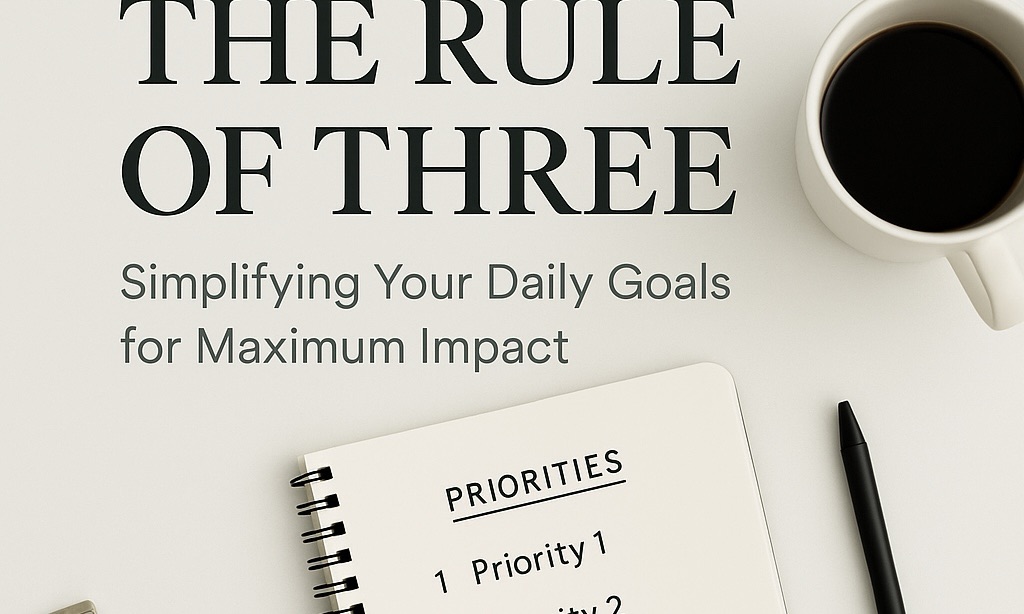

  • ✅ The Rule of Three: Simplifying Your Daily Goals for Maximum Impact

    ✅ The Rule of Three: Simplifying Your Daily Goals for Maximum Impact

    🧠 You start your day with a long to-do list.

    It’s packed with tasks, ideas, emails, and reminders. By noon, you’re “busy”… but not productive.

    Sound familiar?

    Let me offer you something simpler—and far more powerful:

    🎯 The Rule of Three.

    It’s a minimalist productivity method I use daily, and it’s changed how I work, lead, and live.

    🔍 What is the Rule of Three?

    Each morning, ask yourself:

    💬 “What are the 3 most important things I want to accomplish today?”

    Not 10.

    Not everything.

    Just 3.

    These should be high-impact actions—not shallow tasks. Think: finish a proposal, prep for a meeting, finalize a decision.

    🎯 The work that truly moves the needle.

    🧠 Why It Works:

    ✔️ Focus over friction – You eliminate decision fatigue.

    ✔️ Clarity beats chaos – Your day has a compass, not a pile of noise.

    ✔️ Progress feels real – Checking off 3 important wins builds momentum and motivation.

    Studies show that multitasking can reduce productivity by up to 40%. The Rule of Three creates space for deep work instead of distraction.

    ⚙️ How to Use It:

    📅 Every morning, take 2 minutes.

    Write down your 3 priorities—paper, app, mirror—it doesn’t matter.

    Just do it before opening your inbox or calendar.

    🏡 Apply it across life areas:

    Work: finish project draft Health: 20-minute workout Family: tech-free dinner time

    Need more structure? Use this question:

    💡 “What 3 things would make today feel successful—even if I got nothing else done?”

    Stick to 3. If you’re tempted to add more, make it a bonus. 🎁

    🌱 Bonus: The Weekly Rule of Three

    Take 5 minutes every Sunday:

    What’s 1 major work goal? What’s 1 health or personal goal? What’s 1 relationship or family goal?

    Write them down. Keep them visible. Reflect midweek. 🧭

    ✳️ Minimalism in Action

    The Rule of Three isn’t about doing less.

    It’s about doing what matters most—with clarity and consistency.

    “Essentialism isn’t how to get more things done. It’s how to get the right things done.”

    – Greg McKeown

    🎯 When you simplify your focus, you amplify your results.

    🚀 Try This Tomorrow

    ✅ Write down 3 priorities

    ✅ Tackle them before distractions

    ✅ Track how it feels over 1 week

    👇 Drop one of your 3 below if you’re in.

    Let’s make simplicity your new superpower.

  • Why Less is More in Fitness: Avoiding Burnout with Minimalist Training

    Why Less is More in Fitness: Avoiding Burnout with Minimalist Training

    “It’s 6 AM. The alarm goes off. You’ve got emails waiting, breakfast to make, kids to wake up, and your workout? Still just an idea. Sound familiar?”

    If you’re juggling a demanding career, a partner, kids, maybe even aging parents, the idea of fitting in an elaborate workout routine feels more like fantasy than reality. Between back-to-back meetings and bedtime stories, who has the time—or the mental bandwidth—for 90-minute gym sessions and meticulous macro counting?

    The truth? You don’t need all of that to be fit, strong, and healthy. In fact, trying to do too much is often the very thing that derails us. That’s where minimalist training comes in—a practical, sustainable approach that prioritizes consistency over complexity and delivers real results without burnout.

    1. The Problem: Too Much Fitness Advice, Too Little Time

    Open Instagram or YouTube, and you’re hit with a firehose of fitness advice: 7-day workout splits, carb cycling, cold plunges, yoga, meditation, fasting windows. It’s overwhelming—and it’s paralyzing.

    When you already have a full plate, trying to keep up with this fitness circus becomes another stressor. You skip a workout, feel guilty, and spiral into the all-or-nothing trap. The result? Inconsistency, frustration, and eventually, burnout.

    2. Redefining Success: Consistency Over Complexity

    Here’s the hard truth: your fitness routine doesn’t need to look like a personal trainer’s. In fact, it shouldn’t. You’re not getting paid to work out. Your job is to be present, productive, and healthy for the long haul.

    That means success isn’t measured by six-pack abs or bench press PRs—it’s about how consistently you can move your body, build strength, and maintain energy, week after week, month after month.

    Less time. Less stress. More life.

    3. The Minimalist Fitness Mindset

    Minimalist training isn’t lazy training—it’s smart training. It’s about doing the essential things well and ignoring the fluff. It’s about showing up with purpose, not perfection.

    Think of it like this: your workout should energize your day, not drain it. It should simplify your life, not complicate it. When you remove decision fatigue and unrealistic expectations, you free up mental space for what truly matters.

    4. The Core Elements of Minimalist Training

    Let’s break it down to the fundamentals. Here’s all you really need:

    Strength Training (2–3x/week): Focus on compound lifts like squats, deadlifts, pushups, and rows. These give you the biggest bang for your buck. Cardio (daily movement): Walk the dog, bike with your kid, take the stairs. No need for hour-long runs unless you enjoy them. Mobility (5–10 min/day): A short routine to keep joints healthy and pain at bay. Foam rolling, stretching, or yoga flows work great.

    Everything else? Optional. If it fits into your week, great. If not, don’t sweat it.

    5. Sample Weekly Plan (For the Time-Starved Professional)

    Here’s a realistic plan that fits into even the busiest schedules:

    Monday:

    30-minute full-body strength workout (Squats, Pushups, Rows) 15-minute walk after lunch

    Wednesday:

    30-minute strength (Deadlifts, Overhead Press, Core) 5-minute mobility flow

    Friday:

    30-minute bodyweight circuit at home Evening walk with the family

    Saturday/Sunday (Optional):

    Active hobby (hike, swim, bike) Stretch and recover

    This gives you flexibility to miss a day without guilt—and still make progress.

    6. Nutrition Without the Drama

    Minimalist fitness includes minimalist eating. Forget 8-meal meal-prep Sundays or tracking every gram of protein.

    Here’s the simple approach:

    Eat mostly whole foods. Prioritize protein at every meal. Limit sugar and highly processed snacks. Repeat your meals. Uniform eating = less decision fatigue.

    Keep a few go-to meals you can make in 10–15 minutes. Think omelets, Greek yogurt bowls, grilled chicken with frozen veggies. Not gourmet—but effective.

    7. Signs You’re Doing Enough (Even If It Feels Like Less)

    One of the biggest mental hurdles in minimalist training is feeling like you’re not doing enough. But here’s how to know your routine is working:

    You sleep better and wake up with more energy. Your clothes fit better. You’re gradually lifting heavier or moving more fluidly. Your posture and confidence improve. You no longer dread workouts—you actually look forward to them.

    Minimalist training won’t leave you gasping on the floor, but it will leave you feeling stronger and more capable every day.

    8. Burnout is the Real Enemy — Not Lack of Time

    Fitness isn’t about going hard—it’s about going long. Burnout kills more fitness goals than laziness ever could.

    If your workout routine demands more than you can consistently give, it’s a bad routine. The “all-or-nothing” mindset is the enemy of progress. It’s far better to train less and recover more—so you can keep showing up.

    Remember: done consistently, even 20-minute sessions build incredible results over time.

    9. Mastering Fitness with a Family Man’s Mentality

    The busy professional doesn’t need a six-pack to feel strong. He needs energy to play with his kids after work. He needs mobility to carry groceries without pain. He needs endurance to lead at work and still be present at home.

    Minimalist training respects your time. It aligns with your values. And it helps you build a foundation that supports—not competes with—your life.

    Final Thoughts

    Less is more—especially when you’re managing a full life outside the gym. Minimalist training isn’t just efficient. It’s liberating. It allows you to stay fit, strong, and healthy without sacrificing your family, career, or sanity.

    Show up. Do what matters. Then get back to what you’re really training for: life.

    Bonus for Readers:

    Download your free Minimalist Fitness Checklist for Busy Professionals and start simplifying your fitness today.

  • The One-Minimalist-Task Method: Boosting Productivity Without Overload

    The One-Minimalist-Task Method: Boosting Productivity Without Overload

    Introduction: The Productivity Paradox

    Picture this: You wake up, coffee in hand, staring at a to-do list that seems longer than a novel. You’ve read every productivity book, tried the latest apps, and still—somehow—your most important work keeps slipping through the cracks. Sound familiar?

    The modern approach to productivity is broken. We pile on tasks, chase endless efficiency hacks, and juggle multiple priorities, only to end up overwhelmed and exhausted. More work does not equal more results. In fact, it often leads to less focus, more stress, and diminished impact.

    Enter the One-Minimalist-Task Method—a counterintuitive yet powerful approach designed to cut through the noise, eliminate overwhelm, and make productivity effortless. The idea? Do one mission-critical task per day—intentionally, deeply, and without distraction.

    The Problem with Traditional Productivity Hacks

    Most productivity techniques focus on doing more—optimizing workflows, time-tracking, and squeezing every ounce of efficiency out of the day. The result?

    • Task overload: Endless to-do lists lead to decision fatigue and analysis paralysis.
    • Shallow work: Rapid task-switching prevents deep focus and creativity.
    • Burnout: Chasing high-output days without meaningful progress leads to exhaustion.

    Instead of piling on more, the One-Minimalist-Task Method removes the clutter and allows you to focus on what truly matters.

    What is the One-Minimalist-Task Method?

    At its core, this method is about ruthless prioritization. Instead of a never-ending to-do list, you focus on one high-impact task per day—the task that, if completed, moves the needle the most.

    Why does this work?

    • Eliminates decision fatigue: No more debating which task to start first.
    • Enhances deep work: Fewer distractions mean higher quality output.
    • Creates momentum: Finishing one significant task builds confidence and motivation.
    • Reduces stress: A clear focus prevents overwhelm and boosts mental clarity.

    The key difference between this method and traditional approaches is that it prioritizes depth over breadth. Instead of half-completing ten tasks, you fully complete one that truly matters.

    How to Implement the One-Minimalist-Task Method

    1. Identify Your Keystone Task

    Every day, ask yourself: What is the one task that will make everything else easier or unnecessary? This is your keystone task—the singular priority that aligns with your bigger goals.

    If you’re an entrepreneur, this might be a high-value sales call. If you’re a writer, it could be drafting a key chapter of your book. The goal is clarity—knowing exactly what needs your full attention.

    2. Time-Block Like a Pro

    Dedicate uninterrupted time to this task. Whether it’s 90 minutes in the morning or a focused block in the afternoon, treat it like an unmissable appointment.

    A well-planned time block ensures that your most important task isn’t squeezed between distractions but given the mental space it deserves.

    3. Eliminate Distractions Ruthlessly

    Distraction is the enemy of deep work. Before starting, do the following:

    • Turn off notifications on your phone and computer.
    • Close unnecessary tabs and applications.
    • Use a distraction blocker like Freedom or Cold Turkey.
    • Let others know you are unavailable during this time.

    The fewer interruptions, the higher your productivity.

    4. Say No to Everything Else (For Now)

    While other tasks may be important, they are not the priority. Defer, delegate, or delete anything that doesn’t contribute to your keystone task.

    Instead of feeling guilty about an unfinished to-do list, recognize that one task done well beats ten tasks half-done.

    5. Use the “Finisher’s High” to Build Momentum

    Completing one high-impact task triggers a sense of accomplishment, which fuels motivation for the rest of the day.

    If time allows, you can tackle secondary tasks with less cognitive resistance. But if your keystone task was completed, you’ve already won the day.

    The Science Behind Doing Less to Achieve More

    • Deep Work Beats Shallow Work: Research by Cal Newport shows that focused, undistracted work produces exponentially better results than multitasking.
    • The Zeigarnik Effect: Unfinished important tasks stay in our minds, keeping us engaged and motivated.
    • Cognitive Load Theory: Reducing unnecessary tasks conserves mental energy for meaningful work.

    A 2019 study from the University of California found that the average worker switches tasks every three minutes and five seconds, significantly reducing overall efficiency. Single-tasking is the antidote to this modern problem.

    Adapting the Method to Different Work Styles

    • For corporate professionals: Use this method alongside scheduled meetings and daily responsibilities by ensuring your keystone task aligns with key objectives.
    • For entrepreneurs/freelancers: Prioritize revenue-generating or business-growth tasks to drive sustainable success.
    • For busy parents: Apply this approach to personal productivity—whether it’s a workout, meal prep, or quality time with family.

    Even in a highly reactive job, you can apply this method by ensuring one block of time each day is reserved for your most important work.

    Common Objections and How to Overcome Them

    1. “What if I have more than one important task?” Prioritize. If everything is a priority, then nothing is. Rank your tasks and pick the most impactful one.

    2. “What if unexpected work comes up?” Life happens. But the key is to structure your day so that your keystone task gets attention before interruptions arise.

    3. “Won’t this slow me down?” No. In fact, it speeds you up because you spend less time context-switching and more time in deep focus.

    Conclusion: Productivity as a Mindset, Not a To-Do List

    True productivity isn’t about cramming more into your day—it’s about doing fewer things with greater impact. The One-Minimalist-Task Method helps you work smarter, not harder.

    By focusing on one high-impact task per day, you create more meaningful results with less stress.

    Challenge: Try this method for a week. Each day, choose one key task, execute it with full focus, and experience the difference. Productivity doesn’t have to be overwhelming—sometimes, less really is more.

  • Creating a Minimalist Morning Routine for Families

    Creating a Minimalist Morning Routine for Families

    Introduction

    Mornings in a family household can often feel like a chaotic race against the clock — misplaced shoes, last-minute lunch packing, and someone always forgetting something important. But what if mornings could feel calm, predictable, and even enjoyable? A minimalist morning routine isn’t about doing less for the sake of it — it’s about removing unnecessary stressors so that your family can start the day with focus and ease. With a few strategic changes, you can transform the morning madness into a seamless routine that makes the hard things in life look effortless.

    By embracing simplicity, prioritization, and consistency, you create a morning routine that not only reduces stress but also fosters a sense of control and harmony within your household. The key to achieving this is to establish systems that work efficiently while allowing room for flexibility. This guide will provide you with practical steps to help streamline your mornings and start the day with intention.


    1. The Core Principles of a Minimalist Morning Routine

    A successful morning routine doesn’t start in the morning — it begins with a mindset shift. By focusing on these key principles, you can create a system that works consistently for your family.

    • Prioritization: Identify what really matters in the morning. Do you need an elaborate breakfast, or will a simple, nutritious option do? Focus only on the essentials.
    • Consistency: Routines thrive on repetition. By keeping the same order of events each morning, you reduce decision fatigue and create predictability for your family.
    • Preparation: The less you leave to chance in the morning, the smoother everything runs. Prepping clothes, meals, and bags the night before eliminates morning friction.
    • Flexibility: Even the best-laid plans will sometimes go awry. A minimalist morning routine allows for small disruptions without throwing off the entire day.

    One of the most overlooked aspects of a minimalist morning routine is the importance of decluttering your physical and mental space. By removing unnecessary distractions and streamlining decision-making processes, you free up time and energy for what truly matters.


    2. Streamlining Mornings for Parents

    Parents set the tone for the household, and if your morning feels rushed and frantic, the rest of the family will pick up on that energy. Here’s how to simplify:

    • Capsule Wardrobe for Effortless Dressing: A closet filled with versatile, well-fitting basics means no time wasted on outfit indecision. Have go-to combinations that work for any occasion.
    • Quick and Nutritious Breakfast Solutions: Stick to easy, protein-packed options like overnight oats, smoothies, or eggs and toast. Avoid decision overload by rotating a few simple meal choices.
    • Time-Blocking to Minimize Stress: Set designated times for each task (e.g., 10 minutes for getting dressed, 15 minutes for breakfast) to create a structured yet flexible morning flow.
    • Tech-Free Mornings: Avoid checking emails or social media first thing in the morning. Instead, focus on setting a positive tone for the day with mindfulness, light stretching, or journaling.

    By keeping things simple and intentional, you reduce stress and set yourself up for a more productive day.


    3. Simplifying Mornings for Kids

    Children thrive on routine, and the more they can handle independently, the smoother mornings will be.

    • Independent Dressing with Pre-Selected Outfits: Encourage kids to choose their outfits the night before, or simplify further with a weekly outfit organizer.
    • Simplified Breakfast Choices: Give them two to three consistent options to minimize morning negotiations.
    • Making Routines Engaging and Fun: Use checklists, timers, or even a morning playlist to keep kids on track without constant reminders.
    • Encouraging Self-Sufficiency: Teach kids to pack their own school bags, brush their teeth on time, and take responsibility for their morning tasks.

    By instilling responsibility early, children become more self-reliant, leading to smoother mornings for the entire family.


    4. Household Systems That Make Mornings Flow Smoothly

    A well-organized home reduces morning friction. Set up systems that eliminate unnecessary searching and scrambling.

    • Organized Entryways and Designated Drop Zones: Have a space for keys, backpacks, and shoes so nothing gets misplaced.
    • A Family Command Center for Schedules and Reminders: A central calendar or whiteboard can display daily to-dos, appointments, and important reminders.
    • Teaching Responsibility Through Shared Morning Tasks: Assign age-appropriate responsibilities, such as setting the table or packing lunch, so everyone contributes.
    • Decluttering for Efficiency: Ensure that common areas like the kitchen and bathroom are tidy and functional. Eliminating excess clutter helps reduce stress and keeps the morning running smoothly.

    A few small adjustments can lead to major improvements in how efficiently your family operates each morning.


    5. Dealing with the Unexpected Without Losing Your Cool

    Even with the best system, mornings don’t always go as planned. Here’s how to stay on track:

    • Buffer Time: Build in an extra 5–10 minutes so small delays don’t derail the whole morning.
    • Mindset Shifts: Accept that some mornings won’t be perfect. Staying calm sets a positive example for kids.
    • Quick Recovery Strategies: If something goes wrong, focus on problem-solving instead of stressing. Have a backup outfit, easy-to-grab snacks, and a game plan for delays.
    • Emphasizing the Bigger Picture: Remind yourself that a rough morning doesn’t define the entire day. Practicing gratitude and maintaining perspective can help keep stress levels in check.

    The more prepared you are for the unexpected, the more resilient your family will become in handling morning hiccups.


    Conclusion

    A minimalist morning routine isn’t about stripping everything away—it’s about keeping only what truly serves your family. By reducing decision fatigue, fostering independence, and setting up systems that support efficiency, mornings become a smooth transition into the day rather than a daily battle.

    The long-term benefits of a minimalist morning routine extend far beyond just saving time. It cultivates a sense of calm, reduces household stress, and sets the foundation for a more intentional lifestyle. Start with small adjustments, and over time, you’ll see how simplifying your mornings can have a positive ripple effect on the rest of your day.

    Are you ready to transform your family’s mornings? Start by implementing just one of these strategies this week and build from there!