Category: minimalism

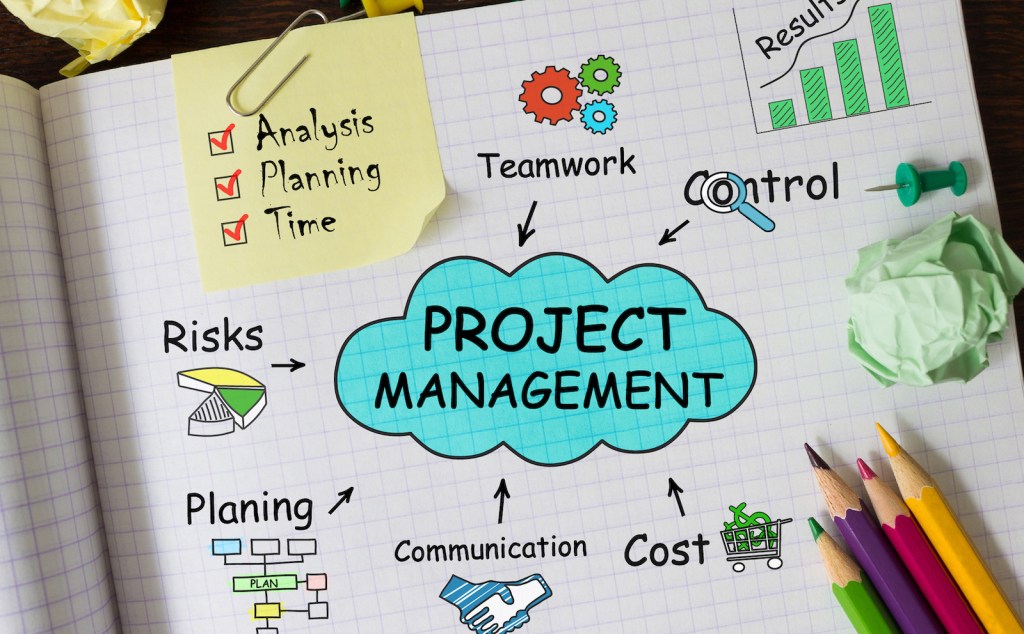
  • 11 things minimalism taught me about project management

    11 things minimalism taught me about project management

    Frist of all I’d like to state the obvious:
    If you want to even remotely complete any project in a reasonable time frame for reasonable costs, you have to lead the project and the team and not just manage it.

    1. Less is more

    No matter if documentation, meetings, status updates, action items, or even team members.
    80% of results will come from 20% of your efforts and 80% of progress will come from 20% of the contributors. There is always potential for cutting things away.

    2. Purposeful meetings

    The main purpose of any meeting should be connection, collaboration or co-creation. And every meeting without a clear decision is just another coffee break. Don’t use project meetings for mere status updates, action items and time plan reviews.

    3. Talk less & share responsibilities

    Listen more and talk less, if all your project meetings are one-man shows, where you do the presenting, note taking, moderation an decision making, let me tell you, you are doing it wrong. Don’t be lethargic but encourage and enable the team to move forward on their own. Some teams / colleague will need more guidance, some will want more autonomy balance it from individual to individual.

    4. Clear & concise communication

    Make all you communication clear, and crisp. Use less and better words to convey your message and be poignant. A C-suit executive won’t read much more than 2-3 short bullets, not because he’s not interested, he just won’t have the time.

    5. High level time planning is sufficient

    Don’t overcomplicate stuff, have less & bigger work packages, less bars in the Gantt. The plan will not stand the test of time. Think of major milestones and timing, not of granular efforts & interdependencies. Your team will know what to do and when, help them close tasks timely and lead discussions & decision taking.

    6. Don’t be cheap with recognition

    Be authentic and benevolent when it comes to recognition. Figure out if the person wants to be praised in a 1on1 setting or in front of the team. Always praise your team members in front of their managers, even if they just do the bare minimum. As long as they are contribution and not actively hurting your project, tell they are doing an outstanding job. Build trust with your team.

    7. Always improve

    Try looking at your project and the companies project work in general with an outside perspective. Streamline what you are doing, cut away what seems to be against common sense, redundant or excess. If the decision of minimizing was wrong you can always add back in. But in general first look what can be omitted.

    8. Get a course, watch a YouTube video on presenting

    All you job is communication, learn to engage your audience, be it your team, or stakeholders or customers, don’t just read your slides out aloud. Have less and more meaning full content on the slides, have less slides, you should be able to talk 5-7 minutes per slide at least.

    9. Risk “management” and mitigations

    Risks are neither qualifiable nor avoidable in general. The occurrence of potential risks can not really be derived from past experience and brainstorming alone, it is to a large degree volatile and random in nature. So focus on taking baby steps with decisions and course correct as long as the costs are low.

    10. Clear roles, responsibilities & expected performance

    Set the expectations early in a written document together with everybody involved. Hold you team accountable and lead with good example. But don’t tolerate slack. The overall performance will be based on what you tolerate, not what example you set (to a degree of course, you can’t slack off either).

    11. It’s all about relationships

    The perception and success of your project is directly tied to the relationships you built, not only with your team, but with their managers, the projects stakeholders, your manager & PMO colleagues. Do good and talk about it, embellish it to a degree.

  • So you ran yourself into the ground?

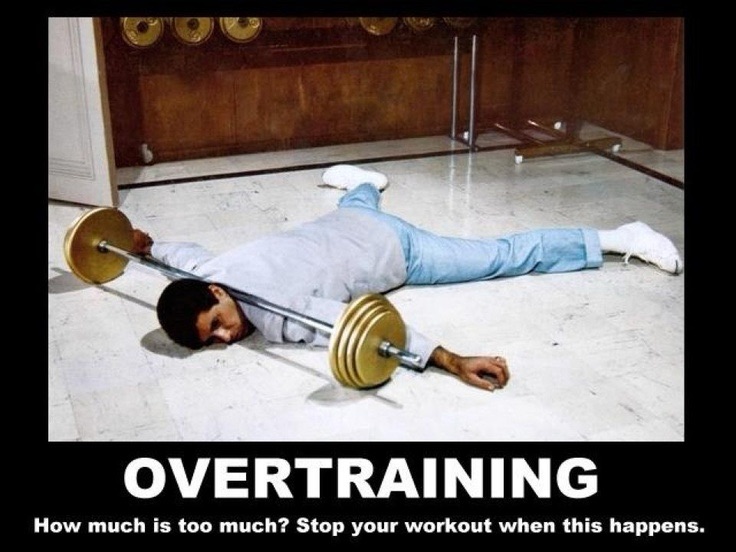
    So you ran yourself into the ground?

    So you wear eager on following through with your high intensity high volume approach, but somehow life got in the way. Kids birthday, working overtime, stressful projects, a vacation trip or even just a cold. Sometimes life has a habit of throwing panned or unplanned stuff at us, that tend to derail our efforts in the quest for size, strength and cuts.

    So maybe you tried really hard to workout 3-5 times a week, and everything was running smoothly for 2 or even 3 weeks, but for most of us, fully committed adults with kids one of the following things happens:

    • You run out of steam and get sick/tired
    • Your schedule implodes and training needs to take a setback

    But don‘t be to hard on yourself, those high commitment fitness routines are not really meant for you. Think of small spurts and enjoy them as long as they keep working. You can always throttle back a little, without losing progress and even continuing to progress along the way, if you change things up a bit and keep the effort high.

    I suggest you check out the writings of Stuart McRobert (Beyond Brawn) or Martin Berkhan form leangains.com or even Dan John’s blog. You can easily make progress no matter if on a diet or tying to bulk up, with just 2 to 3 short sessions in the week.

    High intensity, low volume training on an abbreviated routine that is. So for the zines when life is extra demanding, cut training days and training time but up the intensity and the weight lifted to get the most out of it.

    Exercise selection will be key, so I encourage you to look for one push and one pulling movement in the two major planes for upper and lower body and distribute those out evenly over two to three workout days.

    How does that look like? I‘ll give you two examples, so for a 3 day split routine, like leangains it might look somewhat like:

    Monday:

    • Deadlift 3 sets 5 to 8 reps
    • Standing Shoulder press 3 sets 8 to 12 reps

    Wednesday

    • Benchpress 3 sets 5 to 8 reps
    • Rowing movement 3 sets 8 to 12 reps

    Friday

    • Squat 3 sets 8 to 12 reps
    • Pullups (weighted) 3 sets 8 to 12 reps

    For me at least, I like to keep reps in deadlifts and benchpresses low, and the other exercises a bit higher, since it tends to feel good, but you might be different. Try it for 2 to 3 weeks, see if you can get stronger and how you feel, then adjust for the next 3 week block. High repetition benching hurts my rotator cuff more, than moving bigger weights for example. But low reps squats fry my my lower back completely, while I have no issue doing heavy singles in the deadlift. What can I say, touching 40 so maybe it’s good thing that nothing needed surgery just yet.

    If three days feel like a bit too Abiturient, even if you are only working out 30 minutes each session, you can always go with twice a week, think one of those days on the weekend, where you might have some time to yourself.

    Could look like this:

    Day one

    • Deadlift
    • Benchpress
    • Rowing movement

    Day two

    • Squat
    • Pull-up
    • Overhead press

    With 3 sets per exercise and 3 to 5 minutes rest, you should be out of the gym in under 45 minutes still.

    And of course, if you have a little extra time, or extra energy you can always add two exercises for arms per week, but don‘t let it impact the major movements!

    And with that, enjoy your lifting, give it a shot.

    There are a lot of ways to skin a cat. Main focus should be, to be in it for a lifetime!

  • Most things in life are like a marathon..

    Most things in life are like a marathon..

    ..they say at least.

    But I think that’s fundamentally wrong. Sure to everything that has some kind of outcome worthwhile, consistency is key. There is no doubt bout that. Even coming back to the marathon, how good will you be, if you did it once in a lifetime, unprepared?

    For sure you have to train consistently. But how do you train? Low intensity every day for an endless amount of time? I‘m not big on running but I suggest there is some kind of periodization, starting low volume low effort and peaking with maximum effort and huge volume, before some days of rest towards your competition.

    So I would argue everything worthwhile in life is like training for the 100m dash. High intensity, for short total daily duration over the course of a lifetime. Take rest before burning out, the ease back into the grind and give it your all every day for extended amounts of time.

    Be it a FIY project at home, crammed into a weekend or over the course of a vacation week. Be it the big project at work, the presentation you have to give to a customer, your sales pitch, that you have to deliver. You take spurts of deep focused work on the topic for some limited amount of time. Then your competition, evaluation, talk or whatever rolls around, you perform to the best of your abilities and your done, decompressing and resting before taking on the next major thing.

    This applies to mostly everything, think relationships, what’s more sustainable and will foster the deeper relationships? Small daily bursts of complete focus on the other person, or some shallow clinging to each other, while mindlessly scrolling the gram oder watching Netflix?

    And of course, more is oftentimes better, until it stops working or even backfires. Think minimum effective dose in training. Same principle can be used with everything you do. The meal you prepare will not be tasting better if you cram too much sophisticated sounding ingredients in it. Have some fat in it to carry the taste, some protein for being satiated and some seasoning/ spices and your good.

    Next time you start doing something, think of the sprint vs marathon analogy and then give it your all for a pre defined period. Afterwards give it your all to recover, rest or selfcare and then start refreshed into the next task.

    And please, don‘t take things too seriously!

  • Keep it simple

    Keep it simple

    When embarking on your journey to upgrade your personal style don‘t become a victim to fast fashion and trends. In times of social media it‘s even easier to have sheer endless options of inspiration and ideas than it was 10 or 20 years ago, when you had to browse through magazines or stores to get a grasp on what to wear.

    But on the other hand, standing out with a classic, stylish wardrobe as a man in today‘s times is much easier as well, as it has been for past generations.

    Don‘t worry about wearing your favorite pieces often. Most people won‘t really recognize, if you wore the same jacket or suit 3-5 times a week. Everybody is pretty much focused completely on themselves. If you look well put together, clean and your clothes fit your silhouette nicely, it‘s enough for a great first impression.

    When buying items, go for quality and fit over trend or amount. Don‘t look what you need to buy next, but dig what doesn’t quite cut it from a fit perspective , has too much wear or simply doesn’t make you feel confident. Set yourself a rule when to buy additional pieces (seasonal sales, birthdays or equivalent) and keep a number of total items you want to own in the back of your head.

    It will be liberating, to have less choices and if the ones you can make all make you feel your absolute best, that‘s a second upside to it.

    Dress to impress, you need less for it than you might think.

    post scriptum: pictures borrowed from Tim Ferriss‘ book the 4-hour work week.