Category: productivity

  • How AI Might Be Revolutionizing Project Management

    How AI Might Be Revolutionizing Project Management

    We’re living in an age where the buzzwords of yesterday are quickly becoming the business tools of today. Artificial Intelligence (AI) is no longer the realm of sci-fi; it’s rapidly embedding itself into the fabric of how we work, particularly in project management. For project managers, staying ahead of deadlines, managing resources, and navigating unexpected curveballs are all part of the job. But what if AI could turn these challenges into opportunities, offering smarter ways to predict risks, optimize schedules, and enhance decision-making?

    The Rise of AI-Powered Tools in Project Management

    Imagine starting your day, not with an overwhelming task list, but with a smart assistant that has already analyzed your team’s workload, anticipated bottlenecks, and provided optimized solutions. Sounds like magic, right? Well, welcome to the age of AI in project management.

    AI-powered tools are transforming the way projects are planned and executed by automating tedious processes and offering insights that would take a human brain hours, if not days, to generate.

    1. Predicting Risks Before They Become Problems

    One of the most powerful capabilities of AI in project management is risk prediction. Through machine learning algorithms, AI can scan historical data from previous projects, identify patterns, and predict potential risks before they happen. Whether it’s budget overruns, team burnout, or supplier delays, AI tools can flag issues early on and even suggest mitigation strategies. This enables project managers to not only react faster but, in many cases, avoid crises altogether.

    In essence, AI helps project managers move from firefighting mode to a proactive stance, ensuring smoother operations and happier teams.

    2. Optimizing Schedules Like Never Before

    Who hasn’t had the headache of adjusting timelines when a project starts veering off course? Traditional scheduling tools are static and often feel like they’re working against you when changes occur. Enter AI scheduling optimizers—these dynamic tools don’t just plan a project based on input; they continuously learn and adapt.

    AI-powered schedulers factor in every imaginable variable—resource availability, task dependencies, weather conditions (in some cases), and even team member efficiency. These tools dynamically adjust schedules in real time, providing the project manager with the most efficient path forward. You’ll spend less time adjusting timelines and more time focusing on high-impact decisions.

    3. Enhanced Decision-Making With Data-Driven Insights

    AI doesn’t just help automate tasks; it supercharges decision-making by offering data-backed insights that help project managers make smarter choices. Have you ever been stuck choosing between two suppliers or debating which team member is best suited for a task? AI can assess numerous factors—from past performance to project-specific needs—and recommend the best course of action.

    By processing massive amounts of data that no human could possibly analyze on their own, AI helps cut through the noise and provides actionable, informed advice. Think of it as having a project mentor that’s always available, always learning, and always improving.

    The Human Touch: AI as Your Co-Pilot, Not Your Replacement

    Before we start imagining a future where robots run our projects, let’s clear one thing up — AI is not here to replace project managers. Far from it. In fact, AI’s greatest strength lies in enhancing the human element. By automating mundane tasks, predicting problems, and providing data-driven insights, AI frees up project managers to focus on what truly matters: leading, inspiring, and making judgment calls that only a human can make.

    At its core, AI is a co-pilot, guiding you through complex project landscapes, allowing you to work smarter, not harder.

    Practical AI Tools for Project Managers Today

    So, how can you harness this revolution today? Thankfully, you don’t need to be a tech guru to integrate AI into your daily workflow. Here’s a checklist to get started:

    AI Checklist for Project Managers:
    1. Risk Prediction Tools: Start using platforms like Oracle Primavera or RiskLens that leverage AI to predict project risks and suggest mitigation strategies.
    2. AI-Driven Scheduling: Explore tools like Monday.com or ClickUp with AI scheduling assistants that adapt your timelines based on real-time project updates.
    3. Resource Management: Implement tools like Toggl Plan or Resource Guru, which use AI to optimize resource allocation and ensure teams aren’t overburdened.
    4. Automated Reporting: Tools like Wrike or Zoho Projects can generate AI-based reports that highlight key insights and trends, helping you make faster decisions.
    5. Chatbots for Collaboration: Integrate AI chatbots (like Trello Bots or Slack’s Workbot) to manage tasks, set reminders, and facilitate smoother communication within your team.
    6. AI-Enhanced Decision Support: Consider tools like GiniMachine for data-backed decision-making, providing recommendations based on previous project data.
    7. AI-Driven Analytics: Use AI-based analytics platforms like Smartsheet or Microsoft Project to visualize project performance and make data-driven adjustments.
    In Conclusion

    AI is no longer just a futuristic concept — it’s here, and it’s changing the way projects are managed. By embracing AI-powered tools, project managers can predict risks before they happen, optimize their schedules, and make better, faster decisions. Best of all, AI helps you focus on what really matters: leading your team to success.

    The future of project management is bright — and it’s AI-powered.

  • How Mindfulness Can Transform Project Management

    How Mindfulness Can Transform Project Management

    In today’s fast-paced project management landscape, it’s easy to get overwhelmed by tight deadlines, evolving priorities, and constant communication. As project managers, we are responsible not only for the success of our projects but also for the well-being and productivity of our teams. What if there was a way to navigate this challenging environment with greater clarity, calm, and focus? Enter mindfulness.

    Mindfulness, the practice of staying present and fully engaged in the current moment, can significantly reduce stress, increase focus, and improve decision-making. Let’s explore how mindfulness techniques can help transform your approach to project management.

    1. Mindful Breathing for Clarity Under Pressure

    In the midst of back-to-back meetings, urgent emails, and complex problem-solving, it’s easy for your mind to get overloaded. Mindful breathing can serve as an anchor, helping you regain focus and clarity.

    How to practice it:

    • Take a few moments during the day to pause.
    • Close your eyes and take a deep breath in for four seconds.
    • Hold for four seconds, then exhale slowly for six seconds.
    • Repeat this cycle a few times, focusing solely on your breath.

    This technique helps you reset, reducing the effects of stress and sharpening your focus on the task at hand. When practiced regularly, it can lead to better decision-making during high-pressure situations.

    2. Mindful Listening for Better Team Communication

    Effective communication is critical in project management. Yet, it’s easy to get caught up in thinking about how to respond rather than truly listening to what your team is saying. Mindful listening allows you to fully engage in conversations, promoting a deeper understanding of your team’s challenges, ideas, and concerns.

    How to practice it:

    • When speaking with a team member, consciously focus on their words without mentally preparing your response.
    • Notice their body language and tone of voice.
    • Before replying, pause for a moment to reflect on what they’ve said.

    Mindful listening fosters trust and collaboration, improving team morale and alignment. It also helps prevent misunderstandings and conflicts that arise from miscommunication.

    3. Mindful Prioritization to Avoid Burnout

    Project managers often face competing priorities. Mindful prioritization helps you discern what truly requires your attention and what can be delegated or postponed. By staying present and aware of your current tasks, you can make more strategic decisions about where to focus your energy.

    How to practice it:

    • At the start of each day, review your to-do list and ask yourself, “What tasks will have the most impact?”
    • As you work, be aware of when you’re becoming distracted or overwhelmed.
    • Practice single-tasking—focus on completing one task at a time instead of multitasking.

    By bringing mindfulness into your planning, you’ll be more efficient and less prone to burnout.

    4. Body Scans for Stress Management

    A body scan is a mindfulness technique that helps you tune into your physical state, making you aware of tension or discomfort you may be holding. It’s especially useful when stress starts to take a physical toll on your body.

    How to practice it:

    • Find a quiet space and sit comfortably.
    • Close your eyes and take a few deep breaths.
    • Slowly bring your attention to different parts of your body, starting from your toes and working your way up to your head.
    • As you notice tension, breathe into that area and consciously relax it.

    Regular body scans allow you to manage stress proactively, reducing the risk of burnout and maintaining your overall well-being.

    5. Mindful Reflection for Continuous Improvement

    At the end of a project or a challenging week, taking time to reflect mindfully on what went well and what didn’t can lead to valuable insights for future improvement. This form of reflection allows you to evaluate your own performance and that of your team without judgment.

    How to practice it:

    • Set aside time at the end of each week or project to reflect on key events.
    • Ask yourself questions like, “What worked well? What didn’t? What can I do differently next time?”
    • Take note of patterns in your stress levels, time management, and team dynamics.

    By regularly practicing mindful reflection, you can refine your project management skills and foster a culture of continuous improvement.

    Conclusion

    Mindfulness is not just a personal wellness tool; it’s a leadership strategy. By integrating mindfulness into your project management practices, you can improve focus, communication, and decision-making while reducing stress. Ultimately, it empowers you to lead more effectively, create a more resilient team, and deliver better project outcomes.

    Start small—introduce a few of these mindfulness techniques into your daily routine, and watch how they transform not only your work life but your leadership as well.

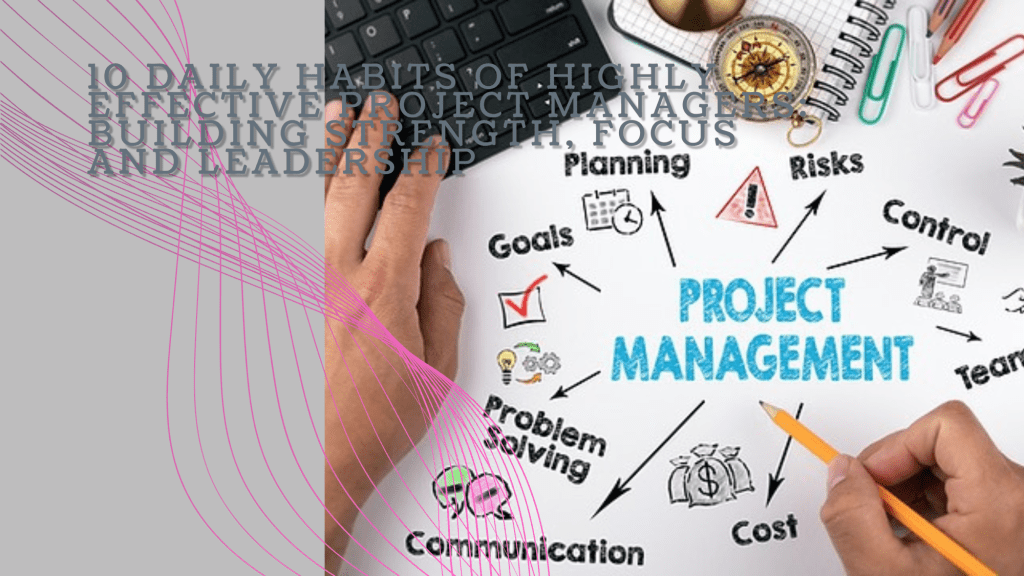
  • 10 Daily Habits of Highly Effective Project Managers: Building Strength, Focus, and Leadership

    10 Daily Habits of Highly Effective Project Managers: Building Strength, Focus, and Leadership

    Imagine this: it’s 5:30 AM, and Mark, a seasoned project manager, is already awake, gearing up for another intense day. His mornings start in the gym—lifting weights, pushing his body to its limits. Mark knows that the mental strength required to manage complex projects starts with physical discipline. Every rep he completes sharpens his focus for the day ahead. But there’s more to Mark’s success than his early morning workout routine. Over time, he’s developed a set of habits that boost his productivity and strengthen his leadership skills.

    Years ago, Sarah, another project manager, found herself constantly overwhelmed. Her days felt like a never-ending scramble, filled with back-to-back meetings and unplanned crises. But like Mark, she discovered the power of daily habits, ones that help her stay organized, calm, and in control. Today, Sarah manages projects with precision, delivering results with confidence. Let’s explore the 10 habits that have helped both Mark and Sarah thrive in their roles.

    1. Start with Physical Strength Training

    Mark’s day begins with physical training. Every morning, he heads to the gym for strength training. This ritual not only keeps him physically fit but also clears his mind. Lifting weights and pushing his body forces him to focus, which translates into sharper decision-making and stress management at work. He knows that a strong body builds a strong mind.

    Sarah, on the other hand, might not lift weights, but she starts her day with yoga and meditation. This calm, mindful practice helps her center herself before diving into the whirlwind of project management. The mental clarity it provides allows her to tackle the day’s challenges with grace and focus. Whether through strength training or yoga, both Mark and Sarah find that starting the day with physical exercise sharpens their mental resilience.

    2. Plan the Night Before

    Sarah’s evenings are just as intentional as her mornings. Before she wraps up her workday, she sets aside time to review her to-do list and plan for tomorrow. By the time she finishes, her mind is clear, and she knows exactly what to tackle first thing in the morning. This habit gives her peace of mind and prevents the morning scramble.

    Similarly, Mark has a habit of laying out his next day’s game plan the night before. He prioritizes key tasks and prepares his workspace, making sure nothing catches him off guard. When he wakes up, he feels in control, knowing that the day’s agenda is set. For both Mark and Sarah, this nightly routine keeps them organized and ready to hit the ground running each day.

    3. Embrace the Two-Minute Rule

    Mark lives by the Two-Minute Rule. If a task can be completed in less than two minutes—whether it’s responding to a quick email or approving a document—he handles it immediately. This habit stops minor tasks from piling up, keeping his workload light and manageable.

    Sarah, too, knows the value of handling quick tasks on the spot. Early in her career, she often felt bogged down by small, unfinished tasks that interrupted her flow. Now, by quickly addressing these minor issues as they arise, she frees up her time and energy for more important, strategic work. Both Mark and Sarah understand that small actions taken immediately prevent future distractions.

    4. Prioritize Deep Work

    Sarah carves out time every day for what she calls her “deep work” sessions. During these hours, she immerses herself in complex tasks that require her full attention—whether it’s strategic planning, reviewing critical reports, or brainstorming solutions. She blocks out distractions, turns off notifications, and focuses entirely on the work that truly matters.

    Mark follows the same principle. His deep work sessions are his most productive times of the day, allowing him to dive into key aspects of his projects without interruptions. He knows that staying in the zone during these moments leads to real progress. For both of them, deep work is where they solve the toughest problems and make the biggest strides.

    5. Leverage the Power of Delegation

    Early in her career, Sarah tried to do everything herself, thinking that being a strong leader meant handling every detail. But as she grew into her role, she learned that effective leadership is about empowering others. Now, she trusts her team to take ownership of their tasks, giving her more time to focus on the bigger picture.

    Mark had a similar realization. Once a hands-on manager who couldn’t let go of control, he now excels at delegating to his team. By trusting them with important responsibilities, he not only lightens his load but also helps his team grow and develop. Both Mark and Sarah have learned that great leaders don’t do it all—they build teams that can.

    6. Communicate with Purpose

    Mark understands the power of clear communication. He’s direct and concise, ensuring that every meeting and conversation serves a purpose. By communicating efficiently, he keeps his team aligned and on track, minimizing misunderstandings and ensuring everyone knows what’s expected.

    Sarah takes a similar approach. Instead of getting bogged down in long, unproductive meetings, she keeps her communication focused and intentional. Whether she’s sending a quick update or leading a strategy session, Sarah makes sure that her words are clear and impactful. Both Mark and Sarah know that effective communication is the key to keeping projects moving smoothly.

    7. Set Aside Time for Reflection

    At the end of each day, Sarah takes a few moments to reflect on her successes and challenges. She asks herself what went well, what could have been done better, and what she learned. This daily reflection helps her continuously improve, making subtle adjustments to her leadership style and project management techniques.

    Mark is no different. He’s made it a habit to end each day by reflecting on his performance. Whether it’s during his drive home or while unwinding after dinner, he considers what worked, where he faced difficulties, and how he can improve tomorrow. For both Sarah and Mark, these moments of reflection provide the self-awareness needed to grow as leaders.

    8. Adopt a Growth Mindset

    Sarah believes that challenges are opportunities to grow. Instead of fearing mistakes, she embraces them as part of the learning process. She’s constantly seeking out new knowledge, attending workshops, reading books, and staying curious. This growth mindset allows her to adapt quickly and stay ahead in a fast-changing environment.

    Mark shares this philosophy. He’s not afraid to push boundaries, experiment with new project management techniques, or ask for feedback. Like Sarah, he understands that continuous learning is the key to staying effective. Both of them know that a growth mindset is essential for long-term success in project management.

    9. Master Time Blocking

    Mark is disciplined about time blocking. He breaks his day into focused chunks—one for meetings, another for deep work, and yet another for handling administrative tasks. This structured approach helps him maximize productivity and prevent his day from being consumed by distractions.

    Sarah also uses time blocking to stay organized. She schedules specific time slots for focused work, meetings, and even personal breaks. By assigning each task its own dedicated block of time, she keeps her day structured and efficient. For both Mark and Sarah, time blocking ensures that their most important work gets the attention it deserves.

    10. End the Day with Gratitude

    At the end of the day, Sarah takes a moment to celebrate her wins. Whether it’s completing a project milestone or simply navigating a challenging conversation, she ends her day by recognizing the progress she and her team have made. This habit keeps her motivated and reminds her of the positive impact she’s having.

    Mark also ends his day on a note of gratitude. He reflects on what went well and appreciates the efforts of his team. Gratitude, he’s found, helps him stay grounded and focused on the bigger picture. Both Mark and Sarah believe that ending the day with appreciation fuels the energy and optimism needed for success.

    Conclusion: A Blueprint for Success

    Mark and Sarah have different approaches, but their success comes from the same core principle: consistent daily habits. These small but powerful routines shape their leadership, boost their productivity, and help them manage projects with confidence and clarity. From physical training to daily reflection, their habits create a strong foundation for growth.

    By adopting these habits, you too can elevate your project management skills and lead with purpose. Success doesn’t happen overnight—it’s built one habit at a time. Like Mark and Sarah, you can create the systems that allow you to thrive, delivering exceptional results in every project you lead.

  • The Science Behind Productivity: How to Optimize Your Work Hours

    The Science Behind Productivity: How to Optimize Your Work Hours

    In today’s fast-paced world, productivity has become a buzzword that everyone chases. But what does it really mean to be productive, and how can we optimize our work hours to achieve it? The answer lies not just in working harder but in working smarter, guided by scientific research. By understanding the science behind productivity, we can implement strategies that make even the hardest tasks seem effortless.

    Understanding Productivity: More Than Just Getting Things Done

    Productivity is often equated with the sheer volume of tasks completed. However, research shows that true productivity is about achieving meaningful results with less effort. It’s the art of doing more with less—less time, less stress, and less energy. This can be achieved by leveraging our natural rhythms, cognitive abilities, and psychological tools.

    The Role of Circadian Rhythms in Productivity

    One of the most powerful determinants of productivity is our circadian rhythm, the body’s natural 24-hour cycle. This internal clock regulates when we feel alert and when we’re likely to feel tired. Studies have shown that most people experience peaks in cognitive function during certain times of the day. For instance, early morning and late afternoon are often cited as high-productivity periods, known as the “two peaks” in the day.

    How to Optimize:

    • Identify Your Peak Hours: Pay attention to when you feel most alert and schedule your most demanding tasks during these periods.
    • Power Down When Necessary: Use the afternoon slump, typically between 1 pm and 3 pm, for less demanding tasks like responding to emails or organizing your workspace.
    The Science of Breaks: Why You Shouldn’t Power Through

    Contrary to the “power through” mentality, research indicates that taking regular breaks is crucial for maintaining high productivity levels. The brain’s ability to maintain focus wanes over time, and pushing through can lead to diminishing returns. Techniques like the Pomodoro Technique, which advocates for 25 minutes of focused work followed by a 5-minute break, align with the way our brain functions.

    How to Optimize:

    • Incorporate Micro-Breaks: Implement short, frequent breaks throughout your workday to reset your focus.
    • Step Outside: Physical movement and a change of environment, even briefly, can rejuvenate your mind.
    The Power of Deep Work

    Deep work, a term popularized by author Cal Newport, refers to focused, uninterrupted periods of work on cognitively demanding tasks. Scientific studies have shown that the brain can only maintain this level of focus for about 90-120 minutes at a time before needing a break. Engaging in deep work maximizes your cognitive resources, allowing you to accomplish more in less time.

    How to Optimize:

    • Block Out Distractions: Use tools and strategies to minimize interruptions. This can include turning off notifications, using noise-cancelling headphones, or setting clear boundaries with colleagues.
    • Schedule Deep Work Sessions: Dedicate specific times of the day to deep work, ideally during your peak cognitive hours.
    The Role of Sleep in Productivity

    It might seem counterintuitive, but rest is a critical component of productivity. Sleep is when the brain consolidates memories, processes information, and resets for the next day. Numerous studies have demonstrated that lack of sleep leads to decreased cognitive performance, poor decision-making, and lower productivity.

    How to Optimize:

    • Prioritize Sleep: Ensure you get 7-9 hours of quality sleep per night. This isn’t just about quantity but also about creating an environment conducive to restful sleep.
    • Maintain a Consistent Sleep Schedule: Going to bed and waking up at the same time each day helps regulate your circadian rhythm, improving your alertness and productivity.
    The Psychology of Motivation: Staying Driven

    Motivation is a key driver of productivity, and understanding its psychological underpinnings can help maintain it throughout the day. The Self-Determination Theory (SDT) posits that motivation is highest when tasks are aligned with our intrinsic goals, provide a sense of competence, and allow for autonomy.

    How to Optimize:

    • Set Clear, Intrinsic Goals: Align your tasks with your long-term goals and values to keep yourself motivated.
    • Break Tasks into Manageable Steps: Smaller, more manageable steps reduce overwhelm and build momentum.
    • Reward Yourself: Positive reinforcement, like small rewards, can boost motivation and make difficult tasks seem easier.
    Actionable Steps to Skyrocket Your Productivity
    1. Track Your Peak Hours: Start by tracking your energy levels throughout the day for a week. Use this data to identify your peak productivity periods and plan your most important tasks during these times.
    2. Adopt the Pomodoro Technique: Begin implementing short, timed work sessions followed by breaks. This not only keeps your mind fresh but also combats procrastination.
    3. Schedule Deep Work Sessions: Dedicate 90-minute blocks to deep work, free from distractions. This will help you tackle the most challenging tasks efficiently.
    4. Prioritize Sleep: Make sleep a non-negotiable part of your productivity strategy. Set a regular sleep schedule, create a relaxing bedtime routine, and optimize your sleeping environment.
    5. Align Tasks with Goals: Reframe your tasks to align with your intrinsic goals. If a task seems mundane, find a way to connect it to a larger, meaningful objective.
    6. Take Strategic Breaks: Incorporate micro-breaks throughout your day. Use them to move, hydrate, or simply step outside for a breath of fresh air.
    7. Practice Gratitude and Positive Reinforcement: Celebrate small wins and progress. This helps maintain motivation and keeps you focused on long-term goals.

    By understanding and applying the science of productivity, you can make even the hardest tasks seem effortless. It’s not about working more hours but optimizing the hours you work. Implementing these scientifically-backed strategies can transform your workday, boost your productivity, and ultimately help you achieve more with less effort.

  • 10 Proven Techniques to Boost Your Daily Productivity: A Guide for Project Managers

    10 Proven Techniques to Boost Your Daily Productivity: A Guide for Project Managers

    Project management is a demanding profession that requires juggling multiple tasks, deadlines, and team dynamics. With so many moving parts, maintaining high productivity levels can be challenging. However, by employing proven techniques, you can enhance your daily productivity and lead your projects to successful completion. Below are ten actionable strategies tailored to the day-to-day work of a project manager.

    1. Prioritize with the Eisenhower Matrix

    As a project manager, your to-do list can quickly become overwhelming. The Eisenhower Matrix helps you prioritize tasks by categorizing them into four quadrants:

    • Urgent and important: Tasks you must do immediately.
    • Important but not urgent: Tasks to schedule for later.
    • Urgent but not important: Tasks to delegate.
    • Neither urgent nor important: Tasks to eliminate.

    By focusing on what’s truly important, you can ensure that critical tasks receive your attention while less vital ones don’t consume your time.

    2. Embrace Time Blocking

    Time blocking involves scheduling specific blocks of time for different tasks or activities throughout your day. For project managers, this could mean allocating time for team meetings, project planning, stakeholder communication, and deep work sessions. By dedicating time to these activities, you minimize context-switching, which can drain your energy and reduce efficiency.

    3. Leverage Project Management Tools

    Modern project management tools like Asana, Trello, or Microsoft Project can be game-changers for productivity. These tools help you manage tasks, track progress, and collaborate with your team in real-time. They also offer features like Gantt charts, time tracking, and automated reminders, ensuring that nothing slips through the cracks.

    4. Implement the Two-Minute Rule

    The two-minute rule is simple: if a task can be completed in two minutes or less, do it immediately. For project managers, this might involve quick email responses, approving small requests, or updating a project status. By handling these quick tasks right away, you prevent them from piling up and cluttering your to-do list.

    5. Practice the Pomodoro Technique

    The Pomodoro Technique is a time management method where you work for 25 minutes and then take a five-minute break. After four “Pomodoros,” take a longer break of 15-30 minutes. This technique helps maintain focus and productivity while preventing burnout. For project managers, using this technique can be particularly useful during periods of intense focus, such as when creating project plans or conducting performance reviews.

    6. Delegate Effectively

    Effective delegation is key to a project manager’s productivity. Identify tasks that can be handled by your team members, and delegate accordingly. This not only frees up your time to focus on high-priority tasks but also empowers your team, fosters trust, and enhances their professional development. Use delegation tools within your project management software to track delegated tasks and ensure accountability.

    7. Conduct Regular Stand-Up Meetings

    Daily stand-up meetings, or “scrums,” are brief check-ins with your team that last no longer than 15 minutes. These meetings help ensure that everyone is on the same page, address any roadblocks, and keep the project moving forward. By keeping them short and focused, you maintain momentum without bogging down your day with lengthy discussions.

    8. Automate Routine Tasks

    Automation can significantly boost your productivity by handling repetitive tasks. As a project manager, you can automate reporting, reminders, or even communication updates using tools like Zapier or built-in automation features in your project management software. This reduces the manual workload, allowing you to focus on more strategic activities.

    9. Set Clear Goals and Milestones

    Setting clear, measurable goals and milestones is essential for maintaining productivity. Break down large projects into smaller tasks with specific deadlines. This not only makes the project more manageable but also provides a sense of progress and accomplishment as you complete each milestone. Clear goals also help you stay aligned with your overall project objectives and reduce the risk of scope creep.

    10. Reflect and Adjust

    At the end of each day or week, take time to reflect on what you accomplished, what challenges you faced, and how you can improve. This practice allows you to adjust your strategies, refine your approach, and continuously improve your productivity. Regular reflection also helps you stay aware of your workload and prevents burnout.

    Conclusion

    For project managers, balancing multiple responsibilities while maintaining high productivity is crucial. By implementing these ten proven techniques, you can streamline your workflow, enhance your efficiency, and ensure that your projects are delivered on time and within scope. Remember, productivity is not about doing more in less time—it’s about focusing on what truly matters and delivering value to your team and stakeholders.