Category: productivity

  • Simplicity reveals what truly matters.

    Simplicity reveals what truly matters.

    In today’s fast-paced project environments, complexity has become the default. We pile on tools, processes, reports, and meetings — hoping to gain control, but often ending up with noise.

    The result?

    Slower progress, unclear priorities, and teams spread thin trying to do everything at once.

    But here’s the truth: complexity is often the enemy of execution.

    In project management and productivity, simplicity isn’t just aesthetic — it’s a strategic advantage. It clears the path for meaningful outcomes and helps teams focus on what actually moves the needle.

    Here’s how to make it real:

    🔹 1. Clarify before you plan.

    Before drafting a timeline or task list, distill the “why” behind the project. If the objective can’t be stated in one sentence, it’s not yet clear enough. Clarity saves you from scope creep later.

    🔹 2. Use fewer tools, better.

    Too many apps create silos and friction. Choose one project management platform — and build a shared, standardized workflow. A good tool used consistently beats a dozen half-integrated ones.

    🔹 3. Replace zombie meetings with async updates.

    Audit recurring meetings monthly. If there’s no new decision to make or problem to solve, it doesn’t need to be a meeting. Tools like dashboards, shared docs, or Loom updates can deliver the same value in half the time.

    🔹 4. Prioritize visually.

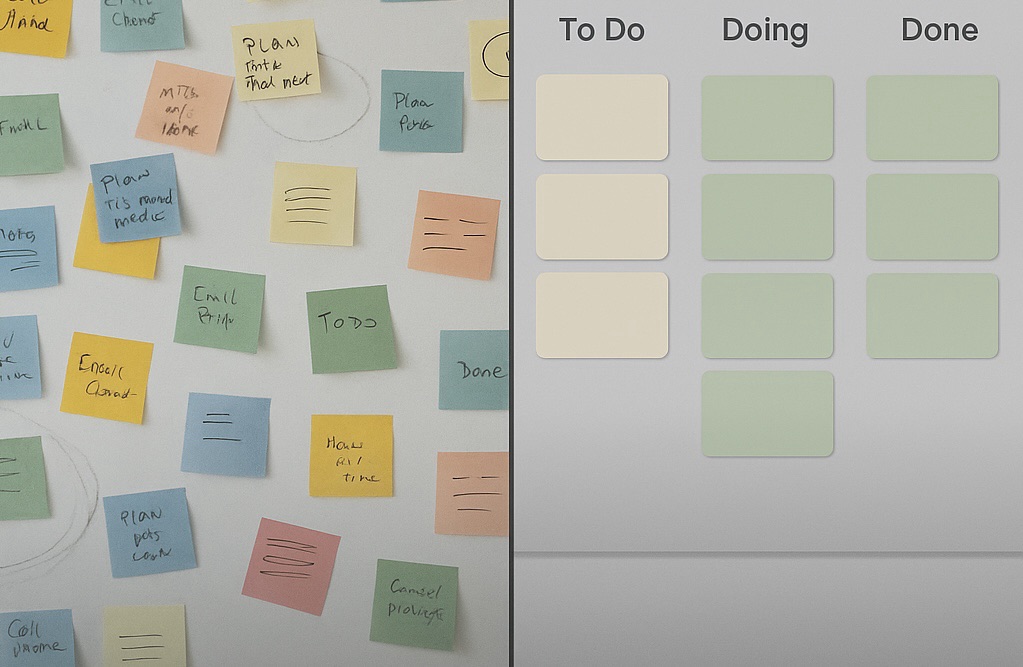
    A Kanban board, a visual timeline, or even a simple progress bar communicates faster than a 10-slide deck. Simplicity isn’t dumbing down — it’s speeding up understanding.

    🔹 5. Focus on one high-impact outcome at a time.

    Multitasking scatters attention. Sequence your team’s work around clear milestones, and make sure everyone knows the current priority. Simplicity helps people feel progress — and progress drives engagement.

    Why this matters:

    Simplicity improves decision-making.

    It reduces stress.

    It accelerates delivery.

    When you eliminate the unnecessary, you uncover what truly drives value — and give your team room to breathe, focus, and thrive.

    In leadership, simplicity is contagious. A streamlined process or a clear, concise brief sets the tone for execution with purpose.

    If your project workflow feels heavy, pause and ask:

    “What can I remove that no longer serves the goal?”

    Sometimes progress means doing less, but doing it better.

    Simplicity reveals what truly matters.

    🔄 Your turn:

    What’s one process, tool, or meeting you’ve simplified recently — and what impact did it have?

    👇 Share below and let’s build smarter, leaner projects together.
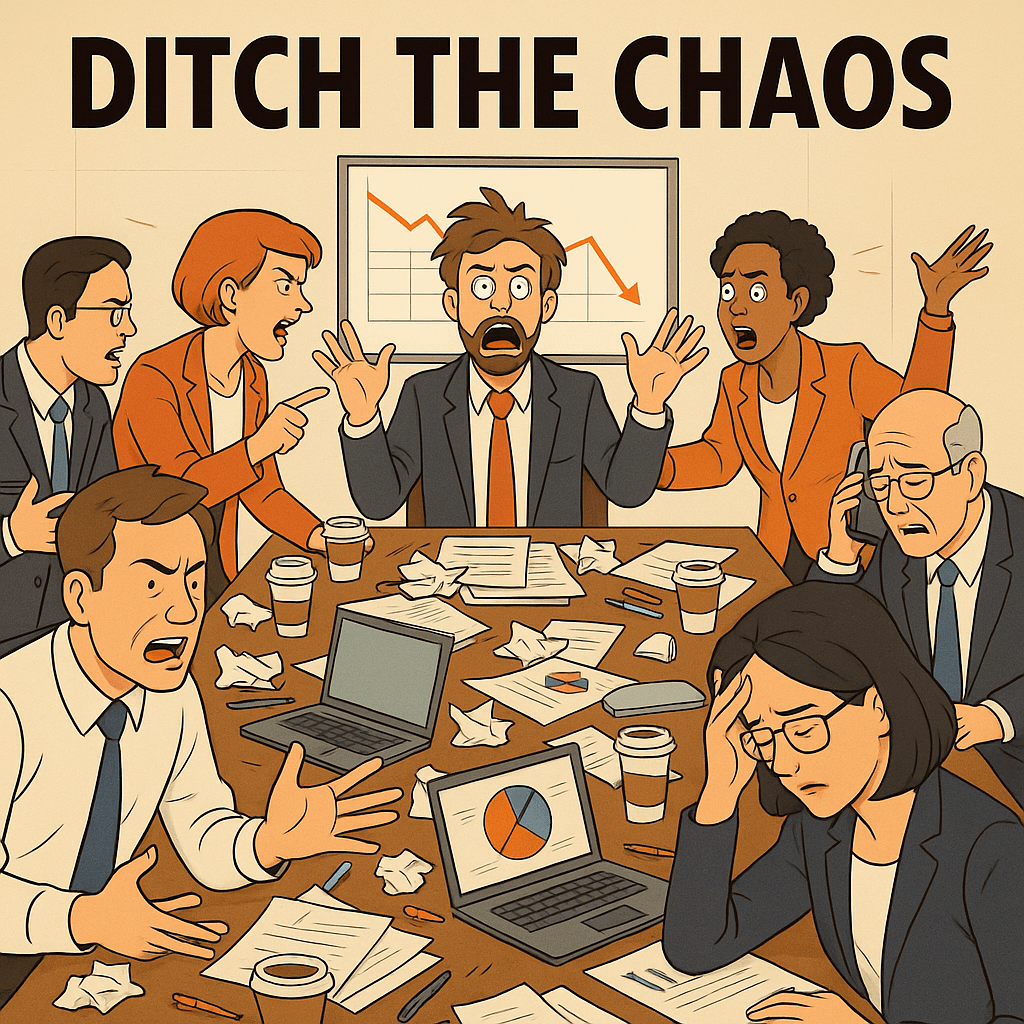
  • Ditch the Chaos: Run Lean, Productive Meetings with Minimalist Principles

    Ditch the Chaos: Run Lean, Productive Meetings with Minimalist Principles

    In the modern workplace, meetings have become synonymous with wasted time, vague outcomes, and bloated invite lists. But it doesn’t have to be this way. If we apply minimalist thinking to how we meet, we can transform meetings from chaotic time sinks into focused tools for progress.

    Minimalism is about cutting what’s unnecessary to make space for what truly matters. This principle—so effective in decluttering homes and calendars—can just as powerfully streamline our meetings.

    1. Only Meet When Necessary

    🧭 Minimalist Principle: Eliminate the unnecessary.

    Ask yourself:

    “Could this be solved with a clear message or short update?”

    If yes, cancel the meeting. Meet only when real-time discussion or decisions are essential.

    2. One Purpose. One Agenda.

    🎯 Minimalist Principle: Focus on what matters most.

    Define the meeting’s goal in one sentence. Keep the agenda tight—fewer items mean deeper focus. Side conversations? Park them for later.

    3. Fewer People = More Progress

    👥 Minimalist Principle: Less is more.

    Invite only the key decision-makers and stakeholders. Smaller groups lead to sharper discussions and quicker outcomes.

    4. Respect Time Like a Resource

    ⏱️ Minimalist Principle: Value time and space.

    Set a time limit—15 or 30 minutes works for most meetings.

    Start on time. End on time. Stay on track.

    Time-box topics to prevent drift and maximize focus.

    5. Use Simple, Streamlined Tools

    🛠️ Minimalist Principle: Use what works, remove what doesn’t.

    Ditch long slideshows and clunky tools.

    Use a shared doc or whiteboard. Tools like Notion or Google Docs keep collaboration visible and flexible—without the fluff.

    6. Always End with Action

    ✅ Minimalist Principle: Clear is better than more.

    Close each meeting with clarity:

    What decisions were made? Who’s doing what? What’s the deadline?

    Document and share this. Make follow-up automatic, not an afterthought.

    7. Reflect. Simplify. Repeat.

    🔄 Minimalist Principle: Continual simplification.

    Audit your recurring meetings:

    Which ones are actually productive? Which ones just feel necessary?

    Cancel or redesign anything that doesn’t serve a clear, current purpose.

    🧘‍♂️ The Minimalist Meeting Mantra:

    “Meet less. Talk less. Decide more.”

    By stripping meetings down to their essentials, we unlock what matters: focus, clarity, and execution. It’s not about doing more—it’s about doing what matters, better.

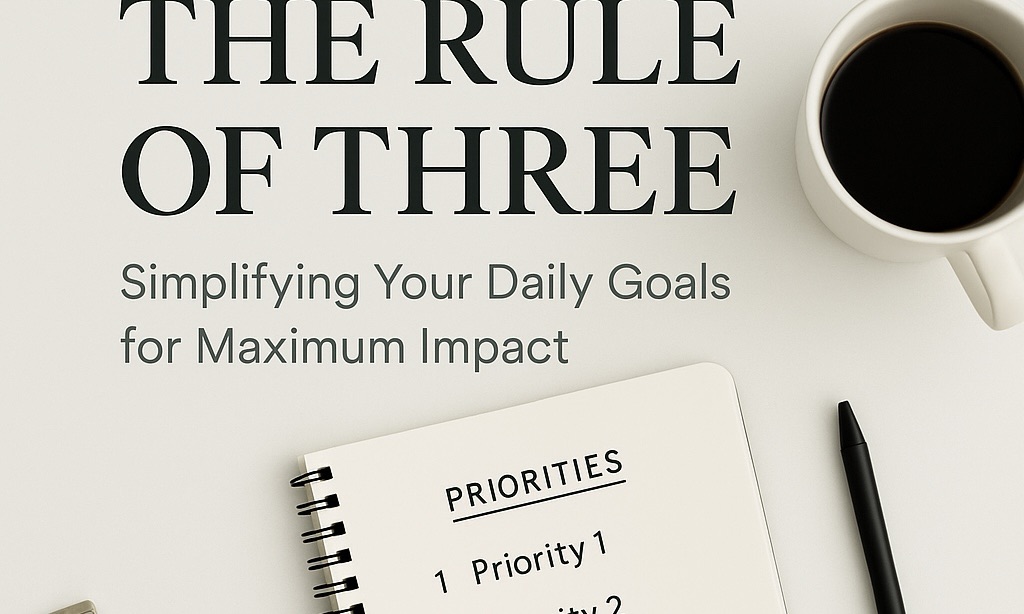
  • ✅ The Rule of Three: Simplifying Your Daily Goals for Maximum Impact

    ✅ The Rule of Three: Simplifying Your Daily Goals for Maximum Impact

    🧠 You start your day with a long to-do list.

    It’s packed with tasks, ideas, emails, and reminders. By noon, you’re “busy”… but not productive.

    Sound familiar?

    Let me offer you something simpler—and far more powerful:

    🎯 The Rule of Three.

    It’s a minimalist productivity method I use daily, and it’s changed how I work, lead, and live.

    🔍 What is the Rule of Three?

    Each morning, ask yourself:

    💬 “What are the 3 most important things I want to accomplish today?”

    Not 10.

    Not everything.

    Just 3.

    These should be high-impact actions—not shallow tasks. Think: finish a proposal, prep for a meeting, finalize a decision.

    🎯 The work that truly moves the needle.

    🧠 Why It Works:

    ✔️ Focus over friction – You eliminate decision fatigue.

    ✔️ Clarity beats chaos – Your day has a compass, not a pile of noise.

    ✔️ Progress feels real – Checking off 3 important wins builds momentum and motivation.

    Studies show that multitasking can reduce productivity by up to 40%. The Rule of Three creates space for deep work instead of distraction.

    ⚙️ How to Use It:

    📅 Every morning, take 2 minutes.

    Write down your 3 priorities—paper, app, mirror—it doesn’t matter.

    Just do it before opening your inbox or calendar.

    🏡 Apply it across life areas:

    Work: finish project draft Health: 20-minute workout Family: tech-free dinner time

    Need more structure? Use this question:

    💡 “What 3 things would make today feel successful—even if I got nothing else done?”

    Stick to 3. If you’re tempted to add more, make it a bonus. 🎁

    🌱 Bonus: The Weekly Rule of Three

    Take 5 minutes every Sunday:

    What’s 1 major work goal? What’s 1 health or personal goal? What’s 1 relationship or family goal?

    Write them down. Keep them visible. Reflect midweek. 🧭

    ✳️ Minimalism in Action

    The Rule of Three isn’t about doing less.

    It’s about doing what matters most—with clarity and consistency.

    “Essentialism isn’t how to get more things done. It’s how to get the right things done.”

    – Greg McKeown

    🎯 When you simplify your focus, you amplify your results.

    🚀 Try This Tomorrow

    ✅ Write down 3 priorities

    ✅ Tackle them before distractions

    ✅ Track how it feels over 1 week

    👇 Drop one of your 3 below if you’re in.

    Let’s make simplicity your new superpower.

  • The One-Minute Rule: A Micro-Habit That Clears Mental and Physical Clutter

    The One-Minute Rule: A Micro-Habit That Clears Mental and Physical Clutter

    Simplify your life one small action at a time—how a single rule can reshape your productivity, mindset, and environment.

    😫 Drowning in Tiny Tasks?

    Ever feel like you’re buried under a mountain of micro-responsibilities?

    📩 Emails piling up…

    🍽 Dishes in the sink…

    💬 Unread Slack messages…

    🧥 A coat draped over the chair since Tuesday…

    They seem too small to matter—yet they drain your energy and linger in the back of your mind. The One-Minute Rule might be the simplest solution you’ve never consistently used.

    ✅ What Is the One-Minute Rule?

    👉 If a task takes one minute or less, do it immediately.

    It’s that simple.

    Here are a few everyday examples:

    📧 Replying to a quick email

    🧥 Hanging up your jacket

    ☕ Washing your coffee cup

    📂 Filing one paper

    💻 Closing unused browser tabs

    🧠 Low mental effort. High payoff.

    🧬 Why It Works (The Psychology Behind It)

    The brilliance of the One-Minute Rule lies in behavioral science:

    🔋 Removes decision fatigue

    🧾 Breaks the “task debt” cycle

    🚀 Triggers momentum—action begets action

    🧘 Clears mental clutter and boosts control

    According to the Zeigarnik effect, our brains fixate on unfinished tasks. These “open loops” drain focus and increase stress.

    Closing these loops—one minute at a time—quietly reclaims energy.

    🛠 How to Use It Without Obsessing

    🎯 The goal isn’t perfection. It’s progress through simplicity.

    Here’s how to make it stick:

    🧠 Don’t overthink it—if you notice it, do it ⏰ Set 3 daily reminders (morning, midday, evening) 🧊 Use it as a warm-up before deep work 👨‍👩‍👧‍👦 Teach it to your team or kids as a culture hack

    Small actions compound—just like mess does. Why not let clarity be what multiplies?

    🌱 The Essentialist Angle: Small Habits, Big Results

    Minimalism isn’t about doing less—it’s about removing what doesn’t matter so you can focus on what does.

    🧭 One minute at a time, you reduce friction.

    💼 You free your mind to lead.

    🏡 You clear space to be present.

    💪 You reserve energy for your fitness, focus, and family.

    This rule isn’t just about getting things done—it’s about becoming the kind of person who gets things done effortlessly.

    🔄 Your Turn

    What’s one one-minute task you’ve been putting off today?

    🔁 Try the One-Minute Rule for 3 days.

    📓 Track how it shifts your mood, your focus, and your space.

    Then drop me a comment, DM, or reply—I’d love to hear what changed for you.

  • Leading with Calm: What Marcus Aurelius Teaches Us About Leadership in Heated Moments 

    Leading with Calm: What Marcus Aurelius Teaches Us About Leadership in Heated Moments 


    Keep this thought handy when you feel a fit of rage coming on—it isn’t manly to be enraged. Rather, gentleness and civility are more human, and therefore manlier. A real man doesn’t give way to anger and discontent, and such a person has strength, courage, and endurance—unlike the angry and complaining. The nearer a man comes to a calm mind, the closer he is to strength.

    MARCUS AURELIUS, MEDITATIONS

    This timeless quote from Marcus Aurelius isn’t just philosophy — it’s a guide for modern leadership.

    In business, pressure is constant. Deadlines loom, clients push, projects stall. It’s tempting — and sometimes feels justified — to explode in frustration 😤. But let’s pause. What if restraint, not rage, is the real sign of strength?

    Anger Is Easy. Composure Is Mastery 🎯

    Reacting with anger is instinctive. Leading with calm is intentional. Teams don’t need a leader who lashes out in stress. They need someone who can hold steady, especially when things go wrong. When you stay composed, you give others permission to do the same.

    • 📌 A calm leader de-escalates tension instead of fueling it.
    • 📌 A calm leader creates psychological safety — a foundation for innovation and trust.
    • 📌 A calm leader makes better decisions, because they’re not clouded by emotion.
    Anger Undermines Authority ⚠️

    Many believe that showing anger asserts control. But in reality, it signals a loss of control. Team members may comply out of fear — but they won’t feel motivated, valued, or heard. Over time, this erodes morale and drives talent away 🚪.

    Marcus Aurelius reminds us that gentleness and civility are not signs of weakness, but of emotional strength. They are the true hallmarks of leadership.

    Practical Ways to Apply Stoic Leadership 💼
    1. Pause before reacting: Take a breath before responding to a trigger. That space is where leadership lives.
    2. Reframe the situation: Ask yourself, What’s the wisest, most composed response right now?
    3. Lead by example: Show your team that staying calm is not only possible, it’s expected. Emotions are contagious — spread resilience, not reactivity 💡.
    4. Debrief, don’t explode: When things go wrong, turn mistakes into learning — not blame. Growth thrives in calm, not in chaos.
    Calm Is Contagious — and Powerful 🌱

    We often admire leaders who remain unshaken in crisis. That’s no accident. People crave stability. In uncertain times, the leader who radiates clarity and calm becomes the anchor ⚓.

    So next time you feel anger rising, remember Marcus Aurelius. Strength isn’t in shouting. It’s in showing up with presence, poise, and purpose.

    Because real power isn’t loud — it’s calm, clear, and quietly unshakable. 💪🧠