Category: productivity

  • Antifragility and how it will benefit your projects

    Antifragility and how it will benefit your projects

    “Antifragile: Things That Gain from Disorder” by Nassim Nicholas Taleb

    “Antifragile: Things That Gain from Disorder” is a book by Nassim Nicholas Taleb that explores the concept of antifragility, a property of systems, individuals, and entities that thrive and grow when exposed to volatility, randomness, and disorder. Unlike fragile things that break under stress or robust things that withstand stress without breaking, antifragile things improve and get stronger. Taleb’s work spans various fields, including finance, medicine, politics, and personal development, highlighting the benefits of embracing uncertainty and chaos.

    Core Principles of Antifragility
    Antifragility vs. Fragility and Robustness
    • Fragility: Things that break or deteriorate under stress (e.g., a glass).
    • Robustness: Things that remain unchanged under stress (e.g., a rock).
    • Antifragility: Things that improve or grow stronger under stress (e.g., the human body’s muscles growing stronger from exercise).
    The Barbell Strategy

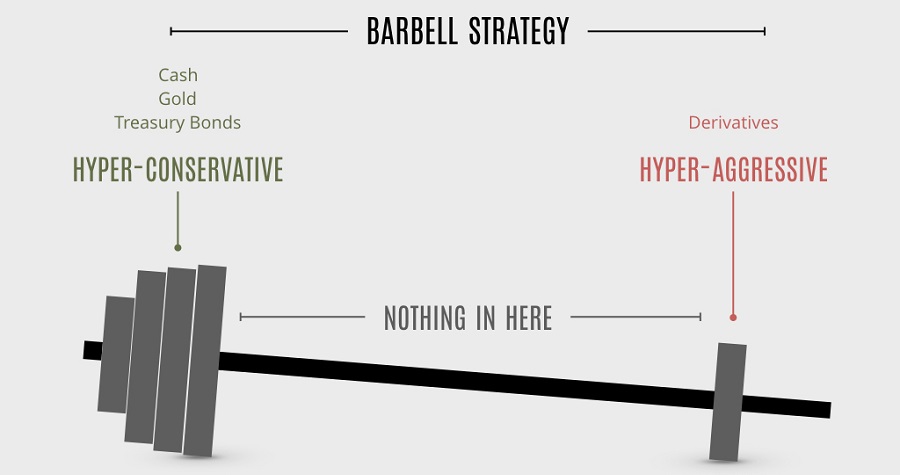
    A risk management strategy that involves taking a combination of extreme safe bets (highly conservative) and extreme aggressive bets (highly speculative), avoiding the middle. This strategy balances risk and reward, reducing exposure to the negative effects of unexpected events while benefiting from potential gains.

    Optionality

    The value of having multiple options and choices. Optionality allows one to benefit from positive unexpected events without incurring significant downsides from negative ones. In financial terms, it’s similar to holding an option that can be exercised when favorable conditions arise.

    Via Negativa

    The principle of improvement through subtraction rather than addition. Removing harmful elements, such as unnecessary interventions, habits, or practices, can lead to better outcomes. This is akin to removing risks rather than trying to predict and control them.

    Skin in the Game

    The concept that individuals or entities should have a vested interest and exposure to the risks and rewards of their actions. This aligns incentives and ensures that decision-makers bear the consequences of their decisions, promoting accountability and better decision-making.

    Convexity and concavity

    Convex systems benefit from volatility and stress, experiencing asymmetric gains. Concave systems are harmed by volatility, experiencing asymmetric losses. Understanding the convex or concave nature of systems helps in identifying which strategies will benefit from disorder and which will suffer.

    The Lindy Effect

    The idea that the future life expectancy of non-perishable items (like a book or technology) increases with their age. The longer something has existed, the longer it is likely to continue to exist, suggesting that time-tested practices and ideas are often more robust.

    Tinkering and Iteration

    The importance of experimenting and learning through trial and error. Small-scale experiments and iterative processes allow for adaptation and improvement over time, fostering antifragility by learning from failures and successes.

    REdundancy and Layers

    Building redundancy into systems to absorb shocks and disruptions. Having backup options and layered defenses makes systems more resilient and capable of thriving under adverse conditions.

    Nonlinear Relationships

    Recognizing that relationships in complex systems are often nonlinear. Small changes can lead to disproportionately large effects (both positive and negative), so understanding and leveraging these nonlinear dynamics is crucial for antifragility.

    Taleb’s book encourages readers to rethink their approach to risk, uncertainty, and volatility, advocating for embracing and leveraging these elements to build stronger, more resilient, and ultimately antifragile systems.

    ANd how do those concepts help you in your day to day work?

    Let’s examine applying the barbell strategy in project management. This involves balancing conservative, low-risk activities with innovative, high-risk ones to ensure overall project resilience and success. Here are steps and strategies to apply the barbell strategy effectively.

    Identify Low-Risk, High-Probability tasks

    These are the core tasks that are essential for the project’s success. They are predictable, have clear outcomes, and are critical for maintaining stability. Examples include:

    • Project Planning: Detailed planning to outline scope, objectives, timelines, and resource allocation.
    • Risk Management: Implementing standard risk management processes to identify, assess, and mitigate risks.
    • Stakeholder Communication: Maintaining regular, clear communication with stakeholders to ensure alignment and manage expectations.
    • Quality Assurance: Establishing robust quality control processes to ensure deliverables meet the required standards.
    Identify High-Risk, High-Reward Opportunities

    These tasks or initiatives have the potential to significantly enhance the project’s value but come with higher uncertainty and risk. Examples include:

    • Innovation Initiatives: Introducing new technologies, methodologies, or creative solutions that could revolutionize the project outcomes.
    • Pilot Projects: Running small-scale pilot tests for new ideas to assess their viability before full-scale implementation.
    • Strategic Partnerships: Forming alliances with external experts or organizations to leverage their capabilities and insights.
    Balance the portfolio

    Ensure a balance between low-risk and high-risk activities to create a diversified project approach. This involves:

    • Allocating Resources: Assign a majority (e.g., 80-90%) of resources to low-risk, high-probability tasks to ensure project stability.
    • Reserving Resources: Keep a smaller portion (e.g., 10-20%) for high-risk, high-reward opportunities to foster innovation and potential breakthrough outcomes.
    Implement Iterative and Incremental Approaches

    Adopt methodologies that support continuous improvement and adaptability, such as:

    • Agile Frameworks: Use Agile methodologies like Scrum or Kanban to allow for flexibility, iterative progress, and constant feedback loops.
    • Lean Principles: Apply Lean principles to eliminate waste, focus on value delivery, and enable rapid iterations.
    Foster a Culture of Experimentation

    Encourage a work environment where experimentation is valued and failure is seen as a learning opportunity:

    • Encourage Risk-Taking: Motivate team members to propose and experiment with new ideas without fear of punitive consequences if they fail.
    • Learn from Failures: Implement a practice of conducting post-mortems or retrospectives to analyze what went wrong in failed experiments and apply the lessons learned.
    Maintain Optionality

    Ensure that the project has multiple options and pathways to success:

    • Contingency Planning: Develop contingency plans to quickly pivot if certain aspects of the project fail or unexpected opportunities arise.
    • Flexible Contracts: Use flexible contracts with vendors and partners that allow for adjustments based on project needs and external conditions.
    Monitor and Adjust

    Continuously monitor the progress of both low-risk and high-risk activities and adjust the strategy as needed:

    • Regular Reviews: Conduct frequent project reviews and adjust resource allocation based on current progress, risks, and opportunities.
    • Performance Metrics: Use performance metrics to track the success of both core and innovative activities, making data-driven decisions to optimize the balance.
    Example Application

    Imagine you are managing a software development project:

    • Low-Risk Activities: Ensure the core functionality of the software is robust, meets client requirements, and passes all quality checks.
    • High-Risk Opportunities: Allocate resources to explore new, cutting-edge features such as integrating AI capabilities or blockchain technology, running pilot tests to gauge their feasibility.

    By applying the barbell strategy, you safeguard the project’s essential deliverables while also creating room for potential high-impact innovations. This balance helps ensure that the project remains resilient and adaptable, capable of absorbing shocks and capitalizing on unforeseen opportunities.

  • Why you should be using timeboxing as a project manager

    Why you should be using timeboxing as a project manager

    What is Timeboxing?

    Timeboxing is a time management technique that involves allocating a fixed, maximum unit of time for an activity. Once the time limit (the “timebox”) is reached, the activity is stopped, and you move on to the next task or evaluate the progress. The goal of timeboxing is to create a sense of urgency and focus, reduce procrastination, and improve productivity by limiting the amount of time spent on tasks.

    Example of Using Timeboxing
    • Define the Task: Identify a specific task you need to accomplish. For example, writing a project report.
    • Set a Timebox: Allocate a fixed amount of time to the task. Let’s say 2 hours.
    • Work Intensely: Focus solely on the task for the allocated time without interruptions.
    • Evaluate Progress: Once the 2 hours are up, stop working on the task and evaluate your progress. Decide if you need another timebox to complete it or if it’s good enough.
    Example
    • Task: Write a project report.
    • Timebox: 2 hours.
    • Execution: Work exclusively on writing the report for 2 hours.
    • Evaluation: After 2 hours, review what has been written. If the report is not finished, schedule another timebox or decide if any additional work is necessary.
    10 Points on How a Project Manager Can Benefit from Timeboxing
    1. Enhanced Focus and Productivity: By limiting time spent on tasks, project managers can concentrate better and avoid distractions, leading to increased productivity.
    2. Better Time Management: Timeboxing helps project managers allocate time efficiently, ensuring that tasks do not overrun and that time is used effectively.
    3. Improved Deadline Adherence: Fixed time limits help ensure that tasks are completed within the deadline, reducing delays and keeping the project on schedule.
    4. Prioritization of Tasks: Timeboxing forces project managers to prioritize tasks, focusing on the most critical activities that need immediate attention.
    5. Reduced Procrastination: The time constraint creates a sense of urgency, helping project managers and their teams overcome procrastination.
    6. Enhanced Decision Making: Regular evaluation after each timebox allows project managers to make informed decisions about continuing, stopping, or adjusting tasks based on progress.
    7. Stress Reduction: Knowing that there is a set time limit for each task can reduce anxiety and stress, as it breaks down overwhelming projects into manageable chunks.
    8. Flexibility and Adaptability: Timeboxing allows project managers to be more flexible and adaptive, as they can quickly shift focus if a task is not yielding the desired results within the timebox.
    9. Better Resource Allocation: By setting time limits, project managers can better allocate resources, ensuring that no task consumes more resources than necessary.
    10. Continuous Improvement: The iterative nature of timeboxing promotes continuous improvement. After each timebox, project managers can reflect on what worked well and what didn’t, making necessary adjustments for future tasks.
    Implementing Timeboxing in Project Management
    1. Identify Key Tasks: Break down the project into smaller, manageable tasks.
    2. Set Timeboxes: Assign a fixed time period for each task based on its complexity and priority.
    3. Monitor Progress: Keep track of time and ensure tasks are progressing within their designated timeboxes.
    4. Evaluate and Adjust: At the end of each timebox, review progress and make any necessary adjustments before starting the next timebox.
    5. Communicate with the Team: Ensure the team understands the timeboxing method and its benefits. Encourage them to adhere to the time limits set.
    6. Use Tools: Utilize project management tools that support timeboxing (like Trello, Asana, or specialized timeboxing apps).

    By integrating timeboxing into their daily routines and project workflows, project managers can enhance efficiency, maintain control over project timelines, and ensure better outcomes for their projects.

  • The 80/20 rule

    The 80/20 rule

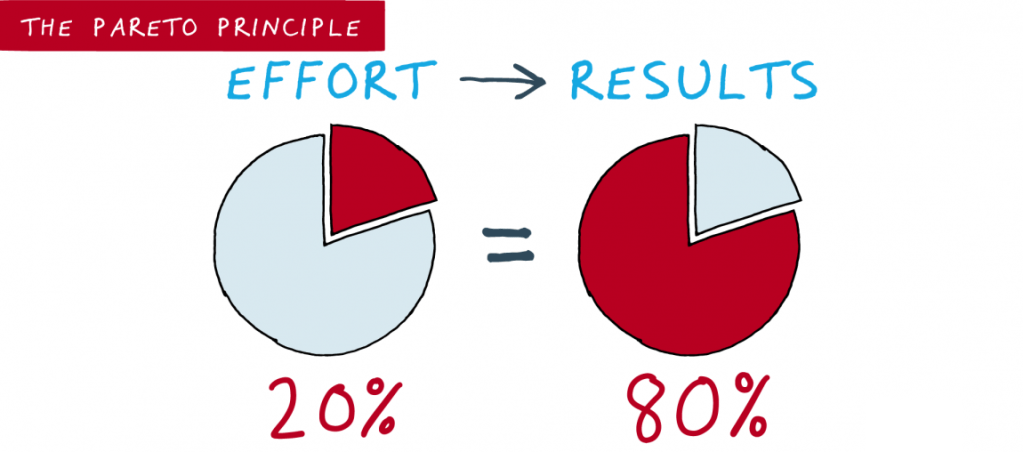
    The 80/20 Rule, also known as the Pareto Principle, is a principle that states that approximately 80% of the effects come from 20% of the causes. In other words, a small proportion of causes often leads to a large proportion of the results. This principle was named after the Italian economist Vilfredo Pareto, who observed that 80% of the land in Italy was owned by 20% of the population.

    Key Points of the 80/20 Rule
    • Inequality of Distribution: The principle highlights that not all inputs or efforts contribute equally to the outcomes.
    • Universal Application: The 80/20 rule can be applied across various fields and situations, including business, economics, software development, health, and personal productivity.
    • Focus on the Vital Few: By identifying and focusing on the critical 20% that contributes to the majority of the results, one can improve efficiency and effectiveness.
    Examples of the 80/20 Rule
    • Business: 80% of a company’s profits often come from 20% of its customers.
    • Sales: 80% of sales typically come from 20% of products or services.
    • Time Management: 80% of productive work is often achieved in 20% of the time.
    • Software Development: 80% of software bugs are usually found in 20% of the code.
    Practical Implications
    • Prioritization: Focus on the key areas that drive the most value or have the highest impact.
    • Efficiency: Allocate resources and efforts to the most influential activities.
    • Problem-Solving: Identify and address the root causes that lead to the majority of problems or defects.
    Summary

    In summary, the 80/20 rule is a powerful concept for understanding the disproportionate relationship between causes and effects, allowing individuals and organizations to optimize their efforts and resources for maximum impact.

    Implementation in Project Management

    Implementing the 80/20 rule in project management can significantly enhance efficiency and effectiveness by focusing on the most impactful activities. Here are some practical ways to apply the 80/20 rule in project management:

    1. Prioritizing Tasks
    • Identify Critical Tasks: Determine which 20% of tasks will produce 80% of the project’s results.
    • Focus Resources: Allocate more resources and time to these critical tasks to ensure they are completed effectively.
    2. Resource Allocation
    • Key Team Members: Assign the most skilled and experienced team members to the tasks that have the highest impact on the project’s success.
    • Budget Allocation: Direct a larger portion of the budget to the activities that drive the most value.
    3. Risk Management
    • Key Stakeholders: Identify the 20% of stakeholders who have the most influence over the project’s success.
    • Engagement Efforts: Prioritize communication and engagement efforts with these key stakeholders to ensure their support and alignment.
    5. Time Management
    • High-Impact Activities: Concentrate on the 20% of activities that will yield the most significant results.
    • Eliminate Wastes: Reduce or eliminate time spent on low-impact activities that do not contribute substantially to the project’s objectives.
    6. Quality Management
    • Critical Quality Metrics: Identify the 20% of quality metrics that impact 80% of the project’s deliverables.
    • Focus on Improvement: Prioritize quality improvement efforts on these critical areas.
    7. Performance Monitoring
    • Key Performance Indicators (KPIs): Track the 20% of KPIs that provide 80% of the insights into project performance.
    • Regular Reviews: Conduct regular reviews focused on these KPIs to ensure the project stays on track.
    Practical Steps for Implementation
    1. Data Analysis: Regularly analyze project data to identify high-impact tasks, risks, and stakeholders.
    2. Pareto Chart: Use Pareto charts to visually represent the most significant factors affecting the project.
    3. Continuous Review: Periodically review and adjust priorities based on new information and changing project dynamics.
    4. Training and Awareness: Train the project team on the 80/20 rule and its benefits to ensure they understand and apply it effectively.
    Example
    • Identifying: Determining that 20% of the features will provide 80% of the user value.
    • Prioritizing: Focusing development efforts on these high-value features first.
    • Allocating Resources: Assigning the best developers to these critical features to ensure they are implemented correctly and efficiently.
    • Risk Management: Identifying the top 20% of potential bugs that could cause 80% of the system failures and prioritizing their resolution.

    By applying the 80/20 rule in project management, project managers can optimize their efforts, enhance productivity, and increase the likelihood of project success.

  • Guarantee success in all your Projects

    Guarantee success in all your Projects

    A lot of literature and training in project management is mainly focusing on the planing phase, that becomes completely obsolete once the team starts working.

    The success of your project will most likely depend on the relationships you have built, to the team and to the stakeholders/ customers and on how well you are troubleshooting, course correcting and taking decisions.

    A key role in being able to really lead the project are your risk management capabilities.

    Throughout the project you should revisit the 6 steps show in the graphic and assess occurred and potential risks and mitigation actions.

    The better you can handle adversity as a project leader and as a project team, the better the performance of your project and your product will be and the easier it will be to keep a overall timeplan, budget and quality expectation.

    So what is Risk management?

    Risk management in a project refers to the systematic process of identifying, analyzing, assessing, and responding to potential risks that could affect the project’s success. It aims to minimize the impact of adverse events and maximize the opportunities by managing uncertainties. Here are the key components of risk management in a project:

    1. Risk Identification
    • Definition: Identifying and documenting potential risks that might affect the project.
    • Tools and Techniques: Brainstorming, interviews, SWOT analysis, checklists, and expert judgment.
    2. Risk analysis
    • Qualitative Analysis: Assessing the impact and likelihood of identified risks using a subjective approach.
    • Tools: Risk probability and impact matrix, risk categorization, risk urgency assessment.
    • Quantitative Analysis: Numerically analyzing the probability and impact of risks on project objectives.
    • Tools: Monte Carlo simulation, decision tree analysis, sensitivity analysis.
    3. Risk prioritization
    • Definition: Ranking risks based on their potential impact and likelihood to determine which risks need the most attention.
    • Tools: Risk matrix, Pareto charts.
    4. Risk response planning
    • Definition: Developing options and actions to enhance opportunities and reduce threats to project objectives.
    • Strategies:
      • Avoidance: Changing the project plan to eliminate the risk.
      • Mitigation: Taking steps to reduce the probability or impact of the risk.
      • Transfer: Shifting the impact of the risk to a third party (e.g., insurance, outsourcing).
      • Acceptance: Acknowledging the risk and not taking any action unless it occurs.
    5. Risk monitoring and control
    • Definition: Tracking identified risks, monitoring residual risks, identifying new risks, and evaluating the effectiveness of risk responses throughout the project lifecycle.
    • Tools: Risk audits, status meetings, risk reassessment, variance and trend analysis.
    6. Communication and Documentation
    • Definition: Ensuring that all stakeholders are aware of the risks and the actions taken to manage them. Keeping detailed records of the risk management process.
    • Tools: Risk register, risk reports, project management information systems.
    Benefits of Risk management in projects
    • Increased likelihood of project success: By proactively identifying and managing risks, the project is more likely to achieve its objectives.
    • Better decision-making: Provides a structured approach to decision-making by understanding the potential risks and their impacts.
    • Cost savings: Helps avoid costly issues and delays by addressing risks early.
    • Improved stakeholder confidence: Demonstrates a proactive approach to managing uncertainties, building trust among stakeholders.

    In summary, risk management is a critical aspect of project management, ensuring that potential issues are anticipated, prioritized, and addressed in a structured manner to increase the likelihood of project success.

  • 11 things minimalism taught me about project management

    11 things minimalism taught me about project management

    Frist of all I’d like to state the obvious:
    If you want to even remotely complete any project in a reasonable time frame for reasonable costs, you have to lead the project and the team and not just manage it.

    1. Less is more

    No matter if documentation, meetings, status updates, action items, or even team members.
    80% of results will come from 20% of your efforts and 80% of progress will come from 20% of the contributors. There is always potential for cutting things away.

    2. Purposeful meetings

    The main purpose of any meeting should be connection, collaboration or co-creation. And every meeting without a clear decision is just another coffee break. Don’t use project meetings for mere status updates, action items and time plan reviews.

    3. Talk less & share responsibilities

    Listen more and talk less, if all your project meetings are one-man shows, where you do the presenting, note taking, moderation an decision making, let me tell you, you are doing it wrong. Don’t be lethargic but encourage and enable the team to move forward on their own. Some teams / colleague will need more guidance, some will want more autonomy balance it from individual to individual.

    4. Clear & concise communication

    Make all you communication clear, and crisp. Use less and better words to convey your message and be poignant. A C-suit executive won’t read much more than 2-3 short bullets, not because he’s not interested, he just won’t have the time.

    5. High level time planning is sufficient

    Don’t overcomplicate stuff, have less & bigger work packages, less bars in the Gantt. The plan will not stand the test of time. Think of major milestones and timing, not of granular efforts & interdependencies. Your team will know what to do and when, help them close tasks timely and lead discussions & decision taking.

    6. Don’t be cheap with recognition

    Be authentic and benevolent when it comes to recognition. Figure out if the person wants to be praised in a 1on1 setting or in front of the team. Always praise your team members in front of their managers, even if they just do the bare minimum. As long as they are contribution and not actively hurting your project, tell they are doing an outstanding job. Build trust with your team.

    7. Always improve

    Try looking at your project and the companies project work in general with an outside perspective. Streamline what you are doing, cut away what seems to be against common sense, redundant or excess. If the decision of minimizing was wrong you can always add back in. But in general first look what can be omitted.

    8. Get a course, watch a YouTube video on presenting

    All you job is communication, learn to engage your audience, be it your team, or stakeholders or customers, don’t just read your slides out aloud. Have less and more meaning full content on the slides, have less slides, you should be able to talk 5-7 minutes per slide at least.

    9. Risk “management” and mitigations

    Risks are neither qualifiable nor avoidable in general. The occurrence of potential risks can not really be derived from past experience and brainstorming alone, it is to a large degree volatile and random in nature. So focus on taking baby steps with decisions and course correct as long as the costs are low.

    10. Clear roles, responsibilities & expected performance

    Set the expectations early in a written document together with everybody involved. Hold you team accountable and lead with good example. But don’t tolerate slack. The overall performance will be based on what you tolerate, not what example you set (to a degree of course, you can’t slack off either).

    11. It’s all about relationships

    The perception and success of your project is directly tied to the relationships you built, not only with your team, but with their managers, the projects stakeholders, your manager & PMO colleagues. Do good and talk about it, embellish it to a degree.