Category: project management

  • The Hard Truths of Project Management That No One Tells You About

    The Hard Truths of Project Management That No One Tells You About

    Project management is often romanticized as a straightforward path of meticulously planned steps leading to a successful outcome. In reality, managing a project is far from a simple process of scheduling tasks and hitting milestones. It’s a dynamic, unpredictable journey where even the most experienced project managers face numerous challenges. Understanding the complexities and pitfalls of project management can mean the difference between success and failure. Here are five hard truths that every project manager should understand:

    1. Scope Creep is Inevitable

    No matter how thorough the initial planning is, project scope tends to evolve over time. Stakeholders may request additional features, modifications, or adjustments as the project progresses. This phenomenon, known as scope creep, can be one of the most challenging aspects of project management. It’s not always a result of poor planning; instead, it often arises from stakeholders gaining new insights, evolving market demands, or unforeseen challenges that necessitate changes.

    Managing scope creep requires a robust change control process. It’s essential to have a clear process for evaluating, approving, and implementing changes to the project scope. Regular communication with stakeholders is also critical. Keeping everyone informed about the implications of changes—whether in terms of budget, timeline, or resource allocation—can help manage expectations and prevent the project from veering off course. However, it’s important to recognize that some level of scope creep is unavoidable, and the key is not to eliminate it but to manage it effectively.

    No Plan Survives First Contact with Reality

    Even the most meticulously crafted project plans rarely unfold exactly as expected. Unforeseen challenges are a given in any project, whether they involve technical difficulties, resource shortages, or external factors like regulatory changes or market shifts. These disruptions can throw timelines and budgets off track, causing frustration and stress among the project team.

    To navigate these inevitable bumps in the road, flexibility and adaptability are crucial. Project managers must be prepared to revise plans, reallocate resources, and even reframe project goals as new information comes to light. This requires a mindset that embraces change rather than resisting it, and a willingness to pivot when necessary. Moreover, it’s vital to build contingency plans into your project from the outset, allowing for the unexpected without derailing the entire effort.

    People Problems are Harder than Technical Problems

    While technical challenges can often be resolved through expertise, research, and problem-solving, managing people is a different kind of challenge—often more complex and unpredictable. Human dynamics can significantly impact project outcomes. Conflicts within the team, lack of motivation, poor communication, and differing priorities among stakeholders can create significant hurdles.

    As a project manager, understanding team dynamics and being able to navigate interpersonal challenges is just as important as technical know-how. Effective communication is the cornerstone of managing people. This involves not only keeping everyone informed but also listening to concerns, mediating conflicts, and fostering a collaborative environment. It’s also crucial to recognize the individual strengths and weaknesses of team members and to assign roles that align with their skills and motivations. Emotional intelligence is an invaluable asset in project management, as it allows leaders to connect with their team on a personal level, fostering trust and cooperation.

    Success is Not Just Delivering On Time and On Budget

    A project that meets its deadlines and stays within budget can still be considered a failure if it doesn’t deliver real value. Successful project management is not just about ticking off tasks and controlling costs; it’s about ensuring that the project’s outcomes align with the organization’s strategic objectives and deliver the intended benefits to stakeholders.

    This means that project managers must keep the broader business goals in mind throughout the project lifecycle. Regularly revisiting the project’s objectives and validating that the work being done contributes to those goals is essential. Stakeholder engagement is also key; their needs and expectations must be understood and managed to ensure that the project delivers what is truly valuable to them. In some cases, this may require making tough decisions, such as de-scoping non-essential features or reallocating resources to more critical areas of the project.

    Leadership is More Important than Management

    While management skills are necessary for planning, organizing, and controlling project activities, leadership is what drives a project to success. Leadership is about inspiring, guiding, and supporting your team, especially when challenges arise. A project manager who can motivate their team, make tough decisions under pressure, and maintain a clear vision of the project’s goals is more likely to succeed than one who simply focuses on process and tasks.

    Leadership in project management involves setting a vision for the project, creating a sense of purpose among team members, and maintaining morale, even in the face of setbacks. It’s about being a role model for the team, demonstrating the behaviors and attitudes you want to see in others. A good leader also knows when to step back and allow the team to take ownership of their work, fostering a sense of accountability and empowerment. In today’s complex project environments, where change is constant and challenges are inevitable, strong leadership is the glue that holds everything together.

    Conclusion: Navigating the Complexities of Project Management

    The realities of project management are far more nuanced than they may appear at first glance. While technical skills and meticulous planning are important, they are not sufficient on their own. A successful project manager must be adept at handling scope creep, adaptable in the face of change, skilled in managing people, focused on delivering value, and capable of leading with vision and empathy.

    As you move forward with your own projects, keep these hard truths in mind. Embrace the inevitability of change, and be prepared to adapt your plans as reality unfolds. Prioritize communication and emotional intelligence in your interactions with your team and stakeholders. Remember that the ultimate measure of success is not just completing tasks on time and within budget, but delivering meaningful value that aligns with strategic goals.

    Call to Action: As you embark on your next project, take a moment to reflect on these insights. Evaluate your current approach and consider where you might need to shift your focus. Are you too rigid in your planning? Are you neglecting the human side of project management? Are you focused more on deadlines than on delivering true value? By addressing these questions, you can navigate the complexities of project management more effectively, leading your projects to not just completion, but success.

  • The Concept of Efficiency: A Double-Edged Sword

    The Concept of Efficiency: A Double-Edged Sword

    Introduction to Efficiency

    Efficiency, at its core, is the ability to achieve a desired outcome with the least amount of wasted time, effort, or resources. It is a measure of how well inputs are converted into outputs, often expressed as a ratio of output to input. In a highly efficient system, more is produced with less, leading to faster, cheaper, or more sustainable results. This concept permeates various aspects of life, from personal time management to the operations of complex organizations and even entire economies.

    The allure of efficiency is clear: it promises increased productivity, reduced costs, and the ability to do more with less. However, as with many powerful concepts, the pursuit of efficiency is not without its drawbacks. A closer examination reveals that while efficiency can yield significant benefits, an overemphasis on it can lead to unintended consequences, particularly when systems become too streamlined and lose their resilience to external and internal disruptions.

    High and Low Efficiency: Examples in Practice

    High efficiency can be seen in industries that have successfully optimized their processes to reduce waste and maximize output. For instance, Toyota’s production system is a classic example of high efficiency. The company’s adoption of Just-In-Time (JIT) manufacturing, which produces goods only as they are needed, significantly reduced inventory costs and increased production speed. This approach allowed Toyota to dominate the automotive industry by offering reliable, affordable vehicles with minimal production waste.

    On the other end of the spectrum, consider a traditional, artisanal approach to manufacturing, such as handmade furniture production. While the quality and uniqueness of each piece may be high, the process is inherently inefficient by modern standards. Each piece requires significant time, skilled labor, and materials, which results in higher costs and longer production times. Although this low-efficiency process might produce superior craftsmanship, it is not scalable or sustainable in a mass-market economy.

    Society’s Obsession with Optimizing Efficiency

    The relentless drive for efficiency has become a defining feature of modern society. This obsession can be traced back to the Industrial Revolution, which introduced the idea that human labor and material resources should be optimized to produce more goods at lower costs. Over time, this notion has permeated every facet of society, from business practices to personal productivity.

    One reason for this obsession is the economic principle of competitive advantage. Companies that can produce goods or deliver services more efficiently than their competitors can offer lower prices, capture larger market shares, and generate higher profits. In the global economy, where competition is fierce, efficiency is often the key to survival.

    Technological advancements have further fueled the drive for efficiency. Automation, artificial intelligence, and data analytics have provided tools to streamline processes and eliminate inefficiencies at unprecedented scales. The result is a society where faster, cheaper, and more efficient are often synonymous with better.

    However, this relentless pursuit is not without its downsides. The drive for efficiency often leads to the elimination of redundancies, which, while seemingly wasteful, can serve as critical safety nets when systems face unexpected disruptions.

    Upsides of Increased Efficiency

    The benefits of increased efficiency are undeniable. In manufacturing, higher efficiency leads to lower production costs, which can translate to lower prices for consumers. The ability to produce more with less also conserves resources, which is crucial in a world with finite natural resources.

    In the energy sector, for example, increasing the efficiency of power plants and appliances can significantly reduce energy consumption and greenhouse gas emissions. A more efficient power grid can deliver electricity more reliably and at lower costs, contributing to both economic and environmental goals.

    Efficiency also plays a vital role in healthcare. Streamlined hospital operations can reduce patient wait times, lower healthcare costs, and improve patient outcomes. The adoption of electronic health records (EHRs) has enhanced the efficiency of medical information management, allowing for quicker and more accurate diagnoses and treatment plans.

    In transportation, efficiency improvements have led to the development of fuel-efficient vehicles, reducing fuel costs and emissions. Public transportation systems that operate efficiently can reduce traffic congestion, lower pollution levels, and provide affordable transportation options to the public.

    The Fragility of Over-Efficient Systems

    While efficiency brings numerous benefits, systems that are overly optimized can become dangerously fragile. The elimination of redundancies and buffers, which are often seen as wasteful, can leave systems vulnerable to disruptions.

    The 2008 financial crisis serves as a stark example of this fragility. The global financial system had become highly efficient, with complex financial products and high levels of leverage maximizing returns. However, this efficiency came at the cost of stability. When the housing market collapsed, the lack of adequate safeguards led to a cascading failure that nearly brought down the entire financial system.

    Similarly, Just-In-Time manufacturing, while highly efficient under normal circumstances, can be extremely vulnerable to supply chain disruptions. The COVID-19 pandemic exposed these vulnerabilities when global supply chains ground to a halt, leading to shortages of essential goods, from medical supplies to semiconductors.

    In nature, too, we see the consequences of over-efficiency. Monoculture farming, which involves planting large expanses of a single crop, is highly efficient in terms of production. However, it is also highly vulnerable to pests and diseases, which can wipe out entire crops due to the lack of biodiversity. In contrast, traditional farming methods that incorporate a variety of crops may be less efficient but are far more resilient to such threats.

    The Fine Line Between Efficiency and Resilience

    The pursuit of efficiency is a double-edged sword. While it can lead to significant benefits, there is a fine line beyond which additional efficiency gains result in diminishing returns and increased risks. Systems that are too efficient often lack the flexibility and resilience needed to adapt to unforeseen challenges.

    The key to balancing efficiency with resilience lies in understanding that some level of redundancy and slack is not just acceptable but necessary. Redundancies act as shock absorbers, allowing systems to withstand and recover from disruptions. This concept is well understood in engineering, where systems are designed with safety margins to prevent catastrophic failure.

    In business, too, there is a growing recognition of the importance of resilience. Companies are increasingly investing in risk management and contingency planning, recognizing that the short-term gains of extreme efficiency are often outweighed by the long-term risks.

    In personal productivity, this balance is also critical. While it is tempting to maximize every minute of the day, this can lead to burnout and decreased effectiveness over time. Allowing for downtime, reflection, and unstructured time can enhance creativity and overall well-being, leading to more sustainable productivity.

    Conclusion

    Efficiency is a powerful concept that has driven much of the progress in modern society. It has led to remarkable advancements in technology, industry, and quality of life. However, the pursuit of efficiency must be tempered with an understanding of its limitations. Overly efficient systems, while highly productive, can become fragile and vulnerable to disruption.

    The challenge lies in finding the right balance between efficiency and resilience. While it is important to eliminate waste and streamline processes, it is equally important to maintain flexibility, redundancy, and the ability to adapt to change. In the end, the most successful systems are those that achieve a harmonious balance, maximizing efficiency while safeguarding against the inherent risks of over-optimization.

  • Crush Your Remote Projects with These 5 Game-Changing Tips!

    Crush Your Remote Projects with These 5 Game-Changing Tips!

    Remote projects can be challenging, but with the right strategies, they can also be incredibly rewarding. Whether you’re leading a team or collaborating with colleagues across different time zones, these five essential tips will ensure your remote projects run smoothly and successfully. Let’s dive in!

    1. Master Communication

    Effective communication is the backbone of any successful remote project. When team members are spread out geographically, keeping everyone connected and informed becomes even more crucial.

    Choose the Right Tools

    Start by using reliable communication platforms like Slack for instant messaging, Zoom for video conferencing, and email for formal updates. These tools help keep everyone in the loop and facilitate real-time collaboration. Integrate these tools with your project management software to streamline communication and avoid information silos.

    Set Clear Guidelines

    Establish communication norms such as response times, preferred channels for different types of communication, and meeting schedules. This ensures that everyone knows what to expect and can plan their work accordingly. For instance, use Slack for quick questions and updates, while reserving Zoom for more in-depth discussions.

    Regular Check-Ins

    Schedule daily or weekly check-ins to discuss progress, roadblocks, and next steps. These meetings help maintain momentum and provide opportunities for team members to seek help or feedback. Use video calls for these check-ins to add a personal touch and strengthen team bonds.

    Actionable Steps

    Select and Onboard Tools: Choose the right tools and ensure your team is comfortable using them. Provide training sessions if necessary.

    Create a Communication Protocol: Draft a document outlining communication expectations and share it with your team.

    Schedule Regular Meetings: Set up recurring team meetings and adhere to them strictly to maintain consistency.

    2. Set Crystal-Clear Objectives and Goals

    Without clear objectives, remote projects can quickly go off track. Setting SMART (Specific, Measurable, Achievable, Relevant, Time-bound) goals is key to keeping your project focused and on course.

    Define the Scope

    Clearly outline the project’s objectives, deliverables, and deadlines. Ensure every team member understands the project’s overall vision and their specific role in achieving it. A well-defined project scope helps prevent scope creep and keeps everyone aligned.

    Break Down Tasks

    Divide the project into smaller, manageable tasks and assign them to team members. This makes it easier to track progress and ensures that everyone knows what they need to do. Use tools like Gantt charts or Kanban boards to visually represent tasks and timelines.

    Monitor Progress

    Use project management tools to keep track of tasks and milestones. Regularly review progress and make adjustments as necessary to stay on course. Implement a system for reporting and documenting progress to maintain transparency and accountability.

    Actionable Steps

    Write a Detailed Project Brief: Include the scope, objectives, and expected deliverables. Share this document with the entire team.

    Use a Project Management Tool: Tools like Asana or Trello can help break down tasks and assign them to team members.

    Schedule Regular Reviews: Regularly review progress against the set goals and make necessary adjustments to keep the project on track.

    3. Rock-Solid Project Management

    Strong project management keeps your remote team organized and focused. With the right approach, you can ensure that all aspects of the project are moving forward seamlessly.

    Use Project Management Software

    Tools like Trello, Asana, or Monday.com help you track tasks, deadlines, and progress. They also provide a central place for project documentation and updates. Choose a tool that best fits your team’s needs and workflow.

    Create a Workflow

    Develop a standard workflow that includes task creation, assignment, progress tracking, and review. This helps streamline processes and ensures consistency. Document this workflow and provide training to ensure everyone follows it.

    Regular Updates

    Provide regular updates to stakeholders and team members. This keeps everyone informed about the project’s status and any changes that might affect their work. Use dashboards and reports to present these updates clearly and concisely.

    Actionable Steps

    Choose a Project Management Tool: Evaluate and select a tool that suits your team’s specific requirements.

    Develop a Workflow: Create a documented workflow for task management and ensure all team members are trained on it.

    Send Regular Updates: Use reports and dashboards to keep everyone updated on project progress and any changes.

    4. Boost Team Spirit

    A motivated and cohesive team is more productive and creative. Fostering a positive team culture can significantly impact the success of your remote projects.

    Virtual Team-Building Activities

    Engage your team with fun and interactive virtual activities. This could be anything from online games and quizzes to virtual coffee breaks and happy hours. These activities help build relationships and improve morale, even when team members are far apart.

    Recognition and Rewards

    Acknowledge the hard work and achievements of your team members. This could be through shout-outs in meetings, awards, or small tokens of appreciation. Recognition boosts morale and encourages continued high performance.

    Foster Inclusivity

    Create an environment where everyone feels valued and included. Encourage open communication and ensure that all voices are heard. Be mindful of cultural differences and time zones when planning meetings and activities.

    Actionable Steps

    Schedule Virtual Team-Building Events: Plan regular activities to keep the team engaged and connected.

    Implement a Recognition Program: Create a system for recognizing and rewarding team members’ achievements.

    Promote an Inclusive Culture: Encourage feedback and participation from all team members to ensure everyone feels valued.

    5. Stay Flexible

    The ability to adapt is crucial in remote project management. Flexibility allows you to navigate unexpected challenges and keep your project on track.

    Monitor Progress Continuously

    Regularly review the project’s progress and identify any potential issues early. Use data and feedback to make informed decisions. Set up key performance indicators (KPIs) to measure progress and identify areas for improvement.

    Be Ready to Pivot

    Be prepared to change course if necessary. Whether it’s adjusting timelines, reallocating resources, or changing strategies, flexibility is key to overcoming challenges. Have contingency plans in place to address potential risks.

    Encourage Open Feedback

    Create an environment where team members feel comfortable providing honest feedback. Use this feedback to make improvements and address any concerns promptly. Implement regular feedback sessions to gather insights and suggestions.

    Actionable Steps

    Set Up a Monitoring System: Use KPIs and regular progress reports to keep track of the project’s status.

    Develop Contingency Plans: Identify potential risks and create plans to mitigate them.

    Create a Feedback Loop: Establish regular feedback sessions to gather input from team members and make necessary adjustments.

    Conclusion

    Managing remote projects successfully requires a combination of clear communication, well-defined goals, robust project management, team collaboration, and flexibility. By implementing these strategies, you can ensure that your remote projects are not only completed on time but also exceed expectations. Start applying these tips today and watch your remote projects thrive!

  • Unleashing the Arnold Factor: 10 Game-Changing Lessons for Project Managers from Arnold Schwarzenegger’s “Total Recall”

    Unleashing the Arnold Factor: 10 Game-Changing Lessons for Project Managers from Arnold Schwarzenegger’s “Total Recall”

    Arnold Schwarzenegger’s autobiography, “Total Recall: My Unbelievably True Life Story,” isn’t just a fascinating chronicle of an extraordinary life—it’s a treasure trove of insights for anyone aiming for success. But project managers, in particular, can extract golden lessons from Schwarzenegger’s journey that are directly applicable to their professional realm. In this blog post, we’ll delve into the key takeaways for project managers and explain why this book is a must-read for anyone interested in self-improvement and a successful career.

    Why “Total Recall” is a Must-Read for Self-Improvement and Career Success

    “Total Recall” isn’t just about Schwarzenegger’s rise to fame; it’s a blueprint for achieving excellence in any field. The book covers his early years in Austria, his bodybuilding triumphs, Hollywood stardom, and his tenure as the Governor of California. Each phase of his life offers valuable lessons on discipline, strategic thinking, adaptability, and resilience. For anyone looking to improve themselves and build a successful career, Schwarzenegger’s story is an inspiring guide on how to overcome obstacles and achieve greatness.

    Key Lessons for Project Managers from “Total Recall”
    1. Goal Setting and Vision:

    Clear Objectives: Schwarzenegger’s life shows that clear, ambitious goals are essential. When he set his sights on becoming the best bodybuilder, actor, and politician, he had a clear roadmap for each. For project managers, defining clear, measurable goals is crucial. For example, if you’re managing a software development project, your goal might be to deliver a fully functional beta version within six months. By setting such specific objectives, you create a sense of direction and purpose for your team.

    Vision: Schwarzenegger’s long-term vision for his career kept him focused and motivated through various challenges. Similarly, project managers should create a compelling vision for their projects and share it with their team. This vision acts as a guiding star, keeping everyone aligned and motivated. For instance, if your project aims to revolutionize customer service through AI, paint a vivid picture of how your solution will improve lives and transform industries.

    2. Discipline and Execution:

    Consistent Effort: Schwarzenegger’s disciplined approach to his training and career transitions is a testament to the power of consistent effort. For project managers, maintaining discipline in executing project plans is essential. Regular progress reviews and adherence to timelines ensure that the project stays on track. Imagine a construction project where daily check-ins and adherence to schedules prevent costly delays and ensure timely completion.

    Attention to Detail: Schwarzenegger’s meticulous preparation for bodybuilding competitions and film roles highlights the importance of attention to detail. Project managers can emulate this by ensuring every aspect of the project is well-planned and executed. This could involve thorough quality checks and detailed project documentation. For instance, before launching a new product, rigorous testing and attention to user feedback can significantly enhance the product’s quality and user satisfaction.

    3. Adaptability and Learning:

    Continuous Improvement: Schwarzenegger’s ability to continuously learn and adapt to new roles is a key factor in his success. Project managers should foster a culture of continuous improvement within their teams. Encourage team members to seek new skills and knowledge, and provide opportunities for professional development. For example, offering training sessions on the latest project management tools or industry trends can keep your team at the forefront of innovation.

    Flexibility: Schwarzenegger’s career transitions from bodybuilding to acting and politics demonstrate his adaptability. Project managers must also be flexible and ready to pivot when necessary. When unforeseen challenges arise, such as sudden market changes or technical issues, the ability to quickly adapt and find solutions is invaluable. For instance, if a software project encounters a critical bug late in development, swiftly reallocating resources to address the issue can save the project.

    4. Strategic Thinking:

    Planning: Schwarzenegger’s strategic planning in his career choices highlights the importance of foresight and preparation. Project managers should develop comprehensive project plans that include risk assessments and mitigation strategies. By anticipating potential challenges and preparing contingency plans, you can navigate complexities with ease. For example, in a marketing campaign, having a backup plan for different scenarios, such as lower-than-expected engagement, ensures you’re always prepared.

    Decision Making: Effective decision-making is at the core of successful project management. Schwarzenegger’s informed and strategic decisions in his career show the value of weighing options and considering long-term impacts. Project managers should gather all relevant information and analyze potential outcomes before making decisions. For instance, when deciding on a vendor for a project, considering factors like cost, reliability, and future scalability can lead to better long-term results.

    5. Risk Management:

    Taking Calculated Risks: Schwarzenegger’s career is marked by bold, calculated risks that paid off. Moving from bodybuilding to acting, and then to politics, each transition involved significant risk but also potential for great rewards. Project managers should be willing to take calculated risks when necessary. This might mean adopting a new technology that could streamline processes or entering a new market with high growth potential. For example, integrating an AI-driven project management tool could enhance efficiency despite initial implementation challenges.

    Risk Mitigation: Effective risk management involves identifying potential risks early and developing strategies to mitigate them. Schwarzenegger’s careful planning in his career transitions illustrates the importance of anticipating and managing risks. In project management, this could involve conducting thorough risk assessments and having contingency plans in place. For example, in a construction project, ensuring backup suppliers for critical materials can prevent delays if the primary supplier fails.

    6. Team Leadership and Motivation:

    Inspire and Motivate: Schwarzenegger’s ability to inspire and motivate people around him is evident throughout his career. As a project manager, your role is to keep your team motivated and aligned with the project goals. Sharing success stories, recognizing individual and team achievements, and maintaining a positive attitude can significantly boost team morale. For example, celebrating milestones and small wins during a long-term project can keep the team engaged and motivated.

    Empower Team Members: Encouraging team members to take ownership of their tasks and empowering them to make decisions can lead to increased accountability and innovation. Schwarzenegger’s success in various fields was partly due to his ability to trust and delegate responsibilities. In project management, providing team members with autonomy and the resources they need to succeed can enhance productivity and creativity. For instance, allowing team members to experiment with new approaches or technologies can lead to innovative solutions.

    7. Resilience and Persistence:

    Overcoming Obstacles: Schwarzenegger’s resilience in overcoming personal and professional obstacles is a powerful lesson in persistence. Project managers should demonstrate resilience and encourage their teams to persist through challenges. When a project hits a significant roadblock, staying focused on finding solutions and leading by example can inspire your team to do the same. For example, if a critical component of your project fails, rallying the team to brainstorm and implement alternative solutions can keep the project moving forward.

    Learning from Failures: Viewing failures as opportunities to learn and improve is a recurring theme in Schwarzenegger’s life. After any project, conducting a thorough post-mortem to understand what went wrong and how similar issues can be avoided in the future is essential. For instance, after a product launch that didn’t meet expectations, analyzing feedback and identifying areas for improvement can guide future projects to success.

    8. Communication and Stakeholder Management:

    Effective Communication: Schwarzenegger’s ability to communicate his vision and goals effectively was key to his success in various fields. Project managers should maintain open and effective communication with all stakeholders. Regular updates, transparent communication, and actively seeking feedback help manage stakeholder expectations and build trust. For example, providing weekly status reports and holding regular meetings with stakeholders can ensure everyone is informed and aligned.

    Stakeholder Engagement: Engaging with stakeholders regularly to understand their needs and expectations is crucial. Keeping stakeholders informed about project progress and involving them in decision-making processes can foster a collaborative environment. For instance, in a software development project, involving key stakeholders in the design phase and seeking their input can lead to a product that better meets user needs.

    9. Work-Life Balance:

    Balance: Schwarzenegger’s reflections on his personal life highlight the importance of not neglecting personal well-being and relationships. Project managers should strive for a balance between professional responsibilities and personal life. Setting boundaries, taking breaks, and encouraging the team to do the same can prevent burnout and maintain high productivity. For example, promoting a culture that values work-life balance, such as flexible work hours and remote work options, can improve overall team well-being.

    Personal Well-being: Prioritizing personal well-being is essential for sustained success. Just as Schwarzenegger maintained his physical fitness throughout his career, project managers should ensure they are taking care of their mental and physical health. This can include regular exercise, healthy eating, and taking time for hobbies and relaxation.

    10. Giving Back and Ethical Leadership:

    Ethical Leadership: Leading with integrity and ethical standards is a hallmark of Schwarzenegger’s career. Project managers should make decisions that are in the best interest of all stakeholders and maintain transparency. Ethical leadership builds credibility and trust, fostering a positive and respectful work environment. For example, addressing any conflicts of interest openly and fairly can maintain team cohesion and stakeholder trust.

    Community Focus: Considering the broader impact of your projects on the community and stakeholders is essential. Striving to make a positive difference, much like Schwarzenegger’s commitment to public service and philanthropy, can enhance the reputation and impact of your projects. For instance, ensuring your project adheres to environmental standards or contributes positively to the community, such as through sustainable practices, can create long-lasting benefits and goodwill.

    Conclusion

    Arnold Schwarzenegger’s “Total Recall” is more than just an autobiography—it’s a masterclass in achieving success across multiple domains. For project managers, the lessons from Schwarzenegger’s life offer valuable insights into goal setting, discipline, adaptability, strategic thinking, risk management, team leadership, resilience, communication, work-life balance, and ethical leadership. By integrating these principles into their professional practices, project managers can drive their projects to success and inspire their teams to achieve greater heights. Whether you’re managing a small team or leading a large-scale project, the Arnold factor can transform your approach and help you unleash your full potential.

  • The Songhurst Matrix: A Game-Changer for Project Management

    The Songhurst Matrix: A Game-Changer for Project Management

    The Origin of the Songhurst Matrix

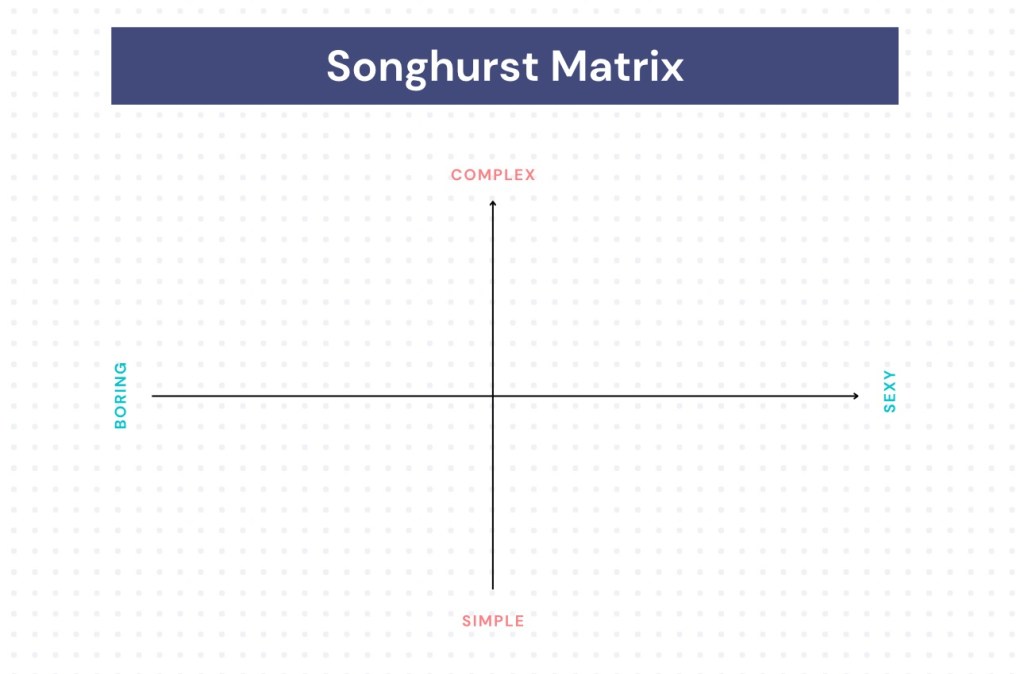
    In the quest for enhanced productivity and effective task management, the Songhurst Matrix emerges as a transformative tool. Named after its creator, Daniel Songhurst, this matrix has become a go-to framework for categorizing and prioritizing tasks based on their complexity and level of interest. By leveraging this matrix, individuals and teams can streamline their workflows, focus on high-impact activities, and ultimately drive better project outcomes.

    Understanding the Songhurst Matrix

    At its core, the Songhurst Matrix divides tasks into four quadrants, each with its own unique characteristics and strategic approach:

    1. Simple and Boring:
      • Characteristics: Routine, repetitive, and low-engagement tasks that are easy but not particularly exciting.
      • Examples: Data entry, filing paperwork, basic administrative duties.
    2. Complex and Boring:
      • Characteristics: Challenging and tedious tasks that require significant effort but lack intrinsic interest.
      • Examples: Detailed financial analysis, lengthy compliance reporting, extensive research.
    3. 3. Simple and Sexy:
      • Characteristics: Easy and enjoyable tasks that can be completed quickly and offer immediate satisfaction.
      • Examples: Creative brainstorming, designing graphics, quick social media posts.
    4. Complex and Sexy:
      • Characteristics: Engaging and stimulating tasks that are both challenging and highly rewarding.
      • Examples: Strategic planning, developing new products, innovative projects.
    How to Use the Songhurst Matrix for Project Management Success
    1. Categorize Your Tasks:
      • Start by listing all your tasks and categorizing them into the appropriate quadrant based on their complexity and engagement level. This initial step provides a clear overview of where your efforts should be directed.
    2. Prioritize Strategically:
      • Focus First on Complex and Sexy Tasks: These tasks are the powerhouse of your project. They drive significant progress and innovation while keeping you motivated and engaged. Prioritize these high-impact activities to ensure you’re working on what matters most.
      • Next, Tackle Simple and Sexy Tasks: Use these tasks as quick wins to maintain momentum and boost morale. They provide a sense of accomplishment and keep the project moving forward smoothly.
    3. Efficiently Manage Boring Tasks:
      • Complex and Boring: These tasks are important but can be draining. Break them down into smaller, more manageable steps, and schedule them during your high-energy periods. Consider delegating parts of these tasks to others if possible.
      • Simple and Boring: These are the prime candidates for automation and delegation. By minimizing the time spent on these routine tasks, you free up valuable resources for more impactful work.
    Main Risks of Over-Focusing on Complex and Sexy Solutions

    Focusing too much on the “Complex and Sexy” quadrant in a project, while appealing, carries several risks that can impact the project’s overall success. Here are some main risks to be aware of:

    1. Neglecting Foundational Tasks:
      • Risk: Essential but less exciting tasks may be overlooked, leading to unstable foundations.
      • Impact: Without solid infrastructure, even the most innovative solutions can fail, resulting in technical debt and future complications.
      • Example: Ignoring basic security measures while developing a cutting-edge feature could lead to vulnerabilities.
    2. Resource Overload:
      • Risk: Complex tasks often require significant time, expertise, and resources.
      • Impact: This can strain your team and budget, potentially leading to burnout and resource depletion.
      • Example: Investing heavily in developing a sophisticated algorithm without adequate planning can exhaust your budget, leaving no room for other crucial tasks.
    3. Scope Creep:
      • Risk: High-complexity tasks can lead to expanding project scope beyond original plans.
      • Impact: This can result in missed deadlines, increased costs, and project management challenges.
      • Example: Adding numerous advanced features because they seem interesting can delay the project timeline significantly.
    4. Increased Risk of Failure:
      • Risk: Complex solutions are inherently riskier and more prone to unforeseen challenges and failures.
      • Impact: High failure rates can demoralize the team and derail the project.
      • Example: Developing a new, untested technology could face numerous setbacks, from technical bugs to market rejection.
    5. Delayed Delivery:
      • Risk: Complex and engaging tasks can take much longer to complete than anticipated.
      • Impact: Delayed project timelines can affect client satisfaction, market competitiveness, and financial projections.
      • Example: Spending too much time perfecting an advanced feature may delay the overall product launch.
    6. Imbalance in Skill Utilization:
      • Risk: Overemphasis on complex tasks might underutilize team members with different skill sets.
      • Impact: This can lead to dissatisfaction in and underperformance among team members whose strengths lie in simpler tasks.
      • Example: A project may have developers with excellent skills in routine coding and maintenance, who feel sidelined by the focus on complex tasks.
    7. Market Misalignment:
      • Risk: Complex solutions might not always align with market needs or customer preferences.
      • Impact: Investing heavily in sophisticated features that customers don’t find valuable can result in wasted effort and missed opportunities.
      • Example: Adding advanced, expensive features that customers don’t use or want can detract from core functionalities they actually need.
    Balancing the Approach

    To mitigate these risks, it’s crucial to balance your focus across all quadrants of the Songhurst Matrix:

    • Foundation First: Ensure that foundational, simple, and boring tasks are adequately addressed to build a stable base.
    • Resource Management: Allocate resources wisely to avoid overburdening the team and budget.
    • Clear Scope: Maintain a clear project scope to prevent scope creep and manage timelines effectively.
    • Risk Assessment: Continuously assess and manage risks associated with complex tasks to stay proactive in addressing potential issues.
    • Customer Feedback: Regularly gather and incorporate customer feedback to ensure that complex solutions align with market needs.

    By maintaining this balance, you can harness the innovative power of complex and sexy tasks without compromising the stability and feasibility of your project.

    The Power of Focusing on the Simple and Boring Quadrant

    While it might seem counterintuitive, dedicating time to the Simple and Boring quadrant can yield significant benefits, particularly in the foundational stages of a project. Here’s why this approach is so powerful:

    1. Building a Strong Foundation:
      • Stability: Simple and repetitive tasks often form the backbone of your project. Ensuring these elements are stable and reliable is crucial. For instance, setting up basic infrastructure and coding standard functions provide a solid base for more complex tasks.
    2. Boosting Efficiency and Productivity:
      • Quick Wins: Completing these tasks quickly leads to early progress, creating a sense of accomplishment and boosting team morale. This momentum can be crucial in the early stages of a project.
    3. Enabling Scalability:
      • Automation: Simple tasks are perfect for automation, which can significantly improve efficiency. Automating build and deployment processes, or using scripts for repetitive tasks, can streamline operations and free up time for more complex activities.
    4. Maximizing Cost-Effectiveness:
      • Resource Allocation: Simple tasks typically require fewer specialized skills, allowing you to utilize lower-cost resources or junior developers effectively. This approach helps manage budgets and makes better use of available talent.
    5. Mitigating Risk:
      • Low Complexity: Tackling low-complexity tasks first can help identify potential issues early without the complications of more complex tasks. This early detection can reduce overall project risk and prevent costly setbacks.
    Conclusion

    The Songhurst Matrix offers a comprehensive framework for enhancing project management by categorizing tasks based on their complexity and engagement. By strategically prioritizing tasks and focusing on the simple and boring elements initially, you can build a strong foundation, improve efficiency, and set your project up for success. Embrace the matrix to unlock your full productivity potential and drive your projects forward with confidence.

    Dive into the world of the Songhurst Matrix and revolutionize the way you manage your projects. With this powerful tool, you’ll find yourself not only achieving more but doing so with greater ease and satisfaction. Ready to transform your project management approach? Start categorizing your tasks today and experience the difference!