• The Hard Truths of Project Management That No One Tells You About

    The Hard Truths of Project Management That No One Tells You About

    Project management is often romanticized as a straightforward path of meticulously planned steps leading to a successful outcome. In reality, managing a project is far from a simple process of scheduling tasks and hitting milestones. It’s a dynamic, unpredictable journey where even the most experienced project managers face numerous challenges. Understanding the complexities and pitfalls of project management can mean the difference between success and failure. Here are five hard truths that every project manager should understand:

    1. Scope Creep is Inevitable

    No matter how thorough the initial planning is, project scope tends to evolve over time. Stakeholders may request additional features, modifications, or adjustments as the project progresses. This phenomenon, known as scope creep, can be one of the most challenging aspects of project management. It’s not always a result of poor planning; instead, it often arises from stakeholders gaining new insights, evolving market demands, or unforeseen challenges that necessitate changes.

    Managing scope creep requires a robust change control process. It’s essential to have a clear process for evaluating, approving, and implementing changes to the project scope. Regular communication with stakeholders is also critical. Keeping everyone informed about the implications of changes—whether in terms of budget, timeline, or resource allocation—can help manage expectations and prevent the project from veering off course. However, it’s important to recognize that some level of scope creep is unavoidable, and the key is not to eliminate it but to manage it effectively.

    No Plan Survives First Contact with Reality

    Even the most meticulously crafted project plans rarely unfold exactly as expected. Unforeseen challenges are a given in any project, whether they involve technical difficulties, resource shortages, or external factors like regulatory changes or market shifts. These disruptions can throw timelines and budgets off track, causing frustration and stress among the project team.

    To navigate these inevitable bumps in the road, flexibility and adaptability are crucial. Project managers must be prepared to revise plans, reallocate resources, and even reframe project goals as new information comes to light. This requires a mindset that embraces change rather than resisting it, and a willingness to pivot when necessary. Moreover, it’s vital to build contingency plans into your project from the outset, allowing for the unexpected without derailing the entire effort.

    People Problems are Harder than Technical Problems

    While technical challenges can often be resolved through expertise, research, and problem-solving, managing people is a different kind of challenge—often more complex and unpredictable. Human dynamics can significantly impact project outcomes. Conflicts within the team, lack of motivation, poor communication, and differing priorities among stakeholders can create significant hurdles.

    As a project manager, understanding team dynamics and being able to navigate interpersonal challenges is just as important as technical know-how. Effective communication is the cornerstone of managing people. This involves not only keeping everyone informed but also listening to concerns, mediating conflicts, and fostering a collaborative environment. It’s also crucial to recognize the individual strengths and weaknesses of team members and to assign roles that align with their skills and motivations. Emotional intelligence is an invaluable asset in project management, as it allows leaders to connect with their team on a personal level, fostering trust and cooperation.

    Success is Not Just Delivering On Time and On Budget

    A project that meets its deadlines and stays within budget can still be considered a failure if it doesn’t deliver real value. Successful project management is not just about ticking off tasks and controlling costs; it’s about ensuring that the project’s outcomes align with the organization’s strategic objectives and deliver the intended benefits to stakeholders.

    This means that project managers must keep the broader business goals in mind throughout the project lifecycle. Regularly revisiting the project’s objectives and validating that the work being done contributes to those goals is essential. Stakeholder engagement is also key; their needs and expectations must be understood and managed to ensure that the project delivers what is truly valuable to them. In some cases, this may require making tough decisions, such as de-scoping non-essential features or reallocating resources to more critical areas of the project.

    Leadership is More Important than Management

    While management skills are necessary for planning, organizing, and controlling project activities, leadership is what drives a project to success. Leadership is about inspiring, guiding, and supporting your team, especially when challenges arise. A project manager who can motivate their team, make tough decisions under pressure, and maintain a clear vision of the project’s goals is more likely to succeed than one who simply focuses on process and tasks.

    Leadership in project management involves setting a vision for the project, creating a sense of purpose among team members, and maintaining morale, even in the face of setbacks. It’s about being a role model for the team, demonstrating the behaviors and attitudes you want to see in others. A good leader also knows when to step back and allow the team to take ownership of their work, fostering a sense of accountability and empowerment. In today’s complex project environments, where change is constant and challenges are inevitable, strong leadership is the glue that holds everything together.

    Conclusion: Navigating the Complexities of Project Management

    The realities of project management are far more nuanced than they may appear at first glance. While technical skills and meticulous planning are important, they are not sufficient on their own. A successful project manager must be adept at handling scope creep, adaptable in the face of change, skilled in managing people, focused on delivering value, and capable of leading with vision and empathy.

    As you move forward with your own projects, keep these hard truths in mind. Embrace the inevitability of change, and be prepared to adapt your plans as reality unfolds. Prioritize communication and emotional intelligence in your interactions with your team and stakeholders. Remember that the ultimate measure of success is not just completing tasks on time and within budget, but delivering meaningful value that aligns with strategic goals.

    Call to Action: As you embark on your next project, take a moment to reflect on these insights. Evaluate your current approach and consider where you might need to shift your focus. Are you too rigid in your planning? Are you neglecting the human side of project management? Are you focused more on deadlines than on delivering true value? By addressing these questions, you can navigate the complexities of project management more effectively, leading your projects to not just completion, but success.
  • The Concept of Efficiency: A Double-Edged Sword

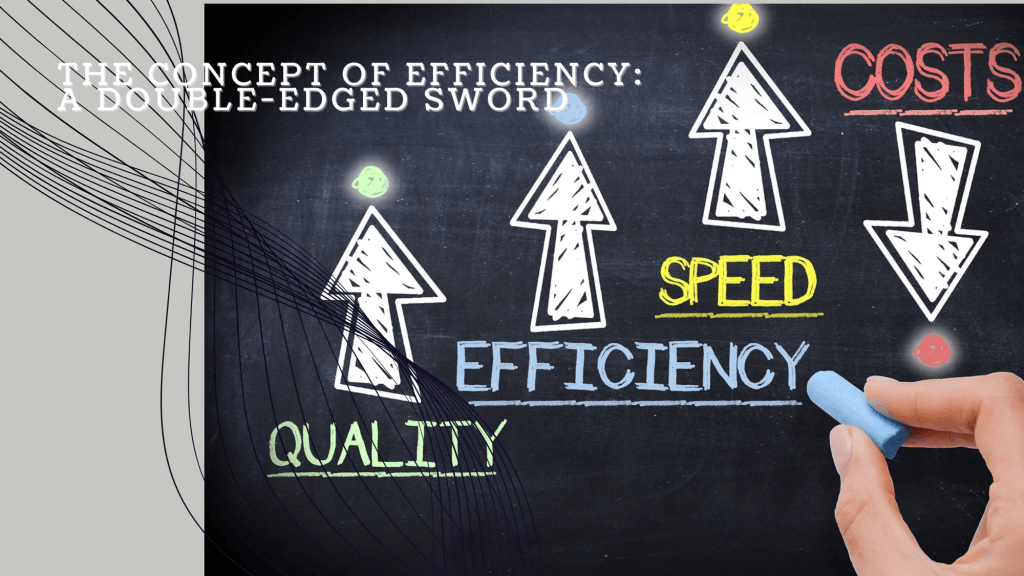
    The Concept of Efficiency: A Double-Edged Sword

    Introduction to Efficiency

    Efficiency, at its core, is the ability to achieve a desired outcome with the least amount of wasted time, effort, or resources. It is a measure of how well inputs are converted into outputs, often expressed as a ratio of output to input. In a highly efficient system, more is produced with less, leading to faster, cheaper, or more sustainable results. This concept permeates various aspects of life, from personal time management to the operations of complex organizations and even entire economies.

    The allure of efficiency is clear: it promises increased productivity, reduced costs, and the ability to do more with less. However, as with many powerful concepts, the pursuit of efficiency is not without its drawbacks. A closer examination reveals that while efficiency can yield significant benefits, an overemphasis on it can lead to unintended consequences, particularly when systems become too streamlined and lose their resilience to external and internal disruptions.

    High and Low Efficiency: Examples in Practice

    High efficiency can be seen in industries that have successfully optimized their processes to reduce waste and maximize output. For instance, Toyota’s production system is a classic example of high efficiency. The company’s adoption of Just-In-Time (JIT) manufacturing, which produces goods only as they are needed, significantly reduced inventory costs and increased production speed. This approach allowed Toyota to dominate the automotive industry by offering reliable, affordable vehicles with minimal production waste.

    On the other end of the spectrum, consider a traditional, artisanal approach to manufacturing, such as handmade furniture production. While the quality and uniqueness of each piece may be high, the process is inherently inefficient by modern standards. Each piece requires significant time, skilled labor, and materials, which results in higher costs and longer production times. Although this low-efficiency process might produce superior craftsmanship, it is not scalable or sustainable in a mass-market economy.

    Society’s Obsession with Optimizing Efficiency

    The relentless drive for efficiency has become a defining feature of modern society. This obsession can be traced back to the Industrial Revolution, which introduced the idea that human labor and material resources should be optimized to produce more goods at lower costs. Over time, this notion has permeated every facet of society, from business practices to personal productivity.

    One reason for this obsession is the economic principle of competitive advantage. Companies that can produce goods or deliver services more efficiently than their competitors can offer lower prices, capture larger market shares, and generate higher profits. In the global economy, where competition is fierce, efficiency is often the key to survival.

    Technological advancements have further fueled the drive for efficiency. Automation, artificial intelligence, and data analytics have provided tools to streamline processes and eliminate inefficiencies at unprecedented scales. The result is a society where faster, cheaper, and more efficient are often synonymous with better.

    However, this relentless pursuit is not without its downsides. The drive for efficiency often leads to the elimination of redundancies, which, while seemingly wasteful, can serve as critical safety nets when systems face unexpected disruptions.

    Upsides of Increased Efficiency

    The benefits of increased efficiency are undeniable. In manufacturing, higher efficiency leads to lower production costs, which can translate to lower prices for consumers. The ability to produce more with less also conserves resources, which is crucial in a world with finite natural resources.

    In the energy sector, for example, increasing the efficiency of power plants and appliances can significantly reduce energy consumption and greenhouse gas emissions. A more efficient power grid can deliver electricity more reliably and at lower costs, contributing to both economic and environmental goals.

    Efficiency also plays a vital role in healthcare. Streamlined hospital operations can reduce patient wait times, lower healthcare costs, and improve patient outcomes. The adoption of electronic health records (EHRs) has enhanced the efficiency of medical information management, allowing for quicker and more accurate diagnoses and treatment plans.

    In transportation, efficiency improvements have led to the development of fuel-efficient vehicles, reducing fuel costs and emissions. Public transportation systems that operate efficiently can reduce traffic congestion, lower pollution levels, and provide affordable transportation options to the public.

    The Fragility of Over-Efficient Systems

    While efficiency brings numerous benefits, systems that are overly optimized can become dangerously fragile. The elimination of redundancies and buffers, which are often seen as wasteful, can leave systems vulnerable to disruptions.

    The 2008 financial crisis serves as a stark example of this fragility. The global financial system had become highly efficient, with complex financial products and high levels of leverage maximizing returns. However, this efficiency came at the cost of stability. When the housing market collapsed, the lack of adequate safeguards led to a cascading failure that nearly brought down the entire financial system.

    Similarly, Just-In-Time manufacturing, while highly efficient under normal circumstances, can be extremely vulnerable to supply chain disruptions. The COVID-19 pandemic exposed these vulnerabilities when global supply chains ground to a halt, leading to shortages of essential goods, from medical supplies to semiconductors.

    In nature, too, we see the consequences of over-efficiency. Monoculture farming, which involves planting large expanses of a single crop, is highly efficient in terms of production. However, it is also highly vulnerable to pests and diseases, which can wipe out entire crops due to the lack of biodiversity. In contrast, traditional farming methods that incorporate a variety of crops may be less efficient but are far more resilient to such threats.

    The Fine Line Between Efficiency and Resilience

    The pursuit of efficiency is a double-edged sword. While it can lead to significant benefits, there is a fine line beyond which additional efficiency gains result in diminishing returns and increased risks. Systems that are too efficient often lack the flexibility and resilience needed to adapt to unforeseen challenges.

    The key to balancing efficiency with resilience lies in understanding that some level of redundancy and slack is not just acceptable but necessary. Redundancies act as shock absorbers, allowing systems to withstand and recover from disruptions. This concept is well understood in engineering, where systems are designed with safety margins to prevent catastrophic failure.

    In business, too, there is a growing recognition of the importance of resilience. Companies are increasingly investing in risk management and contingency planning, recognizing that the short-term gains of extreme efficiency are often outweighed by the long-term risks.

    In personal productivity, this balance is also critical. While it is tempting to maximize every minute of the day, this can lead to burnout and decreased effectiveness over time. Allowing for downtime, reflection, and unstructured time can enhance creativity and overall well-being, leading to more sustainable productivity.

    Conclusion

    Efficiency is a powerful concept that has driven much of the progress in modern society. It has led to remarkable advancements in technology, industry, and quality of life. However, the pursuit of efficiency must be tempered with an understanding of its limitations. Overly efficient systems, while highly productive, can become fragile and vulnerable to disruption.

    The challenge lies in finding the right balance between efficiency and resilience. While it is important to eliminate waste and streamline processes, it is equally important to maintain flexibility, redundancy, and the ability to adapt to change. In the end, the most successful systems are those that achieve a harmonious balance, maximizing efficiency while safeguarding against the inherent risks of over-optimization.

  • Leangains: The Ultimate Guide to Intermittent Fasting and Macro Cycling for Busy Professionals

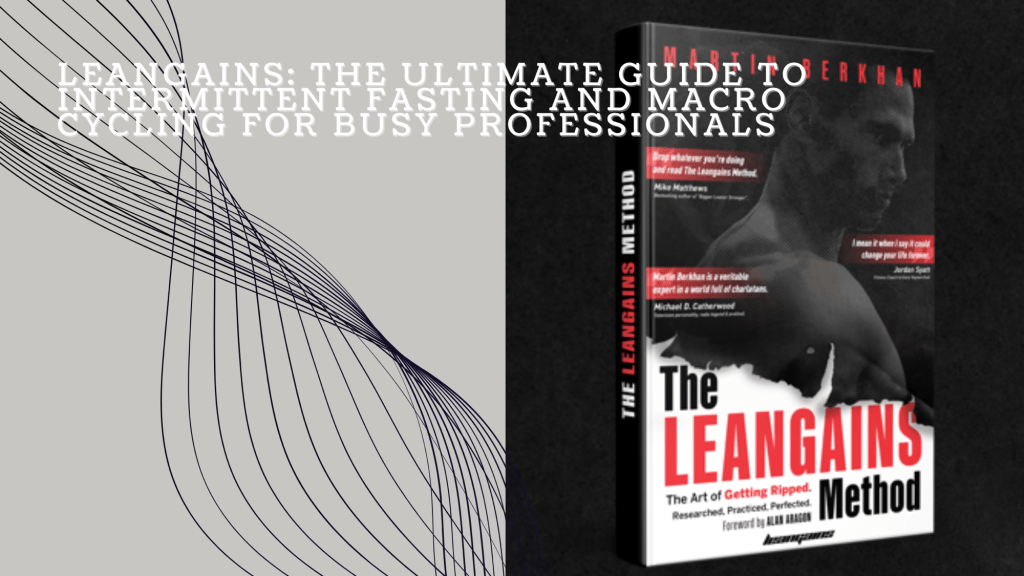
    Leangains: The Ultimate Guide to Intermittent Fasting and Macro Cycling for Busy Professionals

    Introduction

    In today’s fast-paced world, finding time to focus on fitness and nutrition can be challenging, especially for busy professionals. The Leangains method, developed by Martin Berkhan, offers a practical and effective approach to achieving body recomposition—simultaneous fat loss and muscle gain—through intermittent fasting, macro cycling, and strategic meal timing. This method is particularly well-suited for those with limited time, providing a structured yet flexible framework to optimize health and fitness.

    Who is Martin Berkhan?

    Martin Berkhan is a Swedish nutrition consultant, personal trainer, and author known for his pioneering work in the field of intermittent fasting. With a background in nutrition and fitness, Berkhan has helped countless individuals transform their bodies using his Leangains method. His approach is grounded in science and emphasizes simplicity, making it accessible and effective for a wide range of people, including busy professionals.

    Core Components of the Leangains Method
    Intermittent Fasting (IF)

    The cornerstone of the Leangains method is intermittent fasting, specifically the 16:8 protocol. This involves:

    Fasting Period: A 16-hour window during which no calories are consumed. This period can be adjusted based on individual schedules, but a common fasting window is from 8 PM to 12 PM the next day.

    Eating Window: An 8-hour window in which all daily calories and nutrients are consumed. For many, this window falls between 12 PM and 8 PM.

    What is Permitted During Fasting

    During the 16-hour fasting period, it is crucial to avoid any calorie intake. However, certain non-caloric beverages are permitted:

    Water: Staying hydrated is essential, and water is the best choice.

    Black Coffee: Coffee can be consumed without any added sugars or creamers. It can help suppress appetite and increase alertness.

    Tea: Like coffee, tea (especially green or black) can be consumed without added calories. Herbal teas are also a good option.

    Electrolytes: In some cases, adding a small amount of electrolytes to water can help maintain hydration and prevent any imbalance.

    Health Benefits of Fasting

    Intermittent fasting offers a range of health benefits beyond weight management:

    Improved Insulin Sensitivity: Fasting periods can help improve insulin sensitivity, reducing the risk of type 2 diabetes.

    Enhanced Fat Burning: Fasting encourages the body to use stored fat for energy, aiding in fat loss.

    Cellular Repair: Fasting triggers autophagy, a process where cells remove damaged components, promoting cellular health.

    Inflammation Reduction: Regular fasting periods can reduce inflammation markers in the body, lowering the risk of chronic diseases.

    Benefits for Busy Professionals

    Simplicity: By eliminating the need for breakfast, busy professionals can save time in the morning, reducing decision fatigue and simplifying their daily routine.

    Focus: Many people report increased mental clarity and focus during the fasting period, which can enhance productivity at work.

    Flexibility: The fasting and eating windows can be adjusted to fit any schedule, making it easy to maintain even with a hectic lifestyle.

    Caloric Control: Fewer meals and larger portion sizes during the eating window make it easier to stay within calorie targets, reducing the risk of overeating.

    Macronutrient Cycling

    Macro cycling in the Leangains method involves adjusting the intake of macronutrients (proteins, carbohydrates, and fats) based on training and rest days:

    Training Days: Higher intake of carbohydrates and calories to fuel workouts and promote muscle recovery. Protein intake remains high to support muscle synthesis.

    Rest Days: Lower carbohydrate intake and higher fat consumption. Calories are reduced to encourage fat loss while maintaining muscle mass.

    Benefits for Body Recomposition

    Muscle Gain: Higher carbohydrate and calorie intake on training days ensures that muscles receive the necessary nutrients for growth and repair.

    Fat Loss: Lower calorie intake on rest days creates a caloric deficit, promoting fat loss while preserving muscle mass through adequate protein consumption.

    Optimized Performance: Carbohydrate cycling aligns nutrient intake with physical activity, optimizing energy levels and workout performance.

    Hormonal Balance: Alternating macronutrient intake can positively affect hormones related to metabolism and appetite regulation, enhancing overall body composition.

    Meal Timing

    Within the 8-hour eating window, the timing and composition of meals are crucial for optimizing the Leangains method:

    Post-Workout Meal: The largest meal of the day, consumed immediately after training, to maximize muscle protein synthesis and recovery. This meal should be rich in protein and carbohydrates.

    Minimal Snacking: Focus on consuming substantial, nutrient-dense meals rather than frequent snacking to improve satiety and nutrient absorption.

    Balanced Meals: Ensure each meal contains a balance of protein, carbohydrates, and fats to provide sustained energy and support overall health.

    What to Eat to Break the Fast

    When breaking the fast, it is important to consume a meal that provides essential nutrients and supports your fitness goals:

    Protein: Include a high-quality protein source such as lean meat, fish, eggs, or plant-based proteins like tofu and legumes to support muscle synthesis.

    Carbohydrates: Incorporate complex carbohydrates like whole grains, fruits, and vegetables to replenish glycogen stores and provide sustained energy.

    Fats: Add healthy fats from sources like avocados, nuts, seeds, or olive oil to enhance satiety and provide essential fatty acids.

    Micronutrients: Include a variety of colorful vegetables and fruits to ensure adequate intake of vitamins and minerals.

    Benefits for Busy Professionals

    Convenience: By focusing on fewer, larger meals, busy professionals can reduce the time spent on meal preparation and eating.

    Efficiency: Eating strategically around workouts ensures that the body is fueled when it needs it most, enhancing workout performance and recovery.

    Simplicity: A structured meal plan reduces the need for constant decision-making about food, making it easier to stick to dietary goals.

    How the Leangains Method Improves Body Recomposition

    The Leangains method is highly effective for body recomposition due to its strategic combination of fasting, macro cycling, and meal timing:

    Enhanced Fat Loss: The intermittent fasting period promotes fat oxidation and increases insulin sensitivity, making the body more efficient at burning fat.

    Muscle Preservation and Growth: By consuming high-protein meals, especially post-workout, the method supports muscle protein synthesis and prevents muscle loss during fat loss phases.

    Hormonal Benefits: Fasting has been shown to improve the balance of hormones related to metabolism and muscle growth, such as increased growth hormone levels and improved insulin sensitivity.

    Sustained Energy Levels: Balanced meals and strategic carbohydrate intake ensure that energy levels remain stable, reducing fatigue and enhancing overall performance.

    Conclusion

    The Leangains method, developed by Martin Berkhan, offers a practical and scientifically-backed approach to achieving body recomposition. By combining intermittent fasting, macronutrient cycling, and strategic meal timing, this method provides a simple yet effective framework for busy professionals to optimize their health and fitness. Whether your goal is to lose fat, gain muscle, or both, the Leangains method can help you achieve lasting results while fitting seamlessly into a demanding lifestyle.

  • Crush Your Remote Projects with These 5 Game-Changing Tips!

    Crush Your Remote Projects with These 5 Game-Changing Tips!

    Remote projects can be challenging, but with the right strategies, they can also be incredibly rewarding. Whether you’re leading a team or collaborating with colleagues across different time zones, these five essential tips will ensure your remote projects run smoothly and successfully. Let’s dive in!

    1. Master Communication

    Effective communication is the backbone of any successful remote project. When team members are spread out geographically, keeping everyone connected and informed becomes even more crucial.

    Choose the Right Tools

    Start by using reliable communication platforms like Slack for instant messaging, Zoom for video conferencing, and email for formal updates. These tools help keep everyone in the loop and facilitate real-time collaboration. Integrate these tools with your project management software to streamline communication and avoid information silos.

    Set Clear Guidelines

    Establish communication norms such as response times, preferred channels for different types of communication, and meeting schedules. This ensures that everyone knows what to expect and can plan their work accordingly. For instance, use Slack for quick questions and updates, while reserving Zoom for more in-depth discussions.

    Regular Check-Ins

    Schedule daily or weekly check-ins to discuss progress, roadblocks, and next steps. These meetings help maintain momentum and provide opportunities for team members to seek help or feedback. Use video calls for these check-ins to add a personal touch and strengthen team bonds.

    Actionable Steps

    Select and Onboard Tools: Choose the right tools and ensure your team is comfortable using them. Provide training sessions if necessary.

    Create a Communication Protocol: Draft a document outlining communication expectations and share it with your team.

    Schedule Regular Meetings: Set up recurring team meetings and adhere to them strictly to maintain consistency.

    2. Set Crystal-Clear Objectives and Goals

    Without clear objectives, remote projects can quickly go off track. Setting SMART (Specific, Measurable, Achievable, Relevant, Time-bound) goals is key to keeping your project focused and on course.

    Define the Scope

    Clearly outline the project’s objectives, deliverables, and deadlines. Ensure every team member understands the project’s overall vision and their specific role in achieving it. A well-defined project scope helps prevent scope creep and keeps everyone aligned.

    Break Down Tasks

    Divide the project into smaller, manageable tasks and assign them to team members. This makes it easier to track progress and ensures that everyone knows what they need to do. Use tools like Gantt charts or Kanban boards to visually represent tasks and timelines.

    Monitor Progress

    Use project management tools to keep track of tasks and milestones. Regularly review progress and make adjustments as necessary to stay on course. Implement a system for reporting and documenting progress to maintain transparency and accountability.

    Actionable Steps

    Write a Detailed Project Brief: Include the scope, objectives, and expected deliverables. Share this document with the entire team.

    Use a Project Management Tool: Tools like Asana or Trello can help break down tasks and assign them to team members.

    Schedule Regular Reviews: Regularly review progress against the set goals and make necessary adjustments to keep the project on track.

    3. Rock-Solid Project Management

    Strong project management keeps your remote team organized and focused. With the right approach, you can ensure that all aspects of the project are moving forward seamlessly.

    Use Project Management Software

    Tools like Trello, Asana, or Monday.com help you track tasks, deadlines, and progress. They also provide a central place for project documentation and updates. Choose a tool that best fits your team’s needs and workflow.

    Create a Workflow

    Develop a standard workflow that includes task creation, assignment, progress tracking, and review. This helps streamline processes and ensures consistency. Document this workflow and provide training to ensure everyone follows it.

    Regular Updates

    Provide regular updates to stakeholders and team members. This keeps everyone informed about the project’s status and any changes that might affect their work. Use dashboards and reports to present these updates clearly and concisely.

    Actionable Steps

    Choose a Project Management Tool: Evaluate and select a tool that suits your team’s specific requirements.

    Develop a Workflow: Create a documented workflow for task management and ensure all team members are trained on it.

    Send Regular Updates: Use reports and dashboards to keep everyone updated on project progress and any changes.

    4. Boost Team Spirit

    A motivated and cohesive team is more productive and creative. Fostering a positive team culture can significantly impact the success of your remote projects.

    Virtual Team-Building Activities

    Engage your team with fun and interactive virtual activities. This could be anything from online games and quizzes to virtual coffee breaks and happy hours. These activities help build relationships and improve morale, even when team members are far apart.

    Recognition and Rewards

    Acknowledge the hard work and achievements of your team members. This could be through shout-outs in meetings, awards, or small tokens of appreciation. Recognition boosts morale and encourages continued high performance.

    Foster Inclusivity

    Create an environment where everyone feels valued and included. Encourage open communication and ensure that all voices are heard. Be mindful of cultural differences and time zones when planning meetings and activities.

    Actionable Steps

    Schedule Virtual Team-Building Events: Plan regular activities to keep the team engaged and connected.

    Implement a Recognition Program: Create a system for recognizing and rewarding team members’ achievements.

    Promote an Inclusive Culture: Encourage feedback and participation from all team members to ensure everyone feels valued.

    5. Stay Flexible

    The ability to adapt is crucial in remote project management. Flexibility allows you to navigate unexpected challenges and keep your project on track.

    Monitor Progress Continuously

    Regularly review the project’s progress and identify any potential issues early. Use data and feedback to make informed decisions. Set up key performance indicators (KPIs) to measure progress and identify areas for improvement.

    Be Ready to Pivot

    Be prepared to change course if necessary. Whether it’s adjusting timelines, reallocating resources, or changing strategies, flexibility is key to overcoming challenges. Have contingency plans in place to address potential risks.

    Encourage Open Feedback

    Create an environment where team members feel comfortable providing honest feedback. Use this feedback to make improvements and address any concerns promptly. Implement regular feedback sessions to gather insights and suggestions.

    Actionable Steps

    Set Up a Monitoring System: Use KPIs and regular progress reports to keep track of the project’s status.

    Develop Contingency Plans: Identify potential risks and create plans to mitigate them.

    Create a Feedback Loop: Establish regular feedback sessions to gather input from team members and make necessary adjustments.

    Conclusion

    Managing remote projects successfully requires a combination of clear communication, well-defined goals, robust project management, team collaboration, and flexibility. By implementing these strategies, you can ensure that your remote projects are not only completed on time but also exceed expectations. Start applying these tips today and watch your remote projects thrive!

  • Transform Your Look: Simple and Affordable Tailoring Adjustments for Off-the-Rack Suits

    Transform Your Look: Simple and Affordable Tailoring Adjustments for Off-the-Rack Suits

    When it comes to looking your best in a suit, fit is everything. Even the most expensive, stylish suit can look mediocre if it doesn’t fit well. Conversely, a moderately priced off-the-rack suit can look exceptional with a few simple and inexpensive tailoring adjustments. In this article, we’ll explore some key alterations every tailor can make to enhance the fit and appearance of your suit and discuss why these adjustments are crucial for making a lasting impression.

    What to Look for in an Off-the-Rack Suit

    Before even considering alterations, it’s essential to choose an off-the-rack suit that serves as a good starting point. Here are a few key aspects to focus on:

    Shoulder Fit

    The shoulders are the most challenging part of a suit to alter. Ensure that the jacket fits well across your shoulders without any sagging or tightness. The seam should align perfectly with the edge of your shoulder.

    Jacket Length
    Just right – too short – too long

    The bottom of the jacket should cover your buttocks and the top of your thighs. This length is generally flattering and aligns with traditional suit proportions.

    Sleeve Length

    Look for a jacket with sleeves that end at your wrist bone, allowing a bit of your shirt cuff to show. While sleeves can be adjusted, starting with the right length minimizes alterations.

    Trouser Fit

    Choose trousers that fit well around the waist and hips. Ensure there is enough fabric at the hem and waist to allow for adjustments if necessary. Buying suit separates comes in handy, if you have a strong mismatch in jacket and trousers sizes.

    Fabric Quality

    Opt for high-quality fabric, such as wool or wool blends. Wool suits are categorized by their Super numbers (e.g., Super 120s), which indicate the fineness of the wool fibers. For instance, Super 120s wool is made from finer fibers, making the fabric smooth and soft, yet durable. Higher Super numbers, like Super 150s or Super 180s, are even finer and softer but might be less durable and more expensive. For everyday use, Super 100s to Super 120s wool is a good balance of quality, comfort, and durability.

    Key Adjustments to Consider
    Shortening the Sleeves
    Correct length – too short – too long

    Why It Matters: Sleeve length is one of the most noticeable aspects of a suit’s fit. Ideally, your shirt cuffs should be visible by about half an inch when your arms are at your sides.

    Adjustment: A tailor can easily shorten or lengthen the sleeves to achieve this perfect length, making your suit look much more polished. This adjustment is typically straightforward and cost-effective.

    Taking in the Sides

    Why It Matters: A suit jacket that fits well around the torso flatters your body shape and avoids the boxy look.

    Adjustment: Tailors can take in the sides of the jacket to create a more fitted silhouette. This involves slimming down the jacket around the waist and sides, enhancing your natural shape and making the suit look bespoke. This adjustment is often done in combination with adjusting the back seams for a balanced fit.

    Adjusting the Trouser Length
    Correct length – more casual variant – too long

    Why It Matters: Trousers that are too long or too short can ruin the overall look of a suit. The perfect length ensures a clean, sharp appearance.

    Adjustment: Tailors can hem the trousers to the correct length, whether you prefer a slight break or no break at all. Properly hemmed trousers should just graze the top of your shoes, creating a clean line. Additionally, consider tapering the trousers for a more modern and tailored look.

    Nipping the Waist

    Why It Matters: A well-defined waistline can make a significant difference in how the suit drapes on your body, providing a more tailored and sophisticated look.

    Adjustment: Tailors can take in the waist of both the jacket and trousers, ensuring they fit snugly without being too tight. This adjustment helps in highlighting your physique and ensuring the suit looks fitted rather than off-the-rack. It can involve adjusting the darts and side seams for a more contoured fit.

    Shoulder Adjustments

    Why It Matters: The shoulders are the backbone of a suit jacket’s fit. Poorly fitted shoulders can make the entire suit look sloppy.

    Adjustment: While more complex and sometimes pricier, adjusting the shoulders can significantly improve the overall fit. This involves adjusting the padding or the seam, making the jacket sit perfectly on your frame and aligning with your natural shoulder line. This is an adjustment best reserved for experienced tailors due to its complexity.

    Why Tailoring Your Suit is Essential

    Off-the-rack suits are designed to fit a generic body shape, but everyone’s body is unique. Tailoring adjusts the suit to fit your specific measurements, ensuring comfort and enhancing your natural features. A tailored suit communicates that you care about your appearance and are willing to invest in looking your best, which can positively influence how others perceive you in professional and social settings.

    Conclusion

    Investing in a few simple, affordable tailoring adjustments can transform an off-the-rack suit into a perfectly fitted ensemble that enhances your appearance and boosts your confidence. Whether it’s adjusting the sleeves, taking in the sides, or hemming the trousers, these changes make a significant difference in how you look and feel. Remember, the perfect fit is key to making a strong impression, so don’t underestimate the power of tailoring. Next time you purchase an off-the-rack suit, take the extra step to have it tailored to your body—it’s a small investment with a big payoff.