
Tag: 80/20 rule

  • The Pareto Principle: Maximizing Efficiency in the Knowledge Economy

    The Pareto Principle: Maximizing Efficiency in the Knowledge Economy

    In the fast-paced world of the 21st century, where knowledge workers constantly juggle multiple tasks and priorities, finding ways to enhance productivity and efficiency is crucial. One such method that has stood the test of time is the Pareto Principle, also known as the 80/20 rule. This principle, which has its roots in economics, offers valuable insights and practical applications for today’s knowledge workers. In this blog post, we’ll explore the origins of the Pareto Principle, its core concept, the benefits it offers to knowledge workers, and the top five tools in 2024 that can help implement this principle effectively.

    You can check out the previous article on the 80/20 rule in project management here:

    Origins of the Pareto Principle

    The Pareto Principle is named after Vilfredo Pareto, an Italian economist who, in the late 19th century, observed that approximately 80% of Italy’s land was owned by 20% of the population. This observation led Pareto to investigate other areas of life and economics, where he found similar distributions. The principle was later generalized by Joseph M. Juran, a management consultant, who recognized its broader applications in quality management and beyond.

    Understanding the Pareto Principle

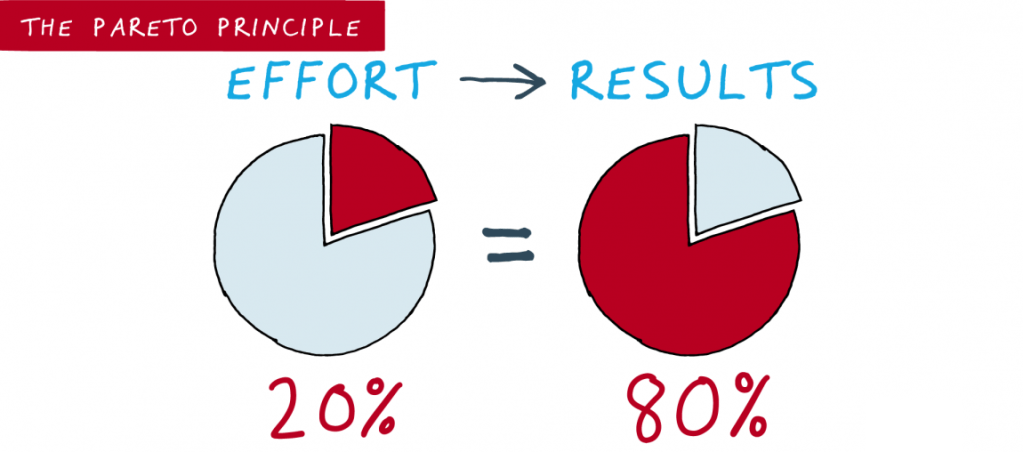
    At its core, the Pareto Principle suggests that roughly 80% of outcomes result from 20% of efforts. This means that a small portion of activities or inputs often leads to the majority of results or outputs. In practical terms, this principle can be applied to various aspects of life and work, such as:

    • Business: 80% of sales come from 20% of customers.
    • Software Development: 80% of software problems are caused by 20% of bugs.
    • Personal Productivity: 80% of your productivity comes from 20% of your tasks.
    Advantages for Knowledge Workers

    For knowledge workers, who often deal with large volumes of information and numerous tasks, adopting the Pareto Principle can lead to significant advantages:

    1. Improved Focus: By identifying and concentrating on the most critical 20% of tasks, knowledge workers can achieve more impactful results.
    2. Increased Efficiency: Prioritizing high-value activities helps reduce time and effort spent on less important tasks, leading to better time management.
    3. Enhanced Decision-Making: Understanding which inputs yield the most significant outcomes can inform better strategic decisions.
    4. Stress Reduction: Focusing on essential tasks can help reduce the feeling of being overwhelmed by an endless to-do list.
    5. Greater Achievement: By channeling energy into the most productive areas, knowledge workers can accomplish more meaningful goals and objectives.
    Top Five Tools in 2024 to Implement the Pareto Principle

    To effectively apply the Pareto Principle, knowledge workers can leverage various tools designed to enhance productivity and focus. Here are the top five tools in 2024:

    1. Notion
      Notion is an all-in-one workspace that combines note-taking, task management, and collaboration. Its flexibility allows knowledge workers to organize tasks, set priorities, and track progress, ensuring they focus on the most critical activities.
    2. Trello
      Trello’s visual board system helps users manage projects and tasks with ease. By creating boards, lists, and cards, knowledge workers can prioritize tasks and track progress, ensuring they concentrate on the most impactful tasks.
    3. Todoist
      Todoist is a task management tool that helps users prioritize and manage tasks effectively. With features like task prioritization, due dates, and project organization, Todoist enables knowledge workers to focus on high-priority tasks.
    4. RescueTime
      RescueTime is a time-tracking app that provides insights into how users spend their time. By analyzing time usage, knowledge workers can identify and eliminate time-wasting activities, allowing them to focus on the most productive tasks.
    5. Focus@Will
      Focus@Will is a productivity app that uses specially designed music tracks to enhance focus and concentration. By creating an optimal work environment, knowledge workers can improve their ability to concentrate on high-value tasks.
    Conclusion

    The Pareto Principle remains a powerful tool for enhancing productivity and efficiency, particularly for knowledge workers navigating the complexities of modern work environments. By understanding and applying this principle, and leveraging the latest productivity tools, knowledge workers can significantly improve their focus, efficiency, and overall success. Embracing the 80/20 rule can lead to a more balanced, productive, and fulfilling work life in 2024 and beyond.
  • The 80/20 rule

    The 80/20 rule

    The 80/20 Rule, also known as the Pareto Principle, is a principle that states that approximately 80% of the effects come from 20% of the causes. In other words, a small proportion of causes often leads to a large proportion of the results. This principle was named after the Italian economist Vilfredo Pareto, who observed that 80% of the land in Italy was owned by 20% of the population.

    Key Points of the 80/20 Rule
    • Inequality of Distribution: The principle highlights that not all inputs or efforts contribute equally to the outcomes.
    • Universal Application: The 80/20 rule can be applied across various fields and situations, including business, economics, software development, health, and personal productivity.
    • Focus on the Vital Few: By identifying and focusing on the critical 20% that contributes to the majority of the results, one can improve efficiency and effectiveness.
    Examples of the 80/20 Rule
    • Business: 80% of a company’s profits often come from 20% of its customers.
    • Sales: 80% of sales typically come from 20% of products or services.
    • Time Management: 80% of productive work is often achieved in 20% of the time.
    • Software Development: 80% of software bugs are usually found in 20% of the code.
    Practical Implications
    • Prioritization: Focus on the key areas that drive the most value or have the highest impact.
    • Efficiency: Allocate resources and efforts to the most influential activities.
    • Problem-Solving: Identify and address the root causes that lead to the majority of problems or defects.
    Summary

    In summary, the 80/20 rule is a powerful concept for understanding the disproportionate relationship between causes and effects, allowing individuals and organizations to optimize their efforts and resources for maximum impact.

    Implementation in Project Management

    Implementing the 80/20 rule in project management can significantly enhance efficiency and effectiveness by focusing on the most impactful activities. Here are some practical ways to apply the 80/20 rule in project management:

    1. Prioritizing Tasks
    • Identify Critical Tasks: Determine which 20% of tasks will produce 80% of the project’s results.
    • Focus Resources: Allocate more resources and time to these critical tasks to ensure they are completed effectively.
    2. Resource Allocation
    • Key Team Members: Assign the most skilled and experienced team members to the tasks that have the highest impact on the project’s success.
    • Budget Allocation: Direct a larger portion of the budget to the activities that drive the most value.
    3. Risk Management
    • Key Stakeholders: Identify the 20% of stakeholders who have the most influence over the project’s success.
    • Engagement Efforts: Prioritize communication and engagement efforts with these key stakeholders to ensure their support and alignment.
    5. Time Management
    • High-Impact Activities: Concentrate on the 20% of activities that will yield the most significant results.
    • Eliminate Wastes: Reduce or eliminate time spent on low-impact activities that do not contribute substantially to the project’s objectives.
    6. Quality Management
    • Critical Quality Metrics: Identify the 20% of quality metrics that impact 80% of the project’s deliverables.
    • Focus on Improvement: Prioritize quality improvement efforts on these critical areas.
    7. Performance Monitoring
    • Key Performance Indicators (KPIs): Track the 20% of KPIs that provide 80% of the insights into project performance.
    • Regular Reviews: Conduct regular reviews focused on these KPIs to ensure the project stays on track.
    Practical Steps for Implementation
    1. Data Analysis: Regularly analyze project data to identify high-impact tasks, risks, and stakeholders.
    2. Pareto Chart: Use Pareto charts to visually represent the most significant factors affecting the project.
    3. Continuous Review: Periodically review and adjust priorities based on new information and changing project dynamics.
    4. Training and Awareness: Train the project team on the 80/20 rule and its benefits to ensure they understand and apply it effectively.
    Example
    • Identifying: Determining that 20% of the features will provide 80% of the user value.
    • Prioritizing: Focusing development efforts on these high-value features first.
    • Allocating Resources: Assigning the best developers to these critical features to ensure they are implemented correctly and efficiently.
    • Risk Management: Identifying the top 20% of potential bugs that could cause 80% of the system failures and prioritizing their resolution.

    By applying the 80/20 rule in project management, project managers can optimize their efforts, enhance productivity, and increase the likelihood of project success.