
Introduction
Nutrition is often overcomplicated with complex meal plans, calorie tracking, and restrictive diets that are hard to follow. But what if there was a simpler way? A minimalist approach to nutrition prioritizes whole, nutrient-dense foods while making meal planning effortless.
For fitness success, the goal is to fuel your body efficiently while maintaining consistency. This article outlines a simple meal strategy based on 40% carbs, 30% protein, and 30% fats, emphasizing protein intake at 2g per kg of body weight to support muscle growth, recovery, and satiety.
If you’re looking for lean muscle gain, fat loss, or overall health, this minimalist approach will help you achieve results without the stress of micromanaging your diet.
1. The Minimalist Nutrition Philosophy
Less is More
Instead of juggling complex diets, focus on the essentials: high-quality protein, smart carbs, and healthy fats. A small number of nutrient-dense foods will cover all your needs without the hassle.
Protein as the Foundation
Since protein is essential for muscle growth, recovery, and satiety, it should be the focus of every meal. We recommend 2g of protein per kg of body weight to optimize performance and lean muscle retention.
Consistency Over Complexity
Rather than trying to create new meals daily, repeat simple, effective meals that you enjoy. This not only saves time but also ensures you stay on track effortlessly.
2. Core Components of a Minimalist Meal Plan
A well-balanced meal should include:
✔ Protein (30%) – Lean meats, fish, eggs, dairy, tofu, legumes
✔ Carbs (40%) – Whole grains, starchy vegetables, legumes, fruits
✔ Healthy Fats (30%) – Nuts, seeds, avocado, olive oil, fatty fish
✔ Vegetables – The fiber and micronutrient powerhouse
✔ Hydration – Water, herbal teas, and electrolyte balance
By keeping meals structured and simple, decision fatigue is eliminated, making healthy eating easier to maintain.
3. Meal Planning for Efficiency
The Power of Meal Templates
Using a meal template helps you rotate foods without overthinking. Here’s a simple guideline:
• Breakfast: Protein + healthy fat + fiber
• Lunch: Protein + smart carbs + vegetables
• Dinner: Protein + fiber + healthy fats
Batch Cooking & Meal Prep
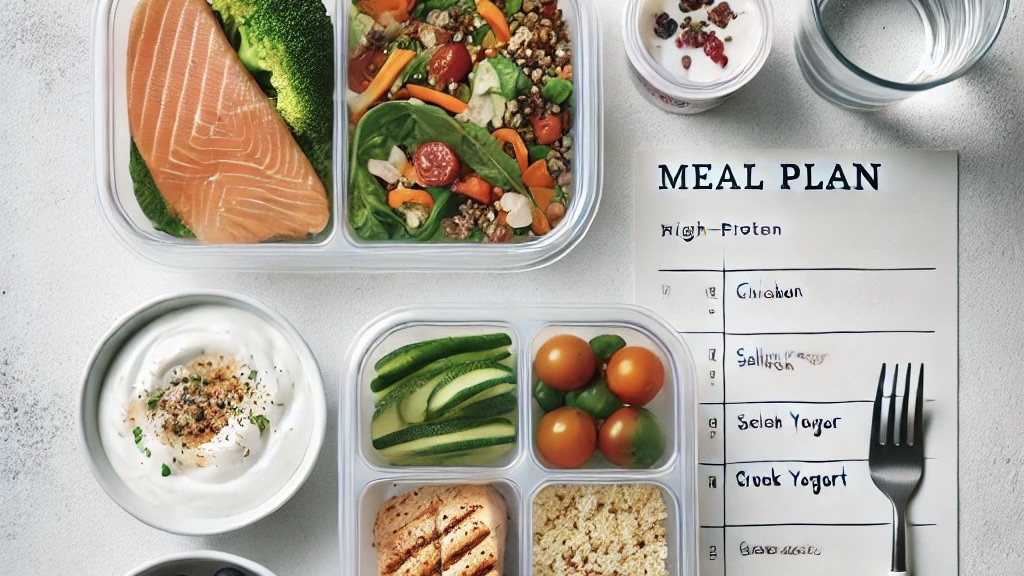
• Cook proteins in bulk (e.g., grilled chicken, boiled eggs, baked salmon).
• Prepare staple carbs (e.g., brown rice, quinoa, roasted potatoes).
• Chop vegetables in advance for easy assembly.
• Stick to a repeatable grocery list to minimize decision-making.
4. Sample Minimalist Meal Plans (Macronutrient Balanced at 40/30/30)
For Fat Loss (High Protein, Caloric Deficit)
Breakfast: Scrambled eggs (3 whole, 2 whites) + spinach + avocado
Lunch: Grilled chicken breast (150g) + quinoa (100g) + steamed broccoli
Dinner: Salmon (120g) + roasted Brussels sprouts + olive oil
Snack: Greek yogurt + walnuts
For Muscle Gain (Higher Calories, Protein-Prioritized)
Breakfast: Omelet (3 eggs, cheese) + whole grain toast + avocado
Lunch: Ground beef (150g) + brown rice (120g) + grilled zucchini
Dinner: Chicken thighs (160g) + sweet potatoes (150g) + sautéed spinach
Snack: Cottage cheese + peanut butter + banana
For General Health & Maintenance
Breakfast: Greek yogurt + berries + almonds
Lunch: Turkey breast (140g) + whole wheat wrap + hummus + salad greens
Dinner: Grilled shrimp (130g) + quinoa (100g) + roasted carrots
Snack: Boiled eggs + mixed nuts
The key to success? Pick a few core meals and stick to them for consistency.
5. Overcoming Common Challenges
“What if I Get Bored?”
Rotate spices, sauces, and cooking methods (grilled, baked, stir-fried) while keeping the core ingredients the same.
Eating Out While Staying on Track
Stick to lean protein + vegetables + a smart carb when ordering meals. Skip excessive sauces and deep-fried options.
Cravings & Social Events
Enjoy occasional treats without guilt, but focus on portion control and protein-first choices to stay in balance.
Conclusion: The Power of Minimalist Nutrition
By prioritizing protein, simplifying meal choices, and following a balanced macronutrient approach, you can maintain a lean, strong, and healthy physique without obsessing over food.
✔ Stick to whole foods with a simple structure
✔ Plan ahead to avoid decision fatigue
✔ Stay consistent – minimalism is about sustainability
Start today: Choose one meal to simplify and build momentum. What’s your go-to simple meal? Drop it in the comments!
 Sebastian Strobl