Tag: DecisionMaking

  • Efficiency Begins Where Overthinking Ends 🚀

    Efficiency Begins Where Overthinking Ends 🚀

    Every minute spent second-guessing is a minute not spent doing.

    Overthinking feels productive — all those mental scenarios, pros-and-cons lists, and “just one more bit of research” moments. But in reality, it’s a thief of time, energy, and momentum.

    Here’s the truth: Efficiency doesn’t come from thinking more. It comes from thinking just enough to take the next step.

    The Problem: How Overthinking Kills Efficiency 🛑

    Overthinking isn’t deep thinking. It’s mental looping:

    🤯 Decision paralysis – The more you think, the harder it becomes to choose.

    🕰 Loss of momentum – Time passes, but progress doesn’t.

    😩 Mental fatigue – You’re tired before you’ve even begun.

    📉 Missed opportunities – While you’re stuck deciding, someone else is already doing.

    Picture this: the report you keep revising “just in case” or the fitness plan you research for weeks but never start. Sound familiar?

    Why Action Beats Endless Analysis ⚡

    Clarity often comes from doing, not from thinking more. The first draft, the first meeting, the first rep in the gym — they teach you more than any hypothetical ever could.

    The world’s best leaders, athletes, and entrepreneurs share a secret: decisive action, followed by fast adjustments, beats perfect planning every time.

    5 Practical Strategies to Stop Overthinking Today 🛠

    1️⃣ Set Decision Boundaries

    Give yourself a limit: “I’ll decide within 24 hours” or “After gathering 3 key facts, I move forward.”

    2️⃣ Apply the 80/20 Rule

    Identify the 20% of actions that bring 80% of results — and start there.

    3️⃣ Limit Your Options

    Fewer choices = faster decisions. Don’t compare 12 solutions; compare 2.

    4️⃣ Trust Small Experiments

    Run quick, low-risk tests instead of betting everything on one big move.

    5️⃣ Establish a “Do First” Habit

    Take one step forward immediately, then refine later. Progress > perfection.

    Mindset Shifts for Long-Term Change 🧠

    Progress over perfection – Perfect is an illusion. Mistakes = Feedback – Each misstep sharpens your approach. No decision is still a decision – And usually, it’s the worst one.

    The Bottom Line ✅

    True efficiency starts the moment you stop spinning in your head and start moving your feet.

    Think less. Do more. Let momentum carry you further than perfection ever could.

    💡 Try this today: Pick one decision you’ve been overthinking, set a 10-minute timer, and act before it runs out. You’ll be amazed how liberating it feels.

  • Streamlining Decision-Making with Minimalism – Making Smart Choices Effortlessly

    Streamlining Decision-Making with Minimalism – Making Smart Choices Effortlessly

    Imagine waking up, reaching for the first outfit in your closet, and knowing it looks great without a second thought. Breakfast is already planned, your calendar is set, and the day flows effortlessly. No frantic last-minute choices, no mental fatigue before 9 AM—just clarity, focus, and ease.

    Sounds ideal, right? Yet for many professionals, daily decision-making feels more like running an endless obstacle course. What should I wear? What should I eat? Which email should I respond to first? By noon, decision fatigue creeps in, leaving us mentally drained before tackling the real challenges of the day.

    Minimalism offers a way out. By reducing unnecessary choices, we can free up mental energy, sharpen our focus, and make smarter decisions—effortlessly. Let’s explore how.


    The Weight of Too Many Choices: Why Decision Fatigue is Holding You Back

    Steve Jobs wore the same black turtleneck daily. Barack Obama kept his wardrobe limited to gray or navy suits. Mark Zuckerberg? Hoodies and T-shirts. These high achievers didn’t lack style; they understood that every small decision chips away at our cognitive resources.

    This phenomenon, known as decision fatigue, means that the more choices we make, the less capable we are of making good ones. Studies show that by the afternoon, judges grant fewer paroles, shoppers abandon online carts, and professionals procrastinate on important tasks. The mental bandwidth needed to sift through endless options gets depleted, leaving us vulnerable to impulsive, lazy, or outright bad decisions.

    So how do we avoid this trap? By removing unnecessary decisions altogether.


    Minimalism as a Mental Clarity Tool: Simplify to Amplify

    Minimalism isn’t about owning fewer things—it’s about making room for what truly matters. The same applies to decision-making. By simplifying our routines, commitments, and priorities, we reduce mental clutter and make better choices with ease.

    Think of your mind like a high-powered processor. If too many applications are running in the background, performance slows down. Closing unnecessary tabs—like debating what to wear or what to eat—keeps your mental CPU running smoothly for high-value tasks.

    How to Apply This in Everyday Life:

    • Streamline your morning routine – A pre-set wardrobe, a fixed breakfast menu, and a clear schedule eliminate guesswork.
    • Automate recurring decisions – Use meal planning, auto-bill payments, and pre-scheduled workouts to reduce daily choices.
    • Say “no” more often – Declutter your commitments, focus only on high-impact tasks, and avoid distractions disguised as opportunities.

    The goal? More energy for deep work, strategic thinking, and the decisions that truly move the needle.


    Effortless Strategies for Smarter Decisions

    Once we strip away the nonessential, decision-making becomes smoother, faster, and more intuitive. Here are four minimalist strategies to make smart choices almost automatically:

    1. The Capsule Wardrobe: One Less Choice Every Morning

    A well-curated wardrobe saves time, mental energy, and unnecessary stress. When every item pairs effortlessly with the rest, dressing well becomes instinctive. Invest in versatile, high-quality essentials, and eliminate the daily “What should I wear?” dilemma.

    2. Pre-Planned Meals: Eat Well Without Overthinking

    Every meal you cook from scratch is a decision. Multiply that by three meals a day, seven days a week, and that’s over 1,000 food choices a year. Instead, rotate a handful of simple, nutritious meals. Meal prepping on Sundays? Even better. It’s one less thing to think about.

    3. Structured Workflows: Prioritizing Like a Pro

    Use frameworks like the Eisenhower Matrix to separate urgent tasks from important ones. Eliminate low-value tasks, delegate what you can, and focus only on what truly matters. The result? A workday that feels effortless, not overwhelming.

    4. The Two-Minute Rule: Beat Procrastination Instantly

    If a task takes less than two minutes, do it immediately. No overthinking, no mental buildup. This simple habit eliminates minor decisions that would otherwise pile up and drain your focus.


    The Power of Fewer, Better Choices

    At its core, minimalism is about removing friction. The fewer unnecessary choices we face, the more energy we have for decisions that truly count—whether it’s a career-defining strategy, a life-changing opportunity, or simply being fully present with family.

    By simplifying the mundane, we gain clarity for the meaningful. When our mental space isn’t cluttered with trivial decisions, we can act with confidence, efficiency, and ease.

    So, what’s one unnecessary decision you can eliminate today? Start small, simplify, and watch as effortlessness becomes second nature.

    Less clutter, fewer choices—smarter decisions.

  • Mastering Decision-Making Under Pressure: Proven Lessons from Corporate Leaders

    Mastering Decision-Making Under Pressure: Proven Lessons from Corporate Leaders

    Introduction
    In the high-stakes world of corporate leadership, the ability to make effective decisions under pressure is not just a skill—it’s a superpower. From navigating tight deadlines to managing crises that could make or break an organization, corporate leaders are often tested in the fire of high-pressure situations. How do they stay calm, focused, and decisive? More importantly, what can we learn from their experiences to improve our own decision-making? This article dives into the strategies and principles leaders rely on when the stakes are high, empowering you to handle pressure with poise and purpose.

    1. The Challenges of Decision-Making Under Pressure

    Pressure can cloud judgment, magnify fear, and lead to hasty or overly cautious decisions. Leaders often face:

    • Time Constraints: The need to act quickly can leave little room for thorough analysis.
    • High Stakes: Decisions often have significant consequences for people, finances, or organizational success.
    • Incomplete Information: Operating without all the facts can lead to uncertainty and hesitation.

    Psychologically, stress can trigger emotional responses like fear of failure or cognitive biases—making it harder to think clearly. Understanding these challenges is the first step to overcoming them.

    2. Key Principles for Effective Decision-Making

    When the pressure is on, these principles can help you navigate the chaos:

    Clarity in Chaos

    Staying calm under pressure is a hallmark of great leaders. It’s not about suppressing stress but channeling it into focus. Techniques like deep breathing or pausing briefly to assess the situation can help regain clarity.

    Prioritization

    In a crisis, not all tasks carry equal weight. Effective leaders excel at identifying what truly matters and focusing their energy there. Ask yourself: What’s the most impactful action I can take right now?

    Risk Assessment

    Weighing potential outcomes is essential. Consider the best- and worst-case scenarios, and decide if the risk aligns with your goals. Remember, taking no action is often riskier than making a calculated decision.

    3. Strategies from Corporate Leaders

    Corporate leaders often use these proven strategies to thrive under pressure:

    Delegation and Team Input

    Great leaders don’t go it alone. They tap into their team’s expertise, encouraging diverse perspectives to fill gaps in their knowledge. As Jeff Bezos once said, “We don’t make decisions because they are easy…we make them because they are the right ones.” Collaboration ensures better decisions.

    Scenario Planning

    Preparedness is key to handling unexpected challenges. Leaders like Satya Nadella of Microsoft emphasize the importance of scenario planning—mapping out potential outcomes and contingency plans so they can act swiftly when surprises arise.

    Structured Thinking

    Frameworks like the OODA Loop (Observe, Orient, Decide, Act) or the Eisenhower Matrix (Urgent vs. Important) help leaders organize their thoughts and prioritize actions, even when the clock is ticking.

    4. Real-World Examples
    Example 1: Indra Nooyi at PepsiCo

    As CEO, Indra Nooyi faced significant pressure to balance profitability with sustainability. By involving her team in brainstorming solutions and focusing on long-term goals, she was able to implement initiatives that benefited both the planet and the company’s bottom line.

    Example 2: Elon Musk’s Crisis Management

    Whether it’s Tesla or SpaceX, Musk’s ability to think under extreme pressure has been instrumental in his success. His strategy? Ruthless prioritization and rapid iteration. Instead of aiming for perfection, he focuses on progress, learning quickly from mistakes.

    5. Building the Skill of Decision-Making Under Pressure

    Great decision-makers aren’t born; they’re made. Here’s how you can sharpen your skills:

    Practice Under Simulated Stress

    Rehearsing challenging scenarios prepares your mind for real-life pressure. Whether through role-playing exercises or crisis simulations, this practice strengthens your mental reflexes.

    Develop Emotional Resilience

    Techniques like mindfulness, journaling, and regular exercise help build resilience, enabling you to handle stress without becoming overwhelmed. Resilience isn’t just about enduring pressure—it’s about thriving under it.

    Continuous Learning

    Every decision, whether successful or not, offers valuable lessons. Reflect on your experiences, seek feedback, and refine your approach. Leaders who embrace a growth mindset consistently improve their decision-making abilities.

    Conclusion

    Mastering decision-making under pressure is a journey of self-awareness, preparation, and practice. By adopting the principles and strategies used by corporate leaders, you can transform high-pressure situations into opportunities for growth and success. As Winston Churchill famously said, “To each, there comes in their lifetime a special moment when they are figuratively tapped on the shoulder and offered the chance to do a very special thing… What a tragedy if that moment finds them unprepared or unqualified for that which could have been their finest hour.”

    Embrace these lessons and seize your finest hour with confidence and clarity. The next time you face a high-stakes decision, remember: pressure doesn’t have to paralyze you—it can propel you forward.

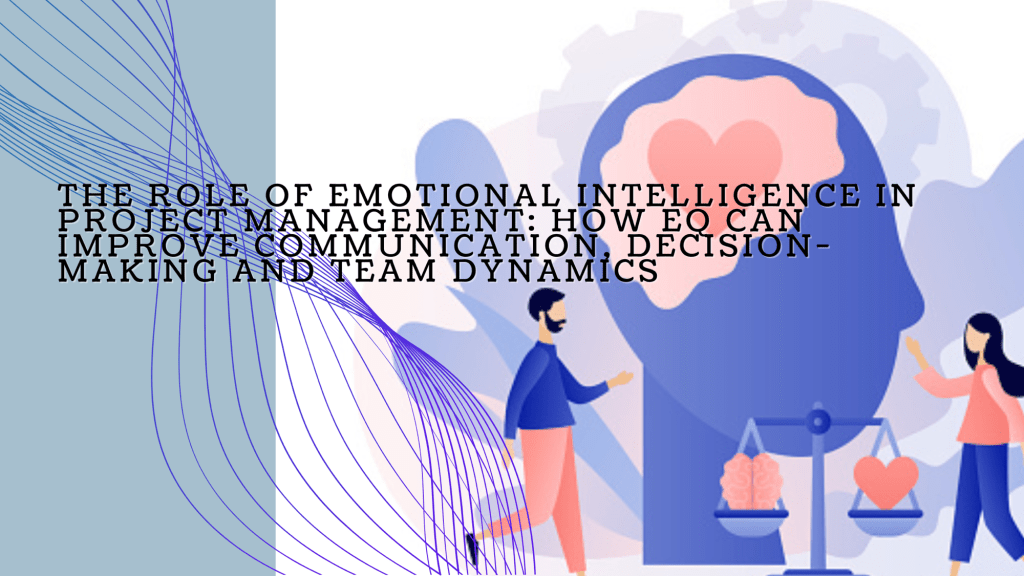
  • The Role of Emotional Intelligence in Project Management: How EQ Can Improve Communication, Decision-Making, and Team Dynamics

    The Role of Emotional Intelligence in Project Management: How EQ Can Improve Communication, Decision-Making, and Team Dynamics

    In today’s fast-paced business environment, project management isn’t just about meeting deadlines, managing budgets, or following methodologies—it’s about managing people. The ability to connect with team members, foster trust, and navigate the complexities of human emotions is critical for success. This is where emotional intelligence (EQ) comes into play.

    What is Emotional Intelligence?

    Emotional intelligence refers to the ability to recognize, understand, and manage our own emotions while being attuned to the emotions of others. It consists of five core components:

    1. Self-awareness: Recognizing one’s emotions and their impact on others.
    2. Self-regulation: Managing emotions in a healthy way and controlling impulses.
    3. Motivation: Staying committed to goals with resilience and a positive attitude.
    4. Empathy: Understanding the feelings and needs of others.
    5. Social skills: Building strong interpersonal relationships, managing conflict, and working effectively within a team.
    Why is EQ Critical in Project Management?

    While technical expertise and organizational skills are important, emotional intelligence can elevate a project manager’s ability to lead. Let’s dive into how EQ influences communication, decision-making, and team dynamics.

    1. Improved Communication

    A project manager with high emotional intelligence excels in active listening, non-verbal communication, and empathy. When you’re attuned to your team’s emotions and individual personalities, you can tailor your communication style to meet their needs. For example, some team members might need detailed instructions, while others work better with creative freedom. EQ helps you discern these needs and communicate in a way that makes everyone feel heard and valued.

    Example: In a high-stress situation, a project manager with high EQ will notice when a team member is overwhelmed, responding with empathy by offering support, adjusting deadlines, or redistributing tasks. This builds trust and keeps communication channels open, preventing small issues from escalating into larger conflicts.

    2. Better Decision-Making

    Decision-making is at the heart of project management, and it often involves managing conflicting priorities, expectations, and personalities. EQ enables project managers to approach decisions holistically, considering both data and human factors.

    Emotionally intelligent managers can distinguish between rational, emotional, and instinctive responses in themselves and others. This helps them make more objective decisions and remain calm under pressure. Moreover, EQ fosters collaborative decision-making, where input from the entire team is valued.

    Example: Suppose there’s a conflict between two departments about resource allocation. A project manager with high EQ would empathize with both sides, facilitating a discussion that acknowledges everyone’s concerns and leads to a solution that balances the project’s needs with team dynamics.

    3. Enhanced Team Dynamics

    High emotional intelligence allows project managers to build stronger, more cohesive teams. When people feel understood and supported, they’re more likely to trust each other and work well together. Empathy and social skills help managers navigate team conflicts and personality clashes, leading to a more harmonious work environment.

    Emotionally intelligent leaders also recognize each team member’s strengths and weaknesses, enabling them to assign tasks that play to individual capabilities. This not only boosts morale but also increases productivity.

    Example: In a situation where tensions arise between a perfectionist and a more pragmatic team member, a project manager with high EQ can mediate by helping both parties understand each other’s perspectives, thus fostering collaboration rather than competition.

    The Benefits of Emotional Intelligence in Project Management
    1. Increased Team Cohesion: Empathy and understanding build trust, reducing misunderstandings and conflicts.
    2. Higher Employee Engagement: A project manager who listens and values emotional input creates a positive atmosphere, increasing motivation and job satisfaction.
    3. Improved Conflict Resolution: Emotional intelligence helps resolve conflicts quickly and effectively, keeping projects on track.
    4. Better Stakeholder Management: EQ allows project managers to navigate stakeholder relationships diplomatically, balancing expectations with realistic project outcomes.
    5. More Resilient Teams: With a focus on emotional well-being, project managers can help their teams stay resilient in the face of challenges, reducing burnout and turnover.
    How to Improve Emotional Intelligence as a Project Manager

    Improving your emotional intelligence isn’t a one-time effort—it’s an ongoing process that involves self-awareness, reflection, and practical application. Here are some steps to help you develop EQ as a project manager:

    1. Practice Self-Awareness: Regularly check in with your emotions and analyze how they affect your decisions and interactions. Mindfulness techniques, such as meditation or journaling, can help you become more attuned to your emotional states.
    2. Develop Empathy: Make a conscious effort to understand your team members’ perspectives. Ask open-ended questions and listen actively, without jumping to conclusions or offering solutions prematurely.
    3. Manage Stress Effectively: Project management comes with high-pressure situations. Practice stress-management techniques like deep breathing, regular exercise, or mindfulness to regulate your emotions during difficult times.
    4. Seek Feedback: Regularly ask for feedback from your team and stakeholders on your leadership style and communication. This will help you identify areas for improvement in your EQ.
    5. Invest in Team-Building: Take time to strengthen relationships within your team. Team-building activities and open discussions can foster a deeper understanding of individual personalities and improve collaboration.
    Implementing Emotional Intelligence in Your Projects

    Once you’ve developed your emotional intelligence, the next step is to implement it in your project management practices:

    • Start with small changes. Pay attention to emotional cues in meetings and adjust your communication style accordingly. Use empathetic language and show that you’re open to feedback.
    • Lead by example. Your team will mirror your behavior. When they see you managing emotions calmly, listening actively, and treating others with respect, they’re more likely to follow suit.
    • Create a safe emotional space. Encourage your team to voice their concerns and emotions without fear of judgment. Open communication will allow you to address issues before they escalate.
    • Promote emotional well-being. Be proactive about managing stress in your team. Regular check-ins, providing mental health resources, and setting realistic deadlines can all contribute to a healthier work environment.
    Conclusion: The Emotional Intelligence Edge

    Emotional intelligence is more than just a soft skill—it’s a crucial leadership asset that enhances communication, decision-making, and team dynamics in project management. By cultivating and applying EQ in your daily interactions, you’ll not only manage projects more effectively but also foster a more collaborative and motivated team environment. Invest in developing your emotional intelligence, and you’ll see the positive effects ripple through your projects, stakeholders, and teams.