Tag: DeepWork

  • Master Time Blocking: The Proven Strategy to Take Control of Your Schedule and Boost Productivity

    Master Time Blocking: The Proven Strategy to Take Control of Your Schedule and Boost Productivity

    In an age where notifications pop up faster than thoughts, and multitasking is worn like a badge of honor, many professionals feel like they’re always working — but rarely making meaningful progress. The secret to cutting through this noise? It’s not a new app or an extra shot of espresso. It’s time blocking.

    Time blocking is a deceptively simple yet powerful method for managing your schedule and directing your focus where it matters most. Think of it as giving every hour of your day a job. Let’s dive in and turn your scattered to-dos into structured victories.


    What Is Time Blocking?

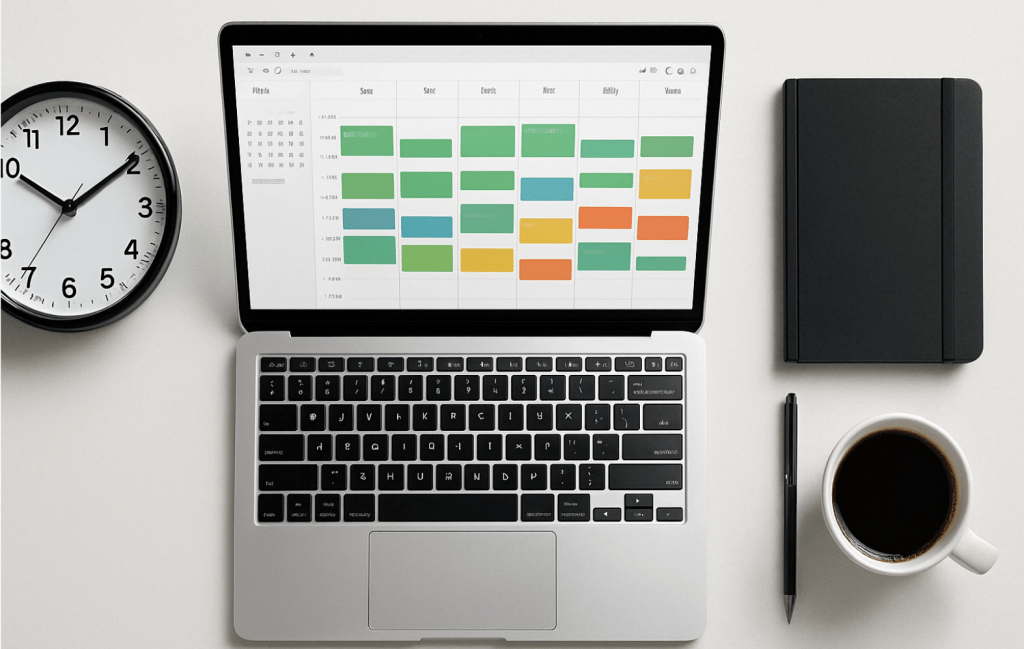
    Time blocking is the practice of dividing your day into discrete chunks of time, each dedicated to a specific task or category of work. Instead of keeping an open-ended to-do list that gets endlessly carried over, you assign specific tasks to specific time slots.

    For example, 9:00–11:00 AM might be for writing a report, 11:00–11:30 AM for email triage, and 1:00–2:00 PM for meetings. The beauty lies in the simplicity: focus on one thing at a time, without guilt about everything else.

    Unlike multitasking, which splits your focus and burns mental fuel fast, time blocking fosters deep work—intense concentration on one meaningful task at a time.


    Why Time Blocking Works (Backed by Psychology)

    Ever notice how a task expands to fill the time you give it? That’s Parkinson’s Law in action. Time blocking flips this law on its head. By putting boundaries around a task, you force yourself to work smarter and with more urgency.

    Plus, time blocking reduces decision fatigue. Instead of deciding in the moment what to do next (and risking a doom scroll instead), you follow your pre-decided plan like a GPS for your day.


    Types of Time Blocks You Can Use

    To make time blocking practical, think of your schedule like a Lego set. Here are the main block types you’ll use:

    • Deep Work Blocks – Reserved for focused, high-impact work like writing, strategic thinking, or coding. No emails, no Slack, no phone.
    • Admin Blocks – Knock out repetitive tasks like responding to emails, filing documents, or updating spreadsheets.
    • Buffer Blocks – Leave room for the unexpected: overflows, quick calls, or simply breathing room between intense sessions.
    • Personal Blocks – Don’t forget lunch, movement, or school runs. Life outside of work deserves structure too.
    • Theme Days – Dedicate entire days to one type of task, like “Meeting Monday” or “Content Friday.” Great for freelancers or team leads.

    How to Set Up a Time Blocking System That Works

    You don’t need to be a Type-A planner with color-coded markers to start time blocking. Here’s a simple roadmap:

    1. Audit Your Time
      For one day, track how you actually spend your time. You might be shocked how often “quick email checks” turn into Instagram detours.
    2. Define Priorities
      Identify your high-leverage tasks—the 20% that brings 80% of your results. Block time for these first.
    3. Choose Your Tools
      Start with Google Calendar, Notion, or a good old-fashioned planner. The best tool is the one you’ll actually use.
    4. Design Your Ideal Week
      Use recurring blocks where possible. Add deep work in the morning if that’s your peak energy time.
    5. Test and Adjust
      Life isn’t static. Treat your calendar like a working draft, not a prison sentence. Adjust weekly.

    Tools & Templates for Better Blocking

    A few tools that make time blocking ridiculously easy:

    • Google Calendar: Set recurring events, color-code blocks, and sync across devices.
    • Sunsama or Motion: Productivity apps that integrate task lists with time blocking.
    • Notion: Great for pairing your weekly planning with notes, goals, and project tracking.

    Bonus Tip: Create a printable weekly template to plan blocks every Sunday evening. Think of it as a ritual to prime your week for success.


    Avoid These Common Pitfalls

    Even a brilliant method like time blocking can backfire if you fall into these traps:

    • Overblocking: Packing every hour from 8 to 8 leaves no room for flexibility—and invites burnout.
    • Unrealistic Time Estimates: Always overestimate how long things take. Tasks expand. Life happens.
    • Skipping Breaks: You’re not a robot. Schedule short resets to boost your focus.
    • Ignoring Energy Levels: Match tough tasks with peak energy. Don’t schedule brainstorming after lunch if that’s your nap zone.

    Real-Life Example: A Day in a Time-Blocked Life

    Let’s look at an example for a working professional:

    Tuesday

    • 7:00–8:00 AM: Morning routine & family breakfast
    • 8:00–10:00 AM: Deep Work – Presentation prep
    • 10:00–10:30 AM: Break & walk
    • 10:30–12:00 PM: Client meetings
    • 12:00–1:00 PM: Lunch & recharge
    • 1:00–2:30 PM: Admin & follow-ups
    • 2:30–4:00 PM: Project planning
    • 4:00–4:30 PM: Buffer block
    • 5:00 PM onward: Workout, dinner, downtime

    Suddenly, your day has rhythm. You move with intention, not reaction.


    Level Up: Advanced Time Blocking Techniques

    • Time Boxing: Add a deadline to each block. “I’ll spend 45 minutes on this task—then I’m done.”
    • Batching: Group similar tasks to minimize context switching.
    • Weekly Reviews: Reflect on what worked, what didn’t, and adjust next week’s blocks.
    • Theme Days: Apply a broad theme to each day of your week. Helpful for solopreneurs or creators.

    Final Thoughts: Time Blocking Is Self-Respect in Action

    Time blocking isn’t about being rigid. It’s about being intentional. It’s a tool that helps you say yes to what matters and no to distractions.

    When you assign your hours with purpose, you move from scattered to strategic. From overwhelmed to in control.

    So, here’s your challenge: block just tomorrow. No need to over-engineer it. Choose your top three tasks and give them each a home on your calendar. Then show up.

    Because productivity isn’t about doing more — it’s about doing what matters, on purpose.

  • The One-Minimalist-Task Method: Boosting Productivity Without Overload

    The One-Minimalist-Task Method: Boosting Productivity Without Overload

    Introduction: The Productivity Paradox

    Picture this: You wake up, coffee in hand, staring at a to-do list that seems longer than a novel. You’ve read every productivity book, tried the latest apps, and still—somehow—your most important work keeps slipping through the cracks. Sound familiar?

    The modern approach to productivity is broken. We pile on tasks, chase endless efficiency hacks, and juggle multiple priorities, only to end up overwhelmed and exhausted. More work does not equal more results. In fact, it often leads to less focus, more stress, and diminished impact.

    Enter the One-Minimalist-Task Method—a counterintuitive yet powerful approach designed to cut through the noise, eliminate overwhelm, and make productivity effortless. The idea? Do one mission-critical task per day—intentionally, deeply, and without distraction.

    The Problem with Traditional Productivity Hacks

    Most productivity techniques focus on doing more—optimizing workflows, time-tracking, and squeezing every ounce of efficiency out of the day. The result?

    • Task overload: Endless to-do lists lead to decision fatigue and analysis paralysis.
    • Shallow work: Rapid task-switching prevents deep focus and creativity.
    • Burnout: Chasing high-output days without meaningful progress leads to exhaustion.

    Instead of piling on more, the One-Minimalist-Task Method removes the clutter and allows you to focus on what truly matters.

    What is the One-Minimalist-Task Method?

    At its core, this method is about ruthless prioritization. Instead of a never-ending to-do list, you focus on one high-impact task per day—the task that, if completed, moves the needle the most.

    Why does this work?

    • Eliminates decision fatigue: No more debating which task to start first.
    • Enhances deep work: Fewer distractions mean higher quality output.
    • Creates momentum: Finishing one significant task builds confidence and motivation.
    • Reduces stress: A clear focus prevents overwhelm and boosts mental clarity.

    The key difference between this method and traditional approaches is that it prioritizes depth over breadth. Instead of half-completing ten tasks, you fully complete one that truly matters.

    How to Implement the One-Minimalist-Task Method

    1. Identify Your Keystone Task

    Every day, ask yourself: What is the one task that will make everything else easier or unnecessary? This is your keystone task—the singular priority that aligns with your bigger goals.

    If you’re an entrepreneur, this might be a high-value sales call. If you’re a writer, it could be drafting a key chapter of your book. The goal is clarity—knowing exactly what needs your full attention.

    2. Time-Block Like a Pro

    Dedicate uninterrupted time to this task. Whether it’s 90 minutes in the morning or a focused block in the afternoon, treat it like an unmissable appointment.

    A well-planned time block ensures that your most important task isn’t squeezed between distractions but given the mental space it deserves.

    3. Eliminate Distractions Ruthlessly

    Distraction is the enemy of deep work. Before starting, do the following:

    • Turn off notifications on your phone and computer.
    • Close unnecessary tabs and applications.
    • Use a distraction blocker like Freedom or Cold Turkey.
    • Let others know you are unavailable during this time.

    The fewer interruptions, the higher your productivity.

    4. Say No to Everything Else (For Now)

    While other tasks may be important, they are not the priority. Defer, delegate, or delete anything that doesn’t contribute to your keystone task.

    Instead of feeling guilty about an unfinished to-do list, recognize that one task done well beats ten tasks half-done.

    5. Use the “Finisher’s High” to Build Momentum

    Completing one high-impact task triggers a sense of accomplishment, which fuels motivation for the rest of the day.

    If time allows, you can tackle secondary tasks with less cognitive resistance. But if your keystone task was completed, you’ve already won the day.

    The Science Behind Doing Less to Achieve More

    • Deep Work Beats Shallow Work: Research by Cal Newport shows that focused, undistracted work produces exponentially better results than multitasking.
    • The Zeigarnik Effect: Unfinished important tasks stay in our minds, keeping us engaged and motivated.
    • Cognitive Load Theory: Reducing unnecessary tasks conserves mental energy for meaningful work.

    A 2019 study from the University of California found that the average worker switches tasks every three minutes and five seconds, significantly reducing overall efficiency. Single-tasking is the antidote to this modern problem.

    Adapting the Method to Different Work Styles

    • For corporate professionals: Use this method alongside scheduled meetings and daily responsibilities by ensuring your keystone task aligns with key objectives.
    • For entrepreneurs/freelancers: Prioritize revenue-generating or business-growth tasks to drive sustainable success.
    • For busy parents: Apply this approach to personal productivity—whether it’s a workout, meal prep, or quality time with family.

    Even in a highly reactive job, you can apply this method by ensuring one block of time each day is reserved for your most important work.

    Common Objections and How to Overcome Them

    1. “What if I have more than one important task?” Prioritize. If everything is a priority, then nothing is. Rank your tasks and pick the most impactful one.

    2. “What if unexpected work comes up?” Life happens. But the key is to structure your day so that your keystone task gets attention before interruptions arise.

    3. “Won’t this slow me down?” No. In fact, it speeds you up because you spend less time context-switching and more time in deep focus.

    Conclusion: Productivity as a Mindset, Not a To-Do List

    True productivity isn’t about cramming more into your day—it’s about doing fewer things with greater impact. The One-Minimalist-Task Method helps you work smarter, not harder.

    By focusing on one high-impact task per day, you create more meaningful results with less stress.

    Challenge: Try this method for a week. Each day, choose one key task, execute it with full focus, and experience the difference. Productivity doesn’t have to be overwhelming—sometimes, less really is more.

  • How Minimalism Improves Team Productivity and Collaboration

    How Minimalism Improves Team Productivity and Collaboration

    1. Introduction: The Power of Less in Teamwork

    In today’s fast-paced work environment, teams often find themselves drowning in endless meetings, overflowing inboxes, and an overwhelming number of tools. Instead of boosting productivity, these distractions create inefficiencies, miscommunication, and burnout.

    Minimalism, often associated with decluttering personal spaces, is just as powerful in a team setting. By focusing only on what truly adds value, teams can operate more effectively, reduce stress, and collaborate seamlessly. The goal of minimalism in teamwork is to remove unnecessary complexity, eliminate distractions, and emphasize clarity, focus, and efficiency.

    Imagine a team where every meeting has a clear purpose, where communication is concise yet impactful, and where tools serve to enhance rather than hinder workflow. By implementing minimalist principles, teams can transform the way they work, fostering a culture of simplicity, agility, and high performance.


    2. The Key Minimalist Principles for Team Productivity

    Clarity Over Clutter

    A cluttered workspace—whether digital or physical—leads to wasted time and confusion. Minimalist teams focus on clear roles, responsibilities, and workflows, ensuring that everyone understands their priorities and objectives. This eliminates ambiguity and allows for a more streamlined execution of tasks.

    A practical example: Instead of multiple platforms for task management, teams should use a single, well-structured tool with clearly defined action items and deadlines. The less time spent navigating multiple systems, the more time spent on meaningful work.

    Focused Work, Fewer Interruptions

    Constant notifications, last-minute meetings, and unnecessary updates disrupt deep work. Studies show that it can take up to 25 minutes to regain full focus after an interruption. A minimalist approach emphasizes structured time for focused work, reducing context switching and enhancing overall efficiency.

    Encouraging “focus blocks,” where team members dedicate uninterrupted periods to deep work, can drastically improve productivity. Companies like Asana and Basecamp implement this strategy, allowing employees to engage in deep, distraction-free work.

    Essentialism in Communication

    Overcommunication can be just as harmful as under-communication. Teams that practice minimalism prioritize concise, clear, and necessary conversations, avoiding redundant discussions and excessive emails.

    For instance, rather than sending lengthy email threads, teams can adopt quick summary reports or project dashboards that provide essential updates at a glance. This not only saves time but also ensures that communication is purposeful and actionable.

    Streamlined Collaboration

    Instead of juggling multiple collaboration tools, minimalist teams adopt only the most effective ones, ensuring a seamless and efficient workflow. Every tool should serve a clear purpose and integrate smoothly with existing processes.

    For example, rather than using five different communication platforms, teams can consolidate into one or two tools that serve both instant messaging and structured documentation needs. This helps avoid information silos and reduces confusion.


    3. Eliminating the Noise: Practical Ways to Implement Minimalism in Teams

    Meetings: Less but More Effective
    • Reduce meeting frequency: Only schedule meetings when they are essential for decision-making. A well-structured email or a shared document can often replace unnecessary discussions.
    • Set clear objectives and time limits: Use the “15-minute stand-up” format where possible. Stick to a strict agenda to maximize efficiency.
    • Encourage asynchronous updates: Many discussions can be handled via written summaries instead of real-time meetings. Tools like Slack or project management boards allow for updates without disrupting workflow.
    Communication: Cutting Through the Clutter
    • The “No-Reply Culture”: Encourage emails that require minimal back-and-forth communication. Clearly state the objective and action items to avoid unnecessary clarification emails.
    • The 80/20 Rule for Collaboration Tools: Focus on a few high-impact tools rather than using multiple platforms. Using fewer tools with deeper functionality is more effective than juggling too many.
    • Use concise, action-driven messages: Avoid long-winded explanations. Instead, use bullet points, direct instructions, and highlight key takeaways.
    Tools & Processes: Doing More with Less
    • Avoid “App Overload”: Stick to a select few tools that integrate well and cover multiple needs. Too many apps can lead to confusion and inefficiencies.
    • Standardize workflows: Minimize custom processes that complicate decision-making. Having a clear process ensures consistency and predictability in execution.
    • Automate repetitive tasks: Leverage automation to reduce manual work and save time. For example, automated reporting can replace time-consuming manual status updates.

    4. The Minimalist Leadership Mindset: Setting the Tone

    • Leaders must set an example: Encourage a results-driven approach rather than a culture of busyness. Rewarding output rather than input fosters efficiency.
    • Empower teams to say “No”: Employees should feel comfortable pushing back against non-essential tasks. Leaders should encourage a mindset where time is valued and protected.
    • Shift from input-based to outcome-based evaluation: Instead of measuring success by hours worked, focus on measurable outcomes and key performance indicators (KPIs).

    5. Case Study: A Real-World Example

    A great example of minimalist team management is Basecamp, a company that prioritizes simplicity in collaboration. They avoid unnecessary meetings, limit their communication channels, and emphasize asynchronous work. As a result, their teams remain focused, productive, and less stressed.

    Key takeaways:
    • Fewer meetings lead to more productive work time.
    • Simplifying tool usage prevents inefficiencies.
    • Encouraging written updates over real-time interruptions improves clarity and documentation.

    Additionally, tech giants like Google and Apple integrate minimalist principles in their work culture by focusing on essential meetings, limiting email overload, and promoting deep work hours. This allows their teams to stay highly productive while maintaining a healthy work-life balance.


    6. Conclusion: Less is More — The Path to a High-Performing Team

    Minimalism in the workplace is not about doing less work—it’s about eliminating distractions and focusing on what truly matters. By streamlining meetings, improving communication, and reducing tool overload, teams can work more efficiently, reduce stress, and collaborate more effectively.

    Try this today: Identify one unnecessary meeting, tool, or process in your workflow and eliminate it. Watch how this small step improves your team’s productivity and collaboration.

    By adopting a minimalist mindset, teams can achieve higher efficiency, stronger collaboration, and a more enjoyable work experience. Remember, in productivity—less is often more.

  • The Science Behind Productivity: How to Optimize Your Work Hours

    The Science Behind Productivity: How to Optimize Your Work Hours

    In today’s fast-paced world, productivity has become a buzzword that everyone chases. But what does it really mean to be productive, and how can we optimize our work hours to achieve it? The answer lies not just in working harder but in working smarter, guided by scientific research. By understanding the science behind productivity, we can implement strategies that make even the hardest tasks seem effortless.

    Understanding Productivity: More Than Just Getting Things Done

    Productivity is often equated with the sheer volume of tasks completed. However, research shows that true productivity is about achieving meaningful results with less effort. It’s the art of doing more with less—less time, less stress, and less energy. This can be achieved by leveraging our natural rhythms, cognitive abilities, and psychological tools.

    The Role of Circadian Rhythms in Productivity

    One of the most powerful determinants of productivity is our circadian rhythm, the body’s natural 24-hour cycle. This internal clock regulates when we feel alert and when we’re likely to feel tired. Studies have shown that most people experience peaks in cognitive function during certain times of the day. For instance, early morning and late afternoon are often cited as high-productivity periods, known as the “two peaks” in the day.

    How to Optimize:

    • Identify Your Peak Hours: Pay attention to when you feel most alert and schedule your most demanding tasks during these periods.
    • Power Down When Necessary: Use the afternoon slump, typically between 1 pm and 3 pm, for less demanding tasks like responding to emails or organizing your workspace.
    The Science of Breaks: Why You Shouldn’t Power Through

    Contrary to the “power through” mentality, research indicates that taking regular breaks is crucial for maintaining high productivity levels. The brain’s ability to maintain focus wanes over time, and pushing through can lead to diminishing returns. Techniques like the Pomodoro Technique, which advocates for 25 minutes of focused work followed by a 5-minute break, align with the way our brain functions.

    How to Optimize:

    • Incorporate Micro-Breaks: Implement short, frequent breaks throughout your workday to reset your focus.
    • Step Outside: Physical movement and a change of environment, even briefly, can rejuvenate your mind.
    The Power of Deep Work

    Deep work, a term popularized by author Cal Newport, refers to focused, uninterrupted periods of work on cognitively demanding tasks. Scientific studies have shown that the brain can only maintain this level of focus for about 90-120 minutes at a time before needing a break. Engaging in deep work maximizes your cognitive resources, allowing you to accomplish more in less time.

    How to Optimize:

    • Block Out Distractions: Use tools and strategies to minimize interruptions. This can include turning off notifications, using noise-cancelling headphones, or setting clear boundaries with colleagues.
    • Schedule Deep Work Sessions: Dedicate specific times of the day to deep work, ideally during your peak cognitive hours.
    The Role of Sleep in Productivity

    It might seem counterintuitive, but rest is a critical component of productivity. Sleep is when the brain consolidates memories, processes information, and resets for the next day. Numerous studies have demonstrated that lack of sleep leads to decreased cognitive performance, poor decision-making, and lower productivity.

    How to Optimize:

    • Prioritize Sleep: Ensure you get 7-9 hours of quality sleep per night. This isn’t just about quantity but also about creating an environment conducive to restful sleep.
    • Maintain a Consistent Sleep Schedule: Going to bed and waking up at the same time each day helps regulate your circadian rhythm, improving your alertness and productivity.
    The Psychology of Motivation: Staying Driven

    Motivation is a key driver of productivity, and understanding its psychological underpinnings can help maintain it throughout the day. The Self-Determination Theory (SDT) posits that motivation is highest when tasks are aligned with our intrinsic goals, provide a sense of competence, and allow for autonomy.

    How to Optimize:

    • Set Clear, Intrinsic Goals: Align your tasks with your long-term goals and values to keep yourself motivated.
    • Break Tasks into Manageable Steps: Smaller, more manageable steps reduce overwhelm and build momentum.
    • Reward Yourself: Positive reinforcement, like small rewards, can boost motivation and make difficult tasks seem easier.
    Actionable Steps to Skyrocket Your Productivity
    1. Track Your Peak Hours: Start by tracking your energy levels throughout the day for a week. Use this data to identify your peak productivity periods and plan your most important tasks during these times.
    2. Adopt the Pomodoro Technique: Begin implementing short, timed work sessions followed by breaks. This not only keeps your mind fresh but also combats procrastination.
    3. Schedule Deep Work Sessions: Dedicate 90-minute blocks to deep work, free from distractions. This will help you tackle the most challenging tasks efficiently.
    4. Prioritize Sleep: Make sleep a non-negotiable part of your productivity strategy. Set a regular sleep schedule, create a relaxing bedtime routine, and optimize your sleeping environment.
    5. Align Tasks with Goals: Reframe your tasks to align with your intrinsic goals. If a task seems mundane, find a way to connect it to a larger, meaningful objective.
    6. Take Strategic Breaks: Incorporate micro-breaks throughout your day. Use them to move, hydrate, or simply step outside for a breath of fresh air.
    7. Practice Gratitude and Positive Reinforcement: Celebrate small wins and progress. This helps maintain motivation and keeps you focused on long-term goals.

    By understanding and applying the science of productivity, you can make even the hardest tasks seem effortless. It’s not about working more hours but optimizing the hours you work. Implementing these scientifically-backed strategies can transform your workday, boost your productivity, and ultimately help you achieve more with less effort.