
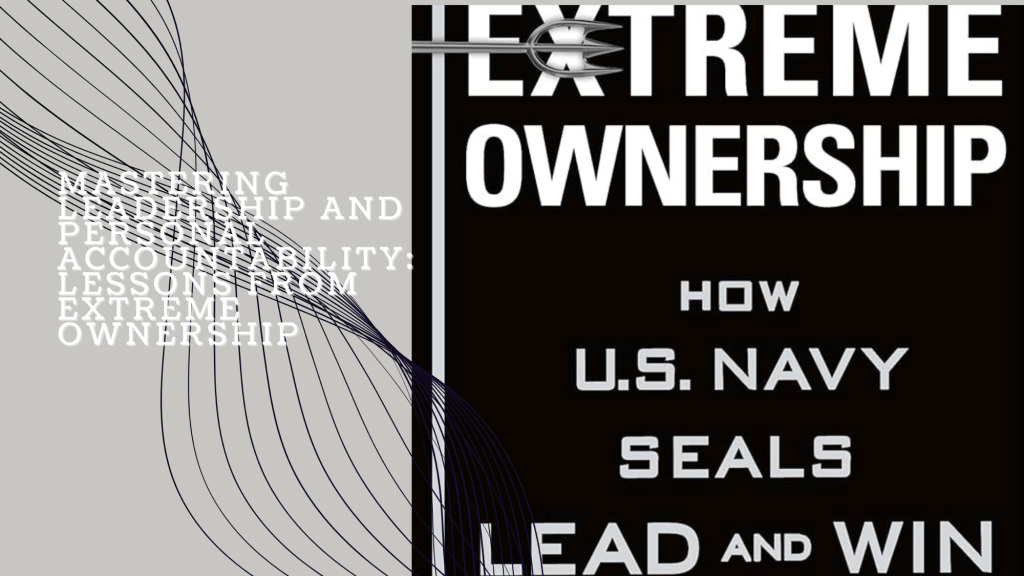
Introduction: The Power of Extreme Ownership
Extreme Ownership: How U.S. Navy SEALs Lead and Win is a compelling guide to leadership, co-authored by Jocko Willink and Leif Babin, two highly decorated U.S. Navy SEALs. Drawing on their experiences in the battlefield, particularly during the Iraq War, the authors present a set of leadership principles that are as relevant in the boardroom as they are in combat. These principles revolve around the concept of “extreme ownership”—the idea that a leader must take full responsibility for everything within their domain, from successes to failures. The book is divided into three sections—Winning the War Within, Laws of Combat, and Sustaining Victory—each offering insights that can be applied to any leadership challenge, whether in business, personal life, or creative projects.
Meet the Authors: Jocko Willink and Leif Babin
Before delving into the principles of Extreme Ownership, it’s important to understand the backgrounds of its authors, Jocko Willink and Leif Babin.
Jocko Willink served for 20 years as a U.S. Navy SEAL, eventually reaching the rank of Lieutenant Commander. He was the commander of Task Unit Bruiser, the most decorated special operations unit of the Iraq War. Willink’s leadership on the battlefield was defined by his unyielding commitment to the principles that would later be outlined in Extreme Ownership. After retiring from the military, he co-founded Echelon Front, a leadership consultancy, and has become a prominent speaker, author, and the host of the popular “Jocko Podcast,” where he discusses leadership, discipline, and personal growth.
Leif Babin also served as a Navy SEAL officer and was the platoon commander in Task Unit Bruiser. His leadership during some of the toughest battles in Ramadi, Iraq, honed his understanding of what it takes to lead a team to victory. After his military service, Babin co-founded Echelon Front with Willink and has since dedicated his career to teaching leadership strategies to a wide range of organizations. Both Willink and Babin continue to influence leaders worldwide through their books, consulting work, and speaking engagements.
The Core Principles of Extreme Ownership
The essence of *Extreme Ownership* is encapsulated in several key principles, each of which is supported by real-world examples from the authors’ military experience. These principles are not only crucial for military leaders but also for anyone in a leadership position, including those managing design projects or creative teams.
1. Extreme Ownership
Principle: Leaders must own everything in their sphere of influence. There is no room for blame-shifting; every failure and success reflects the leader’s ability to guide their team.
Example in Project Management: Imagine a project manager overseeing a branding project. If the final design fails to meet the client’s expectations, instead of blaming the designer, the project manager should reflect on how they could have provided better guidance or clearer feedback during the process. By owning the outcome, the project manager can identify areas for improvement and avoid similar issues in the future.
2. There Are No Bad Teams, Only Bad Leaders
Principle: A team’s performance is a direct reflection of its leadership. Effective leaders can turn even underperforming teams into high-functioning units.
Example: Suppose a design team consistently misses deadlines. Instead of attributing this to a lack of skill or motivation among team members, the project manager should evaluate their own role. Are they setting realistic deadlines, providing adequate resources, and fostering a supportive environment? By adjusting their approach, the project manager can transform the team’s productivity.
3. Believe
Principle: A leader must fully believe in the mission or project. This belief fuels commitment and enables the leader to inspire the same level of dedication in their team.
Example: If a project manager is tasked with leading a rebranding effort but is skeptical about the new direction, their lack of enthusiasm can permeate the team. However, if they take the time to understand the strategic vision and align themselves with the goals, they can then convey this belief to the team, driving collective effort and creativity.
4. Check the Ego
Principle: Ego can be a leader’s worst enemy, clouding judgment and preventing effective decision-making. Leaders must remain humble, open to feedback, and willing to admit mistakes.
Example: During a design review, the client suggests changes that conflict with the project manager’s vision. Instead of letting ego drive the decision to dismiss these suggestions, the project manager should objectively assess their merit. This humility can lead to a more refined and successful final product.
5. Cover and Move
Principle: Teams must work together, supporting each other to achieve the mission. Silos and lack of communication can lead to failure, while collaboration ensures success.
Example: A project manager must ensure that all parts of a design project—such as research, design, and development—are working in sync. If one team falls behind, the manager should facilitate support from other teams to keep the project on track, ensuring that every phase progresses together.
6. Simple
Principle: Complexity can be the enemy of execution. Leaders should simplify plans and communicate them clearly to avoid confusion and ensure that everyone understands their role.
Example: In a complex project with multiple moving parts, the project manager should break down the project plan into simple, actionable steps. Clear, straightforward instructions help the team focus on what needs to be done without getting lost in unnecessary details.
7. Prioritize and Execute
Principle: Leaders must identify the most critical tasks and tackle them first. Trying to do everything at once can lead to paralysis by analysis; focus is key.
Example: When faced with a tight deadline, the project manager should prioritize essential tasks like finalizing the design concept before moving on to less critical elements. This approach ensures that the project’s core objectives are met, even if adjustments have to be made later.
8. Decentralized Command
Principle: Leaders should empower their team members to make decisions within their areas of expertise. This not only builds trust but also allows the team to be more responsive and agile.
Example: In a design project, the project manager can delegate creative decisions to the lead designer, trusting their expertise while maintaining overall project coordination. This empowers the team and allows the project to move forward without bottlenecks.
How Project Managers Can Benefit from Extreme Ownership
Implementing the principles of *Extreme Ownership* can significantly enhance a project manager’s effectiveness and accelerate their career growth. Here’s how:
Strengthened Leadership: Embracing extreme ownership leads to more decisive, proactive leadership. Project managers who take full responsibility for their projects are better positioned to anticipate challenges and navigate their teams toward success.
Better Team Cohesion: Encouraging decentralized command and fostering a collaborative environment helps build stronger, more cohesive teams. This not only improves project outcomes but also boosts morale and engagement.
Increased Efficiency: Simplifying processes and prioritizing tasks ensure that projects are executed efficiently, reducing the risk of delays and cost overruns. This kind of operational excellence is highly valued in any organization.
Continuous Personal Improvement: Leaders who check their ego and remain open to feedback are more likely to grow in their roles. This commitment to self-improvement makes project managers more adaptable and capable, enhancing their long-term career prospects.
Key Takeaways for Personal Productivity Optimization
Extreme Ownership offers several powerful lessons for personal productivity:
Total Accountability: Owning every aspect of your work makes you more focused and motivated to achieve your goals.
Simplicity: Breaking down tasks into simpler, more manageable steps increases efficiency and reduces the risk of feeling overwhelmed.
Effective Prioritization: Focusing on the most important tasks first ensures that you’re always working on what matters most, leading to better outcomes.
Ego Management: By keeping your ego in check, you remain open to learning and growth, which is crucial for long-term success.
Conclusion: Embrace Extreme Ownership for Lasting Success
Extreme Ownership is more than just a book on leadership; it’s a transformative approach to how you manage both others and yourself. By adopting these principles, you can lead your team more effectively, achieve better results in your projects, and continually improve your personal productivity.
Call to Action: Implementing the Principles of Extreme Ownership
Ready to take your leadership and personal productivity to the next level? Here’s how you can start:
- Read the Book: Make reading Extreme Ownership your first step. The insights within are invaluable for anyone looking to enhance their leadership capabilities.
- Reflect and Apply: Identify areas in your current projects or life where you can begin to apply these principles. Start with extreme ownership—take responsibility for every aspect of your work.
- Simplify and Prioritize: Review your current workload and streamline it. Focus on the tasks that will have the most impact and ensure they’re done right.
- Stay Accountable: Set up a system to keep yourself accountable. Whether through regular self-assessment, journaling, or checking in with a mentor, make sure you’re consistently applying what you’ve learned.
By taking these steps, you’ll not only see immediate improvements in your professional life but also set the foundation for ongoing personal and leadership development.
 Sebastian Strobl