Tag: getting things done

  • Unlock Supreme Productivity: The Revolutionary Power of Timeboxing!

    Unlock Supreme Productivity: The Revolutionary Power of Timeboxing!

    In the fast-paced world we live in, finding an effective time management strategy can be the key to unlocking peak productivity. One such game-changing technique is timeboxing—a method that promises to eliminate the chaos of to-do lists, supercharge your efficiency, and reduce stress. But where did this technique come from, and how can it transform your daily life and projects? Let’s dive in!

    The Origins of Timeboxing: A Blast from the Past

    Timeboxing, though popularized in recent years, has roots that stretch back to the early days of computing. It was first conceptualized by James Martin in the 1980s. Martin, a British computer scientist, introduced timeboxing in his book “Rapid Application Development” as a way to manage project timelines effectively. The technique was initially designed to keep software projects on track by allocating fixed time periods for specific tasks, ensuring that work progressed steadily without succumbing to endless perfectionism.

    What Exactly is Timeboxing?

    At its core, timeboxing is a simple yet powerful concept: it involves allocating a fixed unit of time to a task and then completing the task within that time frame. Once the time is up, you stop working on that task, regardless of whether it’s finished. This creates a sense of urgency and focuses your efforts, helping you to avoid the pitfalls of over-analysis and procrastination.

    Implementing Timeboxing: A Practical Example

    Imagine you have a report to write that you estimate will take about two hours. Instead of writing “Finish report” on your to-do list, you schedule two one-hour timeboxes. During each timebox, you work exclusively on the report without distractions. If the report isn’t finished within these two hours, you can decide whether to allocate another timebox or move on to another task. This method not only keeps you on track but also provides a clear structure to your day.

    From To-Do Lists to Timeboxing: A Productivity Revolution

    Traditional to-do lists can often become overwhelming and stressful, especially when they grow long and unmanageable. Timeboxing transforms your approach by turning tasks into scheduled commitments. Instead of a daunting list of tasks, you have a structured schedule where every task has its place. This shift reduces the cognitive load of decision-making throughout the day and helps you maintain a steady workflow.

    The Magic of Timeboxing for Project Managers

    For project managers, integrating timeboxing into daily work and projects can be a game-changer. By assigning fixed time periods to specific project tasks, project managers can ensure that progress is made consistently. This approach helps in identifying potential bottlenecks early and adjusting plans proactively. It also fosters a sense of accomplishment as teams complete tasks within set time frames, boosting morale and productivity.

    Moreover, timeboxing can streamline meetings, a common time drain in projects. By allocating specific time slots for each agenda item, meetings become more focused and efficient, leading to better decision-making and time savings.

    Timeboxing with Digital Calendars

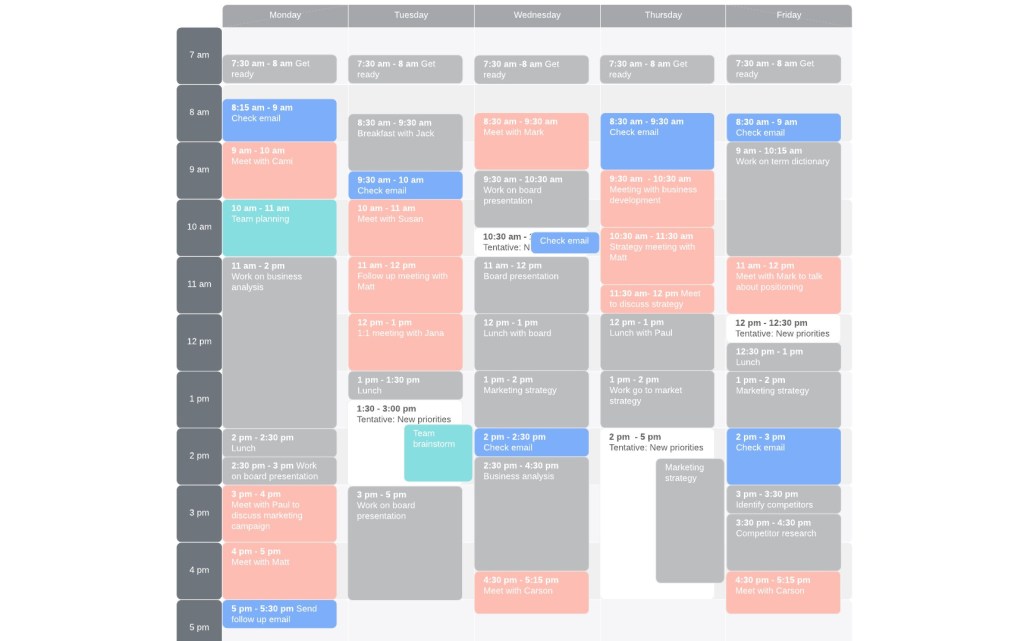
    Incorporating timeboxing into digital calendars like Outlook, iCal, or Google Calendar can make the process even more effective. To start, create calendar events for each task you need to accomplish, setting specific start and end times. This visual representation helps you see your entire day or week at a glance, making it easier to manage your time and ensure that no task is overlooked. For instance, if you have a busy week filled with meetings, you can block out dedicated timeboxes for deep work early in the morning or late in the afternoon when interruptions are less likely. This ensures that important, focus-intensive tasks get the attention they need without being constantly disrupted by meetings.

    Synergizing Timeboxing with GTD and the Pomodoro Technique

    Integrating timeboxing with the Getting Things Done (GTD) methodology and the Pomodoro Technique can further enhance productivity. GTD involves capturing tasks, clarifying what they entail, organizing them, reflecting on them regularly, and engaging in them appropriately. Timeboxing fits seamlessly into this framework by providing the “engage” component a structured time frame.

    The Pomodoro Technique, which involves working in 25-minute intervals followed by short breaks, is a natural fit with timeboxing. By dividing your timeboxes into Pomodoro intervals, you can maintain high levels of concentration and avoid burnout.

    Prioritizing Tasks with Timeboxing: The Pareto Principle

    When prioritizing tasks for timeboxing, the Pareto Principle—also known as the 80/20 rule—can be incredibly useful. This principle suggests that 80% of results come from 20% of efforts. Identify the tasks that will have the most significant impact and allocate timeboxes to these high-priority activities first. This ensures that you’re focusing on what truly matters and getting the most value from your efforts.

    Conclusion

    Timeboxing is more than just a productivity hack; it’s a paradigm shift in how we approach work. By turning tasks into scheduled commitments, timeboxing helps eliminate the stress of to-do lists, enhances focus, and boosts overall productivity. For project managers, it’s an invaluable tool for keeping projects on track and teams motivated. When combined with GTD and the Pomodoro Technique, timeboxing can transform your workflow, helping you achieve more in less time. So why wait? Start timeboxing today and unlock your true productivity potential!

  • Unlock Your Peak Productivity: How David Allen’s GTD Method Can Transform Your Workflow

    Unlock Your Peak Productivity: How David Allen’s GTD Method Can Transform Your Workflow

    Introduction

    “Getting Things Done” (GTD) is a transformative productivity system devised by David Allen. This methodology is your gateway to mastering task management and stress reduction, offering a clear path to achieving your goals with ease and efficiency. In this article, we dive into the principles of GTD, explore David Allen’s inspiration for creating this groundbreaking system, and provide a real-world example of how a project manager can leverage GTD to supercharge both team productivity and personal performance.

    David Allen and the Birth of GTD

    David Allen, a visionary productivity guru, has spent decades helping individuals and organizations streamline their workflows. Before authoring “Getting Things Done: The Art of Stress-Free Productivity,” Allen held various corporate roles and consulted for numerous companies. His experience revealed a common struggle: people were drowning in tasks and information without an effective system to manage them.

    Driven by a quest for personal efficiency and a passion for helping others, Allen experimented with various productivity techniques. Drawing from psychology, organizational theory, and personal development, he crafted the GTD methodology. In 2001, he introduced GTD to the world, and it quickly became a sensation for its practical, stress-reducing approach to task management.

    Core Principles of GTD
    1. Capture:
      • Definition: Collect all tasks, ideas, and projects in a reliable system outside of your mind.
      • Application: Use tools like notepads, digital apps, or any method that works for you.
      • Benefit: Liberate your mind from the clutter of remembering tasks, enabling sharper focus and mental clarity.
    2. Clarify:
      • Definition: Process your captured items by defining actionable tasks and deciding next steps.
      • Application: Break down large projects into manageable actions and determine what can be delegated or deferred.
      • Benefit: Create a clear, actionable roadmap for each task, reducing ambiguity and procrastination.
    3. Organize:
      • Definition: Systematically arrange tasks into appropriate categories.
      • Application: Use lists, folders, or digital tools to sort tasks into projects, next actions, waiting for, someday/maybe, and reference materials.
      • Benefit: Develop a structured system for task management, making it easy to find and act on tasks when needed.
    4. Reflect:
      • Definition: Regularly review your tasks and projects to stay on top of your commitments.
      • Application: Conduct weekly reviews to update lists, track progress, and ensure alignment with goals.
      • Benefit: Maintain a clear overview of your responsibilities, helping you prioritize and adjust as necessary.
    5. Engage:
      • Definition: Choose tasks to work on based on context, time available, energy levels, and priorities.
      • Application: Make informed decisions about what to do at any given moment.
      • Benefit: Enhance focus and productivity by aligning tasks with your current context and capacity.
    GTD Workflow
    1. Collect: Gather everything requiring your attention (emails, ideas, tasks, etc.) in a central inbox.
    2. Process: Go through the inbox and determine the next action for each item.
    3. Organize: Place actions in appropriate lists or categories.
    4. Review: Regularly update and review your lists to keep track of progress and adjust priorities.
    5. Do: Execute the tasks based on current context and priority.
    The Incredible Benefits of GTD
    • Skyrocketed Productivity: With a systematic approach, focus shifts to executing tasks, not deciding what to do next.
    • Stress Reduction: A reliable system clears your mind, dramatically reducing the anxiety of remembering and organizing tasks.
    • Laser Focus: Clear priorities and structured tasks help maintain intense focus and prevent distractions.
    • Masterful Time Management: Breaking down tasks and projects allows for effective time allocation and ensures timely completion.
    Tools for GTD
    • Physical Tools: Notebooks, planners, file folders.
    • Digital Tools: Apps like Todoist, Trello, Asana, Microsoft OneNote, and Evernote to implement GTD digitally.
    Integrating GTD with Timeboxing

    Timeboxing is a powerful productivity technique that involves allocating fixed time periods to specific tasks. Integrating GTD with timeboxing can further enhance your efficiency and focus. Once you’ve captured, clarified, and organized your tasks using GTD, you can assign timeboxes to these tasks, ensuring that you dedicate specific, uninterrupted time slots to complete them. This synergy helps in combating procrastination and ensures that tasks are tackled within a set timeframe, making it easier to manage larger projects and daily work more effectively. By combining the structured approach of GTD with the disciplined time allocation of timeboxing, you create a robust system for achieving peak productivity.

    Applying GTD in Project Management
    Scenario: Project Manager in a Software Development Company

    Objective: Boost team productivity and personal efficiency through the GTD approach.

    1. Capture:
      • Action: Gather all project-related tasks, ideas, and requirements in a central system like Trello or Asana.
      • Example: During team meetings, immediately record all action items in the tool.
    2. Clarify:
      • Action: Break down large projects into smaller, actionable tasks.
      • Example: For developing a new software feature, break it down into design, coding, testing, and documentation tasks.
    3. Organize:
      • Action: Categorize tasks into different lists or boards within the project management tool.
      • Example: Create boards for “To Do,” “In Progress,” “Waiting for Approval,” and “Completed” tasks.
    4. Reflect:
      • Action: Conduct weekly reviews with the team to track progress and adjust priorities.
      • Example: Hold a weekly review meeting to discuss completed tasks, upcoming deadlines, and any roadblocks.
    5. Engage:
      • Action: Prioritize tasks based on the current context and available resources.
      • Example: At the start of each day, review the “To Do” list and select tasks to focus on based on priority and time availability.
    Outstanding Benefits for the Project Manager and Team:
    • Enhanced Coordination: Clear task assignments and regular reviews keep everyone aligned and informed.
    • Increased Accountability: Defined tasks and deadlines create a sense of responsibility among team members.
    • Boosted Efficiency: Breaking down projects and organizing tasks reduces overwhelm and allows for better time management.
    • Improved Adaptability: Regular reviews enable the team to swiftly adapt to changes and reprioritize tasks as needed.
    Conclusion

    David Allen’s GTD methodology offers a powerful framework for mastering task and project management. By capturing, clarifying, organizing, reflecting, and engaging with tasks, individuals and teams can achieve peak productivity and stress reduction. For project managers, implementing GTD can transform team coordination, enhance accountability, and optimize both personal and team efficiency. Embrace GTD to create a more organized, focused, and productive work environment, paving the way for remarkable professional success and growth.