Tag: lifestyle

  • Creating a Minimalist Work Environment for Maximum Efficiency

    Creating a Minimalist Work Environment for Maximum Efficiency

    The Chaos We Call a Workspace

    Ever feel like your desk is more of a battlefield than a workspace? Scattered papers, random cables, half-empty coffee cups, and sticky notes that lost their stick days ago? We’ve all been there. But here’s the real question: is your cluttered workspace secretly sabotaging your productivity?

    Science says yes. Studies reveal that physical and digital clutter overloads our brains, leading to stress, distraction, and wasted time. In contrast, a clean, intentional workspace fosters focus, creativity, and efficiency. Enter minimalism: a streamlined approach to work that helps eliminate distractions and allows you to perform at your peak.

    If you’re ready to reclaim your workspace, boost efficiency, and reduce mental load, let’s dive into the principles of a minimalist work environment and how you can implement them today.

    The Hidden Costs of a Cluttered Workspace

    You might think your messy desk is just a minor inconvenience, but clutter has real consequences.

    • Mental Overload & Decision Fatigue – Every unnecessary object in your field of vision competes for your brain’s attention. When you have to constantly decide where to place things, what to keep, and what to ignore, it drains your mental energy.
    • Distractions & Wasted Time – A cluttered desk means constantly searching for items. A cluttered computer means wasting time sifting through files. A cluttered to-do list means never knowing what to tackle next.
    • Decreased Creativity & Productivity – Research from Princeton University shows that a cluttered environment restricts your brain’s ability to focus. In contrast, a minimalist workspace encourages clarity, allowing you to enter a state of deep work.

    The solution? A workspace that works for you, not against you — one that is streamlined, distraction-free, and built for efficiency.

    The Core Principles of a Minimalist Work Environment

    Minimalism isn’t about stripping everything away — it’s about keeping only what serves a purpose. Here’s what defines an efficient workspace:

    • Intentional Design: Every item in your workspace should have a purpose. No random piles, no “just in case” junk.
    • Decluttering Ruthlessly: Keep only what you use regularly and adds value to your workflow.
    • Digital Minimalism: A cluttered desktop and overflowing inbox are just as distracting as a messy desk. Organizing your digital life is crucial.
    • Mindful Consumption: Stop hoarding office supplies, unnecessary apps, and redundant tech. If it doesn’t enhance your work, it doesn’t belong.

    Practical Steps to Create a Minimalist Work Environment

    A) Decluttering Your Physical Workspace

    Remove Everything: Take everything off your desk. Only put back what you actually use on a daily basis.

    Keep Only Essentials: A laptop, a notebook, a good pen, and maybe a plant for a touch of calm — that’s all you really need.

    One-Touch Rule: Everything should have a designated spot. When you’re done using something, put it back immediately.

    Invest in a Clean Setup: A simple ergonomic desk and chair, proper lighting, and a monitor stand can make a huge difference.

    B) Digital Decluttering

    Clean Your Desktop: Keep only five or fewer icons. A clean screen = a clear mind.

    Organize Files: Create three core folders — Active, Archive, and Trash—to manage your files efficiently.

    Tame Your Inbox: Unsubscribe from unnecessary emails, batch-check your inbox, and use folders to organize important messages.

    Reduce App Overload: If you have 10+ apps open at once, you’re overcomplicating things. Stick to a minimal set of essential tools.

    C) Creating a Distraction-Free Zone

    No-Phone Zone: Keep your phone out of reach while working or put it on Do Not Disturb mode.

    Noise Management: Use noise-canceling headphones or play low-level background sounds to maintain focus.

    Minimize Visual Clutter: A clean, distraction-free workspace helps your brain focus on the task at hand.

    D) Streamlining Workflows for Efficiency

    Use a Kanban Board: A simple board with To-Do, In Progress, and Done sections keeps your tasks visible and organized.

    The Rule of Three: Start your day by setting three top priorities—focus on finishing those before anything else.

    Short, Purposeful Meetings: If a meeting can’t be done in 15-30 minutes, it’s probably too long.

    Sustaining Minimalism Long-Term

    Decluttering once isn’t enough. You need to maintain your minimalist work environment to prevent falling back into chaos. Here’s how:

    • Weekly Decluttering Habit: Spend 10 minutes every Friday resetting your workspace.
    • The “One In, One Out” Rule: If you bring in a new item, remove an old one.
    • Digital Detox Routine: Set limits on screen time, social media, and unnecessary notifications.
    • Audit Productivity Tools: Every month, check if your apps, software, and methods still serve you — eliminate what doesn’t.

    The Minimalist Mindset Beyond the Desk

    A minimalist workspace is just the start. Applying minimalism to how you work and live creates even bigger efficiency gains:

    Simplify Your Decision-Making: Reduce choices to avoid decision fatigue. ✅ Streamline Your Task List: Cut out unnecessary work that doesn’t contribute to your key goals.
    Prioritize Work-Life Balance: A simplified work routine allows for better mental clarity and personal fulfillment.

    Closing Thoughts: Take the First Step Today

    Minimalism at work isn’t about owning less — it’s about removing distractions so you can focus on what truly matters. The result? A workspace that promotes clarity, efficiency, and less stress.

    Challenge: Take five minutes right now to remove ONE unnecessary item from your desk. Just one. Experience how it feels to create space for better work.

    Your workspace is a reflection of your mindset. The cleaner it is, the clearer you think.

    What’s the biggest source of clutter in your workspace? Drop a comment and let’s talk!

  • The Minimalist Leader: Focusing on What Truly Matters in Management

    The Minimalist Leader: Focusing on What Truly Matters in Management

    The Leadership Burden: Why More Isn’t Better

    Modern leadership is plagued by complexity. The more we try to optimize, the more we add—meetings, reports, tools, processes. In the pursuit of efficiency, leaders often find themselves drowning in decision fatigue and overwhelmed by trivial tasks. Yet, the most effective leaders don’t do more. They do less, better.

    Minimalist leadership is the art of subtraction. It is about stripping away the unnecessary to focus on the essential. It is about clarity, simplicity, and effortlessness—the true marks of mastery. But achieving this simplicity is not about being passive; it requires active discipline and deliberate choices.

    The Minimalist Leadership Mindset

    At its core, minimalist leadership is a discipline of focus. Great leaders operate with a refined sense of what truly matters and let go of everything that doesn’t. They follow a principle as old as wisdom itself: the Pareto Principle (80/20 rule).

    • 80% of your results come from 20% of your efforts.
    • The key to effective leadership is identifying and doubling down on that 20%.

    Minimalist leaders are ruthless editors—not just of their own time, but of their organization’s priorities. Their job is not to micromanage or overcomplicate but to remove obstacles, streamline decision-making, and empower others to act with autonomy.

    The Three Pillars of Minimalist Leadership

    1. Clarity: The Power of Simplicity in Communication

    A leader’s most underrated skill is their ability to communicate with clarity. Confusion creates inefficiency. Simplify the message, and execution becomes effortless.

    • Reduce unnecessary emails. If it takes more than five sentences, consider a call instead.
    • Cut the jargon. Speak in simple, actionable language.
    • Define a clear mission. Every team member should know the one thing that matters most.
    • Set concise and specific goals that drive real action rather than vague, broad objectives.

    2. Delegation: Trust and Empowerment Over Control

    Minimalist leaders trust their teams. They own only the decisions that truly require them and delegate the rest. Micromanagement is the enemy of impact.

    • Empower decision-making at lower levels.
    • Set clear expectations, but don’t dictate the process.
    • Measure outcomes, not hours worked.
    • Allow your team to take ownership and make mistakes—it fosters growth and responsibility.

    3. Ruthless Prioritization: Cutting the Noise

    Leadership is not about doing everything—it’s about knowing what not to do. Minimalist leaders are laser-focused on the few critical tasks that drive real impact.

    • Eliminate half of your meetings—keep only those that drive real decisions.
    • Limit your daily focus to 1–3 high-value tasks.
    • Ask yourself daily: “If I could only accomplish one thing today, what would it be?”
    • Remove the temptation to multitask—focus on deep work and give undivided attention to the task at hand.

    Application: How to Implement Effortless Leadership

    Minimalism in leadership is a habit, not just a philosophy. Here’s how to start applying it immediately:

    • Start the day with a defining question: “What is the one thing that, if done well, makes everything else easier?”
    • Simplify decision-making: Use first-principles thinking—strip decisions down to their core truths.
    • Reduce meeting overload: Cut 50% of unnecessary meetings and replace them with asynchronous updates.
    • Optimize your environment: Remove distractions—whether digital (email clutter) or mental (overcommitting to tasks that don’t align with your core focus).
    • Create no-excuse time blocks: Dedicate parts of the day to uninterrupted work and reflection, free from distractions.

    The Hidden Benefits of Minimalist Leadership

    By focusing only on what truly matters, leaders free up their mental bandwidth for creativity and strategic thinking. Instead of firefighting through a cluttered schedule, they create space for:

    • Better decision-making: With fewer distractions, leaders make sharper, more thoughtful decisions.
    • A stronger team culture: Employees thrive when they are trusted, empowered, and not micromanaged.
    • Reduced stress and burnout: A lighter cognitive load allows leaders to stay energized and resilient.
    • Greater adaptability: A streamlined organization can pivot faster and respond more effectively to change.

    When leadership is done well, it looks effortless—because the hard work is in the discipline of subtraction, not addition.

    Leading Effortlessly: The Ultimate Competitive Advantage

    Simplicity is powerful. Leaders who master the art of subtraction create organizations that are nimble, focused, and impactful. They avoid burnout, make better decisions, and cultivate a culture of trust and autonomy.

    Minimalist leadership isn’t about doing less for the sake of it—it’s about doing less of what doesn’t matter and more of what truly does.

    As a leader, your job isn’t to juggle everything. It’s to create clarity, remove obstacles, and make the hard things in leadership look effortless.

    Call to Action: What Can You Subtract Today?

    Ask yourself: What’s one thing you can stop doing today that will create more clarity and focus in your leadership? The first step to becoming a minimalist leader is simply deciding what no longer serves your mission—and letting it go.

    In a world where busyness is mistaken for effectiveness, true leaders stand out by mastering the art of focus. Minimalism isn’t a restriction—it’s a superpower.

  • Timeless vs. Trendy: What Men Can Learn from Decades of Style Evolution

    Timeless vs. Trendy: What Men Can Learn from Decades of Style Evolution

    Introduction

    Men’s fashion is a curious blend of the fleeting and the eternal. Every decade introduces fresh trends, from wide lapels to slim fits, yet some styles seem impervious to time. What makes certain pieces timeless while others fade into obscurity? Understanding the evolution of men’s style is not just an academic exercise; it’s a guide for mastering a wardrobe that feels as relevant today as it will decades from now.

    This article explores the relationship between fleeting fashion trends and timeless style principles, offering insights into how modern men can dress with confidence and enduring sophistication.

    A Brief History of Men’s Fashion

    The evolution of men’s fashion mirrors broader cultural and societal changes. In the Victorian era, formality and structure dominated wardrobes. Moving into the 20th century, the corporate suit became a symbol of power, while casual wear emerged in post-war America, reflecting a shift toward comfort and practicality. By the late 20th and early 21st centuries, streetwear and athleisure took center stage, driven by youth culture and a rejection of traditional norms.

    Despite these shifts, certain elements—like the well-tailored suit or a crisp white shirt—have remained staples. Their enduring appeal lies in their versatility, simplicity, and ability to adapt to changing contexts.

    The Anatomy of Timeless Style

    What defines timeless style? It’s about more than just specific items; it’s a philosophy rooted in three key principles:

    • Fit: Regardless of trends, a well-fitted garment enhances any physique and conveys polish.
    • Fabric: Quality materials age gracefully, making them worthwhile investments.
    • Functionality: Timeless pieces serve a purpose, whether it’s the utility of a leather jacket or the elegance of a tailored blazer.

    Classic wardrobe essentials like dark denim, leather dress shoes, and tailored suits stand the test of time because they balance these elements. They’re versatile enough to adapt to various occasions yet refined enough to transcend fleeting fads.

    Trends: The Double-Edged Sword

    Trends can be a source of inspiration, but they also pose a challenge. On one hand, trends introduce innovative designs and fresh perspectives. For instance, the resurgence of vintage cuts in trousers has modernized traditional tailoring. On the other hand, over-committing to trends can result in a wardrobe that feels dated within a few years.

    Consider the bomber jacket: once a utilitarian piece for pilots, it has been reinterpreted by countless designers. Its transformation from a trend to a wardrobe staple illustrates how certain items can achieve timeless status through adaptation and refinement.

    Creating Timeless Looks in a Trend-Driven World

    Navigating a trend-heavy fashion landscape requires discernment. Here’s how to strike a balance:

    • Anchor Your Wardrobe with Classics: Invest in staples like a navy blazer, oxford shirts, and neutral trousers.
    • Add Trends Sparingly: Incorporate one or two trendy pieces to refresh your look without overwhelming it.
    • Prioritize Quality Over Quantity: A well-made item may cost more upfront but will outlast cheaper alternatives.
    • Tailor to Your Personality: Use timeless pieces as a foundation but let your individuality shine through details like accessories or color choices.
    Sprezzatura in Timeless Style

    The Italian concept of “sprezzatura” encapsulates effortless elegance. It’s the art of looking polished without appearing overly calculated. Sprezzatura thrives on timeless principles—a perfect fit, harmonious proportions, and subtle details—yet it allows room for personal flair. Whether it’s leaving a shirt collar slightly unbuttoned or pairing sneakers with a tailored suit, sprezzatura demonstrates how timeless style can feel modern and approachable.

    Conclusion

    The interplay between trends and timelessness is what keeps men’s fashion dynamic yet enduring. By understanding the evolution of style and grounding your wardrobe in timeless principles, you can navigate changing trends with confidence and ease.

    Remember, true style isn’t about chasing every new fad; it’s about curating a wardrobe that reflects who you are while standing the test of time. Trends may come and go, but timeless style is forever. Which will you choose?

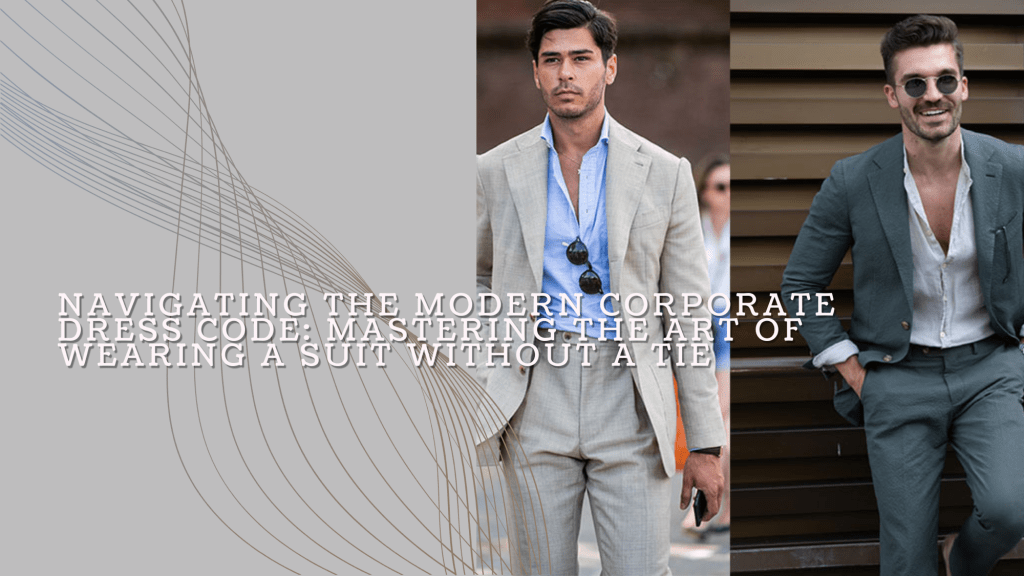
  • Navigating the Modern Corporate Dress Code: Mastering the Art of Wearing a Suit Without a Tie

    Navigating the Modern Corporate Dress Code: Mastering the Art of Wearing a Suit Without a Tie

    In today’s evolving corporate world, where dress codes have loosened in response to the rise of remote working, professionals are finding themselves with more sartorial freedom than ever before. The suit without a tie has emerged as a versatile option that effortlessly bridges the gap between formal and casual, allowing you to maintain a polished appearance while embracing a more relaxed style. But how do you master this look without compromising your professionalism? Here’s your guide to wearing a suit without a tie, tailored for the modern corporate professional, with tips for transitioning from the office to after-work activities.

    The Corporate Office: When to Go Tie-Free

    As the lines between formal and casual continue to blur, knowing when to ditch the tie is crucial. The tie-less suit is ideal for:

    Business Casual Days: Meetings with internal teams or clients in creative industries where a full suit and tie might feel overly formal.

    Casual Fridays: When your office dress code eases up at the end of the week.

    Office Socials: Events like networking mixers or after-work drinks, where you want to appear approachable yet refined.

    In more formal scenarios — like presenting to the board or meeting high-profile clients — sticking with a tie might still be the safest choice.

    How to Perfect the Look
    1. Choose the Right Suit:
      Fabric and Fit: Opt for suits made from softer, less structured fabrics like cotton, linen, or a lightweight wool blend. These materials lend themselves well to a tie-less look, offering a relaxed yet refined silhouette. Fit is paramount—ensure your suit is well-tailored, particularly around the shoulders and waist.
      Color Considerations: Navy, charcoal, and lighter grays are versatile choices that adapt well to both formal and semi-formal settings. For a more relaxed vibe, consider earth tones like olive or tan.
    2. Shirt Selection:
      Collar Style: Shirts with spread or cutaway collars are ideal as they maintain their structure without the support of a tie, framing your face and ensuring your look remains polished.
      Patterns and Textures: While white and light blue remain safe bets, experimenting with subtle patterns or textured fabrics can add depth to your outfit without overpowering it.
    3. Accessorize Wisely:
      Pocket Square: A pocket square can add a splash of personality to your ensemble. Stick to classic folds and patterns—think simple white linen for the office, or a muted print for something slightly more daring.
      Watch & Footwear: A classic wristwatch and polished leather shoes are non-negotiables. They convey a sense of detail-oriented professionalism, rounding off your look with finesse.
    4. Grooming and Presentation:
      Neckline Grooming: A clean shave or a well-maintained beard ensures that your open collar looks intentional rather than unfinished. Pay attention to your hairstyle as well—neat and styled is the way to go.
      Confidence: Confidence is your best accessory. Standing tall and owning your look is essential when opting for a suit without a tie. Remember, the tie-less look is as much about attitude as it is about clothing.
    After-Work Elegance: Transitioning from Office to Evening

    The beauty of the tie-less suit lies in its versatility—it transitions seamlessly from the office to evening engagements. Here’s how to adapt your look for various after-work activities:

    Date Night: When heading out for dinner or drinks after work, consider swapping your office shirt for something more relaxed—like a dark, patterned button-down or a knit polo. Loosen up your pocket square fold for a touch of nonchalance and switch to a more casual shoe, like a suede loafer.

    Wedding Guest: A tie-less suit can work beautifully for weddings, particularly those with a more relaxed dress code. Opt for a suit in a richer color—like deep burgundy or navy—and pair it with a crisp white shirt and a subtle pocket square. A boutonniere or a stylish lapel pin can add a festive touch.

    Weekend Events: For social gatherings like brunches or garden parties, consider a suit in lighter shades, such as beige or light grey, paired with a printed shirt. A pair of stylish sunglasses and leather loafers will keep you looking effortlessly cool and collected.

    A Way Forward: Experimenting with Your Personal Style

    The suit without a tie is more than just a fashion statement; it’s an invitation to experiment with your personal style. Start small—perhaps by trying different collar styles, playing with subtle patterns, or introducing new colors into your wardrobe. Pay attention to how different combinations make you feel and how they are received in various settings. The goal is to find a balance that feels authentic to you while remaining appropriate for your professional environment.

    As corporate dress codes continue to evolve, so too should your approach to style. Embrace the change by experimenting with your attire, and remember that a well-executed tie-less suit can communicate confidence, modernity, and sophistication in equal measure. Whether you’re in the boardroom, out on a date, or attending a wedding, this look has the potential to become a cornerstone of your sartorial repertoire.

  • The Power of Dressing Up: Why Men Should Always Aim to Be Slightly Overdressed

    The Power of Dressing Up: Why Men Should Always Aim to Be Slightly Overdressed

    In today’s casual world, the idea of wearing a suit or maintaining business casual attire might seem old-fashioned. However, choosing to be slightly overdressed can make a significant difference in various aspects of your life. Here’s why men should consider dressing up, even when it’s not required.

    1. First Impressions Count

    First impressions happen in seconds. Your attire can communicate professionalism, attention to detail, and respect. A well-dressed man immediately exudes competence and reliability, setting a positive tone for any interaction. As Mark Twain once said, “Clothes make the man. Naked people have little or no influence on society.”

    2. Boost Your Confidence

    How you dress impacts how you feel about yourself. Dressing well can significantly boost your confidence and self-esteem, translating into how you carry yourself and interact with others. This confidence is particularly advantageous in professional settings. Yves Saint Laurent believed that “Dressing is a way of life,” emphasizing the power of good attire on one’s mindset.

    3. Show Respect and Commitment

    Dressing slightly better than required shows respect for your colleagues, clients, and workplace. It signals that you take your role seriously and are committed to presenting yourself in the best light, fostering a professional environment. Tom Ford encapsulates this by saying, “Dressing well is a form of good manners.”

    4. Stand Out from the Crowd

    In a casual-dress world, opting for a more formal appearance helps you stand out. It shows that you go above and beyond the minimum expectations, opening doors to opportunities, promotions, and positive recognition. “You can never be overdressed or overeducated,” Oscar Wilde famously quipped, highlighting the benefits of dressing well.

    5. Be Ready for Anything

    Being slightly overdressed means you’re prepared for unexpected opportunities, whether it’s an impromptu meeting with an executive or a networking event. A well-dressed man is always ready to make a great impression. As Edith Head put it, “You can have anything you want in life if you dress for it.”

    6. Enhance Your Professional Image

    Your attire contributes to your personal brand. Consistently dressing well helps build a professional image that aligns with your career aspirations, positioning you as someone serious about their career. Ralph Lauren wisely noted, “Style is very personal. It has nothing to do with fashion. Fashion is over quickly. Style is forever.”

    7. Cultural and Social Awareness

    Dressing well is often a sign of respect and good manners. It shows that you understand and adhere to the norms and expectations of your environment, crucial in global business settings. Giorgio Armani’s words, “Elegance is not standing out, but being remembered,” capture this sentiment perfectly.

    8. Influence Others

    Your attire affects how others perceive and interact with you. A well-dressed individual commands more respect and attention, facilitating better communication and more effective interactions. As fashion icon Coco Chanel said, “Dress shabbily and they remember the dress; dress impeccably and they remember the woman.”

    Conclusion

    While casual attire is on the rise, the benefits of being slightly overdressed are undeniable. From making strong first impressions to boosting confidence and standing out, dressing well offers numerous advantages. In a world where image and perception are crucial, a well-dressed man is always one step ahead. Following the wisdom of these style icons, embracing a polished look can significantly enhance your professional and personal life.