Tag: minimalism

  • 6 ways my life got easier through building a capsule wardrobe

    6 ways my life got easier through building a capsule wardrobe

    Are you tired of standing in front of your bursting closet before a big occasion, important presentation at work, or just your usual Friday date night with nothing to wear? Read below how building an interchangeable minimalist wardrobe influence my life for the better and who knows, some points may even apply to your life.

    Create your own personal brand

    So this is twofold, for once you will be able to have some kind of designated uniform for your work activities. This is going to make it easier for yourself, to separate work from your leisure, personal life. You change into your uniform in the morning, focus on performing in your workplace and when you come home, you slip out of it and cut the chords to work stuff. This is becoming more and more important, the more both parts of your day are blending together. Are you self-employed and using one mobile device for business & private matters? Do you have a job, where working from home is permitted and therefore a company notebook and a company phone are always accessible? It can get out of hand quickly with constant beeps and vibrations, since work is more and more globalized and you are co-creating across different time zones.

    The other big benefit is, you will be recognizable, people will be starting to get a good feeling of what they can expect from you. It will calm their minds, and give you more opportunities to take over additional, greater responsibilities or just being recognized for your work and successes. Even if next to no one would ever say it out loud in a workplace setting, your appearance is the first thing that gets recognized and you will be judged base on that. Maybe just unconsciously, but we all do it. You see someone walking around in dirty joggers with a little fluff around the waist, is your first impression that he or she is a top performing lawyer or doctor?

    Save time dressing & shopping

    Once you own several staple items, that go well together in any potential combination and for every setting you can think of. Be it a summer wedding, a day in the office or running errands around town. It will be quite easy picking a outfit, that generally is the same look you will always wear. Pick any one item for tops and one for bottoms, depending on time of the year and temperature slap an item for layering over it, grab any shoes heading out and you are good to go.

    As for shopping, once you know hat sizes and colors match your type and preference, it will be far easier to add to your wardrobe. If you are already in the position where you are completely happy with the items you own, it’s just a matter of replacing pieces that are beyond repair with similar things.

    Spend less money on clothes

    In general, once you developed a clear feeling for your own style, what you like to wear, what makes you feel great and doesn’t limit you in your daily activities, the need to go with the trend or buy the thing some influencer advertised will subside. Therefore you will spend less on clothes in general and the potential for buying sprees in online or physical shops will be minimized. Try to develop a healthy relationship with the stuff you buy. If every piece in your closet is an item you absolutely love and love to wear, why would you want to buy additional stuff?

    Mitigate decision fatigue

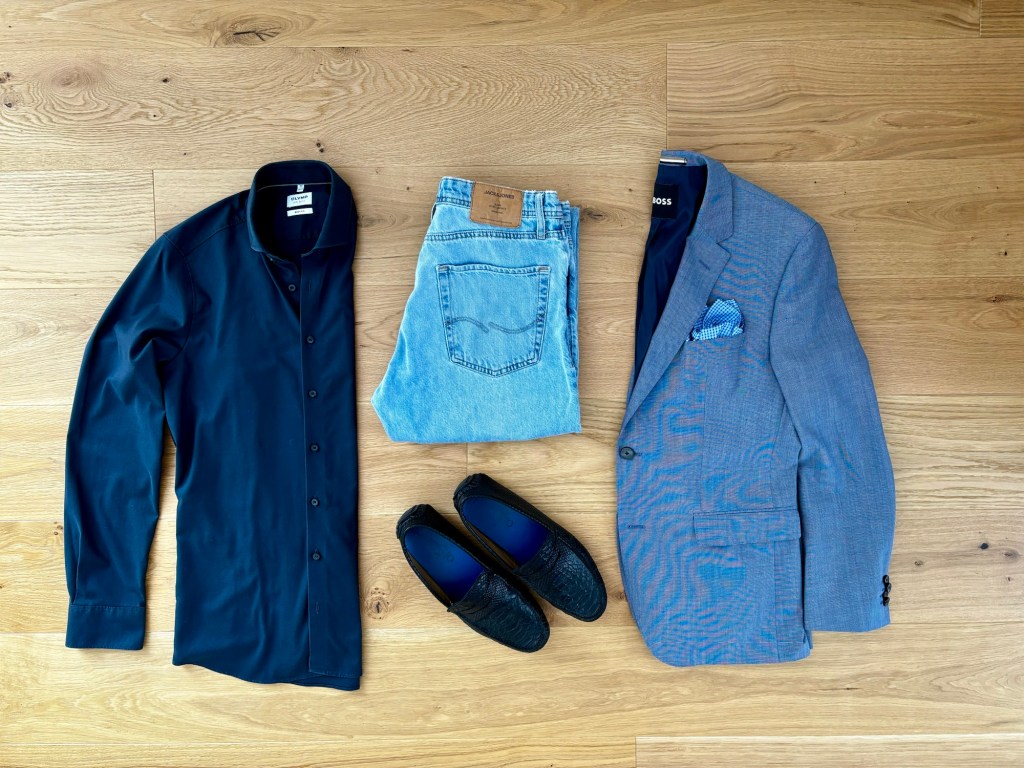
    As mentioned two paragraphs before, the more interchangeable the core of the wardrobe you build is, the easier it will become to pick outfits tailored to any occasion. Feel like wearing a suit, wear the suit, either with a dress shirt, an oxford or a t-shirt/ polo. It will look well composed if the patterns/ materials and colors match each other. There will be no thinking involved, just picking items based on gut feeling. Don’t want to wear a full suit, just use the jacked and go with jeans, or the other way round, pick the slacks from your suit, throw a plain white T over it and you are dress for nearly everything, even the modern office job. And you will stand out between all the functional clothes, jeans and running shoes outfits of your peers.

    Boost your self confidence

    Once you look good and feel good in the outfits you wear you will have a confidence boost. Even without any recognition from other persons. Not to say, that every compliment you receive, and you will receive a lot, once you are always slightly overdressed, will build additional confidence. Coming back on the (unconscious) judging of people based on first impression and appearance, if you get this right, people will start to talk to you differently. They might not be aware of it, but they will treat you more to your benefit compared to the peer showing up like pulled from his own ass and therefore looking not as well prepared as you will be looking.

    Make traveling and business trips easier

    The bigger the overlap between your professional outfits, your leisure outfits and the pieces you feel and move great in, the less items you will need to pack for a business or even holiday trip. This will save you time and mental energy while packing, while out and about and when you are coming back and need to wash, iron and put everything back away. Travel lightly and it will make traveling itself easier, less space occupied for luggage, maybe you can make do only with carry-on baggage, which will make processing through the airport easier and faster.
  • 11 things minimalism taught me about project management

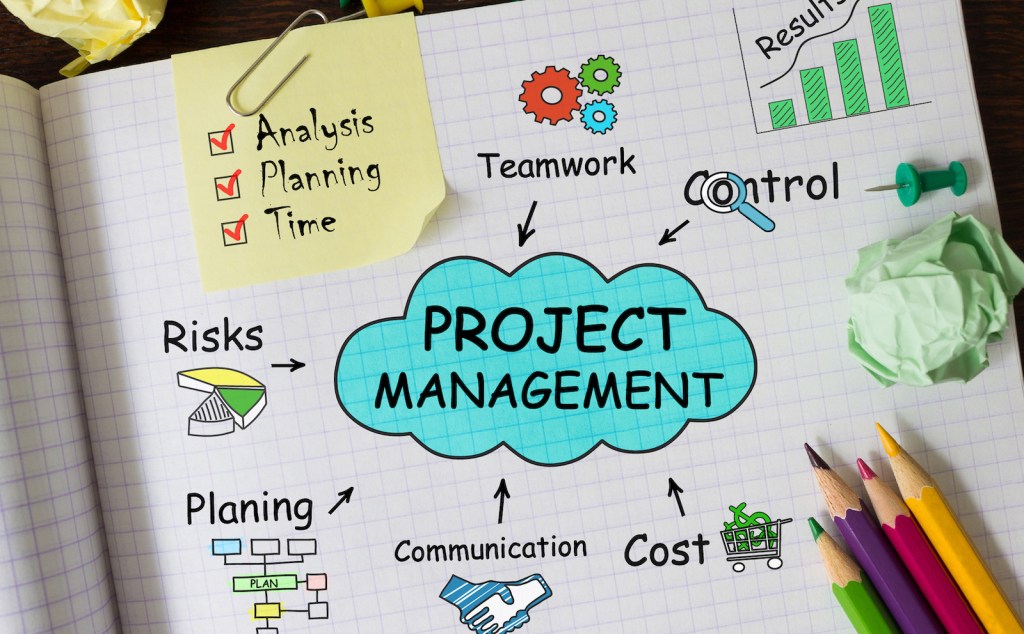
    11 things minimalism taught me about project management

    Frist of all I’d like to state the obvious:
    If you want to even remotely complete any project in a reasonable time frame for reasonable costs, you have to lead the project and the team and not just manage it.

    1. Less is more

    No matter if documentation, meetings, status updates, action items, or even team members.
    80% of results will come from 20% of your efforts and 80% of progress will come from 20% of the contributors. There is always potential for cutting things away.

    2. Purposeful meetings

    The main purpose of any meeting should be connection, collaboration or co-creation. And every meeting without a clear decision is just another coffee break. Don’t use project meetings for mere status updates, action items and time plan reviews.

    3. Talk less & share responsibilities

    Listen more and talk less, if all your project meetings are one-man shows, where you do the presenting, note taking, moderation an decision making, let me tell you, you are doing it wrong. Don’t be lethargic but encourage and enable the team to move forward on their own. Some teams / colleague will need more guidance, some will want more autonomy balance it from individual to individual.

    4. Clear & concise communication

    Make all you communication clear, and crisp. Use less and better words to convey your message and be poignant. A C-suit executive won’t read much more than 2-3 short bullets, not because he’s not interested, he just won’t have the time.

    5. High level time planning is sufficient

    Don’t overcomplicate stuff, have less & bigger work packages, less bars in the Gantt. The plan will not stand the test of time. Think of major milestones and timing, not of granular efforts & interdependencies. Your team will know what to do and when, help them close tasks timely and lead discussions & decision taking.

    6. Don’t be cheap with recognition

    Be authentic and benevolent when it comes to recognition. Figure out if the person wants to be praised in a 1on1 setting or in front of the team. Always praise your team members in front of their managers, even if they just do the bare minimum. As long as they are contribution and not actively hurting your project, tell they are doing an outstanding job. Build trust with your team.

    7. Always improve

    Try looking at your project and the companies project work in general with an outside perspective. Streamline what you are doing, cut away what seems to be against common sense, redundant or excess. If the decision of minimizing was wrong you can always add back in. But in general first look what can be omitted.

    8. Get a course, watch a YouTube video on presenting

    All you job is communication, learn to engage your audience, be it your team, or stakeholders or customers, don’t just read your slides out aloud. Have less and more meaning full content on the slides, have less slides, you should be able to talk 5-7 minutes per slide at least.

    9. Risk “management” and mitigations

    Risks are neither qualifiable nor avoidable in general. The occurrence of potential risks can not really be derived from past experience and brainstorming alone, it is to a large degree volatile and random in nature. So focus on taking baby steps with decisions and course correct as long as the costs are low.

    10. Clear roles, responsibilities & expected performance

    Set the expectations early in a written document together with everybody involved. Hold you team accountable and lead with good example. But don’t tolerate slack. The overall performance will be based on what you tolerate, not what example you set (to a degree of course, you can’t slack off either).

    11. It’s all about relationships

    The perception and success of your project is directly tied to the relationships you built, not only with your team, but with their managers, the projects stakeholders, your manager & PMO colleagues. Do good and talk about it, embellish it to a degree.

  • So you ran yourself into the ground?

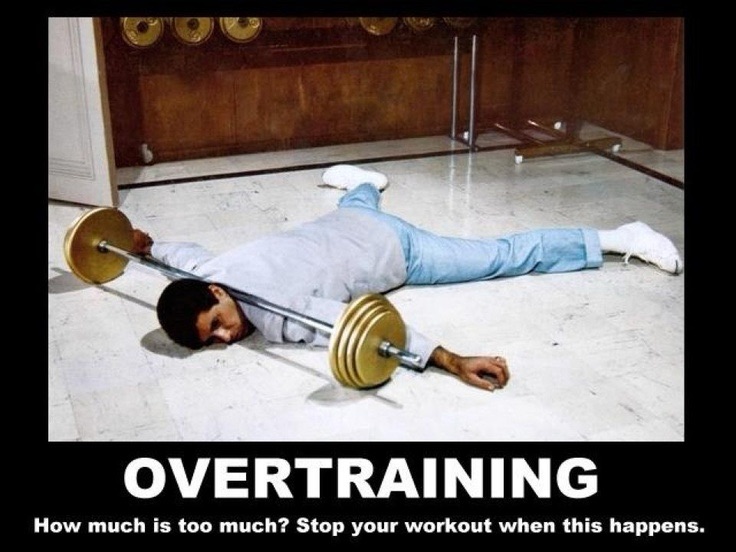
    So you ran yourself into the ground?

    So you wear eager on following through with your high intensity high volume approach, but somehow life got in the way. Kids birthday, working overtime, stressful projects, a vacation trip or even just a cold. Sometimes life has a habit of throwing panned or unplanned stuff at us, that tend to derail our efforts in the quest for size, strength and cuts.

    So maybe you tried really hard to workout 3-5 times a week, and everything was running smoothly for 2 or even 3 weeks, but for most of us, fully committed adults with kids one of the following things happens:

    • You run out of steam and get sick/tired
    • Your schedule implodes and training needs to take a setback

    But don‘t be to hard on yourself, those high commitment fitness routines are not really meant for you. Think of small spurts and enjoy them as long as they keep working. You can always throttle back a little, without losing progress and even continuing to progress along the way, if you change things up a bit and keep the effort high.

    I suggest you check out the writings of Stuart McRobert (Beyond Brawn) or Martin Berkhan form leangains.com or even Dan John’s blog. You can easily make progress no matter if on a diet or tying to bulk up, with just 2 to 3 short sessions in the week.

    High intensity, low volume training on an abbreviated routine that is. So for the zines when life is extra demanding, cut training days and training time but up the intensity and the weight lifted to get the most out of it.

    Exercise selection will be key, so I encourage you to look for one push and one pulling movement in the two major planes for upper and lower body and distribute those out evenly over two to three workout days.

    How does that look like? I‘ll give you two examples, so for a 3 day split routine, like leangains it might look somewhat like:

    Monday:

    • Deadlift 3 sets 5 to 8 reps
    • Standing Shoulder press 3 sets 8 to 12 reps

    Wednesday

    • Benchpress 3 sets 5 to 8 reps
    • Rowing movement 3 sets 8 to 12 reps

    Friday

    • Squat 3 sets 8 to 12 reps
    • Pullups (weighted) 3 sets 8 to 12 reps

    For me at least, I like to keep reps in deadlifts and benchpresses low, and the other exercises a bit higher, since it tends to feel good, but you might be different. Try it for 2 to 3 weeks, see if you can get stronger and how you feel, then adjust for the next 3 week block. High repetition benching hurts my rotator cuff more, than moving bigger weights for example. But low reps squats fry my my lower back completely, while I have no issue doing heavy singles in the deadlift. What can I say, touching 40 so maybe it’s good thing that nothing needed surgery just yet.

    If three days feel like a bit too Abiturient, even if you are only working out 30 minutes each session, you can always go with twice a week, think one of those days on the weekend, where you might have some time to yourself.

    Could look like this:

    Day one

    • Deadlift
    • Benchpress
    • Rowing movement

    Day two

    • Squat
    • Pull-up
    • Overhead press

    With 3 sets per exercise and 3 to 5 minutes rest, you should be out of the gym in under 45 minutes still.

    And of course, if you have a little extra time, or extra energy you can always add two exercises for arms per week, but don‘t let it impact the major movements!

    And with that, enjoy your lifting, give it a shot.

    There are a lot of ways to skin a cat. Main focus should be, to be in it for a lifetime!

  • Most things in life are like a marathon..

    Most things in life are like a marathon..

    ..they say at least.

    But I think that’s fundamentally wrong. Sure to everything that has some kind of outcome worthwhile, consistency is key. There is no doubt bout that. Even coming back to the marathon, how good will you be, if you did it once in a lifetime, unprepared?

    For sure you have to train consistently. But how do you train? Low intensity every day for an endless amount of time? I‘m not big on running but I suggest there is some kind of periodization, starting low volume low effort and peaking with maximum effort and huge volume, before some days of rest towards your competition.

    So I would argue everything worthwhile in life is like training for the 100m dash. High intensity, for short total daily duration over the course of a lifetime. Take rest before burning out, the ease back into the grind and give it your all every day for extended amounts of time.

    Be it a FIY project at home, crammed into a weekend or over the course of a vacation week. Be it the big project at work, the presentation you have to give to a customer, your sales pitch, that you have to deliver. You take spurts of deep focused work on the topic for some limited amount of time. Then your competition, evaluation, talk or whatever rolls around, you perform to the best of your abilities and your done, decompressing and resting before taking on the next major thing.

    This applies to mostly everything, think relationships, what’s more sustainable and will foster the deeper relationships? Small daily bursts of complete focus on the other person, or some shallow clinging to each other, while mindlessly scrolling the gram oder watching Netflix?

    And of course, more is oftentimes better, until it stops working or even backfires. Think minimum effective dose in training. Same principle can be used with everything you do. The meal you prepare will not be tasting better if you cram too much sophisticated sounding ingredients in it. Have some fat in it to carry the taste, some protein for being satiated and some seasoning/ spices and your good.

    Next time you start doing something, think of the sprint vs marathon analogy and then give it your all for a pre defined period. Afterwards give it your all to recover, rest or selfcare and then start refreshed into the next task.

    And please, don‘t take things too seriously!

  • Monday fun day

    Monday fun day

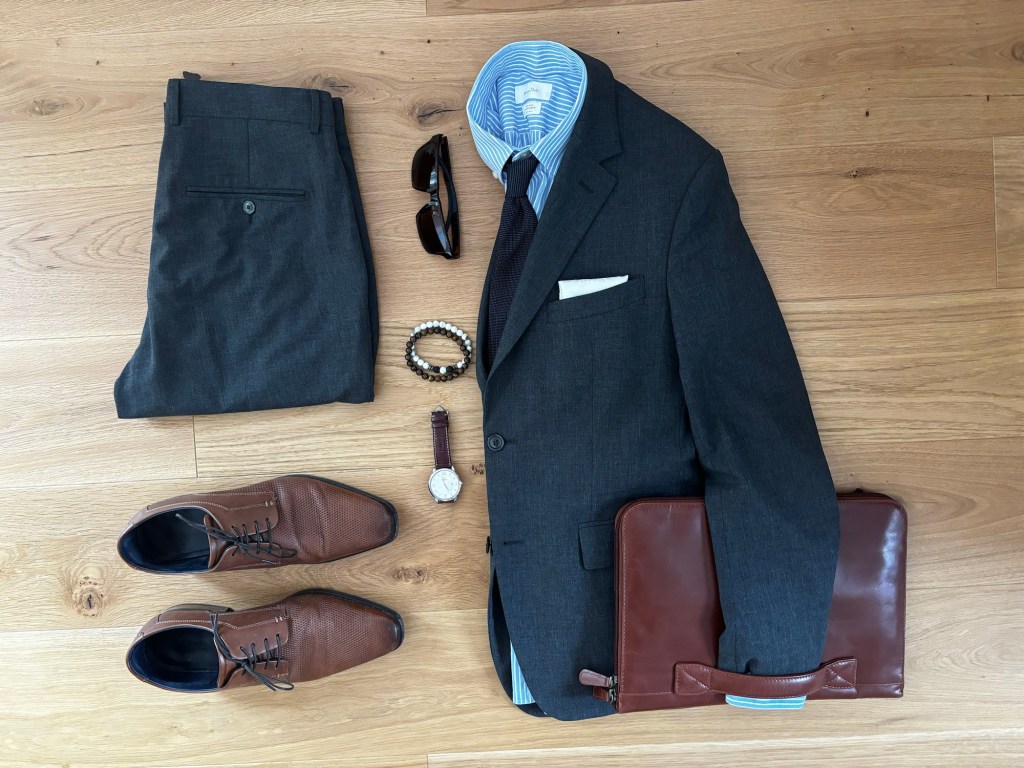
    Grey suit, blue/white striped shirt, navy tie and light brown accessories. Perfectly dressed for any workplace, destined to catch some funny looks from the colleagues showing up in cycling/ functional clothes made from shredded plastic bottles and Birkenstocks.

    To stand out has some pros and cons to it, but if you own your style and have some good story on your why for dressing well the pros outweigh the negative aspects.

    Keep it fun & don‘t take other people’s opinions to seriously!