Tag: MinimalistFitness

  • Why Less is More in Fitness: Avoiding Burnout with Minimalist Training

    Why Less is More in Fitness: Avoiding Burnout with Minimalist Training

    “It’s 6 AM. The alarm goes off. You’ve got emails waiting, breakfast to make, kids to wake up, and your workout? Still just an idea. Sound familiar?”

    If you’re juggling a demanding career, a partner, kids, maybe even aging parents, the idea of fitting in an elaborate workout routine feels more like fantasy than reality. Between back-to-back meetings and bedtime stories, who has the time—or the mental bandwidth—for 90-minute gym sessions and meticulous macro counting?

    The truth? You don’t need all of that to be fit, strong, and healthy. In fact, trying to do too much is often the very thing that derails us. That’s where minimalist training comes in—a practical, sustainable approach that prioritizes consistency over complexity and delivers real results without burnout.

    1. The Problem: Too Much Fitness Advice, Too Little Time

    Open Instagram or YouTube, and you’re hit with a firehose of fitness advice: 7-day workout splits, carb cycling, cold plunges, yoga, meditation, fasting windows. It’s overwhelming—and it’s paralyzing.

    When you already have a full plate, trying to keep up with this fitness circus becomes another stressor. You skip a workout, feel guilty, and spiral into the all-or-nothing trap. The result? Inconsistency, frustration, and eventually, burnout.

    2. Redefining Success: Consistency Over Complexity

    Here’s the hard truth: your fitness routine doesn’t need to look like a personal trainer’s. In fact, it shouldn’t. You’re not getting paid to work out. Your job is to be present, productive, and healthy for the long haul.

    That means success isn’t measured by six-pack abs or bench press PRs—it’s about how consistently you can move your body, build strength, and maintain energy, week after week, month after month.

    Less time. Less stress. More life.

    3. The Minimalist Fitness Mindset

    Minimalist training isn’t lazy training—it’s smart training. It’s about doing the essential things well and ignoring the fluff. It’s about showing up with purpose, not perfection.

    Think of it like this: your workout should energize your day, not drain it. It should simplify your life, not complicate it. When you remove decision fatigue and unrealistic expectations, you free up mental space for what truly matters.

    4. The Core Elements of Minimalist Training

    Let’s break it down to the fundamentals. Here’s all you really need:

    Strength Training (2–3x/week): Focus on compound lifts like squats, deadlifts, pushups, and rows. These give you the biggest bang for your buck. Cardio (daily movement): Walk the dog, bike with your kid, take the stairs. No need for hour-long runs unless you enjoy them. Mobility (5–10 min/day): A short routine to keep joints healthy and pain at bay. Foam rolling, stretching, or yoga flows work great.

    Everything else? Optional. If it fits into your week, great. If not, don’t sweat it.

    5. Sample Weekly Plan (For the Time-Starved Professional)

    Here’s a realistic plan that fits into even the busiest schedules:

    Monday:

    30-minute full-body strength workout (Squats, Pushups, Rows) 15-minute walk after lunch

    Wednesday:

    30-minute strength (Deadlifts, Overhead Press, Core) 5-minute mobility flow

    Friday:

    30-minute bodyweight circuit at home Evening walk with the family

    Saturday/Sunday (Optional):

    Active hobby (hike, swim, bike) Stretch and recover

    This gives you flexibility to miss a day without guilt—and still make progress.

    6. Nutrition Without the Drama

    Minimalist fitness includes minimalist eating. Forget 8-meal meal-prep Sundays or tracking every gram of protein.

    Here’s the simple approach:

    Eat mostly whole foods. Prioritize protein at every meal. Limit sugar and highly processed snacks. Repeat your meals. Uniform eating = less decision fatigue.

    Keep a few go-to meals you can make in 10–15 minutes. Think omelets, Greek yogurt bowls, grilled chicken with frozen veggies. Not gourmet—but effective.

    7. Signs You’re Doing Enough (Even If It Feels Like Less)

    One of the biggest mental hurdles in minimalist training is feeling like you’re not doing enough. But here’s how to know your routine is working:

    You sleep better and wake up with more energy. Your clothes fit better. You’re gradually lifting heavier or moving more fluidly. Your posture and confidence improve. You no longer dread workouts—you actually look forward to them.

    Minimalist training won’t leave you gasping on the floor, but it will leave you feeling stronger and more capable every day.

    8. Burnout is the Real Enemy — Not Lack of Time

    Fitness isn’t about going hard—it’s about going long. Burnout kills more fitness goals than laziness ever could.

    If your workout routine demands more than you can consistently give, it’s a bad routine. The “all-or-nothing” mindset is the enemy of progress. It’s far better to train less and recover more—so you can keep showing up.

    Remember: done consistently, even 20-minute sessions build incredible results over time.

    9. Mastering Fitness with a Family Man’s Mentality

    The busy professional doesn’t need a six-pack to feel strong. He needs energy to play with his kids after work. He needs mobility to carry groceries without pain. He needs endurance to lead at work and still be present at home.

    Minimalist training respects your time. It aligns with your values. And it helps you build a foundation that supports—not competes with—your life.

    Final Thoughts

    Less is more—especially when you’re managing a full life outside the gym. Minimalist training isn’t just efficient. It’s liberating. It allows you to stay fit, strong, and healthy without sacrificing your family, career, or sanity.

    Show up. Do what matters. Then get back to what you’re really training for: life.

    Bonus for Readers:

    Download your free Minimalist Fitness Checklist for Busy Professionals and start simplifying your fitness today.
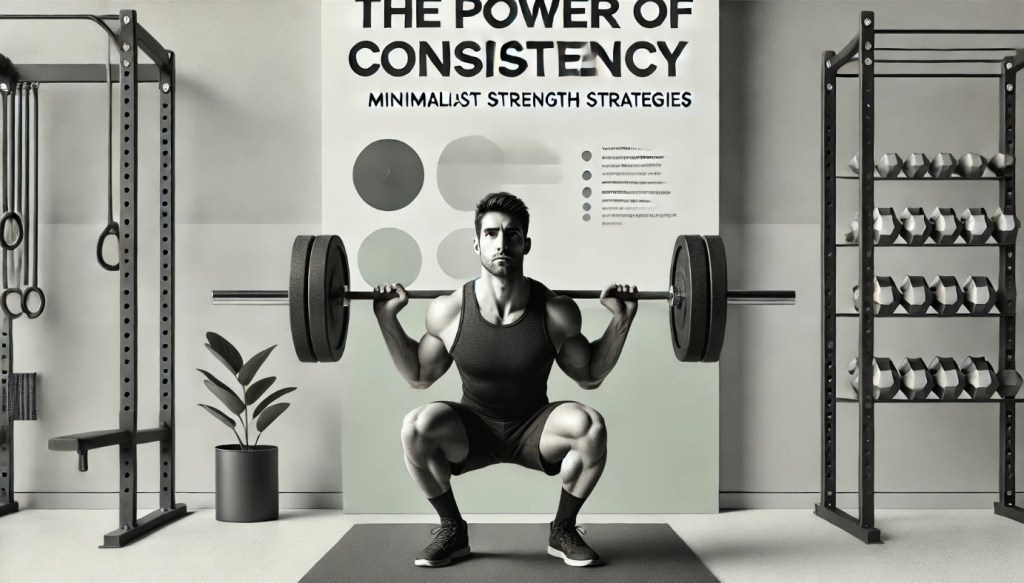

  • The Power of Consistency: Minimalist Strategies for Long-Term Strength Gains

    The Power of Consistency: Minimalist Strategies for Long-Term Strength Gains

    In the world of strength training, flashy routines and overcomplicated systems often steal the spotlight. Yet, anyone who’s spent years under the bar knows: long-term progress isn’t built on novelty. It’s built on consistency.

    As a minimalist strength trainer, I focus on cutting through the noise — offering busy professionals efficient, sustainable strategies that deliver exceptional results without monopolizing their time or mental bandwidth. Here’s how applying minimalist principles can unlock serious strength gains over the long term.

    Why Consistency Beats Complexity

    Your body thrives on repeated signals. Strength and muscle aren’t developed through constantly switching exercises or chasing trends. Instead, they’re the byproduct of progressive overload applied week after week, month after month.

    Minimalism emphasizes doing fewer things — but doing them well and consistently. For strength training, this means focusing on:

    • A small selection of compound lifts (squat, deadlift, bench press, pull-up, overhead press)
    • Simple, progressive programming
    • Unwavering adherence to form and effort
    • Prioritizing recovery and nutrition without micromanagement

    The key takeaway? Mastery through repetition trumps variety without progression.

    Minimalist Strategies for Strength Success

    1. Build Your Core Routine — Then Stick to It

    You don’t need 12 different exercises for biceps. You need a well-rounded plan based on multi-joint, compound movements that engage large muscle groups and allow you to lift heavy.

    Here’s a minimalist weekly template:

    DayFocusKey Exercises
    1Push (Upper Body)Bench Press, Overhead Press
    2Pull (Upper Body)Pull-ups, Barbell Rows
    3LegsSquats, Romanian Deadlifts
    4Full Body (Optional)Deadlifts, Farmer’s Carries

    Optional accessory work is fine, but never the focus.

    2. Apply Progressive Overload—Patiently

    The fastest way to plateau is program hopping. Instead, add small, manageable increments to your lifts over time — whether that’s 2.5 kg more on your squat or one extra rep with perfect form.

    Progress stalls only when you stop tracking. Keep it simple: write down your sets, reps, and weight. Aim for marginal gains every session, no matter how small.

    3. Prioritize Recovery Without Overthinking

    Recovery is often overlooked, especially by driven professionals used to pushing limits. Minimalist recovery principles:

    • Sleep: 7–8 hours minimum.
    • Nutrition: Lean proteins, whole foods, balanced meals. No obsession over exact macros, just consistent intake of quality calories.
    • Mobility: 5-10 minutes of daily joint mobility work.

    No need for expensive supplements or elaborate routines. Simple habits executed consistently outperform complexity every time.

    4. Treat Nutrition as Support, Not Obsession

    You don’t need exotic superfoods or meticulous calorie tracking to build strength and lean muscle.

    The minimalist nutrition rule:

    Each meal = Protein + Vegetable/Fruit + Quality Carb/Fat

    Examples:

    • Grilled chicken, quinoa, roasted vegetables
    • Scrambled eggs, whole grain toast, berries
    • Salmon, rice, steamed broccoli

    Keep portions reasonable. Eat mostly the same 10–12 meals you enjoy. Less decision fatigue = more adherence.

    5. Accept Boring = Effective

    The biggest mental shift busy professionals must make?

    Boring is good. Boring builds.

    You won’t always feel excited. Your workouts might feel repetitive. That’s exactly when progress happens. By embracing simplicity, you remove mental clutter and create space for effort and focus.


    The Minimalist Strength Advantage

    Minimalist strength training isn’t about doing less for the sake of laziness. It’s about ruthless efficiency — removing distractions, focusing energy, and letting consistency compound over time.

    For professionals balancing careers, family, and demanding schedules, the minimalist approach is the only sustainable, scalable path to peak strength and physique.

    Master the basics. Commit long-term. Watch how effortless, yet unstoppable, your progress becomes.

  • How Minimalism Improves Focus and Results in Fitness

    How Minimalism Improves Focus and Results in Fitness

    In a world obsessed with the latest fitness fads, high-tech gadgets, and influencer-endorsed magic formulas, it’s easy to get lost in the noise. But the truth? Fitness success isn’t about complexity. It’s about doing fewer things, better — showing up, lifting with purpose, and mastering the basics. Strength training and overall fitness don’t thrive on chaos; they thrive on focused, relentless consistency. If you’re ready to ditch the fluff and get real results, welcome to the minimalist fitness mindset.

    Strength Training: The Minimalist Approach

    Forget the circus act of balancing on a Bosu ball while curling pink dumbbells. The foundation of any effective strength training program is built on big, battle-tested, multi-joint movements: squats, deadlifts, bench presses, overhead presses, and pull-ups/rows. These exercises aren’t just for show — they recruit multiple muscle groups, enhance coordination, and stimulate serious strength and muscle gains.

    Want results? Progressive overload is king. Instead of aimlessly wandering through the gym trying every machine like a lost tourist, focus on lifting heavier over time. The magic isn’t in how many different exercises you cram into a session — it’s in getting stronger in a handful of fundamental movements. Stick to these, push hard, and you’ll build the kind of real-world strength that actually matters.

    Consistency Over Complexity

    One of the biggest mistakes people make in the gym? Constantly switching routines like they’re swiping through a dating app. Here’s the secret: the best program is the one you stick to. Strength isn’t built in a week — it’s built over years.

    Minimalism in training means cutting out the noise and doubling down on what works. Instead of getting sucked into the latest high-rep, low-rep, pyramid, drop-set, muscle confusion nonsense, just focus on showing up and progressively getting stronger. Train hard. Recover well. Repeat. It’s not rocket science — it’s discipline.

    Cardio: The Overlooked Essential

    For those over 30, maintaining cardiovascular fitness isn’t optional — it’s a non-negotiable investment in your long-term vitality. Strength training is crucial, but your heart needs training too. Luckily, a minimalist approach to cardio makes it effective, sustainable, and downright enjoyable:

    • Walking: The simplest, most underrated form of cardio. A 30-minute brisk walk daily does wonders for heart health, recovery, and mental clarity.
    • Zone 2 Cardio: Low-intensity steady-state cardio (cycling, jogging, rowing) 2-3 times a week improves endurance without torching your strength gains.
    • Short, Intense Sessions: Occasional sprints or high-intensity intervals keep you athletic, explosive, and metabolically efficient.

    Cardio doesn’t have to be a miserable, soul-crushing slog. Find what you enjoy, do it consistently, and reap the benefits.

    Nutrition: The Minimalist Perspective

    Fitness isn’t just built in the gym — it’s built in the kitchen, too. But too many people get caught up in the endless labyrinth of diet trends, expensive supplements, and contradictory nutrition advice. The minimalist approach? Keep it simple, stupid.

    • Whole Foods First: Stick to real, unprocessed foods. Lean proteins, vegetables, healthy fats, and quality carbs should be the backbone of your diet.
    • Protein-Rich, Easy-to-Prepare Meals: Eggs, chicken, beef, fish, legumes, and dairy — simple, effective, and essential for recovery and muscle growth.
    • Everything in Moderation: Forget extreme dieting and unnecessary restrictions. 80% whole, nutrient-dense foods, 20% flexibility. No guilt, no obsession — just sustainable habits.
    • Stick to the Basics: Meal prep simple, balanced meals that you actually enjoy, and stop chasing the latest diet cult.

    Master the fundamentals—eat enough protein, stay within reasonable calorie limits, prioritize real food—and you’ll be in better shape than 90% of people out there. No magic formulas needed.

    Final Thoughts: Less but Better

    Minimalism in fitness isn’t about doing the bare minimum — it’s about doing the essential things with ruthless efficiency. Strength training should revolve around fundamental compound lifts with progressive overload. Your routine should be consistent, not constantly changing. Cardio should be simple yet effective, especially as you age. Nutrition should be focused on whole, protein-rich foods in a way that’s easy to sustain.

    Success in fitness doesn’t come from doing everything; it comes from doing the right things, relentlessly. Master the basics. Stay consistent. Train hard. Eat well. Let the rest take care of itself. Less but better — that’s the minimalist way to real fitness.

  • Minimalist Strength Training: Build Maximum Strength with Just 3 Exercises and Family-Friendly Nutrition

    Minimalist Strength Training: Build Maximum Strength with Just 3 Exercises and Family-Friendly Nutrition

    In the age of over-complicated fitness plans and endless diet trends, it’s easy to feel overwhelmed when starting or maintaining a strength training routine. But what if building strength, improving health, and staying consistent didn’t have to be so complex?

    With just three foundational exercises—the squat, bench press, and deadlift—and a family-friendly, protein-rich meal plan, you can create a simple, effective, and sustainable fitness lifestyle that works for you and your loved ones. This approach is perfect for busy professionals and parents who want to stay strong without sacrificing precious time with family.

    Why Minimalist Strength Training is a Game-Changer

    When life is busy, simplicity is key. Minimalist strength training focuses on quality over quantity. By using compound movements like the squat, bench press, and deadlift, you can engage multiple muscle groups, build functional strength, and maximize efficiency in the gym.

    Even with just two workouts per week, these exercises deliver full-body results. Forget the clutter of endless accessory movements—you’ll get stronger, fitter, and healthier while keeping your schedule intact.

    The Three Power Moves
    1. The Squat: The Foundation of Strength

    The squat isn’t just a leg exercise—it’s a total-body movement that builds powerful quads, hamstrings, glutes, and a rock-solid core.

    Why It Matters:

    Whether it’s carrying groceries, playing with your kids, or hiking with family, the squat builds the strength and mobility needed for real-life activities.

    How to Perform It Right:

    1. Stand with feet shoulder-width apart and toes slightly pointed out.
    2. Rest the barbell on your upper traps (not your neck).
    3. Keep your chest proud, engage your core, and lower your hips back and down.
    4. Aim to go deep enough that your thighs are parallel to the ground (or lower).
    5. Drive up through your heels to return to standing.

    Pro Tip: Start light to perfect your form before progressing to heavier weights.

    2. The Bench Press: Build an Impressive Upper Body

    The bench press is a classic and for good reason. It targets the chest, shoulders, and triceps, helping you build a balanced, strong upper body.

    Why It Matters:

    Whether pushing your child on a swing or lifting something heavy, the bench press improves upper body strength for both functional and aesthetic benefits.

    How to Perform It Right:

    1. Lie on the bench with your eyes directly under the bar.
    2. Grip the barbell slightly wider than shoulder-width.
    3. Lower the bar slowly to your chest, keeping your elbows at about a 75-degree angle.
    4. Press the bar back up until your arms are fully extended.

    Pro Tip: Focus on control — don’t rush. Controlled movements engage more muscle and reduce injury risk.

    3. The Deadlift: The Ultimate Strength Builder

    The deadlift is a full-body powerhouse exercise. It builds strength in the glutes, hamstrings, lower back, core, and even your grip.

    Why It Matters:

    The deadlift mimics everyday movements like picking up a child or moving furniture. Training this lift translates directly into your daily life.

    How to Perform It Right:

    1. Stand with your feet hip-width apart and the bar over your midfoot.
    2. Grip the bar outside your knees, keeping your back straight and chest up.
    3. Drive through your heels, keeping the bar close to your body as you lift.
    4. Lock your hips and knees at the top before lowering the bar in a controlled motion.

    Pro Tip: For added grip strength, alternate your hand grip (one palm up, one palm down).

    The Minimalist Training Plan
    Day 1: Squat + Bench Press
    • Warm-up: 5–10 minutes of dynamic stretches and mobility work.
    • Squat: 4 sets of 5–8 reps.
    • Bench Press: 4 sets of 5–8 reps.
    • Optional: Plank holds or hanging leg raises for core stability.
    Day 2: Deadlift + Bench Press
    • Warm-up: Same as Day 1.
    • Deadlift: 4 sets of 3–6 reps.
    • Bench Press: 4 sets of 5–8 reps.
    • Optional: Pull-ups or rows for upper back development.
    Rest Days:

    Take at least one full day between workouts to recover. Use these days for light activities like walking, yoga, or family-friendly games that keep you moving.

    Family-Friendly Protein-Rich Nutrition
    The Importance of Protein

    To fuel your strength gains, aim for 1.6–2.2 grams of protein per kilogram of body weight daily. A meat-based diet simplifies meal planning and is easy to adapt for the entire family.

    Tailored Meal Plan for Families

    Breakfast:

    • Scrambled eggs with turkey bacon and fresh fruit (e.g., berries).
    • Pancakes made with protein powder for kids who love a sweet start.

    Lunch:

    • Grilled chicken wraps: Use whole-grain tortillas with shredded chicken, lettuce, and cheese.
    • For kids, cut the wraps into bite-sized pinwheels for easier handling.

    Dinner:

    • Baked salmon with roasted potatoes and green beans.
    • Cook extra salmon to use for salads or sandwiches the next day.

    Snacks:

    • Beef jerky or meat sticks for on-the-go fuel.
    • Greek yogurt parfaits layered with granola and fruit for a kid-friendly option.
    Meal Prep Tips:
    • Batch-cook proteins (grill chicken, bake salmon, or roast a beef brisket) to save time.
    • Involve your kids in simple prep tasks, like seasoning meat or arranging side dishes.
    • Use one-pot recipes like slow-cooked stews or casseroles to feed the whole family with minimal effort.
    Keys to Long-Term Success
    1. Progress Slowly: Track your lifts and focus on adding small increments of weight over time. Progression is the foundation of long-term strength.
    2. Prioritize Recovery: Sleep, hydration, and rest are just as important as training. Set a family bedtime routine to ensure everyone gets enough rest.
    3. Stay Consistent: The beauty of this minimalist plan is its sustainability. By keeping workouts and meals simple, you’ll stay on track without feeling overwhelmed.
    Conclusion

    Minimalist strength training is about more than just efficiency — it’s a sustainable lifestyle that fits into the lives of busy professionals and families alike. With just three exercises and a simple, protein-rich diet, you can build strength, improve health, and set an example of fitness for your loved ones.

    Embrace simplicity, train with purpose, and nourish your body with wholesome meals. With this approach, you’ll not only achieve your fitness goals but inspire your family to live healthier, stronger lives as well.