Tag: PersonalGrowth

  • The Minimalist Wheel of Life: A Simple Approach to Balance and Focus

    The Minimalist Wheel of Life: A Simple Approach to Balance and Focus

    In today’s world, we’re constantly asked to manage more — more goals, more categories, more tools to track our progress. The classic Wheel of Life method is a fantastic framework for self-reflection, but with its 8 to 12 categories, it can quickly feel overwhelming. For busy professionals, the last thing you need is another complex system that steals time instead of creating clarity.

    Minimalism offers a better way. Instead of trying to optimize every corner of life, a minimalist Wheel of Life helps you zoom in on what truly matters, giving you maximum clarity with minimum effort.

    🌐 What Is the Wheel of Life?

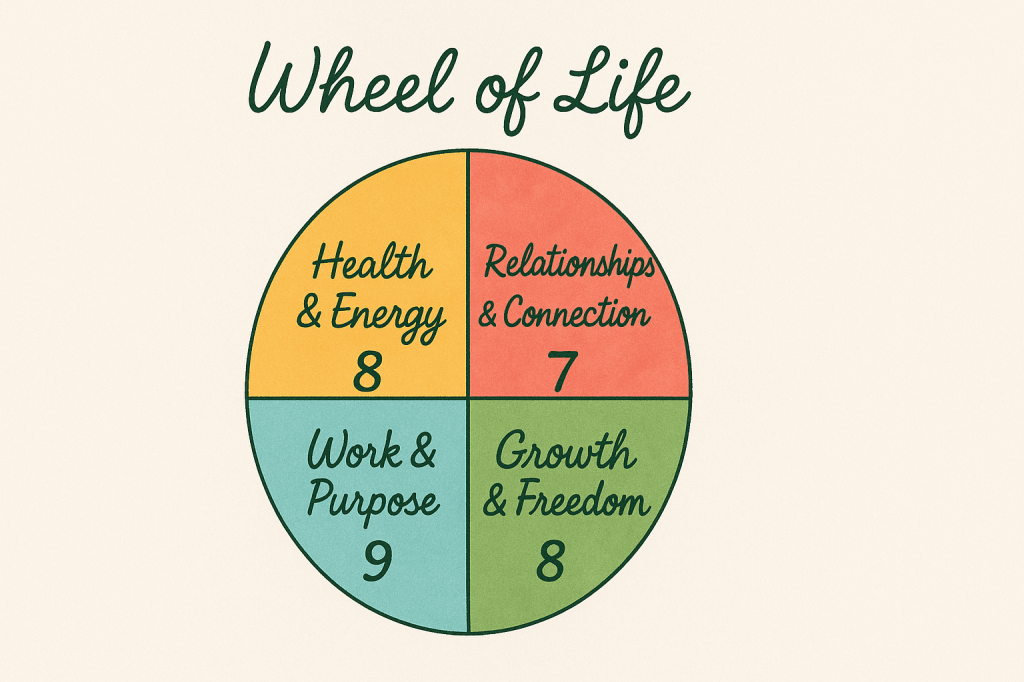
    The Wheel of Life is a personal development tool designed to visualize how balanced your life feels. Traditionally, you divide a circle into several segments (health, work, relationships, finances, hobbies, etc.) and rate each from 1–10. The resulting “wheel” shows where you’re rolling smoothly — or hitting bumps that throw you off course.

    ✨ The Minimalist Take: 4 Core Areas

    Instead of juggling 8–12 categories, this streamlined version focuses on 4 key areas that influence everything else:

    1. 💪 Health & Energy: Your physical and mental foundation. Without good health, it’s nearly impossible to sustain performance anywhere else.
    2. 🤝 Relationships & Connection: Family, friendships, and colleagues. The quality of your connections shapes the quality of your days.
    3. 🚀 Work & Purpose: Your career, projects, or mission. Work provides structure, growth, and financial security — but also meaning.
    4. 🌱 Growth & Freedom: Personal growth, learning, hobbies, spirituality, and financial independence. These ensure you’re not just surviving but also expanding.

    With these four, you strip away the noise yet still capture the essence of a well-rounded life.

    🕒 How and When to Do It

    • Quarterly check-in: Once every three months is enough. Life doesn’t shift overnight, but this rhythm keeps you aligned.
    • Rate simply: Give each area a score from 1–10. No need for fancy visuals — four numbers on paper (or in your notes app) are enough.
    • Choose one focus: Instead of chasing improvement everywhere, ask: Which area, if improved, would create the biggest ripple effect?

    💡 Example: Getting consistent sleep and exercise (Health & Energy) will often boost your focus at work, patience at home, and motivation for growth.

    ⚖️ Why Balance Isn’t the Goal

    Here’s the key: life won’t always be balanced — and that’s okay. Sometimes one area will dominate your focus so you can make real progress. Maybe you’re pushing hard on a career project 🚀, or focusing on your health after a rough season 💪.

    The point isn’t to keep every category at a perfect 10 at all times. It’s about being aware, making intentional trade-offs, and then realigning when the time is right. Balance is dynamic, not static.

    🌟 Benefits of the Minimalist Wheel of Life

    • Clarity without overwhelm – Four categories are easy to reflect on.
    • Maximum leverage – Progress in one area cascades into the others.
    • Quick practice – Less than 10 minutes per quarter keeps it sustainable.
    • Intentional focus – Helps you decide where to lean in and where to accept “good enough.”

    Final Thought

    Minimalism isn’t about doing less for the sake of it. It’s about removing distractions so the essentials shine. The minimalist Wheel of Life does just that: it simplifies reflection, highlights your priorities, and gives you the clarity to act with purpose.

    Because in the end, life isn’t about juggling every category perfectly — it’s about knowing where to focus now, so you can move forward with balance in the long run. 🌿

  • Minimalist Goal-Setting: How to Prioritize What Truly Matters

    Minimalist Goal-Setting: How to Prioritize What Truly Matters

    In a world filled with endless distractions, constant pressure to perform, and a seemingly unending list of goals, it’s no wonder that many of us feel overwhelmed and stretched too thin. We set more goals than we can realistically achieve, and as a result, productivity suffers, relationships fray, and well-being declines. This is where minimalist goal-setting comes in—a powerful approach to reclaim focus, prioritize what truly matters, and make the hard things in life look effortless.

    Minimalist goal-setting isn’t about doing less for the sake of less; it’s about identifying what’s essential, cutting out the noise, and pursuing a path that’s both intentional and sustainable. In this article, we’ll explore how minimalist goal-setting can be applied to all areas of life—from personal growth to professional success, fitness, and personal style—and show you how to streamline your goals for greater impact.

    The Problem with Traditional Goal-Setting

    Traditional goal-setting methods often focus on doing more: more tasks, more activities, more deadlines. While this can sometimes yield temporary success, it often leads to burnout and frustration. The hustle culture that demands we constantly strive for more leaves little room for reflection, alignment, or meaningful progress.

    The problem lies in the assumption that the more goals we set, the more we accomplish. The reality, however, is that we rarely have the bandwidth to manage it all. Instead of focusing on achieving a laundry list of goals, minimalist goal-setting challenges us to focus on fewer, more impactful objectives that align with our core values and long-term vision.

    Key Concepts in Minimalist Goal-Setting
    1. Essentialism: Less But Better

    The philosophy of essentialism, popularized by Greg McKeown in his book Essentialism: The Disciplined Pursuit of Less, is the foundation of minimalist goal-setting. Essentialism teaches that we should prioritize only what is absolutely essential—what brings the most value and impact—while eliminating anything that doesn’t contribute meaningfully to our lives.

    By adopting an essentialist mindset, we can move away from “more is better” and instead ask ourselves, “What is the one thing that will make everything else easier or unnecessary?” Whether it’s in our personal life, career, or fitness goals, this approach ensures that our focus remains sharp and purposeful.

    2. The One-In, One-Out Rule

    One of the challenges of goal-setting is that we often pile on new ambitions without completing the ones we’ve already set. The one-in, one-out rule helps prevent this. For every new goal or task you add, make sure to remove or wrap up an existing one. This not only keeps your focus tight but also creates a sense of accomplishment as you make progress in each area.

    3. The Power of the “Anti-Goal”

    We often define goals in positive terms, such as “lose weight” or “increase sales.” However, the concept of the “anti-goal”—defining what you don’t want to achieve—can be just as powerful. For instance, you might set an anti-goal like, “I don’t want to feel burnt out” or “I don’t want to compromise my health for career success.” These anti-goals help create boundaries and guide us in saying “no” to opportunities that don’t align with our core values.

    4. Alignment Across Life Areas

    Minimalist goal-setting thrives on the idea that different areas of life—productivity, personal, fitness, and style—don’t have to compete for attention. Instead, they should support each other. Goals should align with one another, creating a harmonious flow rather than causing friction. When your professional goals complement your personal life or your fitness goals enhance your productivity, the effort you put into one area positively impacts the others.

    Application Across Life Domains

    Now that we’ve covered the core concepts of minimalist goal-setting, let’s explore how to apply these principles across different areas of life.

    1. Productivity Goals

    At the heart of minimalist goal-setting is productivity. However, productivity isn’t about doing more; it’s about doing less, more effectively. To start, apply the Rule of Three: choose no more than three major objectives for each quarter, month, or week. This keeps you focused on what truly matters and prevents overwhelm.

    Use tools like the Eisenhower Matrix to prioritize tasks: distinguish between what’s urgent versus important, and delegate or eliminate tasks that fall outside these categories. Creating systems—rather than setting individual, complex goals—will make your productivity more sustainable and less taxing.

    2. Professional Goals

    In your professional life, embrace a minimalist approach by focusing on what creates the most value. Instead of setting a vast array of KPIs or goals, think in terms of “theme goals.” For instance, rather than aiming to improve multiple skills at once, set a theme for the year such as “Improving Delegation” or “Enhancing Strategic Thinking.” This simplifies your focus and gives you direction without spreading yourself too thin.

    Furthermore, align your goals with your personal strengths. Ask yourself: What do I do best, and how can this skillset help my team or company? By concentrating on what you excel at, you can make a greater impact without the pressure of tackling everything at once.

    3. Personal Goals

    When it comes to personal development, minimalist goal-setting can transform how you approach growth. Instead of focusing on dozens of vague personal goals, aim to define your identity. For example, you might set a goal like “Be a present father” or “Live with intention.” These identity-driven goals are easier to align with, and they help you stay grounded in what truly matters.

    Use journaling or monthly reviews to check your progress, ensuring that your goals are still aligned with your values. This reflective process helps prevent the pursuit of goals that aren’t fulfilling.

    4. Fitness & Health Goals

    Health and fitness are often neglected when life gets busy, but minimalist goal-setting can make maintaining a healthy lifestyle easier. Rather than signing up for intense workout regimens or trying the latest fitness trends, focus on the minimum effective dose that provides sustainable results.

    For example, instead of committing to an exhaustive exercise routine, focus on strength training three times a week, complemented by daily walking and stretching. This simple approach yields significant benefits while keeping your routine manageable. Similarly, prioritize key health practices like sleep, hydration, and protein intake to fuel your body for success in all other areas.

    5. Personal Style Goals

    Personal style is often overlooked when setting goals, yet it plays a crucial role in your self-esteem and professional presence. A minimalist approach to style—such as creating a capsule wardrobe—simplifies your clothing choices and helps you dress with intention. By investing in timeless, versatile pieces that you truly love, you can reduce decision fatigue while maintaining a polished look.

    Consider quarterly style reviews to assess your wardrobe, refine your look, and make adjustments as needed. This approach helps you stay intentional with your clothing choices without the need to constantly shop or follow fleeting fashion trends.

    How These Areas Support Each Other

    Minimalist goal-setting isn’t just about simplifying individual areas of life; it’s about creating a harmonious balance where each area supports the others. For example, focusing on fitness can improve your energy levels, making you more productive in your career. When you prioritize your personal life and relationships, you’ll feel more grounded, which in turn allows you to be more present and focused at work. Personal style, while seemingly unrelated, boosts confidence, which can improve both your professional interactions and personal relationships.

    By integrating minimalist principles across all areas of life, you create a feedback loop that fosters success and well-being.

    A Simple Minimalist Goal-Setting Framework

    To get started with minimalist goal-setting, follow this simple framework:

    1. Vision: What kind of life are you building? Visualize your ideal life in terms of work, family, health, and personal development.
    2. Focus Areas: Choose 3–5 domains (e.g., work, health, family, growth, style) that reflect your vision.
    3. One Keystone Goal per Area: For each focus area, identify the one goal that will elevate everything else.
    4. Weekly Check-ins: Assess your progress, adjust your priorities, and make sure you’re staying true to your vision.
    5. Quarterly Reviews: Reflect on your goals, cut what no longer serves you, and recommit to what truly matters.
    Conclusion

    Minimalist goal-setting isn’t about doing less for the sake of less; it’s about doing less of what doesn’t matter and more of what does. By prioritizing the essential and aligning your goals across all areas of life, you can achieve greater success with less stress. The process is simple, but its impact is profound—helping you not only accomplish your goals but do so in a way that makes the hard things look effortless.

    Remember, you don’t need more goals—you need fewer that matter more. By embracing minimalist goal-setting, you’ll clear the clutter and create a life that’s both intentional and fulfilling.

  • Achieving Success: 12 Books That Impacted My 2024 Reading Journey

    Achieving Success: 12 Books That Impacted My 2024 Reading Journey

    At the start of 2024, I set a goal to read one book per month. I’m thrilled to say that I achieved my target, discovering a diverse range of insights and perspectives along the way. These 12 books not only enriched my understanding of leadership, resilience, and personal growth but also provided practical lessons to apply in daily life. Here’s a recap of the books I read this year and why I believe they’re worth your time.


    1. Extreme Ownership by Jocko Willink

    This book dives deep into the principles of leadership and accountability, drawing from Willink’s experiences as a Navy SEAL. Each chapter is anchored by gripping war stories and followed by practical applications for everyday life and business. The core message is simple but powerful: leaders must take complete ownership of their actions and outcomes.

    For me, Willink’s lessons on discipline and accountability resonate strongly. It’s a book I return to repeatedly because it encourages me to evaluate where I’m thriving and where I’m falling short. The principles are invaluable for anyone looking to lead with greater clarity and integrity.

    2. Tools of the Titans by Tim Ferriss

    A compilation of wisdom from top performers across various industries, Ferriss’s book distills interviews into actionable insights. From fitness routines to productivity hacks and mental resilience strategies, it’s a treasure trove of ideas designed to inspire and motivate.

    I found this book particularly valuable for its diversity of perspectives. The bite-sized advice is perfect for implementing small but impactful changes. It’s a resource I continually revisit to refine both my habits and my mindset.

    3. Antifragility by Nassim Nicholas Taleb

    Taleb introduces the concept of antifragility—systems and individuals that grow stronger under stress and chaos. Through a mix of philosophy, economics, and practical anecdotes, he demonstrates how to embrace volatility and use it to your advantage.

    Reading this challenged me to rethink my approach to uncertainty. Instead of fearing chaos, Taleb’s insights inspire me to see it as an opportunity for growth. This book is a thought-provoking call to build resilience and adaptability in every facet of life.

    4. I Will Teach You to Be Rich by Ramit Sethi

    Sethi’s book is a step-by-step guide to managing finances, from automating savings to making smart investments. His conversational tone and practical examples make the often-daunting topic of personal finance accessible and even fun.

    This book transformed how I approach money management. It’s not just about saving — it’s about designing a system that lets you enjoy life while securing your future. Sethi’s practical advice feels attainable and empowering, encouraging a proactive approach to financial health.

    5. Ikigai by Héctor García and Francesc Miralles

    García and Miralles explore the Japanese concept of Ikigai—one’s reason for being. Through research and interviews with the residents of Okinawa, they highlight the principles of living a long, purposeful, and happy life.

    This book left me reflecting on what truly brings meaning to my life. Its insights into balance, gratitude, and the pursuit of passion make it a profound read for anyone seeking to align their daily choices with their core values.

    6. About Face by David Hackworth

    This memoir chronicles Hackworth’s journey from a teenage soldier to one of the most decorated military leaders in U.S. history. It’s packed with raw, unfiltered accounts of war and the lessons he learned about leadership, adaptability, and courage.

    For me, Hackworth’s story is a powerful reminder of the value of integrity and leading by example. His experiences inspire me to tackle challenges head-on and continuously strive for excellence, both in work and in life.

    7. Total Recall by Arnold Schwarzenegger

    Schwarzenegger’s autobiography spans his incredible journey from an Austrian farm boy to a global icon. It’s a candid, inspiring tale of relentless ambition, goal-setting, and reinvention across multiple careers.

    Schwarzenegger’s story serves as a testament to the power of determination and hard work. It’s an inspiring read that encourages bold goal-setting and reinforces the importance of embracing change and pushing boundaries.

    8. Whiskey Tango Foxtrot by Lynne Black

    This book offers a riveting account of covert operations by Special Forces, with vivid storytelling that brings high-stakes missions to life. It’s a testament to teamwork, decision-making under pressure, and the human spirit.

    Black’s experiences remind me of the critical importance of trust and adaptability. His stories resonate far beyond military contexts, illustrating lessons on resilience and collaboration that are universally relevant.

    9. The Power of Your Subconscious Mind by Dr. Joseph Murphy

    Murphy explores how the subconscious mind influences our actions and outcomes, offering techniques to harness its power for success. The book blends science and spirituality, providing practical exercises to reprogram your thinking.

    I’ve found this book to be a valuable resource for cultivating a positive mindset. It’s a guide to unlocking untapped potential and breaking free from self-limiting beliefs—a compelling read for anyone looking to elevate their personal and professional life.

    10. Beyond Brawn by Stuart McRobert

    This guide to strength training focuses on sustainable, effective methods rather than quick fixes. McRobert emphasizes discipline, consistency, and mastering the basics, making it a timeless resource for fitness enthusiasts.

    Revisiting this book always reignites my training motivation. Its principles mirror the value of sticking to fundamentals in other areas of life. For anyone serious about long-term improvement, this book is an invaluable guide.

    11. The Art of Laziness by Library Mindset

    This unexpected find challenges the hustle mentality, advocating for strategic laziness to maximize efficiency. It’s a concise, thought-provoking read that questions traditional approaches to work and productivity.

    This book resonated deeply with me as a reminder to work smarter, not harder. It encourages me to prioritize outcomes over busyness, reclaiming time and energy for what truly matters.

    12. Atomic Habits by James Clear

    Clear provides a practical framework for building good habits and breaking bad ones. With actionable steps and compelling examples, he demonstrates how small changes compound over time to create significant results.

    This book has been instrumental in helping me make sustainable changes. It’s a straightforward yet profound guide to improving daily routines and achieving long-term goals, proving that small actions truly lead to big outcomes.


    Looking back, 2024 was a rewarding year of reading. Each of these books brought unique perspectives and practical takeaways that enriched my journey. From leadership to resilience, financial empowerment, and personal growth, these titles have profoundly influenced how I approach life and work. I wholeheartedly recommend exploring these books—they might just spark the inspiration and insights you’ve been looking for.