Tag: productivity

  • The Concept of Efficiency: A Double-Edged Sword

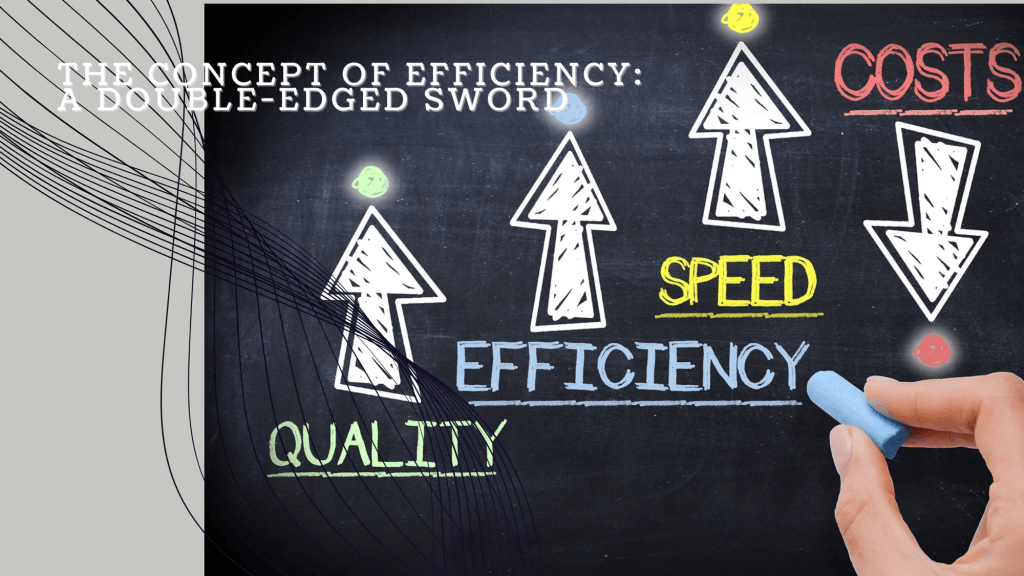
    The Concept of Efficiency: A Double-Edged Sword

    Introduction to Efficiency

    Efficiency, at its core, is the ability to achieve a desired outcome with the least amount of wasted time, effort, or resources. It is a measure of how well inputs are converted into outputs, often expressed as a ratio of output to input. In a highly efficient system, more is produced with less, leading to faster, cheaper, or more sustainable results. This concept permeates various aspects of life, from personal time management to the operations of complex organizations and even entire economies.

    The allure of efficiency is clear: it promises increased productivity, reduced costs, and the ability to do more with less. However, as with many powerful concepts, the pursuit of efficiency is not without its drawbacks. A closer examination reveals that while efficiency can yield significant benefits, an overemphasis on it can lead to unintended consequences, particularly when systems become too streamlined and lose their resilience to external and internal disruptions.

    High and Low Efficiency: Examples in Practice

    High efficiency can be seen in industries that have successfully optimized their processes to reduce waste and maximize output. For instance, Toyota’s production system is a classic example of high efficiency. The company’s adoption of Just-In-Time (JIT) manufacturing, which produces goods only as they are needed, significantly reduced inventory costs and increased production speed. This approach allowed Toyota to dominate the automotive industry by offering reliable, affordable vehicles with minimal production waste.

    On the other end of the spectrum, consider a traditional, artisanal approach to manufacturing, such as handmade furniture production. While the quality and uniqueness of each piece may be high, the process is inherently inefficient by modern standards. Each piece requires significant time, skilled labor, and materials, which results in higher costs and longer production times. Although this low-efficiency process might produce superior craftsmanship, it is not scalable or sustainable in a mass-market economy.

    Society’s Obsession with Optimizing Efficiency

    The relentless drive for efficiency has become a defining feature of modern society. This obsession can be traced back to the Industrial Revolution, which introduced the idea that human labor and material resources should be optimized to produce more goods at lower costs. Over time, this notion has permeated every facet of society, from business practices to personal productivity.

    One reason for this obsession is the economic principle of competitive advantage. Companies that can produce goods or deliver services more efficiently than their competitors can offer lower prices, capture larger market shares, and generate higher profits. In the global economy, where competition is fierce, efficiency is often the key to survival.

    Technological advancements have further fueled the drive for efficiency. Automation, artificial intelligence, and data analytics have provided tools to streamline processes and eliminate inefficiencies at unprecedented scales. The result is a society where faster, cheaper, and more efficient are often synonymous with better.

    However, this relentless pursuit is not without its downsides. The drive for efficiency often leads to the elimination of redundancies, which, while seemingly wasteful, can serve as critical safety nets when systems face unexpected disruptions.

    Upsides of Increased Efficiency

    The benefits of increased efficiency are undeniable. In manufacturing, higher efficiency leads to lower production costs, which can translate to lower prices for consumers. The ability to produce more with less also conserves resources, which is crucial in a world with finite natural resources.

    In the energy sector, for example, increasing the efficiency of power plants and appliances can significantly reduce energy consumption and greenhouse gas emissions. A more efficient power grid can deliver electricity more reliably and at lower costs, contributing to both economic and environmental goals.

    Efficiency also plays a vital role in healthcare. Streamlined hospital operations can reduce patient wait times, lower healthcare costs, and improve patient outcomes. The adoption of electronic health records (EHRs) has enhanced the efficiency of medical information management, allowing for quicker and more accurate diagnoses and treatment plans.

    In transportation, efficiency improvements have led to the development of fuel-efficient vehicles, reducing fuel costs and emissions. Public transportation systems that operate efficiently can reduce traffic congestion, lower pollution levels, and provide affordable transportation options to the public.

    The Fragility of Over-Efficient Systems

    While efficiency brings numerous benefits, systems that are overly optimized can become dangerously fragile. The elimination of redundancies and buffers, which are often seen as wasteful, can leave systems vulnerable to disruptions.

    The 2008 financial crisis serves as a stark example of this fragility. The global financial system had become highly efficient, with complex financial products and high levels of leverage maximizing returns. However, this efficiency came at the cost of stability. When the housing market collapsed, the lack of adequate safeguards led to a cascading failure that nearly brought down the entire financial system.

    Similarly, Just-In-Time manufacturing, while highly efficient under normal circumstances, can be extremely vulnerable to supply chain disruptions. The COVID-19 pandemic exposed these vulnerabilities when global supply chains ground to a halt, leading to shortages of essential goods, from medical supplies to semiconductors.

    In nature, too, we see the consequences of over-efficiency. Monoculture farming, which involves planting large expanses of a single crop, is highly efficient in terms of production. However, it is also highly vulnerable to pests and diseases, which can wipe out entire crops due to the lack of biodiversity. In contrast, traditional farming methods that incorporate a variety of crops may be less efficient but are far more resilient to such threats.

    The Fine Line Between Efficiency and Resilience

    The pursuit of efficiency is a double-edged sword. While it can lead to significant benefits, there is a fine line beyond which additional efficiency gains result in diminishing returns and increased risks. Systems that are too efficient often lack the flexibility and resilience needed to adapt to unforeseen challenges.

    The key to balancing efficiency with resilience lies in understanding that some level of redundancy and slack is not just acceptable but necessary. Redundancies act as shock absorbers, allowing systems to withstand and recover from disruptions. This concept is well understood in engineering, where systems are designed with safety margins to prevent catastrophic failure.

    In business, too, there is a growing recognition of the importance of resilience. Companies are increasingly investing in risk management and contingency planning, recognizing that the short-term gains of extreme efficiency are often outweighed by the long-term risks.

    In personal productivity, this balance is also critical. While it is tempting to maximize every minute of the day, this can lead to burnout and decreased effectiveness over time. Allowing for downtime, reflection, and unstructured time can enhance creativity and overall well-being, leading to more sustainable productivity.

    Conclusion

    Efficiency is a powerful concept that has driven much of the progress in modern society. It has led to remarkable advancements in technology, industry, and quality of life. However, the pursuit of efficiency must be tempered with an understanding of its limitations. Overly efficient systems, while highly productive, can become fragile and vulnerable to disruption.

    The challenge lies in finding the right balance between efficiency and resilience. While it is important to eliminate waste and streamline processes, it is equally important to maintain flexibility, redundancy, and the ability to adapt to change. In the end, the most successful systems are those that achieve a harmonious balance, maximizing efficiency while safeguarding against the inherent risks of over-optimization.

  • Unleashing the Arnold Factor: 10 Game-Changing Lessons for Project Managers from Arnold Schwarzenegger’s “Total Recall”

    Unleashing the Arnold Factor: 10 Game-Changing Lessons for Project Managers from Arnold Schwarzenegger’s “Total Recall”

    Arnold Schwarzenegger’s autobiography, “Total Recall: My Unbelievably True Life Story,” isn’t just a fascinating chronicle of an extraordinary life—it’s a treasure trove of insights for anyone aiming for success. But project managers, in particular, can extract golden lessons from Schwarzenegger’s journey that are directly applicable to their professional realm. In this blog post, we’ll delve into the key takeaways for project managers and explain why this book is a must-read for anyone interested in self-improvement and a successful career.

    Why “Total Recall” is a Must-Read for Self-Improvement and Career Success

    “Total Recall” isn’t just about Schwarzenegger’s rise to fame; it’s a blueprint for achieving excellence in any field. The book covers his early years in Austria, his bodybuilding triumphs, Hollywood stardom, and his tenure as the Governor of California. Each phase of his life offers valuable lessons on discipline, strategic thinking, adaptability, and resilience. For anyone looking to improve themselves and build a successful career, Schwarzenegger’s story is an inspiring guide on how to overcome obstacles and achieve greatness.

    Key Lessons for Project Managers from “Total Recall”
    1. Goal Setting and Vision:

    Clear Objectives: Schwarzenegger’s life shows that clear, ambitious goals are essential. When he set his sights on becoming the best bodybuilder, actor, and politician, he had a clear roadmap for each. For project managers, defining clear, measurable goals is crucial. For example, if you’re managing a software development project, your goal might be to deliver a fully functional beta version within six months. By setting such specific objectives, you create a sense of direction and purpose for your team.

    Vision: Schwarzenegger’s long-term vision for his career kept him focused and motivated through various challenges. Similarly, project managers should create a compelling vision for their projects and share it with their team. This vision acts as a guiding star, keeping everyone aligned and motivated. For instance, if your project aims to revolutionize customer service through AI, paint a vivid picture of how your solution will improve lives and transform industries.

    2. Discipline and Execution:

    Consistent Effort: Schwarzenegger’s disciplined approach to his training and career transitions is a testament to the power of consistent effort. For project managers, maintaining discipline in executing project plans is essential. Regular progress reviews and adherence to timelines ensure that the project stays on track. Imagine a construction project where daily check-ins and adherence to schedules prevent costly delays and ensure timely completion.

    Attention to Detail: Schwarzenegger’s meticulous preparation for bodybuilding competitions and film roles highlights the importance of attention to detail. Project managers can emulate this by ensuring every aspect of the project is well-planned and executed. This could involve thorough quality checks and detailed project documentation. For instance, before launching a new product, rigorous testing and attention to user feedback can significantly enhance the product’s quality and user satisfaction.

    3. Adaptability and Learning:

    Continuous Improvement: Schwarzenegger’s ability to continuously learn and adapt to new roles is a key factor in his success. Project managers should foster a culture of continuous improvement within their teams. Encourage team members to seek new skills and knowledge, and provide opportunities for professional development. For example, offering training sessions on the latest project management tools or industry trends can keep your team at the forefront of innovation.

    Flexibility: Schwarzenegger’s career transitions from bodybuilding to acting and politics demonstrate his adaptability. Project managers must also be flexible and ready to pivot when necessary. When unforeseen challenges arise, such as sudden market changes or technical issues, the ability to quickly adapt and find solutions is invaluable. For instance, if a software project encounters a critical bug late in development, swiftly reallocating resources to address the issue can save the project.

    4. Strategic Thinking:

    Planning: Schwarzenegger’s strategic planning in his career choices highlights the importance of foresight and preparation. Project managers should develop comprehensive project plans that include risk assessments and mitigation strategies. By anticipating potential challenges and preparing contingency plans, you can navigate complexities with ease. For example, in a marketing campaign, having a backup plan for different scenarios, such as lower-than-expected engagement, ensures you’re always prepared.

    Decision Making: Effective decision-making is at the core of successful project management. Schwarzenegger’s informed and strategic decisions in his career show the value of weighing options and considering long-term impacts. Project managers should gather all relevant information and analyze potential outcomes before making decisions. For instance, when deciding on a vendor for a project, considering factors like cost, reliability, and future scalability can lead to better long-term results.

    5. Risk Management:

    Taking Calculated Risks: Schwarzenegger’s career is marked by bold, calculated risks that paid off. Moving from bodybuilding to acting, and then to politics, each transition involved significant risk but also potential for great rewards. Project managers should be willing to take calculated risks when necessary. This might mean adopting a new technology that could streamline processes or entering a new market with high growth potential. For example, integrating an AI-driven project management tool could enhance efficiency despite initial implementation challenges.

    Risk Mitigation: Effective risk management involves identifying potential risks early and developing strategies to mitigate them. Schwarzenegger’s careful planning in his career transitions illustrates the importance of anticipating and managing risks. In project management, this could involve conducting thorough risk assessments and having contingency plans in place. For example, in a construction project, ensuring backup suppliers for critical materials can prevent delays if the primary supplier fails.

    6. Team Leadership and Motivation:

    Inspire and Motivate: Schwarzenegger’s ability to inspire and motivate people around him is evident throughout his career. As a project manager, your role is to keep your team motivated and aligned with the project goals. Sharing success stories, recognizing individual and team achievements, and maintaining a positive attitude can significantly boost team morale. For example, celebrating milestones and small wins during a long-term project can keep the team engaged and motivated.

    Empower Team Members: Encouraging team members to take ownership of their tasks and empowering them to make decisions can lead to increased accountability and innovation. Schwarzenegger’s success in various fields was partly due to his ability to trust and delegate responsibilities. In project management, providing team members with autonomy and the resources they need to succeed can enhance productivity and creativity. For instance, allowing team members to experiment with new approaches or technologies can lead to innovative solutions.

    7. Resilience and Persistence:

    Overcoming Obstacles: Schwarzenegger’s resilience in overcoming personal and professional obstacles is a powerful lesson in persistence. Project managers should demonstrate resilience and encourage their teams to persist through challenges. When a project hits a significant roadblock, staying focused on finding solutions and leading by example can inspire your team to do the same. For example, if a critical component of your project fails, rallying the team to brainstorm and implement alternative solutions can keep the project moving forward.

    Learning from Failures: Viewing failures as opportunities to learn and improve is a recurring theme in Schwarzenegger’s life. After any project, conducting a thorough post-mortem to understand what went wrong and how similar issues can be avoided in the future is essential. For instance, after a product launch that didn’t meet expectations, analyzing feedback and identifying areas for improvement can guide future projects to success.

    8. Communication and Stakeholder Management:

    Effective Communication: Schwarzenegger’s ability to communicate his vision and goals effectively was key to his success in various fields. Project managers should maintain open and effective communication with all stakeholders. Regular updates, transparent communication, and actively seeking feedback help manage stakeholder expectations and build trust. For example, providing weekly status reports and holding regular meetings with stakeholders can ensure everyone is informed and aligned.

    Stakeholder Engagement: Engaging with stakeholders regularly to understand their needs and expectations is crucial. Keeping stakeholders informed about project progress and involving them in decision-making processes can foster a collaborative environment. For instance, in a software development project, involving key stakeholders in the design phase and seeking their input can lead to a product that better meets user needs.

    9. Work-Life Balance:

    Balance: Schwarzenegger’s reflections on his personal life highlight the importance of not neglecting personal well-being and relationships. Project managers should strive for a balance between professional responsibilities and personal life. Setting boundaries, taking breaks, and encouraging the team to do the same can prevent burnout and maintain high productivity. For example, promoting a culture that values work-life balance, such as flexible work hours and remote work options, can improve overall team well-being.

    Personal Well-being: Prioritizing personal well-being is essential for sustained success. Just as Schwarzenegger maintained his physical fitness throughout his career, project managers should ensure they are taking care of their mental and physical health. This can include regular exercise, healthy eating, and taking time for hobbies and relaxation.

    10. Giving Back and Ethical Leadership:

    Ethical Leadership: Leading with integrity and ethical standards is a hallmark of Schwarzenegger’s career. Project managers should make decisions that are in the best interest of all stakeholders and maintain transparency. Ethical leadership builds credibility and trust, fostering a positive and respectful work environment. For example, addressing any conflicts of interest openly and fairly can maintain team cohesion and stakeholder trust.

    Community Focus: Considering the broader impact of your projects on the community and stakeholders is essential. Striving to make a positive difference, much like Schwarzenegger’s commitment to public service and philanthropy, can enhance the reputation and impact of your projects. For instance, ensuring your project adheres to environmental standards or contributes positively to the community, such as through sustainable practices, can create long-lasting benefits and goodwill.

    Conclusion

    Arnold Schwarzenegger’s “Total Recall” is more than just an autobiography—it’s a masterclass in achieving success across multiple domains. For project managers, the lessons from Schwarzenegger’s life offer valuable insights into goal setting, discipline, adaptability, strategic thinking, risk management, team leadership, resilience, communication, work-life balance, and ethical leadership. By integrating these principles into their professional practices, project managers can drive their projects to success and inspire their teams to achieve greater heights. Whether you’re managing a small team or leading a large-scale project, the Arnold factor can transform your approach and help you unleash your full potential.

  • Mastering Your Email: The Ultimate Guide to Inbox Zero

    Mastering Your Email: The Ultimate Guide to Inbox Zero

    n today’s fast-paced digital world, our email inboxes can quickly become overwhelming, distracting us from our most important tasks and contributing to stress and decreased productivity. Enter the concept of “Inbox Zero,” a powerful method for managing your emails effectively. Let’s explore what Inbox Zero is, where it originated, and how you can implement it to enhance your productivity and reduce stress.

    What is Inbox Zero?

    Inbox Zero is a rigorous approach to managing your email inbox, aimed at keeping it empty—or nearly empty—at all times. The term was coined by productivity expert Merlin Mann, who introduced it as a way to help people reclaim their time and attention from the constant influx of emails.

    The Origin and Inventor of Inbox Zero

    Merlin Mann, a writer, speaker, and productivity guru, developed the Inbox Zero method. Mann is well-known for his work on productivity and time management, particularly through his website 43 Folders. His insights into how digital tools can either enhance or hinder our productivity have made him a respected figure in the world of personal and professional efficiency.

    Born in Cincinnati, Ohio, Mann initially worked in web development and design before focusing on writing and public speaking. His passion for productivity and helping others led him to create Inbox Zero, which has since become a widely adopted strategy in both personal and professional settings.

    Core Principles of Inbox Zero

    The Inbox Zero approach is built on several core principles designed to help you process emails quickly and efficiently:

    1. Process, Don’t Procrastinate:

    Address emails as you read them rather than letting them accumulate. For instance, when you receive an email asking for a report, decide immediately whether you can do it now, delegate it, or schedule it for later. If you can handle the request in a few minutes, do it right away to keep your inbox clear.

    2. Delete or Archive:

    Immediately get rid of emails that you don’t need. If you receive a newsletter you don’t read, delete it right away or archive it if you might need it for reference. For example, after skimming a newsletter from a professional association, archive it for future reference if it contains valuable information or delete it if it doesn’t.

    3. Delegate:

    Forward emails to the appropriate person if they are better suited to handle them. For example, if an email comes in about a task another team member can handle, delegate it to them and move on. An email requesting technical support should be forwarded to your IT department rather than handling it yourself if it’s not your area of expertise.

    4. Respond:

    Reply to emails that require a response as soon as possible. If a client requests a meeting, respond immediately to confirm or propose a time. For example, if an email asks for your availability next week, reply immediately with your available time slots.

    5. Defer:

    Move emails that require more time or effort to a separate folder or task list. For instance, if an email requires extensive research, move it to a “To Do” folder and schedule time to address it later. Use a task management tool to set a reminder to ensure it gets done.

    6. Do:

    If an email can be dealt with in less than two minutes, handle it immediately. This could be confirming an appointment, sending a quick piece of information, or acknowledging receipt of a document. For example, if a colleague asks for a document that you can easily attach and send, do it right away.

    Steps to Achieve Inbox Zero

    Achieving Inbox Zero involves adopting specific concepts and processes. Here are guidelines to help you get there:

    1. Set Specific Times for Checking Email:

    Avoid constantly checking your inbox. Designate specific times during the day to process emails. For example, check your email first thing in the morning, after lunch, and at the end of the day. This helps you focus on your core tasks without frequent interruptions.

    2. Use Filters and Labels:

    Automate email organization by setting up filters and labels in your email client. For instance, create filters to automatically sort newsletters, promotional emails, and work-related emails into different folders. In Gmail, you can set up filters to label and archive newsletters so they don’t clutter your primary inbox.

    3. Unsubscribe Ruthlessly:

    Regularly unsubscribe from newsletters and promotional emails you no longer find useful. This reduces the volume of emails and helps keep your inbox manageable. Use tools like Unroll.Me to quickly unsubscribe from multiple email lists.

    4. Use the Two-Minute Rule:

    If an email requires an action that takes less than two minutes, do it immediately. This prevents small tasks from piling up and overwhelming you. For example, replying with a quick confirmation or forwarding an email to the correct person should be done on the spot.

    5. Create Action Folders:

    Use folders such as “Action,” “Waiting,” and “Reference” to organize emails that need follow-up. This keeps your inbox clear and helps you track what needs to be done. For example, move an email about an upcoming project to an “Action” folder to address later when you have more time.

    6. Archive Regularly:

    Move emails out of your inbox and into archive folders once they have been processed. For example, after replying to a client’s query, archive the email to keep your inbox tidy. This also makes it easy to find the email later if needed.

    Implementing Inbox Zero in Gmail and Outlook
    Gmail:
    1. Use Labels and Filters:

    Create labels and filters to automatically sort incoming emails. For example, set up a filter to label all emails from your boss as “High Priority.”

    2. Priority Inbox:

    Enable Priority Inbox to automatically categorize emails by importance, helping you focus on the most critical messages first.

    3. Snooze Feature:

    Use the snooze feature to defer emails and have them return to your inbox at a more convenient time, ensuring you deal with them when you’re ready.

    4. Keyboard Shortcuts:

    Enable and use keyboard shortcuts to speed up email processing. For example, use “e” to archive an email quickly.

    Outlook:
    1. Rules and Categories:

    Set up rules to automatically sort and categorize emails. For example, create a rule to move all emails with “Meeting” in the subject line to a specific folder.

    2. Focused Inbox:

    Use the Focused Inbox feature to separate important emails from the rest, ensuring you see high-priority messages first.

    3. Quick Steps:

    Utilize Quick Steps to automate repetitive actions, such as archiving or forwarding emails. For instance, create a Quick Step to move emails to your “To Do” folder with one click.

    4. Flags and Tasks:

    Use flags and the Tasks feature to track emails that require follow-up, ensuring nothing slips through the cracks. For example, flag an email that needs a response later and it will automatically appear in your Tasks list.

    Integrating Flags and Tasks with Microsoft To-Do

    In Outlook, flagged emails automatically sync with Microsoft To-Do, creating a seamless integration between your email and task management. When you flag an email in Outlook, it appears in your To-Do list, allowing you to track and manage tasks without missing any important follow-ups. This integration helps streamline your workflow by consolidating your tasks in one place, making it easier to prioritize and complete them.

    How Inbox Zero Enhances Productivity and Reduces Stress

    An empty inbox is more than just an aesthetic victory; it’s a gateway to enhanced productivity and reduced stress. Here’s how:

    1. Reduced Cognitive Load:

    A cluttered inbox is a constant reminder of unfinished tasks and unanswered emails. This background noise can sap your mental energy and make it harder to focus on the task at hand. By clearing your inbox, you reduce this cognitive load, freeing up mental space to concentrate on more important activities.

    Imagine you have 200 unread emails. Each time you open your inbox, you’re overwhelmed by the sheer number. By processing, deleting, and archiving, you clear out the clutter, leaving only a few actionable items. This makes it easier to focus on what’s truly important.

    2. Improved Focus:

    With fewer distractions from incoming emails, you can focus on deep work that requires concentration. An empty inbox helps create a distraction-free environment where you can dedicate your attention to tasks that matter most.

    Instead of being interrupted by email notifications, you schedule email processing times and focus solely on your projects during other times, leading to more productive work sessions.

    3. Clear Prioritization:

    Inbox Zero forces you to make quick decisions about what needs your attention now, what can wait, and what can be delegated or deleted. This helps in setting clear priorities and ensures that important tasks are addressed promptly.

    When you receive an email about an urgent issue, you address it immediately. Less urgent emails are deferred or delegated, ensuring that high-priority tasks get the attention they need without delay.

    4. Less Stress:

    A full inbox can be a source of stress and anxiety. The constant stream of new messages and the fear of missing something important can be overwhelming. Maintaining Inbox Zero means you have a clear handle on your communications, reducing stress and giving you a sense of control.

    Knowing your inbox is under control and that nothing important will be missed helps reduce the anxiety associated with email overload, leading to a more relaxed and focused work environment.

    5. Increased Efficiency:

    By processing emails as they come in, you avoid the buildup of a backlog. This means that you can handle tasks more efficiently, preventing small tasks from turning into bigger problems due to neglect.

    Quickly replying to a simple request avoids a situation where multiple follow-up emails are needed, saving time for both you and the requester.

    Why Inbox Zero is Key for Project Managers

    For project managers, staying on top of emails is crucial. An overflowing inbox can lead to missed deadlines, overlooked tasks, and poor communication. Inbox Zero ensures that project managers can quickly process and prioritize emails, allowing them to maintain clear and efficient communication with their team and stakeholders. This level of organization is essential for keeping projects on track and ensuring that all team members are aligned and informed. A project manager who practices Inbox Zero can manage project updates, stakeholder communications, and task delegations seamlessly, ensuring smooth project execution and timely completion.

    Conclusion

    Adopting the Inbox Zero approach can transform the way you handle emails, leading to increased productivity, reduced stress, and greater success in both personal and professional endeavors. By following the core principles and implementing the guidelines outlined above, you can take control of your inbox and reclaim your time and attention. Whether you’re using Gmail or Outlook, these strategies will help you maintain a clean and organized inbox, setting you up for success. By staying on top of your emails, especially as a project manager, you ensure that important communications are handled promptly, and projects run smoothly, ultimately driving better results and enhancing your overall efficiency. Embrace Inbox Zero and experience the profound impact it can have on your daily productivity and peace of mind.

  • Boost Your Productivity and Reduce Stress: The Magic of the Eisenhower Matrix

    Boost Your Productivity and Reduce Stress: The Magic of the Eisenhower Matrix

    In the world of productivity hacks and time management tools, the Eisenhower Matrix stands out as a timeless and powerful method for making better decisions faster. Whether you’re a busy professional juggling multiple projects or a team leader aiming to optimize your team’s efficiency, this simple yet effective tool can transform the way you work. But where did it come from, and how can you apply it to your daily tasks? Let’s dive into the origins, usage, and benefits of the Eisenhower Matrix.

    The Origins of the Eisenhower Matrix

    The Eisenhower Matrix, also known as the Urgent-Important Matrix, is named after Dwight D. Eisenhower, the 34th President of the United States. Eisenhower, who was known for his incredible productivity, is often quoted as saying, “What is important is seldom urgent, and what is urgent is seldom important.” This philosophy guided him through a career that included being a five-star general in the U.S. Army during World War II and serving two terms as President.

    The matrix itself was popularized by Stephen Covey in his book “The 7 Habits of Highly Effective People,” where he introduced it as a key tool for time management.

    How the Eisenhower Matrix Works

    The Eisenhower Matrix helps you categorize tasks into four distinct quadrants based on their urgency and importance:

    1. Quadrant 1: Urgent and Important (Do First)
      • These tasks require immediate attention and have significant consequences if not completed. Examples include:
        • Handling a project deadline
        • Addressing a critical issue in a project
        • Resolving urgent customer complaints
    2. Quadrant 2: Important but Not Urgent (Schedule)
      • Tasks that are important for long-term success but do not need immediate action. Examples include:
        • Strategic planning for an upcoming project
        • Personal development activities like training
        • Building relationships with key stakeholders
    3. Quadrant 3: Urgent but Not Important (Delegate)
      • Tasks that require immediate attention but can be delegated to others. Examples include:
        • Routine administrative tasks
        • Scheduling meetings
        • Answering some emails
    4. Quadrant 4: Neither Urgent nor Important (Eliminate)
      • Tasks that do not contribute to your goals and can be eliminated or minimized. Examples include:
        • Excessive social media browsing
        • Attending non-essential meetings
        • Engaging in trivial activities
    Applying the Eisenhower Matrix: A Practical Example

    Imagine you’re managing a project to launch a new product. Here’s how you might use the Eisenhower Matrix:

    • Quadrant 1: Finalizing the product design (urgent and important), fixing a critical bug found in testing (urgent and important).
    • Quadrant 2: Developing a marketing strategy (important but not urgent), conducting team training sessions (important but not urgent).
    • Quadrant 3: Organizing team-building activities (urgent but not important), handling routine customer service queries (urgent but not important).
    • Quadrant 4: Attending a meeting about a different, unrelated project (neither urgent nor important), checking social media during work hours (neither urgent nor important).
    Speeding Up Decision Making with the Eisenhower Matrix

    Using the Eisenhower Matrix accelerates decision making by providing a clear framework for prioritization. Here’s how:

    • Clarity and Focus: The matrix helps you quickly identify what tasks need your immediate attention and which can be scheduled, delegated, or eliminated. This clarity reduces the time spent deliberating on what to tackle next.
    • Reduced Procrastination: By breaking down tasks into these categories, you can tackle high-priority tasks head-on, reducing the tendency to procrastinate.
    • Efficient Delegation: Recognizing tasks that can be delegated frees up your time to focus on more critical activities, enhancing overall productivity.
    Positive Effects on Knowledge Workers and Project Teams

    For knowledge workers and project teams, the benefits of using the Eisenhower Matrix are substantial:

    • Enhanced Productivity: Focusing on important tasks that add real value leads to better outcomes and faster project completion.
    • Improved Time Management: Efficiently allocating time based on task priority ensures that deadlines are met without last-minute rushes.
    • Reduced Stress: With a clear plan of action, the overwhelming feeling of having too much to do diminishes, leading to a more manageable workload.
    • Better Collaboration: Teams can align on what tasks are most critical, ensuring everyone is working towards the same goals with clear priorities.
    Conclusion

    The Eisenhower Matrix is more than just a time management tool; it’s a strategy for transforming how you approach your work. By categorizing tasks based on urgency and importance, you can make better decisions, work more efficiently, and reduce stress. Whether you’re an individual looking to boost your productivity or a team leader striving to optimize your team’s performance, the Eisenhower Matrix is a game-changer.

    So, why wait? Start using the Eisenhower Matrix today and watch your productivity soar while stress takes a back seat.

  • Unlock Supreme Productivity: The Revolutionary Power of Timeboxing!

    Unlock Supreme Productivity: The Revolutionary Power of Timeboxing!

    In the fast-paced world we live in, finding an effective time management strategy can be the key to unlocking peak productivity. One such game-changing technique is timeboxing—a method that promises to eliminate the chaos of to-do lists, supercharge your efficiency, and reduce stress. But where did this technique come from, and how can it transform your daily life and projects? Let’s dive in!

    The Origins of Timeboxing: A Blast from the Past

    Timeboxing, though popularized in recent years, has roots that stretch back to the early days of computing. It was first conceptualized by James Martin in the 1980s. Martin, a British computer scientist, introduced timeboxing in his book “Rapid Application Development” as a way to manage project timelines effectively. The technique was initially designed to keep software projects on track by allocating fixed time periods for specific tasks, ensuring that work progressed steadily without succumbing to endless perfectionism.

    What Exactly is Timeboxing?

    At its core, timeboxing is a simple yet powerful concept: it involves allocating a fixed unit of time to a task and then completing the task within that time frame. Once the time is up, you stop working on that task, regardless of whether it’s finished. This creates a sense of urgency and focuses your efforts, helping you to avoid the pitfalls of over-analysis and procrastination.

    Implementing Timeboxing: A Practical Example

    Imagine you have a report to write that you estimate will take about two hours. Instead of writing “Finish report” on your to-do list, you schedule two one-hour timeboxes. During each timebox, you work exclusively on the report without distractions. If the report isn’t finished within these two hours, you can decide whether to allocate another timebox or move on to another task. This method not only keeps you on track but also provides a clear structure to your day.

    From To-Do Lists to Timeboxing: A Productivity Revolution

    Traditional to-do lists can often become overwhelming and stressful, especially when they grow long and unmanageable. Timeboxing transforms your approach by turning tasks into scheduled commitments. Instead of a daunting list of tasks, you have a structured schedule where every task has its place. This shift reduces the cognitive load of decision-making throughout the day and helps you maintain a steady workflow.

    The Magic of Timeboxing for Project Managers

    For project managers, integrating timeboxing into daily work and projects can be a game-changer. By assigning fixed time periods to specific project tasks, project managers can ensure that progress is made consistently. This approach helps in identifying potential bottlenecks early and adjusting plans proactively. It also fosters a sense of accomplishment as teams complete tasks within set time frames, boosting morale and productivity.

    Moreover, timeboxing can streamline meetings, a common time drain in projects. By allocating specific time slots for each agenda item, meetings become more focused and efficient, leading to better decision-making and time savings.

    Timeboxing with Digital Calendars

    Incorporating timeboxing into digital calendars like Outlook, iCal, or Google Calendar can make the process even more effective. To start, create calendar events for each task you need to accomplish, setting specific start and end times. This visual representation helps you see your entire day or week at a glance, making it easier to manage your time and ensure that no task is overlooked. For instance, if you have a busy week filled with meetings, you can block out dedicated timeboxes for deep work early in the morning or late in the afternoon when interruptions are less likely. This ensures that important, focus-intensive tasks get the attention they need without being constantly disrupted by meetings.

    Synergizing Timeboxing with GTD and the Pomodoro Technique

    Integrating timeboxing with the Getting Things Done (GTD) methodology and the Pomodoro Technique can further enhance productivity. GTD involves capturing tasks, clarifying what they entail, organizing them, reflecting on them regularly, and engaging in them appropriately. Timeboxing fits seamlessly into this framework by providing the “engage” component a structured time frame.

    The Pomodoro Technique, which involves working in 25-minute intervals followed by short breaks, is a natural fit with timeboxing. By dividing your timeboxes into Pomodoro intervals, you can maintain high levels of concentration and avoid burnout.

    Prioritizing Tasks with Timeboxing: The Pareto Principle

    When prioritizing tasks for timeboxing, the Pareto Principle—also known as the 80/20 rule—can be incredibly useful. This principle suggests that 80% of results come from 20% of efforts. Identify the tasks that will have the most significant impact and allocate timeboxes to these high-priority activities first. This ensures that you’re focusing on what truly matters and getting the most value from your efforts.

    Conclusion

    Timeboxing is more than just a productivity hack; it’s a paradigm shift in how we approach work. By turning tasks into scheduled commitments, timeboxing helps eliminate the stress of to-do lists, enhances focus, and boosts overall productivity. For project managers, it’s an invaluable tool for keeping projects on track and teams motivated. When combined with GTD and the Pomodoro Technique, timeboxing can transform your workflow, helping you achieve more in less time. So why wait? Start timeboxing today and unlock your true productivity potential!