Tag: productivity

  • 10 Proven Techniques to Boost Your Daily Productivity: A Guide for Project Managers

    10 Proven Techniques to Boost Your Daily Productivity: A Guide for Project Managers

    Project management is a demanding profession that requires juggling multiple tasks, deadlines, and team dynamics. With so many moving parts, maintaining high productivity levels can be challenging. However, by employing proven techniques, you can enhance your daily productivity and lead your projects to successful completion. Below are ten actionable strategies tailored to the day-to-day work of a project manager.

    1. Prioritize with the Eisenhower Matrix

    As a project manager, your to-do list can quickly become overwhelming. The Eisenhower Matrix helps you prioritize tasks by categorizing them into four quadrants:

    • Urgent and important: Tasks you must do immediately.
    • Important but not urgent: Tasks to schedule for later.
    • Urgent but not important: Tasks to delegate.
    • Neither urgent nor important: Tasks to eliminate.

    By focusing on what’s truly important, you can ensure that critical tasks receive your attention while less vital ones don’t consume your time.

    2. Embrace Time Blocking

    Time blocking involves scheduling specific blocks of time for different tasks or activities throughout your day. For project managers, this could mean allocating time for team meetings, project planning, stakeholder communication, and deep work sessions. By dedicating time to these activities, you minimize context-switching, which can drain your energy and reduce efficiency.

    3. Leverage Project Management Tools

    Modern project management tools like Asana, Trello, or Microsoft Project can be game-changers for productivity. These tools help you manage tasks, track progress, and collaborate with your team in real-time. They also offer features like Gantt charts, time tracking, and automated reminders, ensuring that nothing slips through the cracks.

    4. Implement the Two-Minute Rule

    The two-minute rule is simple: if a task can be completed in two minutes or less, do it immediately. For project managers, this might involve quick email responses, approving small requests, or updating a project status. By handling these quick tasks right away, you prevent them from piling up and cluttering your to-do list.

    5. Practice the Pomodoro Technique

    The Pomodoro Technique is a time management method where you work for 25 minutes and then take a five-minute break. After four “Pomodoros,” take a longer break of 15-30 minutes. This technique helps maintain focus and productivity while preventing burnout. For project managers, using this technique can be particularly useful during periods of intense focus, such as when creating project plans or conducting performance reviews.

    6. Delegate Effectively

    Effective delegation is key to a project manager’s productivity. Identify tasks that can be handled by your team members, and delegate accordingly. This not only frees up your time to focus on high-priority tasks but also empowers your team, fosters trust, and enhances their professional development. Use delegation tools within your project management software to track delegated tasks and ensure accountability.

    7. Conduct Regular Stand-Up Meetings

    Daily stand-up meetings, or “scrums,” are brief check-ins with your team that last no longer than 15 minutes. These meetings help ensure that everyone is on the same page, address any roadblocks, and keep the project moving forward. By keeping them short and focused, you maintain momentum without bogging down your day with lengthy discussions.

    8. Automate Routine Tasks

    Automation can significantly boost your productivity by handling repetitive tasks. As a project manager, you can automate reporting, reminders, or even communication updates using tools like Zapier or built-in automation features in your project management software. This reduces the manual workload, allowing you to focus on more strategic activities.

    9. Set Clear Goals and Milestones

    Setting clear, measurable goals and milestones is essential for maintaining productivity. Break down large projects into smaller tasks with specific deadlines. This not only makes the project more manageable but also provides a sense of progress and accomplishment as you complete each milestone. Clear goals also help you stay aligned with your overall project objectives and reduce the risk of scope creep.

    10. Reflect and Adjust

    At the end of each day or week, take time to reflect on what you accomplished, what challenges you faced, and how you can improve. This practice allows you to adjust your strategies, refine your approach, and continuously improve your productivity. Regular reflection also helps you stay aware of your workload and prevents burnout.

    Conclusion

    For project managers, balancing multiple responsibilities while maintaining high productivity is crucial. By implementing these ten proven techniques, you can streamline your workflow, enhance your efficiency, and ensure that your projects are delivered on time and within scope. Remember, productivity is not about doing more in less time—it’s about focusing on what truly matters and delivering value to your team and stakeholders.

  • Mastering the Art of a Project Kick-Off: Your Blueprint for Success

    Mastering the Art of a Project Kick-Off: Your Blueprint for Success

    A project kick-off meeting is like the launchpad of a rocket — everything needs to be perfectly aligned for a smooth takeoff. This pivotal moment sets the stage for the entire project, making it crucial to get it right from the start. Whether you’re launching a new product, implementing a software solution, or planning an event, a well-executed kick-off meeting can ignite momentum, foster collaboration, and lay down the foundation for success. Let’s dive into the steps for preparing and conducting an impactful kick-off meeting, explore the skills every project manager needs to shine, and consider how the meeting format — whether in-person, hybrid, or remote — can influence the outcome.

    1. Setting the Stage: How to Prepare Like a Pro
    Get to Know Your Project Inside Out

    Imagine trying to sell a product you barely know. Impossible, right? The same goes for your project. Before the kick-off meeting, immerse yourself in the project’s scope, objectives, deliverables, timeline, and stakeholders. Picture yourself as the project’s ambassador—your job is to articulate the vision so clearly that everyone in the room buys into it.

    Craft a Crystal-Clear Agenda

    A kick-off meeting without an agenda is like a road trip without a map—you might get somewhere, but it won’t be where you intended. Your agenda is your navigation tool. It should be straightforward, covering:

    • Welcome and introductions: Start on a warm note.
    • Project overview: Lay out the mission and the vision.
    • Roles and responsibilities: Who’s doing what?Timeline and milestones: When’s it all happening?
    • Communication plan: How will you stay in touch?
    • Risk management: What could go wrong, and how will you handle it?
    • Q&A session: Time to address any uncertainties.

    Share this agenda with all participants well in advance, so they come prepared.

    Engage Key Stakeholders Early

    Ever heard the saying, “An ounce of prevention is worth a pound of cure”? Engaging stakeholders before the kick-off can save you from potential roadblocks later on. Reach out to understand their expectations, concerns, and any key insights they might have. This will help you tailor the meeting to address their needs and ensure their buy-in from the get-go.

    Set Up for Success: Tools and Materials

    Depending on whether your meeting is in-person, hybrid, or remote, make sure you have all the necessary tools in place. For an in-person meeting, book a comfortable room, prepare any visuals, and ensure technical equipment is ready to go. For hybrid or remote meetings, ensure your video conferencing software is reliable, test the internet connection, and distribute all digital materials ahead of time.

    Communicate the Why

    Don’t just invite people — sell them on the importance of the kick-off. Explain why this meeting matters, what you hope to achieve, and why their participation is critical. This builds anticipation and ensures that everyone comes ready to contribute.

    2. Running the Show: Conducting a Kick-Off Meeting That Energizes Your Team
    Kick Off with Energy and Enthusiasm

    Start your meeting with a positive, welcoming introduction. If you can infuse some excitement, do it—your energy sets the tone for the rest of the session. Think of it like warming up before a big game; it gets everyone in the right mindset.

    Make the Project Overview Engaging

    Don’t just read off a slide—tell a story. Share the project’s background, its importance, and what success will look like. Use visuals, real-world examples, or analogies to make the information relatable and engaging.

    Clarify Roles with Precision

    Avoid the dreaded “it’s not my job” scenario by clearly defining roles and responsibilities. Go around the room (or the virtual room) and make sure everyone knows who’s responsible for what. This clarity helps prevent overlap and ensures that all tasks are covered.

    Timeline and Milestones: The Roadmap to Success

    Present the timeline in a way that’s easy to digest. Break it down into key milestones and emphasize any critical paths or dependencies. This not only helps the team understand the schedule but also underscores the importance of meeting deadlines.

    Nail Down the Communication Plan

    Communication can make or break a project. Explain how you’ll keep everyone in the loop — whether it’s through weekly check-ins, status reports, or a project management tool like Trello or Asana. The goal is to ensure that information flows smoothly and that everyone knows where to go for updates.

    Address Risks Head-On

    No project is without risks, but by addressing them upfront, you can prevent them from derailing your efforts. Encourage the team to voice any concerns and work together to brainstorm solutions. This proactive approach builds confidence and fosters a problem-solving mindset.

    Foster Engagement and Open Dialogue

    Throughout the meeting, encourage participation. Ask questions, invite feedback, and make sure everyone’s voice is heard. This not only builds engagement but also helps surface any issues that need to be addressed before they become bigger problems.

    Wrap Up with a Bang: Summary and Next Steps

    End your meeting with a clear summary of what was discussed and what comes next. Reinforce the key takeaways, and make sure everyone knows what their immediate tasks are. This ensures that the momentum from the meeting carries forward into action.

    3. The Project Manager’s Secret Sauce: Must-Have Skills for a Standout Kick-Off

    To deliver a kick-off meeting that’s both effective and inspiring, you’ll need to bring your A-game in several key areas:

    • Communication: The Glue That Holds It All Together
      Your ability to communicate clearly and persuasively is critical. You need to convey complex information in a way that’s easy to understand, while also inspiring and motivating your team.
    • Organization: Keeping It All Together
      A successful kick-off meeting is a well-organized one. From the agenda to the follow-up, your ability to keep everything on track is crucial. Good organization shows your team that you’re in control and that the project is in capable hands.
    • Leadership: Guiding the Team to Victory
      As the project manager, you’re the captain of the ship. Your leadership skills—how you motivate, manage, and guide your team—are key to setting the project off on the right foot.
    • Emotional Intelligence: The People Factor
      Projects are about people as much as they are about tasks. Understanding and managing emotions, both yours and your team’s, helps in resolving conflicts, building trust, and maintaining a positive work environment.
    • Tech Savvy: Leveraging Tools for Success
      Whether it’s project management software or video conferencing tools, being comfortable with technology is essential. The better you are at using these tools, the smoother your kick-off meeting will run, especially in hybrid or remote settings.
    4. In-Person, Hybrid, or Remote? Tailoring Your Approach for Each Format
    • In-Person Meetings: Leveraging Face-to-Face Interaction
      In-person kick-offs are great for building rapport and trust. They allow for spontaneous interaction and easier collaboration. For these meetings, make sure the environment is conducive to open discussion and that all necessary materials are at hand.
    • Hybrid Meetings: Bridging the Gap
      Hybrid meetings require careful planning to ensure that both in-person and remote participants feel equally included. Invest in good technology—like high-quality microphones and cameras—and make sure everyone has access to the same information. Facilitation skills are particularly important here to maintain balance.
    • Remote Meetings: Keeping the Virtual Energy High
      Remote kick-offs are convenient and flexible but can be challenging in terms of engagement. Use interactive tools like polls or breakout rooms to keep participants involved. Be mindful of time zones, and consider recording the meeting for anyone who can’t attend live.
    5. Your Kick-Off Meeting Checklist

    To help you ace your next project kick-off, here’s a handy checklist:

    1. Understand the Project: Know your project’s ins and outs.
    2. Craft a Clear Agenda: Structure your meeting with a focused agenda.
    3. Engage Stakeholders: Get buy-in before the meeting.
    4. Set Up Tools and Materials: Prepare all necessary tools and materials.
    5. Communicate the Purpose: Make sure everyone knows why the meeting matters.
    6. Start Strong: Begin with a positive, energizing introduction.
    7. Present Clearly: Make the project overview engaging and easy to understand.
    8. Clarify Roles: Ensure everyone knows their responsibilities.
    9. Discuss Timeline: Break down key milestones and deadlines.
    10. Outline Communication: Explain how you’ll keep in touch.
    11. Address Risks: Discuss potential risks and mitigation strategies.
    12. Encourage Participation: Make sure everyone’s voice is heard.
    13. Summarize and Assign Next Steps: End with clear action items.

    With this guide and checklist in hand, you’re well on your way to conducting a project kick-off meeting that not only sets the project up for success but also energizes and aligns your team from the very start. Good luck, and go lead that project to victory!

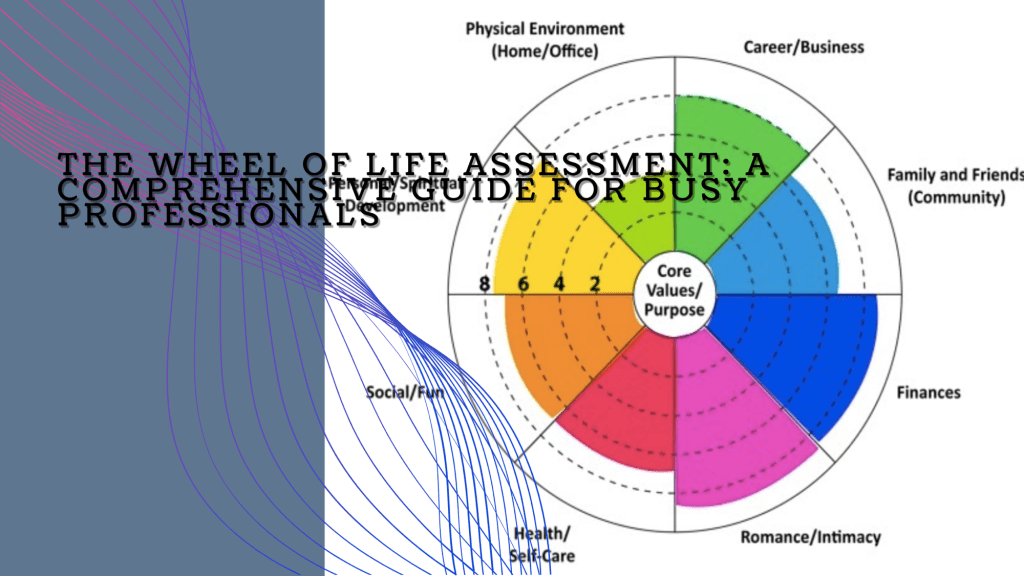
  • The Wheel of Life Assessment: A Comprehensive Guide for Busy Professionals

    The Wheel of Life Assessment: A Comprehensive Guide for Busy Professionals

    The Wheel of Life is a powerful self-assessment tool designed to help individuals evaluate and achieve balance across different areas of their lives. Originating from life coaching and personal development practices, this tool visualizes life balance as a wheel with each segment representing a key area of life. By assessing these areas, you can identify where you’re thriving and where you may need to focus more attention, ultimately guiding you towards a more balanced and fulfilling life.

    Origins and Concept of the Wheel of Life

    The Wheel of Life assessment is rooted in holistic approaches to self-improvement. While its precise origins are unclear, it has gained widespread use in coaching, personal development, and therapy. The concept is simple yet profound: life is divided into various segments or categories, each representing a critical aspect of our existence. The wheel is balanced only when these areas receive appropriate attention and effort, allowing it to roll smoothly.

    What is the Wheel of Life?

    The Wheel of Life typically includes 8 to 10 segments, each representing a significant area of life such as:

    • Career
    • Family and Friends
    • Significant Other/Romance
    • Health
    • Finance
    • Personal Growth
    • Fun and Recreation
    • Physical Environment

    These categories can be customized to reflect your unique life circumstances. For instance, if you’re an entrepreneur, you might add segments like “Business Growth” or “Leadership.” The goal is to rate your satisfaction in each area on a scale of 1 to 10, creating a visual representation of your life balance​ (Quenza, Scott Jeffrey).

    Conducting the Wheel of Life Assessment: A Step-by-Step Guide
    Step 1: Determine Your Categories

    Begin by defining the categories that are most relevant to your life. While there are standard categories like Career and Health, your personal circumstances might require custom segments. For example, if you’re a busy professional with a family, you might include categories such as “Parenting,” “Spouse Relationship,” “Career,” “Health,” “Finances,” “Personal Growth,” and “Leisure” ​(Scott Jeffrey).

    Step 2: Assess Your Current Situation

    Next, evaluate your satisfaction level in each category using a scale from 1 to 10, where 1 represents complete dissatisfaction and 10 signifies full contentment. Be honest in your assessment—this is crucial for identifying where improvements are needed. Consider what a “10” would look like in each category. For example, in “Health,” a 10 might mean regular exercise, a balanced diet, and overall well-being​ (Quenza, Scott Jeffrey).

    Step 3: Plot Your Ratings on the Wheel

    Once you’ve rated each category, transfer these scores onto the Wheel of Life template. This will give you a visual representation of your life balance. Ideally, the wheel should be evenly rounded, indicating balance. However, if it appears uneven, this highlights the areas of your life that require more attention ​(Quenza).

    Step 4: Analyze and Reflect

    Take time to reflect on your completed wheel. Ask yourself questions like:

    • Are there any surprises in the scores?
    • Which areas need the most improvement?
    • How do these imbalances affect other areas of your life?

    This reflection is crucial for understanding the interconnectedness of different life areas. For example, neglecting your health might lead to reduced productivity at work and strained relationships​ (Quenza).

    Deriving Topics to Work On Over the Year
    Step 5: Set SMART Goals

    After identifying the areas that need improvement, set SMART (Specific, Measurable, Achievable, Relevant, Time-bound) goals for each one. For example:

    • If your “Health” score is low, a goal might be: “Exercise three times a week for 30 minutes to improve overall energy and well-being.”
    • If your “Relationship” score is low, a goal could be: “Plan a date night with my spouse once a week to strengthen our connection.”

    Choose 2-3 key areas to focus on each quarter, ensuring that you don’t overwhelm yourself by trying to improve everything at once​ (Quenza, Scott Jeffrey).

    Step 6: Create an Action Plan

    Develop a clear action plan for each goal. Break down your goals into daily, weekly, and monthly tasks to make them more manageable. For example:

    • Daily Habits: Incorporate small, consistent actions like drinking more water or taking short walks.
    • Weekly Check-ins: Set aside time to review your progress each week. Are you staying on track? What obstacles are you facing?

    This structured approach helps ensure steady progress without becoming overwhelming ​(Scott Jeffrey).

    Measuring Success and Tracking Progress
    Step 7: Regular Reviews and Adjustments

    Tracking your progress is key to maintaining motivation and ensuring you’re on the right path. Here’s how to measure success:

    • Monthly Reviews: At the end of each month, revisit your Wheel of Life and reassess your scores. Have you made progress? This will indicate whether your efforts are effective.
    • Quarterly Reviews: Every three months, conduct a more thorough review. Adjust your goals and strategies based on any changes in your life circumstances or priorities ​(Quenza, Scott Jeffrey).
    Tools for Tracking

    Consider using a journal, an app, or a simple spreadsheet to log your activities and monitor your progress. This allows you to track patterns over time and stay accountable to your goals.

    Keeping Track and Staying on Course

    Consistency is essential for maintaining balance. Here’s how to stay on track:

    • Accountability Partner: Share your goals with someone you trust, like a partner, friend, or coach. This adds accountability and increases your likelihood of following through.
    • Adapt and Adjust: Life is dynamic, and your priorities may shift. Be flexible with your goals and willing to adjust your action plan as needed. Regularly revisiting your Wheel of Life ensures your actions remain aligned with your evolving circumstances​ (Scott Jeffrey).
    Conclusion

    The Wheel of Life is more than just an assessment tool — it’s a guide for ongoing personal development and life balance. By regularly assessing your life, setting SMART goals, and tracking your progress, you can maintain productivity while ensuring that all areas of your life receive the attention they deserve. Remember, the goal is not perfection but continuous improvement and balance across all aspects of your life.

  • Harnessing the Power of Kanban for Enhanced Productivity and Project Management

    Harnessing the Power of Kanban for Enhanced Productivity and Project Management

    In the relentless pursuit of productivity, professionals are constantly seeking methodologies that offer clarity, efficiency, and a sense of control over their workflows. Enter Kanban, a method that has stood the test of time, evolving from a simple inventory management system to a powerful tool for managing projects across various industries. But what exactly is Kanban, and how can it transform the way you approach work and productivity? This article explores the fascinating origins of Kanban, its application in modern project management, and how you can implement its principles to enhance your daily life, increase visibility, and reduce stress.

    The Origins of Kanban: From Factory Floors to Global Workspaces

    The roots of Kanban stretch back to post-World War II Japan, where the economy was rebuilding, and efficiency was paramount. Toyota, under the visionary leadership of industrial engineer Taiichi Ohno, was looking for ways to streamline production and eliminate waste. Ohno was inspired by a surprising source—American supermarkets. He observed how shelves were restocked only when items were purchased, leading to a lean, demand-driven inventory system. This insight led to the development of Kanban, a word that translates to “signboard” or “visual card” in Japanese, which would become the backbone of Toyota’s just-in-time (JIT) production system.

    Kanban was initially used to control the logistical chain from production through to the delivery of finished products, ensuring that nothing was produced until it was needed. This revolutionary approach reduced costs, minimized waste, and maximized efficiency, propelling Toyota to the forefront of the global automotive industry. Over time, the principles of Kanban have transcended manufacturing, being adopted by knowledge workers in industries as diverse as software development, healthcare, and marketing.

    What is Kanban? A Visual Symphony of Workflow Management

    At its essence, Kanban is a visual workflow management tool designed to help teams visualize work, balance demands with available capacity, and optimize the flow of work items. Picture a board divided into columns that represent different stages of a process—this is the heart of Kanban. Tasks, often represented by cards, move across the board from left to right as they progress through stages such as “To Do,” “In Progress,” and “Done.”

    But Kanban is more than just a board with sticky notes. It embodies a set of core principles that guide how work is approached and completed:

    1. Visualizing the Workflow: The visual aspect of Kanban is perhaps its most powerful feature. By creating a visual map of your tasks and their statuses, you gain immediate insight into the progress and potential bottlenecks. This transparency fosters better communication and collaboration among team members, as everyone can see exactly what needs to be done and what is currently in motion.
    2. Limiting Work in Progress (WIP): One of the biggest productivity killers is multitasking. Kanban combats this by setting strict limits on how much work can be in progress at any given time. By focusing on a smaller number of tasks, you can ensure that each task receives the attention it needs, reducing the likelihood of errors and improving overall quality.
    3. Managing Flow: Kanban encourages a smooth and consistent flow of work. By closely monitoring how tasks move through the workflow, you can identify and address inefficiencies, ensuring that work is completed promptly without unnecessary delays.
    4. Making Process Policies Explicit: For a team to function effectively, everyone must be on the same page. Kanban promotes clarity by making the rules and processes explicit, so there is no confusion about how tasks should be handled or what the priorities are.
    5. Implementing Feedback Loops: Continuous improvement is a cornerstone of Kanban. Regular feedback loops, such as daily stand-ups or retrospective meetings, allow teams to review their progress, address challenges, and make incremental improvements to their workflow.
    6. Improving Collaboratively, Evolving Experimentally: Kanban is inherently flexible. It encourages teams to experiment with their processes, try new approaches, and learn from their experiences. This iterative approach fosters a culture of continuous improvement, where the focus is on finding the best way to achieve the desired outcomes.
    Kanban in Project Management: A Versatile Tool for Diverse Industries

    The adaptability of Kanban has made it a favored methodology in various fields, particularly in project management. Its principles are universal, making it an excellent fit for any industry where work can be visualized and broken down into discrete tasks.

    1. Software Development: In the fast-paced world of software development, where requirements often change mid-project, Kanban provides the flexibility to adapt without disrupting the flow of work. It complements Agile methodologies like Scrum by offering a continuous delivery model that emphasizes the steady flow of features, bug fixes, and updates. This ensures that development teams can maintain momentum without being overwhelmed by shifting priorities.
    2. Marketing: Marketing teams, often juggling multiple campaigns, content calendars, and social media strategies, benefit immensely from Kanban’s visual approach. By mapping out tasks on a Kanban board, teams can see at a glance what content is in the pipeline, what needs approval, and what’s ready to go live. This visibility reduces the risk of missed deadlines and helps ensure that all aspects of a campaign are aligned.
    3. Healthcare: In healthcare, where the stakes are high, and efficiency can impact patient outcomes, Kanban is used to manage everything from patient flow in hospitals to treatment plans. For example, a Kanban board can help a healthcare team track the status of each patient’s treatment, ensuring that critical steps are not overlooked and that care is delivered in a timely manner.
    4. Manufacturing: Kanban’s origins in manufacturing make it particularly well-suited to this industry. Whether managing production schedules, tracking inventory, or coordinating supply chain logistics, Kanban helps ensure that manufacturing processes are efficient, responsive to demand, and free from waste.
    Integrating Kanban Principles into Traditional Project Management

    Even in classically managed projects, which often rely on rigid structures and timelines, Kanban principles can bring significant benefits. The key is to incorporate Kanban’s flexibility and visual management into existing frameworks, enhancing overall efficiency and communication.

    1. Visualizing Complex Projects: Traditional projects often involve multiple teams and numerous interdependent tasks. By using Kanban boards to visualize these tasks, project managers can create a clear picture of the entire project landscape. This visualization helps identify potential bottlenecks, allowing managers to allocate resources more effectively and keep the project on track.
    2. Limiting Work in Progress Across Phases: In projects that follow a waterfall methodology, it’s common to have several phases (e.g., design, development, testing) running simultaneously. However, without proper controls, this can lead to overload and inefficiency. Applying WIP limits to these phases ensures that each stage of the project is fully completed before moving on to the next, reducing the risk of rework and delays.
    3. Enhancing Flow with Strategic Resource Allocation: Traditional project management often suffers from resource bottlenecks—when too many tasks are assigned to too few people. By adopting Kanban’s focus on flow, project managers can monitor task progress and adjust workloads in real-time, ensuring that resources are used effectively and that tasks move smoothly from start to finish.
    4. Incorporating Feedback for Continuous Improvement: In traditional projects, feedback is often limited to post-mortem reviews after the project has ended. However, by incorporating regular feedback loops, similar to Kanban’s retrospective meetings, project managers can make iterative improvements throughout the project lifecycle. This not only increases the chances of project success but also fosters a culture of learning and continuous improvement.
    Implementing Kanban for Personal Productivity: A Roadmap for High Performers

    For high achievers looking to optimize their personal productivity, Kanban offers a structured yet flexible approach to managing daily tasks. Here’s how you can leverage Kanban to boost your efficiency, reduce stress, and achieve your goals.

    1. Building Your Personal Kanban Board: Start by creating a simple Kanban board, either physically with sticky notes or digitally using tools like Trello or Asana. Begin with three columns: “To Do,” “In Progress,” and “Done.” Populate the “To Do” column with tasks that need your attention, and move them across the board as you work on them.
    2. Mastering Focus with WIP Limits: The beauty of Kanban lies in its ability to help you focus. Set a WIP limit for the “In Progress” column—perhaps two or three tasks at a time. This encourages you to concentrate on completing tasks before taking on new ones, reducing the cognitive load and the stress of multitasking.
    3. Conducting Regular Reviews: At the end of each day or week, take a few moments to review your Kanban board. Look for patterns—are there tasks that frequently stall in the “In Progress” column? Are you consistently underestimating the time required for certain tasks? Use these insights to refine your workflow, making adjustments that will enhance your productivity over time.
    4. Showcasing Your Progress: One of the most satisfying aspects of using Kanban is seeing tasks move into the “Done” column. This not only provides a visual representation of your accomplishments but also allows you to communicate your progress to others. If you’re working in a team or reporting to a manager, sharing your Kanban board can be a powerful way to demonstrate your productivity and ensure that your efforts are recognized.
    Leveraging Kanban for Visibility and Recognition

    In a competitive environment, making your contributions visible is crucial for career advancement. Kanban’s transparency can help you not only manage your work more effectively but also ensure that your efforts are noticed and valued by others.

    1. Proactively Share Your Board: Don’t wait for others to ask for updates. By regularly sharing your Kanban board with your team or supervisor, you take control of the narrative around your work. This proactive communication demonstrates your commitment to transparency and accountability, qualities that are highly valued in any professional setting.
    2. Use the “Done” Column as a Portfolio: The “Done” column of your Kanban board is more than just a record of completed tasks—it’s a showcase of your accomplishments. Regularly reviewing this column can help you prepare for performance reviews, project retrospectives, or even job interviews, providing concrete examples of the work you’ve completed and the impact you’ve made.
    3. Foster a Collaborative Environment: Kanban’s visual nature makes it easy for others to see where they can contribute. By maintaining an up-to-date board, you encourage team members to offer support, share insights, and collaborate more effectively. This not only enhances team performance but also positions you as a leader who facilitates open communication and teamwork.
    A Gradual Implementation Plan: Start Small, Scale Up

    If you’re ready to start using Kanban to transform your workflow, the key is to start small and gradually scale up as you become more comfortable with the methodology. Here’s a step-by-step plan:

    1. Begin with a Simple Board: Set up a basic Kanban board with three columns: “To Do,” “In Progress,” and “Done.” Start by adding a few tasks that you need to complete this week. Don’t worry about getting everything perfect—focus on getting started.
    2. Introduce WIP Limits: Once you’re comfortable with the basic board, introduce WIP limits. This could be as simple as deciding that you won’t work on more than three tasks at once. Observe how this affects your focus and productivity, and adjust the limits as needed.
    3. Regularly Review and Reflect: Make it a habit to review your Kanban board at the end of each day or week. Reflect on what’s working well and what could be improved. This practice will help you fine-tune your approach and ensure that you’re continuously improving your workflow.
    4. Gradually Expand the Board: As you become more comfortable with Kanban, consider expanding your board to include additional columns or categories. For example, you might add a “Backlog” column for tasks that are not yet ready to be started, or a “Blocked” column for tasks that are waiting on input from others.
    5. Scale Up and Share: Once Kanban has become an integral part of your workflow, consider scaling up by using it for more complex projects or by introducing it to your team. Sharing your board with others can help you align efforts, improve collaboration, and ensure that everyone is working towards the same goals.

    By following this plan, you’ll not only integrate Kanban into your daily work but also create a scalable system that grows with you. Over time, you’ll find that Kanban not only boosts your productivity but also reduces stress, enhances visibility, and makes your efforts more impactful.

    Kanban is more than just a tool—it’s a mindset that empowers you to take control of your work, continuously improve, and achieve your goals with confidence. Whether you’re managing a team, running a project, or simply looking to optimize your personal productivity, the principles of Kanban offer a path to success that is both effective and sustainable. Start small, stay committed, and watch as your productivity soars to new heights.

  • 40 Simple Ideas to Improve Your Life: A Minimalist Guide to Happiness, Satisfaction, Health, and Productivity

    40 Simple Ideas to Improve Your Life: A Minimalist Guide to Happiness, Satisfaction, Health, and Productivity

    As I approach my 40th birthday next week, I’ve been reflecting on ways to simplify and enhance my life in meaningful ways. Turning 40 feels like a milestone, and I want to enter this new decade with a clear focus on what truly matters. With that in mind, I’ve put together a list of 40 simple ideas to boost happiness, satisfaction, health, and productivity. These are small, actionable steps that anyone can take to improve their life immediately.

    1. Declutter Your Space
      • How: Start with one area, like your desk or a single drawer. Remove anything you don’t use regularly or doesn’t bring you joy.
      • Why: A tidy space promotes a clear mind and reduces stress.
    2. Practice Gratitude Daily
      • How: Each morning or before bed, write down three things you’re grateful for.
      • Why: Gratitude shifts focus from what’s lacking to what’s abundant, fostering a positive mindset.
    3. Set Clear Priorities
      • How: List the top three things you want to accomplish each day.
      • Why: Focusing on fewer tasks increases your chances of completing them, leading to a greater sense of achievement.
    4. Drink More Water
      • How: Carry a reusable water bottle and aim to drink a full bottle by lunchtime and refill for the afternoon.
      • Why: Staying hydrated boosts energy levels and supports overall health.
    5. Take a Walk Outside
      • How: Spend at least 10 minutes walking outside each day, preferably in a green space.
      • Why: Nature exposure reduces stress and increases feelings of well-being.
    6. Limit Screen Time
      • How: Set specific times to check your phone or social media, and avoid screens an hour before bed.
      • Why: Reducing screen time improves sleep and frees up time for more meaningful activities.
    7. Simplify Your Wardrob
      • How: Create a capsule wardrobe with a few versatile pieces that you love wearing.
      • Why: Fewer clothing choices reduce decision fatigue and simplify mornings.
    8. Practice Deep Breathing
      • How: Take a few deep breaths in and out when feeling stressed.
      • Why: Deep breathing calms the mind and reduces stress.
    9. Eat Whole Foods
      • How: Incorporate more fruits, vegetables, and whole grains into your meals.
      • Why: Whole foods provide essential nutrients that boost energy and improve health.
    10. Read Daily
      • How: Spend 15 minutes reading a book or article that interests you.
      • Why: Reading stimulates the mind and offers new perspectives.
    11. Say “No” More Often
      • How: Politely decline commitments that don’t align with your priorities.
      • Why: Saying no preserves time and energy for what truly matters.
    12. Practice Mindful Eating
      • How: Eat without distractions, savoring each bite and noticing flavors and textures.
      • Why: Mindful eating improves digestion and satisfaction with meals.
    13. Create a Morning Routine
      • Design a simple, consistent routine that includes activities that set a positive tone for the day.
      • Why: A morning routine grounds you and prepares you for the day ahead.
    14. Get Enough Sleep
      • How: Establish a consistent bedtime and wake-up time, even on weekends.
      • Why: Adequate sleep is crucial for mental and physical health.
    15. Reduce Possessions
      • How: Regularly assess and donate or discard items you no longer need.
      • Why: Fewer possessions lead to less clutter and more focus on what’s important.
    16. Connect with Loved Ones
      • How: Make time for regular conversations or visits with friends and family.
      • Why: Strong relationships are key to happiness and fulfillment.
    17. Practice Meditation
      • How: Start with just five minutes of sitting quietly, focusing on your breath.
      • Why: Meditation reduces stress and increases mindfulness.
    18. Limit Caffeine Intake
      • How: Gradually reduce coffee or energy drink consumption, especially in the afternoon.
      • Why: Less caffeine can improve sleep quality and reduce anxiety.
    19. Practice Single-tasking
      • How: Focus on completing one task at a time before moving to the next.
      • Why: Single-tasking improves productivity and the quality of your work.
    20. Unsubscribe from Unnecessary Emails
      • How: Take a few minutes to unsubscribe from newsletters or services you no longer read.
      • Why: A cleaner inbox reduces stress and distraction.
    21. Laugh More
      • How: Watch a funny video or spend time with people who make you laugh.
      • Why: Laughter releases endorphins and reduces stress.
    22. Keep a Journal
      • How: Spend a few minutes each day writing down your thoughts, ideas, or experiences.
      • Why: Journaling helps clarify thoughts and track personal growth.
    23. Simplify Your Finances
      • How: Automate bill payments and set up a budget that’s easy to follow.
      • Why: Simplifying finances reduces stress and helps you stay on track with your goals.
    24. Embrace Minimalist Design
      • How: Simplify your home decor by choosing fewer, more meaningful items.
      • Why: A minimalist environment is calming and aesthetically pleasing.
    25. Practice Forgiveness
      • How: Let go of grudges or past grievances, focusing on moving forward.
      • Why: Forgiveness frees you from negative emotions and promotes inner peace.
    26. Volunteer Your Time
      • How: Find a cause you care about and dedicate a few hours a month to helping out.
      • Why: Volunteering fosters connection and provides a sense of purpose.
    27. Use a Planner
      • How: Write down your tasks, appointments, and goals for the week.
      • Why: A planner helps you stay organized and reduces the stress of trying to remember everything.
    28. Cook Simple, Healthy Meals
      • How: Focus on recipes with few ingredients that you can prepare in under 30 minutes.
      • Why: Simple meals save time and support healthy eating habits.
    29. Practice Self-compassion
      • How: Treat yourself with the same kindness you would a friend when you make mistakes.
      • Why: Self-compassion improves mental health and resilience.
    30. Take Short Breaks
      • How: Set a timer to take a 5-minute break every hour during work.
      • Why: Short breaks improve focus and prevent burnout.
    31. Embrace Minimalism in Technology
      • How: Delete apps you rarely use and organize the remaining ones for easy access.
      • Why: A streamlined phone reduces distraction and increases productivity.
    32. Focus on Experiences, Not Things
      • How: Spend money on activities and experiences rather than material possessions.
      • Why: Experiences create lasting memories and happiness.
    33. Stay Present
      • How: When with others, focus fully on the conversation without distractions.
      • Why: Being present improves relationships and life satisfaction.
    34. Limit News Consumption
      • How: Check the news once a day instead of constantly throughout the day.
      • Why: Limiting news reduces anxiety and frees up time for other activities.
    35. Engage in Creative Activities
      • How: Spend time on a hobby like drawing, writing, or playing music.
      • Why: Creativity enhances problem-solving skills and brings joy.
    36. Take Care of Your Posture
      • How: Sit up straight and stretch regularly if you sit for long periods.
      • Why: Good posture prevents back pain and promotes better breathing.
    37. Cultivate a Growth Mindset
      • How: View challenges as opportunities to learn rather than as setbacks.
      • Why: A growth mindset fosters resilience and continuous improvement.
    38. Simplify Your Social Media
      • How: Unfollow accounts that don’t add value to your life or make you feel inadequate.
      • Why: A curated feed reduces comparison and increases positivity.
    39. Create a Bedtime Ritual
      • How: Develop a calming pre-sleep routine, like reading or meditating, to wind down.
      • Why: A bedtime ritual signals to your body that it’s time to sleep, improving sleep quality.
    40. Practice Minimalist Thinking
      • How: When overwhelmed, focus on what truly matters and let go of the rest.
      • Why: Minimalist thinking reduces stress and helps you make better decisions.
    Final Thoughts

    Improving your life doesn’t have to be complicated. By implementing even a few of these minimalist ideas, you can create positive changes that enhance your happiness, satisfaction, health, and productivity. Start small, and remember that simplicity is often the key to lasting success. Less is indeed more.