Tag: ProfessionalGrowth

  • Minimalist Project Reporting: How to Win Stakeholder Trust Without the Overload

    Minimalist Project Reporting: How to Win Stakeholder Trust Without the Overload

    Project reporting is meant to create alignment and trust. Yet in many organizations, it becomes the opposite: endless pages of charts, jargon-filled slide decks, or data-heavy spreadsheets that leave stakeholders overwhelmed and disengaged. The irony is clear — the more information we try to share, the less clarity we actually create.

    The solution is not to report less, but to report better. Minimalist project reporting focuses on essentials, delivering the right information at the right time in a way stakeholders can actually use. Done well, it strengthens trust, drives faster decision-making, and turns reporting from a chore into a leadership tool.

    Why Minimalist Reporting Matters for Stakeholder Management

    Stakeholders — whether executives, partners, clients, or team members — don’t need every detail. They need clarity. Overly complex reporting creates confusion, while concise updates respect their time and sharpen their decisions.

    Minimalist reporting:

    • Saves time — shorter updates are easier to produce and consume.
    • Enables faster decisions — stakeholders focus on what matters.
    • Builds trust — transparency, consistency, and brevity show professionalism.

    It’s not about cutting corners. It’s about cutting clutter.

    Principles of Minimalist Project Reporting

    To shift toward a minimalist approach, follow four guiding principles:

    1. Clarity over complexity – Focus on signal, not noise.
    2. Consistency over volume – Short, regular updates create alignment.
    3. Relevance over comprehensiveness – Tailor information to your audience.
    4. Action orientation – Reports should enable stakeholders to act, not just observe.

    The Core of a Minimalist Project Report

    A strong report should answer five questions quickly:

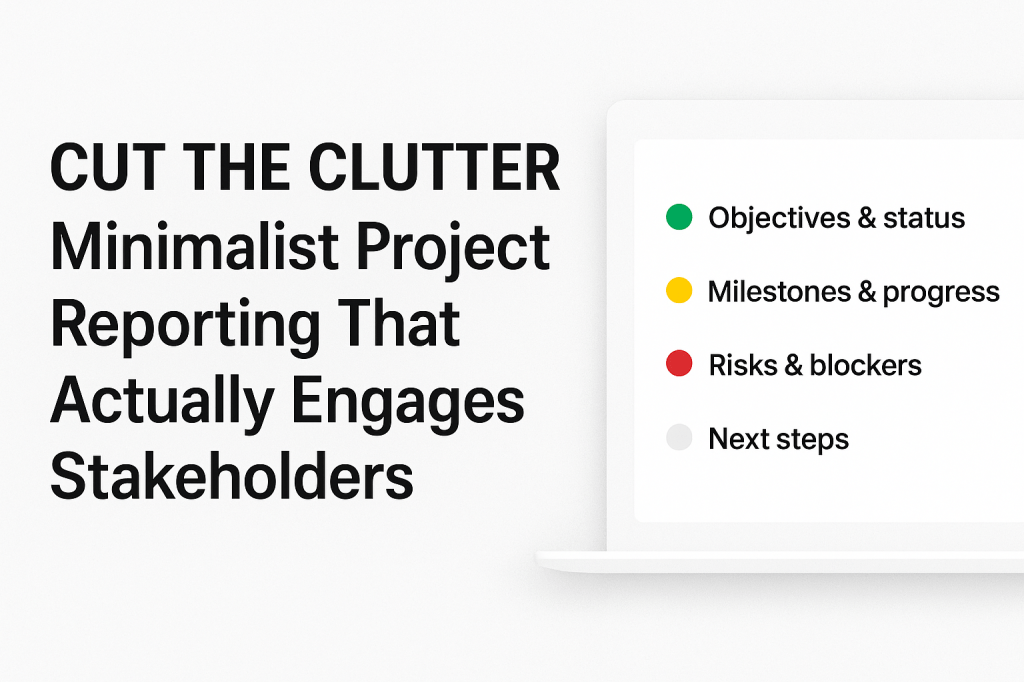
    • What are we trying to achieve? (objectives & status)
    • What have we accomplished since the last update? (progress)
    • What stands in our way? (risks & blockers)
    • What comes next? (priorities)
    • How can stakeholders help?(engagement opportunity)

    This structure ensures every update is focused, actionable, and engaging.

    Formats That Work

    Minimalist reporting thrives in familiar tools. A few effective approaches:

    • A one-page dashboard or summary.
    • A weekly email or Slack message with clear sections: progress, blockers, next steps.
    • A 5–10 minute stakeholder check-in supported by a simple traffic light dashboard.
    • Visual cues like green/yellow/red status indicators or Kanban snapshots.

    The goal is the same: fast comprehension and quick alignment.

    Turning Reports Into Engagement

    Reporting isn’t just about information — it’s about relationships. By tailoring updates to different audiences, leaders show they understand stakeholder priorities.

    • Executives want strategy, risks, and big-picture progress.
    • Teams need clarity on deliverables and ownership.
    • Clients or partners care about timelines and commitments.

    Minimalist reporting transforms updates into conversations. It invites feedback, surfaces concerns early, and builds trust through transparency.

    Final Thoughts

    Minimalist project reporting is not a reduction in quality — it’s an improvement in effectiveness. By focusing on clarity, consistency, and relevance, leaders turn reporting into a powerful engagement tool.

    The next time you prepare a project update, ask yourself: Am I giving stakeholders what they really need to make decisions and stay engaged — or am I just adding to the noise?

    When you cut the clutter, you don’t just simplify reporting. You build stronger relationships, accelerate alignment, and win stakeholder trust.

  • Simplicity reveals what truly matters.

    Simplicity reveals what truly matters.

    In today’s fast-paced project environments, complexity has become the default. We pile on tools, processes, reports, and meetings — hoping to gain control, but often ending up with noise.

    The result?

    Slower progress, unclear priorities, and teams spread thin trying to do everything at once.

    But here’s the truth: complexity is often the enemy of execution.

    In project management and productivity, simplicity isn’t just aesthetic — it’s a strategic advantage. It clears the path for meaningful outcomes and helps teams focus on what actually moves the needle.

    Here’s how to make it real:

    🔹 1. Clarify before you plan.

    Before drafting a timeline or task list, distill the “why” behind the project. If the objective can’t be stated in one sentence, it’s not yet clear enough. Clarity saves you from scope creep later.

    🔹 2. Use fewer tools, better.

    Too many apps create silos and friction. Choose one project management platform — and build a shared, standardized workflow. A good tool used consistently beats a dozen half-integrated ones.

    🔹 3. Replace zombie meetings with async updates.

    Audit recurring meetings monthly. If there’s no new decision to make or problem to solve, it doesn’t need to be a meeting. Tools like dashboards, shared docs, or Loom updates can deliver the same value in half the time.

    🔹 4. Prioritize visually.

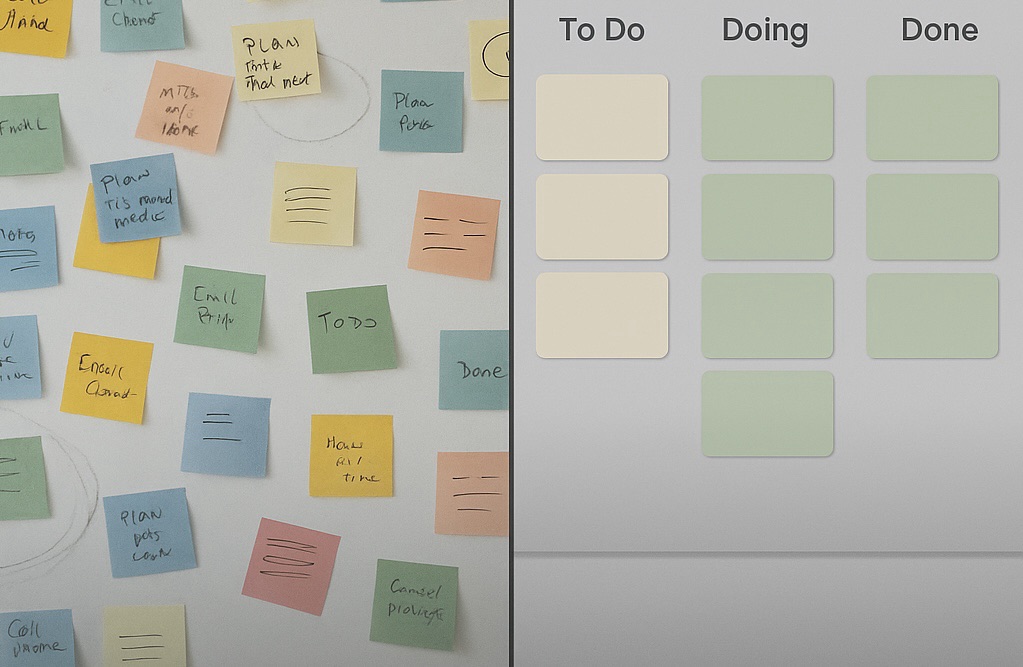
    A Kanban board, a visual timeline, or even a simple progress bar communicates faster than a 10-slide deck. Simplicity isn’t dumbing down — it’s speeding up understanding.

    🔹 5. Focus on one high-impact outcome at a time.

    Multitasking scatters attention. Sequence your team’s work around clear milestones, and make sure everyone knows the current priority. Simplicity helps people feel progress — and progress drives engagement.

    Why this matters:

    Simplicity improves decision-making.

    It reduces stress.

    It accelerates delivery.

    When you eliminate the unnecessary, you uncover what truly drives value — and give your team room to breathe, focus, and thrive.

    In leadership, simplicity is contagious. A streamlined process or a clear, concise brief sets the tone for execution with purpose.

    If your project workflow feels heavy, pause and ask:

    “What can I remove that no longer serves the goal?”

    Sometimes progress means doing less, but doing it better.

    Simplicity reveals what truly matters.

    🔄 Your turn:

    What’s one process, tool, or meeting you’ve simplified recently — and what impact did it have?

    👇 Share below and let’s build smarter, leaner projects together.

  • Tough Lessons in Project Management: What ‘If You’re Gonna Be Stupid, You Gotta Be Tough’ Teaches Us About Leadership

    Tough Lessons in Project Management: What ‘If You’re Gonna Be Stupid, You Gotta Be Tough’ Teaches Us About Leadership

    It’s a phrase that’s equal parts funny, blunt, and uncomfortably true: “If you’re gonna be stupid, you gotta be tough.” Popularized by author John Grisham, this quote has become a tongue-in-cheek anthem for everyone who’s ever learned something the hard way. While it might sound like the punchline to a bar story, it’s also quietly profound—especially if you’re managing complex projects, tight timelines, and high-stakes outcomes.

    Let’s be honest: in project management, no matter how skilled you are, mistakes happen. Bad calls are made. Sometimes you skip a process to save time, only to watch things go sideways weeks later. In those moments, toughness isn’t a bonus—it’s a survival skill.

    In this article, we’ll explore what this gritty little quote can teach us about leadership, accountability, and how to build teams that get stronger with every challenge.

    What the Quote Really Means

    On the surface, “If you’re gonna be stupid, you gotta be tough” is a jab at people who make reckless choices and then suffer the consequences. But let’s break it down:

    “Stupid” doesn’t necessarily mean intellectually lacking — it often means acting without foresight, rushing decisions, or ignoring best practices. “Tough” means resilient, adaptive, and strong enough to fix the mess you created without giving up.

    It’s not just about enduring pain. It’s about learning fast, bouncing back, and owning your part in what went wrong. In the project management world, that mindset is priceless.

    5 Project Management Lessons Hidden in the Quote
    1. Risk Ignored is Pain Deferred

    We’ve all been tempted to fast-track a project by skipping the risk register or brushing off stakeholder alignment. After all, what’s the worst that could happen?

    Plenty.

    When we ignore potential risks, we’re not eliminating them — we’re simply deferring the pain. A minor oversight in the early stages can balloon into a full-blown crisis in execution. The tough project manager isn’t just a fire-fighter; they’re a risk-spotter who prevents the fire in the first place.

    Pro tip: Build in a “pre-mortem” at project kickoff. Ask your team, “If this project failed six months from now, what went wrong?” Then plan to prevent those scenarios.

    2. Toughness is a Core Competency

    Every project faces bumps: budget overruns, vendor delays, last-minute scope changes. What separates good PMs from great ones is how they handle adversity.

    Toughness doesn’t mean powering through with brute force. It means staying calm under pressure, navigating politics with grace, and keeping the team focused when things go wrong. It’s about emotional resilience, not ego.

    When the pressure’s on, your team will look to you. Be the calm in the storm.

    3. Don’t Confuse Hustle with Strategy

    Too many project managers wear their stress as a badge of honor — working nights, sending emails at 2 a.m., fixing problems caused by bad planning.

    That’s not leadership. That’s burnout.

    Being “tough” shouldn’t be about cleaning up after poor decisions. It should be about preventing them with smart strategy and clear priorities. Hustle is overrated if it’s compensating for a lack of structure.

    Remember: Your job isn’t to suffer through the chaos. It’s to design a system that avoids chaos in the first place.

    4. Own Your Mistakes Publicly and Early

    Project leaders who try to hide or deflect mistakes often create a toxic culture of blame. The best PMs do the opposite: they own their decisions, admit errors early, and invite their teams into the solution.

    This creates trust, accelerates course correction, and models what real accountability looks like.

    Toughness isn’t about pretending to be perfect. It’s about being honest and brave enough to lead through imperfection.

    5. Learn Fast or Repeat Pain

    Pain is a great teacher — if you let it be.

    After every project (especially the messy ones), carve out time for a “lessons learned” session. Not just to document what went wrong, but to implement changes in your process, team culture, or decision-making criteria.

    Every mistake is a tuition payment. Make sure you get your degree.

    Tools to Prevent ‘Stupid’ Decisions

    The good news? We’re not at the mercy of trial and error. Project management offers powerful tools to reduce the “stupid” and strengthen the “tough”:

    1. RAID Logs (Risks, Assumptions, Issues, Dependencies): Keep your threats visible and manageable.
    2. Decision Logs: Track why certain paths were chosen — it helps defend your logic later and improve future calls.
    3. Stakeholder Maps: Identify who needs to be involved before surprises happen.
    4. Psychological Safety: Create a culture where team members can challenge bad decisions before they turn into costly problems.
    5. Retrospectives: Don’t just look back — plan forward with the insights gained.
    The Upside: Why Toughness Builds Legendary PMs

    We tend to remember great project managers not for their smoothest projects, but for how they handled the toughest ones. When the stakes were high, the budget was low, and everything went wrong — they showed up with calm, clarity, and courage.

    Toughness, in this sense, isn’t brute strength. It’s emotional intelligence, proactive leadership, and the refusal to let a bad day become a bad outcome.

    Every crisis you manage well increases your influence and trust capital. Toughness is the seed of leadership growth.

    Closing Thoughts: Embrace the Quote, But Don’t Live By It

    The quote “If you’re gonna be stupid, you gotta be tough” should make you laugh — but also think. Yes, it’s a reminder that toughness is vital. But the real win is minimizing the “stupid” decisions through systems, foresight, and humility.

    Don’t make toughness your only strategy. Make preparation, reflection, and clarity your daily habits — and let toughness be your last line of defense, not your first.

    Call to Action

    Think back to your last project misstep — what would’ve helped you avoid it? A clearer plan? A stronger team conversation? A simple checklist?

    Take one step today to tighten your process — and make life a little less tough down the road.

  • Authentic Leadership: Why It Matters in the Corporate World

    Authentic Leadership: Why It Matters in the Corporate World

    1. The Myth of the Corporate Mask

    In today’s fast-paced corporate environment, it’s tempting to believe that effective leadership means always being composed, always having the answer, always showing strength. We slip into roles, wear professional masks, and often bury our true selves in the name of performance.

    But here’s the truth: leadership isn’t about playing a role — it’s about showing up as the best version of yourself. The most respected leaders aren’t those who pretend to be perfect. They’re the ones who have the courage to be real.

    Authentic leadership may sound like a luxury in a world of metrics, deadlines, and tight schedules, but it’s actually the foundation of resilient, high-performing teams. And while it may feel uncomfortable at first, it’s the path that makes leadership feel lighter, more effective — even effortless.


    2. What Is Authentic Leadership?

    Authentic leadership means leading with integrity, self-awareness, and purpose. It’s not about being loud, charismatic, or overly transparent — it’s about aligning your words and actions with your values, and showing consistency even under pressure.

    An authentic leader:

    • Knows and accepts their strengths and weaknesses.
    • Makes decisions based on values, not optics.
    • Communicates honestly, without manipulation.
    • Builds trust by being consistent — not flawless.

    In short, authenticity is about being anchored. In a world that pulls in a hundred directions, it’s your internal compass that keeps you grounded — and allows others to find their bearings around you.


    3. Why Authentic Leadership Matters — Especially Today

    In a post-pandemic world marked by remote collaboration, digital overload, and cultural shifts, people are craving connection and clarity more than ever.

    Authenticity cuts through the noise. It builds:

    • Trust, because people can rely on you to be consistent.
    • Loyalty, because people follow leaders who stand for something real.
    • Resilience, because grounded leaders handle chaos without crumbling.

    Consider leaders like Satya Nadella, who transformed Microsoft not with bravado, but by leading with empathy and clarity. Or Patagonia’s Rose Marcario, who built a culture rooted in purpose and environmental responsibility. These leaders didn’t just drive results — they changed culture by being real.


    4. Authenticity Isn’t Effortless — But It Makes Leadership Feel That Way

    At first, being authentic might feel like the harder path. It requires vulnerability, reflection, and the willingness to say, “I don’t know,” or “I made a mistake.”

    But here’s the paradox: once you embrace it, authenticity simplifies everything. You stop second-guessing yourself. You stop rehearsing conversations. You stop managing a persona.

    Instead, you lead from a place of clarity — and that clarity makes hard decisions easier, communication sharper, and your presence more powerful. That’s how authentic leadership makes the hard things feel effortless.


    5. The Hidden Barriers to Authenticity

    So why isn’t every leader authentic? The corporate world isn’t always kind to vulnerability. Many professionals fear being seen as weak or unpolished.

    Common barriers include:

    • Fear of judgment or failure
    • A culture that rewards performance over presence
    • Pressure to conform or “fit the mold”
    • Lack of psychological safety

    But authenticity doesn’t mean overexposing your private life or sharing every doubt. It means having the courage to show up truthfully, even when it’s uncomfortable — especially when it matters most.


    6. How to Practice Authentic Leadership (Even With a Packed Schedule)

    Authenticity isn’t a big event — it’s a series of small, daily decisions. Here are five minimalist habits you can build into your leadership routine:

    1. Start with self-reflection
      Journal regularly. Ask: What do I stand for? Where am I out of alignment?
    2. Lead with your “why”
      When setting direction or making decisions, explain the reasoning. People respect transparency.
    3. Ask for feedback — and listen
      Authenticity grows through openness. Don’t just ask for input; act on it.
    4. Be consistent, not performative
      Don’t change your leadership style depending on who’s watching. Consistency builds trust.
    5. Simplify communication
      Speak clearly and concisely. Say less, mean more. People remember presence more than polish.

    These small acts build momentum. Over time, they form the foundation of a leadership style that feels natural, honest, and impactful.


    7. Authentic Leadership as a Force Multiplier

    When you lead authentically, you unlock authenticity in others. Your team feels safer taking initiative, being honest about challenges, and collaborating with confidence.

    This has compounding effects:

    • Fewer misunderstandings
    • More creative problem-solving
    • Higher engagement and ownership
    • Reduced burnout and turnover

    Authenticity creates alignment — and alignment creates speed. When everyone is pulling in the same direction, guided by shared values, progress accelerates.


    8. Final Thoughts: Be the Leader Who Breathes Instead of Braces

    The world doesn’t need more perfect leaders. It needs more real ones. The ones who pause before reacting, who listen without defensiveness, who admit when they don’t know — and keep showing up with intention.

    In the end, authentic leadership isn’t about impressing others. It’s about having the courage to lead from the inside out. It’s not easy — but it’s lighter. Simpler. More sustainable.

    And when done well, it makes even the hardest parts of leadership look effortless.

  • The Role of Digital Minimalism in Professional Success

    The Role of Digital Minimalism in Professional Success

    In a world where technology is omnipresent, professionals face both immense opportunities and significant challenges. While digital tools enable connectivity and efficiency, they also introduce distractions, stress, and overwhelm. Digital minimalism—a deliberate approach to using technology—offers a solution. By prioritizing purposeful digital habits, professionals can cultivate focus, clarity, and long-term success.

    What is Digital Minimalism?

    Digital minimalism is the practice of curating your digital life to align with your values and goals. It’s about minimizing distractions, decluttering your digital environment, and using technology as a tool rather than a crutch. This philosophy allows professionals to reclaim their time and energy, paving the way for a more intentional and productive work life.


    Why Digital Minimalism Matters for Professional Success
    1. Improved Focus and Productivity

    The modern workplace is plagued by constant notifications, emails, and pings. Each interruption pulls you away from deep work, the kind of focused effort required for meaningful progress.

    • How to apply it:
      • Set specific blocks of time to check emails and respond to messages.
      • Turn off non-essential notifications to maintain uninterrupted focus.
      • Use apps like Freedom or Focus@Will to block distractions and enhance concentration.
    2. Reduced Decision Fatigue

    Every app, tool, and notification competes for your attention, leading to decision fatigue. Digital minimalism reduces this cognitive load by simplifying your digital ecosystem.

    • How to apply it:
      • Limit the number of apps you use daily.
      • Organize your digital workspace for clarity, such as creating clean folder structures or using minimal desktop layouts.
      • Unsubscribe from unnecessary newsletters and unfollow accounts that don’t add value.
    3. Better Time Management

    Professionals often underestimate how much time is spent on unproductive digital activities like scrolling social media or checking notifications. By adopting digital minimalism, you can reallocate that time to high-priority tasks.

    • How to apply it:
      • Conduct a digital audit to identify time-wasting habits.
      • Use time-blocking techniques to structure your day effectively.
      • Leverage minimalist productivity tools like Google Calendar, Notion, or Todoist to stay organized.
    4. Improved Mental Clarity and Well-being

    The constant influx of information can overwhelm your mind, leading to stress and burnout. Digital minimalism allows you to regain mental space, fostering clarity and resilience.

    • How to apply it:
      • Take regular digital detoxes, even if just for a few hours a day.
      • Prioritize offline activities that recharge you, such as reading, exercising, or spending time with loved ones.
      • Create a calming digital environment with fewer apps and muted notifications.

    How to Get Started with Digital Minimalism
    1. Audit Your Digital Usage:
      Analyze how you currently use technology. Identify tools that enhance your productivity and eliminate those that waste your time.
    2. Define Your Priorities:
      Align your digital habits with your professional goals. For example, if networking is a priority, focus on using LinkedIn purposefully instead of spending hours on unrelated platforms.
    3. Embrace the “Less is More” Philosophy:
      Limit your digital tools to essentials. Instead of juggling multiple apps for the same purpose, choose one reliable tool.
    4. Set Boundaries:
      Define when and how you use technology. For instance, designate specific times for checking emails and avoid using your phone during meetings or creative work.
    5. Experiment with Digital Detoxes:
      Start small by disconnecting for a few hours each week. Gradually build up to longer periods to experience the benefits of a tech-free mindset.

    The Path to Sustainable Professional Success

    In the fast-paced professional world, success is no longer about doing more—it’s about doing what matters. Digital minimalism empowers you to focus on high-impact activities, maintain clarity, and reduce stress. By intentionally curating your digital life, you create the mental and physical space needed to achieve your goals while staying aligned with your values.

    Adopting digital minimalism doesn’t mean rejecting technology; it means using it as a tool for intentional success. Start small, stay consistent, and watch as your professional life transforms for the better.