Tag: risk-management

  • Tough Lessons in Project Management: What ‘If You’re Gonna Be Stupid, You Gotta Be Tough’ Teaches Us About Leadership

    Tough Lessons in Project Management: What ‘If You’re Gonna Be Stupid, You Gotta Be Tough’ Teaches Us About Leadership

    It’s a phrase that’s equal parts funny, blunt, and uncomfortably true: “If you’re gonna be stupid, you gotta be tough.” Popularized by author John Grisham, this quote has become a tongue-in-cheek anthem for everyone who’s ever learned something the hard way. While it might sound like the punchline to a bar story, it’s also quietly profound—especially if you’re managing complex projects, tight timelines, and high-stakes outcomes.

    Let’s be honest: in project management, no matter how skilled you are, mistakes happen. Bad calls are made. Sometimes you skip a process to save time, only to watch things go sideways weeks later. In those moments, toughness isn’t a bonus—it’s a survival skill.

    In this article, we’ll explore what this gritty little quote can teach us about leadership, accountability, and how to build teams that get stronger with every challenge.

    What the Quote Really Means

    On the surface, “If you’re gonna be stupid, you gotta be tough” is a jab at people who make reckless choices and then suffer the consequences. But let’s break it down:

    “Stupid” doesn’t necessarily mean intellectually lacking — it often means acting without foresight, rushing decisions, or ignoring best practices. “Tough” means resilient, adaptive, and strong enough to fix the mess you created without giving up.

    It’s not just about enduring pain. It’s about learning fast, bouncing back, and owning your part in what went wrong. In the project management world, that mindset is priceless.

    5 Project Management Lessons Hidden in the Quote
    1. Risk Ignored is Pain Deferred

    We’ve all been tempted to fast-track a project by skipping the risk register or brushing off stakeholder alignment. After all, what’s the worst that could happen?

    Plenty.

    When we ignore potential risks, we’re not eliminating them — we’re simply deferring the pain. A minor oversight in the early stages can balloon into a full-blown crisis in execution. The tough project manager isn’t just a fire-fighter; they’re a risk-spotter who prevents the fire in the first place.

    Pro tip: Build in a “pre-mortem” at project kickoff. Ask your team, “If this project failed six months from now, what went wrong?” Then plan to prevent those scenarios.

    2. Toughness is a Core Competency

    Every project faces bumps: budget overruns, vendor delays, last-minute scope changes. What separates good PMs from great ones is how they handle adversity.

    Toughness doesn’t mean powering through with brute force. It means staying calm under pressure, navigating politics with grace, and keeping the team focused when things go wrong. It’s about emotional resilience, not ego.

    When the pressure’s on, your team will look to you. Be the calm in the storm.

    3. Don’t Confuse Hustle with Strategy

    Too many project managers wear their stress as a badge of honor — working nights, sending emails at 2 a.m., fixing problems caused by bad planning.

    That’s not leadership. That’s burnout.

    Being “tough” shouldn’t be about cleaning up after poor decisions. It should be about preventing them with smart strategy and clear priorities. Hustle is overrated if it’s compensating for a lack of structure.

    Remember: Your job isn’t to suffer through the chaos. It’s to design a system that avoids chaos in the first place.

    4. Own Your Mistakes Publicly and Early

    Project leaders who try to hide or deflect mistakes often create a toxic culture of blame. The best PMs do the opposite: they own their decisions, admit errors early, and invite their teams into the solution.

    This creates trust, accelerates course correction, and models what real accountability looks like.

    Toughness isn’t about pretending to be perfect. It’s about being honest and brave enough to lead through imperfection.

    5. Learn Fast or Repeat Pain

    Pain is a great teacher — if you let it be.

    After every project (especially the messy ones), carve out time for a “lessons learned” session. Not just to document what went wrong, but to implement changes in your process, team culture, or decision-making criteria.

    Every mistake is a tuition payment. Make sure you get your degree.

    Tools to Prevent ‘Stupid’ Decisions

    The good news? We’re not at the mercy of trial and error. Project management offers powerful tools to reduce the “stupid” and strengthen the “tough”:

    1. RAID Logs (Risks, Assumptions, Issues, Dependencies): Keep your threats visible and manageable.
    2. Decision Logs: Track why certain paths were chosen — it helps defend your logic later and improve future calls.
    3. Stakeholder Maps: Identify who needs to be involved before surprises happen.
    4. Psychological Safety: Create a culture where team members can challenge bad decisions before they turn into costly problems.
    5. Retrospectives: Don’t just look back — plan forward with the insights gained.
    The Upside: Why Toughness Builds Legendary PMs

    We tend to remember great project managers not for their smoothest projects, but for how they handled the toughest ones. When the stakes were high, the budget was low, and everything went wrong — they showed up with calm, clarity, and courage.

    Toughness, in this sense, isn’t brute strength. It’s emotional intelligence, proactive leadership, and the refusal to let a bad day become a bad outcome.

    Every crisis you manage well increases your influence and trust capital. Toughness is the seed of leadership growth.

    Closing Thoughts: Embrace the Quote, But Don’t Live By It

    The quote “If you’re gonna be stupid, you gotta be tough” should make you laugh — but also think. Yes, it’s a reminder that toughness is vital. But the real win is minimizing the “stupid” decisions through systems, foresight, and humility.

    Don’t make toughness your only strategy. Make preparation, reflection, and clarity your daily habits — and let toughness be your last line of defense, not your first.

    Call to Action

    Think back to your last project misstep — what would’ve helped you avoid it? A clearer plan? A stronger team conversation? A simple checklist?

    Take one step today to tighten your process — and make life a little less tough down the road.

  • Effortless Risk Management: A Minimalist Approach to Identifying and Mitigating Project Risks

    Effortless Risk Management: A Minimalist Approach to Identifying and Mitigating Project Risks

    Introduction

    Risk management is often seen as a bureaucratic burden—long spreadsheets, endless meetings, and overcomplicated frameworks. But when done right, it’s the opposite: a streamlined approach that removes uncertainty and keeps projects on track.

    A minimalist mindset can make risk management effortless. Instead of drowning in analysis, you focus only on what truly matters. In this article, we’ll break down how to identify, prioritize, and manage risks without unnecessary complexity.

    1. The Minimalist Mindset for Risk Management

    Minimalism is about cutting the excess and focusing on essentials. In risk management, that means:

    • Identifying only the risks that genuinely impact success

    • Avoiding overcomplicated processes that slow you down

    • Taking action on key risks rather than obsessing over every possibility

    Instead of trying to eliminate all risk (impossible), the goal is to manage uncertainty efficiently. A simple, structured approach improves decision-making and response times.

    2. Identifying Risks with Maximum Efficiency

    Most teams overcomplicate risk identification. The key is to spot only the risks that truly matter.

    The 80/20 Rule of Risk Identification

    Not all risks deserve equal attention. About 20% of risks cause 80% of project issues. Focus on these, and you’ll reduce complexity without sacrificing control.

    Simple Risk Identification Techniques

    Instead of exhaustive brainstorming, try these quick methods:

    • SWOT Analysis: Identify weaknesses and threats specific to your project.

    • Pre-mortem Thinking: Ask, “If this project fails, what likely caused it?”

    • Stakeholder Feedback: Get input from key team members in a brief structured session.

    Keep risk identification short and focused. A one-hour workshop is often enough.

    3. Prioritization: Managing Risks Without Overload

    Once you’ve identified risks, the challenge is knowing which ones deserve action.

    The Minimalist Risk Register

    Forget massive risk registers filled with minor concerns. Instead, create a one-page risk summary that tracks:

    • Risk description (keep it short)

    • Likelihood (high/medium/low)

    • Impact (high/medium/low)

    • Response strategy (avoid, mitigate, transfer, accept)

    The ICE Model for Quick Prioritization

    For a simple prioritization method, use ICE (Impact, Confidence, Ease):

    • Impact: How damaging would this risk be?

    • Confidence: How sure are we that it’s a real risk?

    • Ease: How easy is it to address?

    Score risks from 1 to 5 in each category, then focus on the highest-scoring risks. No overthinking—keep it fast.

    4. Risk Response Strategies: The Simple & Effective Way

    Most risks fall into four response categories:

    1. Avoid – Change the project to remove the risk (e.g., adjust scope).

    2. Mitigate – Take steps to reduce likelihood or impact (e.g., backup plans).

    3. Transfer – Shift responsibility elsewhere (e.g., insurance, outsourcing).

    4. Accept – Acknowledge the risk but take no action (e.g., minor delays).

    Instead of developing complex response plans for every risk, use checklists and templates to standardize your approach. This saves time and ensures consistency.

    Pre-Approved Contingency Plans

    For common risks, have simple, pre-approved responses ready. Example:

    • Supplier delay → Use backup vendor

    • Scope creep → Require formal change request

    This way, your team knows exactly what to do without wasting time.

    5. Continuous Risk Monitoring with Minimal Effort

    Many teams overdo risk monitoring, drowning in weekly reports. Instead, simplify risk tracking:

    The “Set & Review” Method

    1. Identify risks upfront.

    2. Assign clear ownership.

    3. Review risks only when something changes (not on autopilot).

    Instead of rigid check-ins, make risk management part of regular project updates—a five-minute discussion in team meetings is often enough.

    Automate Where Possible

    Use simple automation tools to track risks without effort:

    • Project dashboards for risk visibility

    • Automated alerts for deadline risks

    • AI-based forecasting tools for early warnings

    Minimal monitoring means less time spent on reports, more time solving real issues.

    Conclusion

    Risk management doesn’t have to be overwhelming. A minimalist approach strips away unnecessary complexity, allowing teams to focus only on key risks and respond efficiently.

    By identifying fewer, high-impact risks, prioritizing simply, and streamlining responses, you make risk management effortless.

    Start small: apply one minimalist strategy today and refine as you go. The result? Less stress, better decisions, and a project that runs smoothly.

  • The Songhurst Matrix: A Game-Changer for Project Management

    The Songhurst Matrix: A Game-Changer for Project Management

    The Origin of the Songhurst Matrix

    In the quest for enhanced productivity and effective task management, the Songhurst Matrix emerges as a transformative tool. Named after its creator, Daniel Songhurst, this matrix has become a go-to framework for categorizing and prioritizing tasks based on their complexity and level of interest. By leveraging this matrix, individuals and teams can streamline their workflows, focus on high-impact activities, and ultimately drive better project outcomes.

    Understanding the Songhurst Matrix

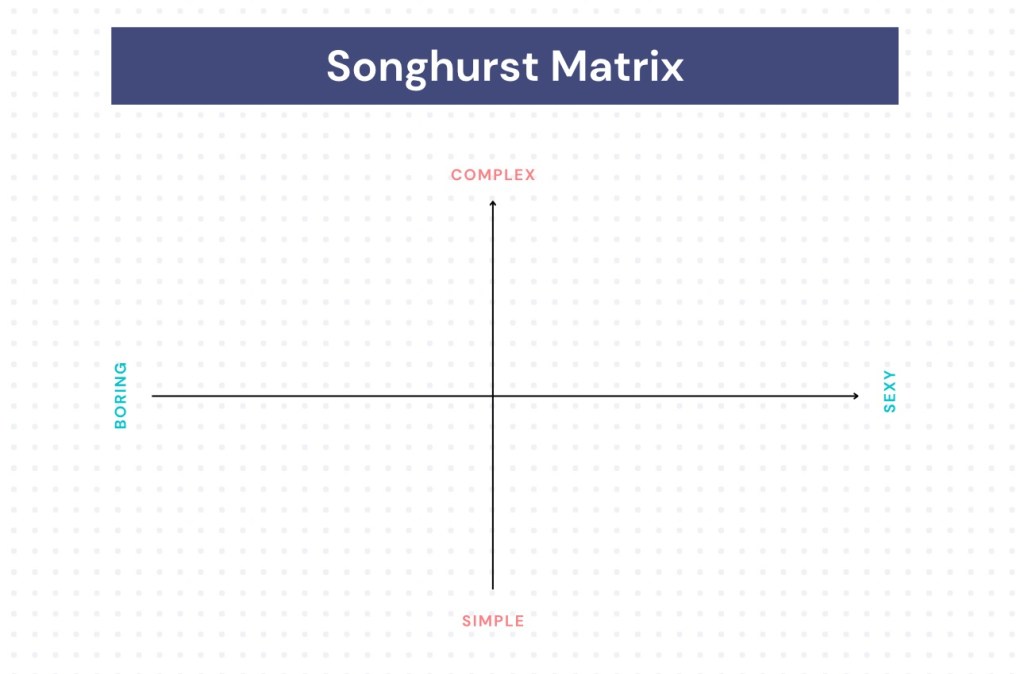
    At its core, the Songhurst Matrix divides tasks into four quadrants, each with its own unique characteristics and strategic approach:

    1. Simple and Boring:
      • Characteristics: Routine, repetitive, and low-engagement tasks that are easy but not particularly exciting.
      • Examples: Data entry, filing paperwork, basic administrative duties.
    2. Complex and Boring:
      • Characteristics: Challenging and tedious tasks that require significant effort but lack intrinsic interest.
      • Examples: Detailed financial analysis, lengthy compliance reporting, extensive research.
    3. 3. Simple and Sexy:
      • Characteristics: Easy and enjoyable tasks that can be completed quickly and offer immediate satisfaction.
      • Examples: Creative brainstorming, designing graphics, quick social media posts.
    4. Complex and Sexy:
      • Characteristics: Engaging and stimulating tasks that are both challenging and highly rewarding.
      • Examples: Strategic planning, developing new products, innovative projects.
    How to Use the Songhurst Matrix for Project Management Success
    1. Categorize Your Tasks:
      • Start by listing all your tasks and categorizing them into the appropriate quadrant based on their complexity and engagement level. This initial step provides a clear overview of where your efforts should be directed.
    2. Prioritize Strategically:
      • Focus First on Complex and Sexy Tasks: These tasks are the powerhouse of your project. They drive significant progress and innovation while keeping you motivated and engaged. Prioritize these high-impact activities to ensure you’re working on what matters most.
      • Next, Tackle Simple and Sexy Tasks: Use these tasks as quick wins to maintain momentum and boost morale. They provide a sense of accomplishment and keep the project moving forward smoothly.
    3. Efficiently Manage Boring Tasks:
      • Complex and Boring: These tasks are important but can be draining. Break them down into smaller, more manageable steps, and schedule them during your high-energy periods. Consider delegating parts of these tasks to others if possible.
      • Simple and Boring: These are the prime candidates for automation and delegation. By minimizing the time spent on these routine tasks, you free up valuable resources for more impactful work.
    Main Risks of Over-Focusing on Complex and Sexy Solutions

    Focusing too much on the “Complex and Sexy” quadrant in a project, while appealing, carries several risks that can impact the project’s overall success. Here are some main risks to be aware of:

    1. Neglecting Foundational Tasks:
      • Risk: Essential but less exciting tasks may be overlooked, leading to unstable foundations.
      • Impact: Without solid infrastructure, even the most innovative solutions can fail, resulting in technical debt and future complications.
      • Example: Ignoring basic security measures while developing a cutting-edge feature could lead to vulnerabilities.
    2. Resource Overload:
      • Risk: Complex tasks often require significant time, expertise, and resources.
      • Impact: This can strain your team and budget, potentially leading to burnout and resource depletion.
      • Example: Investing heavily in developing a sophisticated algorithm without adequate planning can exhaust your budget, leaving no room for other crucial tasks.
    3. Scope Creep:
      • Risk: High-complexity tasks can lead to expanding project scope beyond original plans.
      • Impact: This can result in missed deadlines, increased costs, and project management challenges.
      • Example: Adding numerous advanced features because they seem interesting can delay the project timeline significantly.
    4. Increased Risk of Failure:
      • Risk: Complex solutions are inherently riskier and more prone to unforeseen challenges and failures.
      • Impact: High failure rates can demoralize the team and derail the project.
      • Example: Developing a new, untested technology could face numerous setbacks, from technical bugs to market rejection.
    5. Delayed Delivery:
      • Risk: Complex and engaging tasks can take much longer to complete than anticipated.
      • Impact: Delayed project timelines can affect client satisfaction, market competitiveness, and financial projections.
      • Example: Spending too much time perfecting an advanced feature may delay the overall product launch.
    6. Imbalance in Skill Utilization:
      • Risk: Overemphasis on complex tasks might underutilize team members with different skill sets.
      • Impact: This can lead to dissatisfaction in and underperformance among team members whose strengths lie in simpler tasks.
      • Example: A project may have developers with excellent skills in routine coding and maintenance, who feel sidelined by the focus on complex tasks.
    7. Market Misalignment:
      • Risk: Complex solutions might not always align with market needs or customer preferences.
      • Impact: Investing heavily in sophisticated features that customers don’t find valuable can result in wasted effort and missed opportunities.
      • Example: Adding advanced, expensive features that customers don’t use or want can detract from core functionalities they actually need.
    Balancing the Approach

    To mitigate these risks, it’s crucial to balance your focus across all quadrants of the Songhurst Matrix:

    • Foundation First: Ensure that foundational, simple, and boring tasks are adequately addressed to build a stable base.
    • Resource Management: Allocate resources wisely to avoid overburdening the team and budget.
    • Clear Scope: Maintain a clear project scope to prevent scope creep and manage timelines effectively.
    • Risk Assessment: Continuously assess and manage risks associated with complex tasks to stay proactive in addressing potential issues.
    • Customer Feedback: Regularly gather and incorporate customer feedback to ensure that complex solutions align with market needs.

    By maintaining this balance, you can harness the innovative power of complex and sexy tasks without compromising the stability and feasibility of your project.

    The Power of Focusing on the Simple and Boring Quadrant

    While it might seem counterintuitive, dedicating time to the Simple and Boring quadrant can yield significant benefits, particularly in the foundational stages of a project. Here’s why this approach is so powerful:

    1. Building a Strong Foundation:
      • Stability: Simple and repetitive tasks often form the backbone of your project. Ensuring these elements are stable and reliable is crucial. For instance, setting up basic infrastructure and coding standard functions provide a solid base for more complex tasks.
    2. Boosting Efficiency and Productivity:
      • Quick Wins: Completing these tasks quickly leads to early progress, creating a sense of accomplishment and boosting team morale. This momentum can be crucial in the early stages of a project.
    3. Enabling Scalability:
      • Automation: Simple tasks are perfect for automation, which can significantly improve efficiency. Automating build and deployment processes, or using scripts for repetitive tasks, can streamline operations and free up time for more complex activities.
    4. Maximizing Cost-Effectiveness:
      • Resource Allocation: Simple tasks typically require fewer specialized skills, allowing you to utilize lower-cost resources or junior developers effectively. This approach helps manage budgets and makes better use of available talent.
    5. Mitigating Risk:
      • Low Complexity: Tackling low-complexity tasks first can help identify potential issues early without the complications of more complex tasks. This early detection can reduce overall project risk and prevent costly setbacks.
    Conclusion

    The Songhurst Matrix offers a comprehensive framework for enhancing project management by categorizing tasks based on their complexity and engagement. By strategically prioritizing tasks and focusing on the simple and boring elements initially, you can build a strong foundation, improve efficiency, and set your project up for success. Embrace the matrix to unlock your full productivity potential and drive your projects forward with confidence.

    Dive into the world of the Songhurst Matrix and revolutionize the way you manage your projects. With this powerful tool, you’ll find yourself not only achieving more but doing so with greater ease and satisfaction. Ready to transform your project management approach? Start categorizing your tasks today and experience the difference!

  • Mastering Project Scoping: Essentials, main tasks, pitfalls and key competencies

    Mastering Project Scoping: Essentials, main tasks, pitfalls and key competencies

    Project scoping is a critical phase in project management that defines the boundaries and deliverables of a project. It sets the stage for all subsequent project activities and is fundamental to ensuring project success. A well-defined scope helps in aligning stakeholder expectations, managing resources effectively, and minimizing risks. This article explores the basic knowledge required for project scoping, outlines the most important tasks, highlights common pitfalls, and discusses the key competencies a project manager needs to successfully define the scope.

    Basic Knowledge of Project Scoping

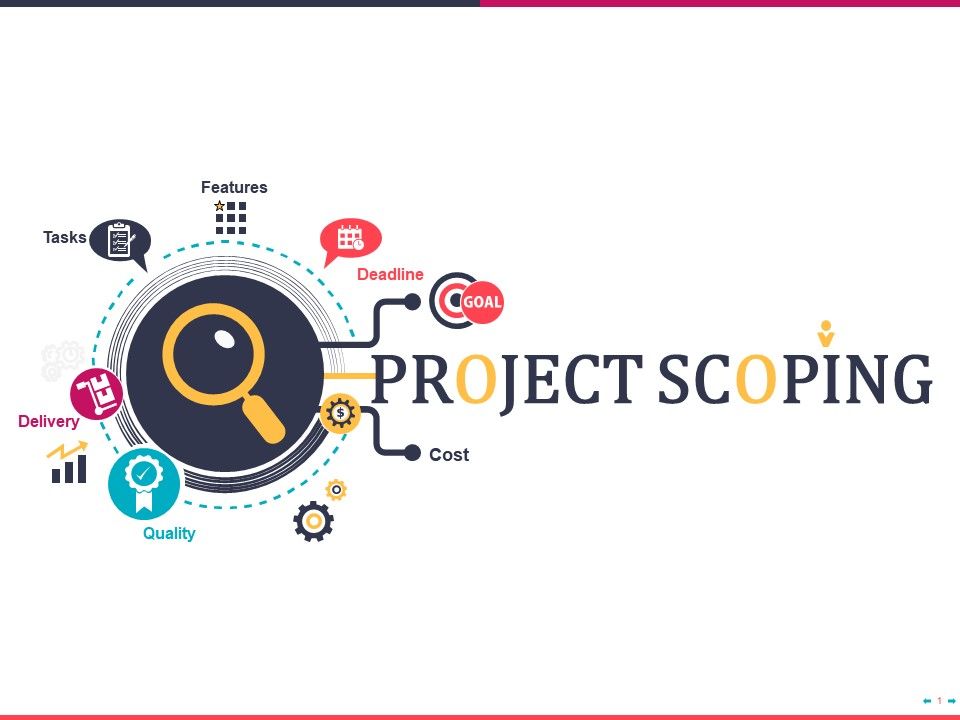
    Project scoping involves determining and documenting a list of specific project goals, deliverables, tasks, costs, and deadlines. The scope defines the project’s boundaries and establishes what is included and excluded in the project. Key elements of project scoping include:

    1. Objectives: Clear, measurable goals that the project aims to achieve.
    2. Deliverables: Tangible or intangible outputs that the project will produce.
    3. Milestones: Significant points or events in the project timeline.
    4. Tasks: Specific activities required to complete the deliverables.
    5. Resources: Personnel, equipment, and materials needed for the project.
    6. Budget: Estimated costs associated with the project.
    7. Timeline: Schedule for project tasks and milestones.
    Most Important Tasks in Project Scoping

    To effectively define the project scope, a project manager must perform several key tasks:

    1. Stakeholder Identification and Analysis:
      • Identify all stakeholders involved in or affected by the project.
      • Understand stakeholder needs, expectations, and influence on the project.
    2. Requirements Gathering:
      • Collect detailed requirements from stakeholders through interviews, surveys, and workshops.
      • Prioritize requirements based on project objectives and stakeholder input.
    3. Scope Statement Development:
      • Create a comprehensive scope statement that outlines project objectives, deliverables, boundaries, and constraints.
      • Ensure the scope statement is clear, concise, and agreed upon by all stakeholders.
    4. Work Breakdown Structure (WBS):
      • Develop a WBS that breaks down the project into manageable components and tasks.
      • Assign responsibilities and timelines for each task.
    5. Scope Verification and Validation:
      • Review the scope statement and WBS with stakeholders to ensure accuracy and completeness.
      • Validate that the project scope aligns with business goals and stakeholder expectations.
    6. Scope Management Plan:
      • Develop a plan for managing scope changes and ensuring scope creep is controlled.
      • Define procedures for documenting and approving scope changes.
    Common Pitfalls in Project Scoping

    Despite its importance, project scoping is often fraught with challenges. Common pitfalls include:

    1. Unclear Objectives:
      • Vague or ambiguous project objectives can lead to misunderstandings and misaligned expectations.
    2. Incomplete Requirements:
      • Failing to gather comprehensive requirements from all stakeholders can result in scope gaps and rework.
    3. Scope Creep:
      • Uncontrolled changes to the project scope can cause delays, cost overruns, and resource strain.
    4. Poor Stakeholder Engagement:
      • Inadequate involvement of stakeholders in the scoping process can lead to missed requirements and dissatisfaction.
    5. Inaccurate Estimates:
      • Underestimating the time, cost, and resources needed for the project can lead to unrealistic scope and project failure.
    Key Competencies for Successful Project Scoping

    To successfully define and manage project scope, a project manager needs to possess several key competencies:

    1. Analytical Skills:
      Ability to analyze stakeholder needs, project requirements, and potential risks.
    2. Communication Skills:
      Effective communication with stakeholders to gather requirements, provide updates, and manage expectations.
    3. Detail Orientation:
      Attention to detail in documenting the scope, developing the WBS, and ensuring all aspects of the project are covered.
    4. Negotiation Skills:
      Skill in negotiating with stakeholders to prioritize requirements and manage scope changes.
    5. Leadership:
      Ability to lead the project team, engage stakeholders, and drive consensus on project scope.
    6. Risk Management:
      Proficiency in identifying potential scope risks and developing mitigation strategies.
    7. Change Management:
      Capability to manage scope changes effectively, ensuring they are documented, analyzed, and approved.

    Step-by-Step Guide to the Scoping Phase of a Software Development Project
    Step 1: Identify Stakeholders

    Objective: Identify all individuals and groups who have an interest in the project or will be affected by it.

    Actions:

    • List Potential Stakeholders: Include project sponsors, end-users, development team members, product owners, and any other relevant parties.
    • Conduct Stakeholder Analysis: Understand their interests, influence, and expectations regarding the project.
    • Engage Stakeholders: Schedule initial meetings or interviews to gather insights and expectations.

    Outcome: A comprehensive list of stakeholders with their roles, interests, and influence levels documented.

    Step 2: Gather Requirements

    Objective: Collect detailed requirements to understand what the project needs to achieve.

    Actions:

    • Conduct Workshops and Interviews: Engage stakeholders through workshops, interviews, and surveys to gather requirements.
    • Document Functional Requirements: Specify what the software should do, including features and functionalities.
    • Document Non-Functional Requirements: Include performance, security, usability, and compliance requirements.
    • Prioritize Requirements: Work with stakeholders to prioritize requirements based on business needs and constraints.

    Outcome: A well-documented set of functional and non-functional requirements, prioritized and validated by stakeholders.

    Step 3: Define Project Objectives

    Objective: Clearly define the project’s goals and objectives.

    Actions:

    • Establish SMART Goals: Ensure that objectives are Specific, Measurable, Achievable, Relevant, and Time-bound.
    • Align with Business Goals: Ensure project objectives align with the broader business objectives.
    • Validate with Stakeholders: Confirm objectives with key stakeholders to ensure alignment and buy-in.

    Outcome: A clear and concise statement of the project’s objectives, agreed upon by all stakeholders.

    Step 4: Develop the Scope Statement

    Objective: Create a detailed scope statement that outlines the project’s boundaries and deliverables.

    Actions:

    • Define Deliverables: List the main outputs of the project (e.g., software modules, documentation, training materials).
    • Specify Boundaries: Clarify what is included in the project scope and what is not.
    • Identify Constraints: Document any limitations such as budget, timelines, technology, or resources.
    • Assumptions: List any assumptions that have been made during the scoping phase.

    Outcome: A comprehensive scope statement that serves as the foundation for project planning and execution.

    Step 5: Create a Work Breakdown Structure (WBS)

    Objective: Break down the project into smaller, more manageable components and tasks.

    Actions:

    • Identify Major Deliverables: Start by identifying the key deliverables from the scope statement.
    • Break Down Deliverables: Decompose each deliverable into smaller tasks and sub-tasks.
    • Assign Responsibilities: Assign team members to each task and sub-task.
    • Estimate Durations: Estimate the time required to complete each task.

    Outcome: A detailed WBS that provides a clear roadmap for project tasks and responsibilities.

    Step 6: Develop a Scope Management Plan

    Objective: Create a plan for managing scope changes and ensuring scope creep is controlled.

    Actions:

    • Define Change Control Procedures: Establish procedures for how changes to the scope will be proposed, evaluated, and approved.
    • Set Up a Change Control Board (CCB): Form a CCB with representatives from key stakeholder groups to review and approve scope changes.
    • Document Change Requests: Implement a system for documenting and tracking change requests.
    • Communicate Changes: Ensure all stakeholders are informed about scope changes and their implications.

    Outcome: A scope management plan that outlines how scope changes will be handled throughout the project.

    Step 7: Validate Scope with Stakeholders

    Objective: Ensure that all stakeholders agree with the defined project scope and are aligned with the project’s goals.

    Actions:

    • Review Scope Statement and WBS: Conduct a review meeting with key stakeholders to present the scope statement and WBS.
    • Address Feedback: Collect and address any feedback or concerns from stakeholders.
    • Obtain Formal Approval: Secure formal sign-off from stakeholders on the project scope.

    Outcome: A validated and approved project scope that all stakeholders agree upon.


    Conclusion

    Project scoping is a fundamental aspect of project management that lays the groundwork for project success. By understanding the basic elements of project scope, performing essential tasks diligently, avoiding common pitfalls, and developing key competencies, a project manager can effectively define and manage the project scope. This not only ensures that the project stays on track but also aligns stakeholder expectations and delivers the desired outcomes within the agreed parameters. Mastering project scoping is, therefore, a critical skill for any project manager aiming to lead successful projects in today’s dynamic business environment.

  • Antifragility and how it will benefit your projects

    Antifragility and how it will benefit your projects

    “Antifragile: Things That Gain from Disorder” by Nassim Nicholas Taleb

    “Antifragile: Things That Gain from Disorder” is a book by Nassim Nicholas Taleb that explores the concept of antifragility, a property of systems, individuals, and entities that thrive and grow when exposed to volatility, randomness, and disorder. Unlike fragile things that break under stress or robust things that withstand stress without breaking, antifragile things improve and get stronger. Taleb’s work spans various fields, including finance, medicine, politics, and personal development, highlighting the benefits of embracing uncertainty and chaos.

    Core Principles of Antifragility
    Antifragility vs. Fragility and Robustness
    • Fragility: Things that break or deteriorate under stress (e.g., a glass).
    • Robustness: Things that remain unchanged under stress (e.g., a rock).
    • Antifragility: Things that improve or grow stronger under stress (e.g., the human body’s muscles growing stronger from exercise).
    The Barbell Strategy

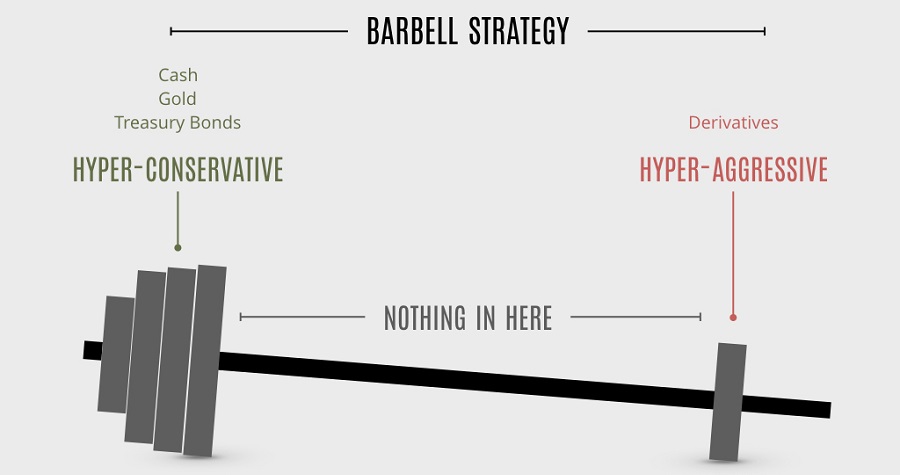
    A risk management strategy that involves taking a combination of extreme safe bets (highly conservative) and extreme aggressive bets (highly speculative), avoiding the middle. This strategy balances risk and reward, reducing exposure to the negative effects of unexpected events while benefiting from potential gains.

    Optionality

    The value of having multiple options and choices. Optionality allows one to benefit from positive unexpected events without incurring significant downsides from negative ones. In financial terms, it’s similar to holding an option that can be exercised when favorable conditions arise.

    Via Negativa

    The principle of improvement through subtraction rather than addition. Removing harmful elements, such as unnecessary interventions, habits, or practices, can lead to better outcomes. This is akin to removing risks rather than trying to predict and control them.

    Skin in the Game

    The concept that individuals or entities should have a vested interest and exposure to the risks and rewards of their actions. This aligns incentives and ensures that decision-makers bear the consequences of their decisions, promoting accountability and better decision-making.

    Convexity and concavity

    Convex systems benefit from volatility and stress, experiencing asymmetric gains. Concave systems are harmed by volatility, experiencing asymmetric losses. Understanding the convex or concave nature of systems helps in identifying which strategies will benefit from disorder and which will suffer.

    The Lindy Effect

    The idea that the future life expectancy of non-perishable items (like a book or technology) increases with their age. The longer something has existed, the longer it is likely to continue to exist, suggesting that time-tested practices and ideas are often more robust.

    Tinkering and Iteration

    The importance of experimenting and learning through trial and error. Small-scale experiments and iterative processes allow for adaptation and improvement over time, fostering antifragility by learning from failures and successes.

    REdundancy and Layers

    Building redundancy into systems to absorb shocks and disruptions. Having backup options and layered defenses makes systems more resilient and capable of thriving under adverse conditions.

    Nonlinear Relationships

    Recognizing that relationships in complex systems are often nonlinear. Small changes can lead to disproportionately large effects (both positive and negative), so understanding and leveraging these nonlinear dynamics is crucial for antifragility.

    Taleb’s book encourages readers to rethink their approach to risk, uncertainty, and volatility, advocating for embracing and leveraging these elements to build stronger, more resilient, and ultimately antifragile systems.

    ANd how do those concepts help you in your day to day work?

    Let’s examine applying the barbell strategy in project management. This involves balancing conservative, low-risk activities with innovative, high-risk ones to ensure overall project resilience and success. Here are steps and strategies to apply the barbell strategy effectively.

    Identify Low-Risk, High-Probability tasks

    These are the core tasks that are essential for the project’s success. They are predictable, have clear outcomes, and are critical for maintaining stability. Examples include:

    • Project Planning: Detailed planning to outline scope, objectives, timelines, and resource allocation.
    • Risk Management: Implementing standard risk management processes to identify, assess, and mitigate risks.
    • Stakeholder Communication: Maintaining regular, clear communication with stakeholders to ensure alignment and manage expectations.
    • Quality Assurance: Establishing robust quality control processes to ensure deliverables meet the required standards.
    Identify High-Risk, High-Reward Opportunities

    These tasks or initiatives have the potential to significantly enhance the project’s value but come with higher uncertainty and risk. Examples include:

    • Innovation Initiatives: Introducing new technologies, methodologies, or creative solutions that could revolutionize the project outcomes.
    • Pilot Projects: Running small-scale pilot tests for new ideas to assess their viability before full-scale implementation.
    • Strategic Partnerships: Forming alliances with external experts or organizations to leverage their capabilities and insights.
    Balance the portfolio

    Ensure a balance between low-risk and high-risk activities to create a diversified project approach. This involves:

    • Allocating Resources: Assign a majority (e.g., 80-90%) of resources to low-risk, high-probability tasks to ensure project stability.
    • Reserving Resources: Keep a smaller portion (e.g., 10-20%) for high-risk, high-reward opportunities to foster innovation and potential breakthrough outcomes.
    Implement Iterative and Incremental Approaches

    Adopt methodologies that support continuous improvement and adaptability, such as:

    • Agile Frameworks: Use Agile methodologies like Scrum or Kanban to allow for flexibility, iterative progress, and constant feedback loops.
    • Lean Principles: Apply Lean principles to eliminate waste, focus on value delivery, and enable rapid iterations.
    Foster a Culture of Experimentation

    Encourage a work environment where experimentation is valued and failure is seen as a learning opportunity:

    • Encourage Risk-Taking: Motivate team members to propose and experiment with new ideas without fear of punitive consequences if they fail.
    • Learn from Failures: Implement a practice of conducting post-mortems or retrospectives to analyze what went wrong in failed experiments and apply the lessons learned.
    Maintain Optionality

    Ensure that the project has multiple options and pathways to success:

    • Contingency Planning: Develop contingency plans to quickly pivot if certain aspects of the project fail or unexpected opportunities arise.
    • Flexible Contracts: Use flexible contracts with vendors and partners that allow for adjustments based on project needs and external conditions.
    Monitor and Adjust

    Continuously monitor the progress of both low-risk and high-risk activities and adjust the strategy as needed:

    • Regular Reviews: Conduct frequent project reviews and adjust resource allocation based on current progress, risks, and opportunities.
    • Performance Metrics: Use performance metrics to track the success of both core and innovative activities, making data-driven decisions to optimize the balance.
    Example Application

    Imagine you are managing a software development project:

    • Low-Risk Activities: Ensure the core functionality of the software is robust, meets client requirements, and passes all quality checks.
    • High-Risk Opportunities: Allocate resources to explore new, cutting-edge features such as integrating AI capabilities or blockchain technology, running pilot tests to gauge their feasibility.

    By applying the barbell strategy, you safeguard the project’s essential deliverables while also creating room for potential high-impact innovations. This balance helps ensure that the project remains resilient and adaptable, capable of absorbing shocks and capitalizing on unforeseen opportunities.