Tag: risk-management

  • Guarantee success in all your Projects

    Guarantee success in all your Projects

    A lot of literature and training in project management is mainly focusing on the planing phase, that becomes completely obsolete once the team starts working.

    The success of your project will most likely depend on the relationships you have built, to the team and to the stakeholders/ customers and on how well you are troubleshooting, course correcting and taking decisions.

    A key role in being able to really lead the project are your risk management capabilities.

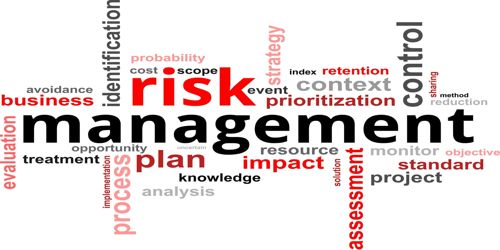
    Throughout the project you should revisit the 6 steps show in the graphic and assess occurred and potential risks and mitigation actions.

    The better you can handle adversity as a project leader and as a project team, the better the performance of your project and your product will be and the easier it will be to keep a overall timeplan, budget and quality expectation.

    So what is Risk management?

    Risk management in a project refers to the systematic process of identifying, analyzing, assessing, and responding to potential risks that could affect the project’s success. It aims to minimize the impact of adverse events and maximize the opportunities by managing uncertainties. Here are the key components of risk management in a project:

    1. Risk Identification
    • Definition: Identifying and documenting potential risks that might affect the project.
    • Tools and Techniques: Brainstorming, interviews, SWOT analysis, checklists, and expert judgment.
    2. Risk analysis
    • Qualitative Analysis: Assessing the impact and likelihood of identified risks using a subjective approach.
    • Tools: Risk probability and impact matrix, risk categorization, risk urgency assessment.
    • Quantitative Analysis: Numerically analyzing the probability and impact of risks on project objectives.
    • Tools: Monte Carlo simulation, decision tree analysis, sensitivity analysis.
    3. Risk prioritization
    • Definition: Ranking risks based on their potential impact and likelihood to determine which risks need the most attention.
    • Tools: Risk matrix, Pareto charts.
    4. Risk response planning
    • Definition: Developing options and actions to enhance opportunities and reduce threats to project objectives.
    • Strategies:
      • Avoidance: Changing the project plan to eliminate the risk.
      • Mitigation: Taking steps to reduce the probability or impact of the risk.
      • Transfer: Shifting the impact of the risk to a third party (e.g., insurance, outsourcing).
      • Acceptance: Acknowledging the risk and not taking any action unless it occurs.
    5. Risk monitoring and control
    • Definition: Tracking identified risks, monitoring residual risks, identifying new risks, and evaluating the effectiveness of risk responses throughout the project lifecycle.
    • Tools: Risk audits, status meetings, risk reassessment, variance and trend analysis.
    6. Communication and Documentation
    • Definition: Ensuring that all stakeholders are aware of the risks and the actions taken to manage them. Keeping detailed records of the risk management process.
    • Tools: Risk register, risk reports, project management information systems.
    Benefits of Risk management in projects
    • Increased likelihood of project success: By proactively identifying and managing risks, the project is more likely to achieve its objectives.
    • Better decision-making: Provides a structured approach to decision-making by understanding the potential risks and their impacts.
    • Cost savings: Helps avoid costly issues and delays by addressing risks early.
    • Improved stakeholder confidence: Demonstrates a proactive approach to managing uncertainties, building trust among stakeholders.

    In summary, risk management is a critical aspect of project management, ensuring that potential issues are anticipated, prioritized, and addressed in a structured manner to increase the likelihood of project success.
  • 11 things minimalism taught me about project management

    11 things minimalism taught me about project management

    Frist of all I’d like to state the obvious:
    If you want to even remotely complete any project in a reasonable time frame for reasonable costs, you have to lead the project and the team and not just manage it.

    1. Less is more

    No matter if documentation, meetings, status updates, action items, or even team members.
    80% of results will come from 20% of your efforts and 80% of progress will come from 20% of the contributors. There is always potential for cutting things away.

    2. Purposeful meetings

    The main purpose of any meeting should be connection, collaboration or co-creation. And every meeting without a clear decision is just another coffee break. Don’t use project meetings for mere status updates, action items and time plan reviews.

    3. Talk less & share responsibilities

    Listen more and talk less, if all your project meetings are one-man shows, where you do the presenting, note taking, moderation an decision making, let me tell you, you are doing it wrong. Don’t be lethargic but encourage and enable the team to move forward on their own. Some teams / colleague will need more guidance, some will want more autonomy balance it from individual to individual.

    4. Clear & concise communication

    Make all you communication clear, and crisp. Use less and better words to convey your message and be poignant. A C-suit executive won’t read much more than 2-3 short bullets, not because he’s not interested, he just won’t have the time.

    5. High level time planning is sufficient

    Don’t overcomplicate stuff, have less & bigger work packages, less bars in the Gantt. The plan will not stand the test of time. Think of major milestones and timing, not of granular efforts & interdependencies. Your team will know what to do and when, help them close tasks timely and lead discussions & decision taking.

    6. Don’t be cheap with recognition

    Be authentic and benevolent when it comes to recognition. Figure out if the person wants to be praised in a 1on1 setting or in front of the team. Always praise your team members in front of their managers, even if they just do the bare minimum. As long as they are contribution and not actively hurting your project, tell they are doing an outstanding job. Build trust with your team.

    7. Always improve

    Try looking at your project and the companies project work in general with an outside perspective. Streamline what you are doing, cut away what seems to be against common sense, redundant or excess. If the decision of minimizing was wrong you can always add back in. But in general first look what can be omitted.

    8. Get a course, watch a YouTube video on presenting

    All you job is communication, learn to engage your audience, be it your team, or stakeholders or customers, don’t just read your slides out aloud. Have less and more meaning full content on the slides, have less slides, you should be able to talk 5-7 minutes per slide at least.

    9. Risk “management” and mitigations

    Risks are neither qualifiable nor avoidable in general. The occurrence of potential risks can not really be derived from past experience and brainstorming alone, it is to a large degree volatile and random in nature. So focus on taking baby steps with decisions and course correct as long as the costs are low.

    10. Clear roles, responsibilities & expected performance

    Set the expectations early in a written document together with everybody involved. Hold you team accountable and lead with good example. But don’t tolerate slack. The overall performance will be based on what you tolerate, not what example you set (to a degree of course, you can’t slack off either).

    11. It’s all about relationships

    The perception and success of your project is directly tied to the relationships you built, not only with your team, but with their managers, the projects stakeholders, your manager & PMO colleagues. Do good and talk about it, embellish it to a degree.