
Introduction
Agile project management (APM) has revolutionized the way projects are managed, especially in software development. However, its principles can be applied across various industries. This article explores what agile project management is, its historical context, and how it can be effectively implemented beyond software development.
What is Agile Project Management?
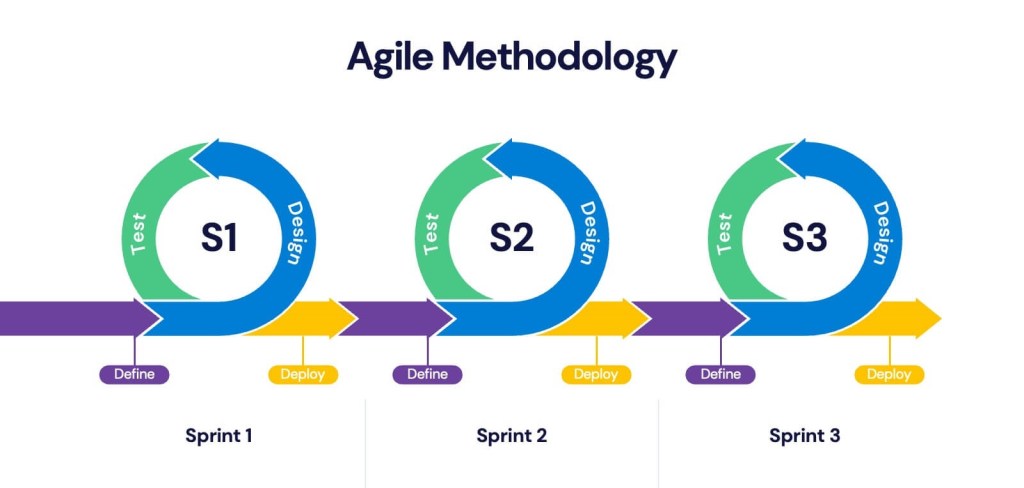
Agile project management is an iterative approach to planning and guiding project processes. It focuses on delivering value quickly, in small, consumable increments. This method is characterized by flexibility, continuous improvement, and a strong emphasis on collaboration and customer feedback.
Historical Context and Origins
Agile project management originated from the Agile Manifesto, created in 2001 by a group of software developers. They were frustrated with the limitations of traditional, linear project management methods (like the Waterfall model) and sought to develop a more adaptive and efficient way to manage projects. The Agile Manifesto outlines four core values and twelve principles aimed at improving software development processes.
Core Values of the Agile Manifesto:
- Individuals and interactions over processes and tools
- Working software over comprehensive documentation
- Customer collaboration over contract negotiation
- Responding to change over following a plan
Key Principles of Agile:
- Satisfy the customer through early and continuous delivery of valuable software.
- Welcome changing requirements, even late in development.Deliver working software frequently, with a preference for shorter timescales.
- Business people and developers must work together daily throughout the project.
- Build projects around motivated individuals, providing them the environment and support they need.
- Convey information face-to-face within a development team.
- Working software is the primary measure of progress.
- Maintain a constant pace indefinitely.
- Continuous attention to technical excellence and good design enhances agility.
- Simplicity—the art of maximizing the amount of work not done—is essential.
- The best architectures, requirements, and designs emerge from self-organizing teams.
- Regularly reflect on how to become more effective, then tune and adjust behavior accordingly.
Implementing Agile in Non-Software Projects
Agile’s core principles can be adapted to manage various types of projects beyond software development, such as marketing campaigns, event planning, product development, and more. Here’s how:
- Iterative Planning and Delivery:
Break down the project into smaller, manageable parts or sprints.
Focus on delivering tangible outputs at the end of each sprint. - Emphasize Collaboration:
Foster a culture of open communication and teamwork.
Engage all stakeholders, including customers, to ensure the project meets their needs and expectations. - Flexibility and Adaptability:
Be prepared to adjust plans based on feedback and changing requirements.
Encourage continuous improvement by regularly reviewing and refining processes. - Customer Involvement:
Keep the customer involved throughout the project lifecycle.
Use their feedback to guide the direction of the project. - Empowered Teams:
Form self-organizing, cross-functional teams.
Give team members the authority to make decisions and solve problems. - Focus on Value:
Prioritize tasks that deliver the most value to the customer.
Continuously evaluate and re-prioritize tasks based on their impact and importance.
Case Studies: Agile in Non-Software Projects
- Marketing Campaigns:
Agile principles can be used to manage the creation and execution of marketing campaigns. Teams can use sprints to develop and test different components of a campaign, such as social media posts, email newsletters, and advertisements, and then adjust based on real-time feedback. - Event Planning:
Event planners can use agile methods to manage the complex logistics of organizing events. By breaking down the event into smaller tasks (e.g., venue selection, catering, guest management), teams can focus on completing one task at a time and adapt plans as new information becomes available. - Product Development:
In industries like manufacturing or consumer goods, agile can help manage the development of new products. By iterating on prototypes and incorporating customer feedback at each stage, companies can ensure that the final product meets market demands.
Conclusion
Agile project management offers a flexible, collaborative, and customer-focused approach that can be applied beyond its software development roots. By adopting agile principles, teams in various industries can improve their efficiency, adaptability, and ability to deliver high-value outcomes. Whether managing a marketing campaign, planning an event, or developing a new product, agile methodologies provide a robust framework for success.
 Sebastian Strobl