
The Origin of the Songhurst Matrix
In the quest for enhanced productivity and effective task management, the Songhurst Matrix emerges as a transformative tool. Named after its creator, Daniel Songhurst, this matrix has become a go-to framework for categorizing and prioritizing tasks based on their complexity and level of interest. By leveraging this matrix, individuals and teams can streamline their workflows, focus on high-impact activities, and ultimately drive better project outcomes.
Understanding the Songhurst Matrix
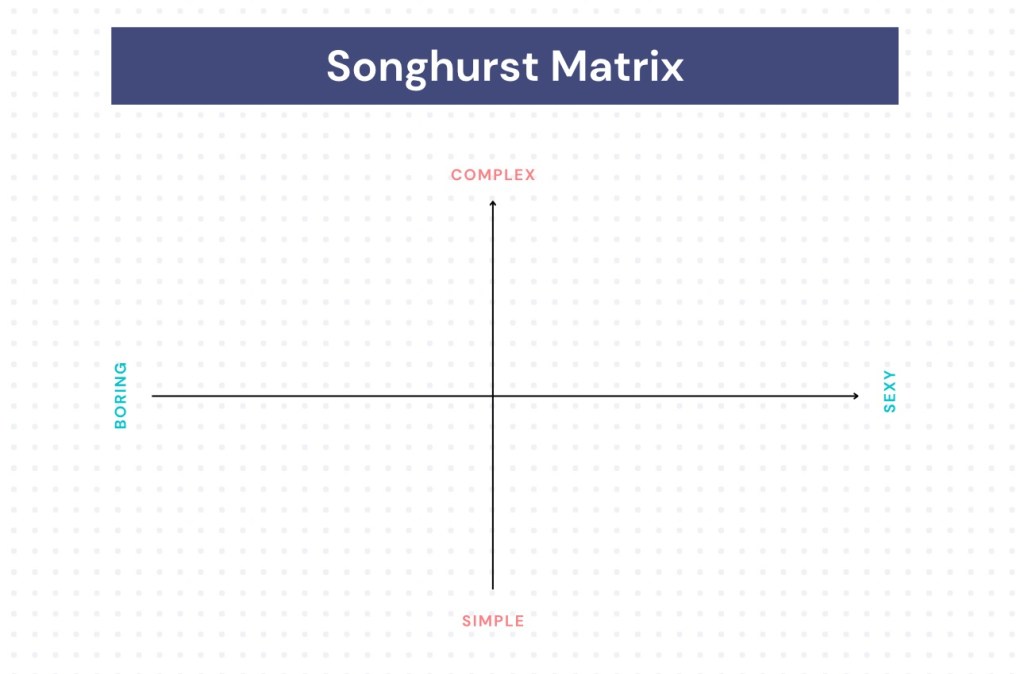
At its core, the Songhurst Matrix divides tasks into four quadrants, each with its own unique characteristics and strategic approach:
- Simple and Boring:
- Characteristics: Routine, repetitive, and low-engagement tasks that are easy but not particularly exciting.
- Examples: Data entry, filing paperwork, basic administrative duties.
- Complex and Boring:
- Characteristics: Challenging and tedious tasks that require significant effort but lack intrinsic interest.
- Examples: Detailed financial analysis, lengthy compliance reporting, extensive research.
- 3. Simple and Sexy:
- Characteristics: Easy and enjoyable tasks that can be completed quickly and offer immediate satisfaction.
- Examples: Creative brainstorming, designing graphics, quick social media posts.
- Complex and Sexy:
- Characteristics: Engaging and stimulating tasks that are both challenging and highly rewarding.
- Examples: Strategic planning, developing new products, innovative projects.
How to Use the Songhurst Matrix for Project Management Success
- Categorize Your Tasks:
- Start by listing all your tasks and categorizing them into the appropriate quadrant based on their complexity and engagement level. This initial step provides a clear overview of where your efforts should be directed.
- Prioritize Strategically:
- Focus First on Complex and Sexy Tasks: These tasks are the powerhouse of your project. They drive significant progress and innovation while keeping you motivated and engaged. Prioritize these high-impact activities to ensure you’re working on what matters most.
- Next, Tackle Simple and Sexy Tasks: Use these tasks as quick wins to maintain momentum and boost morale. They provide a sense of accomplishment and keep the project moving forward smoothly.
- Efficiently Manage Boring Tasks:
- Complex and Boring: These tasks are important but can be draining. Break them down into smaller, more manageable steps, and schedule them during your high-energy periods. Consider delegating parts of these tasks to others if possible.
- Simple and Boring: These are the prime candidates for automation and delegation. By minimizing the time spent on these routine tasks, you free up valuable resources for more impactful work.
Main Risks of Over-Focusing on Complex and Sexy Solutions
Focusing too much on the “Complex and Sexy” quadrant in a project, while appealing, carries several risks that can impact the project’s overall success. Here are some main risks to be aware of:
- Neglecting Foundational Tasks:
- Risk: Essential but less exciting tasks may be overlooked, leading to unstable foundations.
- Impact: Without solid infrastructure, even the most innovative solutions can fail, resulting in technical debt and future complications.
- Example: Ignoring basic security measures while developing a cutting-edge feature could lead to vulnerabilities.
- Resource Overload:
- Risk: Complex tasks often require significant time, expertise, and resources.
- Impact: This can strain your team and budget, potentially leading to burnout and resource depletion.
- Example: Investing heavily in developing a sophisticated algorithm without adequate planning can exhaust your budget, leaving no room for other crucial tasks.
- Scope Creep:
- Risk: High-complexity tasks can lead to expanding project scope beyond original plans.
- Impact: This can result in missed deadlines, increased costs, and project management challenges.
- Example: Adding numerous advanced features because they seem interesting can delay the project timeline significantly.
- Increased Risk of Failure:
- Risk: Complex solutions are inherently riskier and more prone to unforeseen challenges and failures.
- Impact: High failure rates can demoralize the team and derail the project.
- Example: Developing a new, untested technology could face numerous setbacks, from technical bugs to market rejection.
- Delayed Delivery:
- Risk: Complex and engaging tasks can take much longer to complete than anticipated.
- Impact: Delayed project timelines can affect client satisfaction, market competitiveness, and financial projections.
- Example: Spending too much time perfecting an advanced feature may delay the overall product launch.
- Imbalance in Skill Utilization:
- Risk: Overemphasis on complex tasks might underutilize team members with different skill sets.
- Impact: This can lead to dissatisfaction in and underperformance among team members whose strengths lie in simpler tasks.
- Example: A project may have developers with excellent skills in routine coding and maintenance, who feel sidelined by the focus on complex tasks.
- Market Misalignment:
- Risk: Complex solutions might not always align with market needs or customer preferences.
- Impact: Investing heavily in sophisticated features that customers don’t find valuable can result in wasted effort and missed opportunities.
- Example: Adding advanced, expensive features that customers don’t use or want can detract from core functionalities they actually need.
Balancing the Approach
To mitigate these risks, it’s crucial to balance your focus across all quadrants of the Songhurst Matrix:
- Foundation First: Ensure that foundational, simple, and boring tasks are adequately addressed to build a stable base.
- Resource Management: Allocate resources wisely to avoid overburdening the team and budget.
- Clear Scope: Maintain a clear project scope to prevent scope creep and manage timelines effectively.
- Risk Assessment: Continuously assess and manage risks associated with complex tasks to stay proactive in addressing potential issues.
- Customer Feedback: Regularly gather and incorporate customer feedback to ensure that complex solutions align with market needs.
By maintaining this balance, you can harness the innovative power of complex and sexy tasks without compromising the stability and feasibility of your project.
The Power of Focusing on the Simple and Boring Quadrant
While it might seem counterintuitive, dedicating time to the Simple and Boring quadrant can yield significant benefits, particularly in the foundational stages of a project. Here’s why this approach is so powerful:
- Building a Strong Foundation:
- Stability: Simple and repetitive tasks often form the backbone of your project. Ensuring these elements are stable and reliable is crucial. For instance, setting up basic infrastructure and coding standard functions provide a solid base for more complex tasks.
- Boosting Efficiency and Productivity:
- Quick Wins: Completing these tasks quickly leads to early progress, creating a sense of accomplishment and boosting team morale. This momentum can be crucial in the early stages of a project.
- Enabling Scalability:
- Automation: Simple tasks are perfect for automation, which can significantly improve efficiency. Automating build and deployment processes, or using scripts for repetitive tasks, can streamline operations and free up time for more complex activities.
- Maximizing Cost-Effectiveness:
- Resource Allocation: Simple tasks typically require fewer specialized skills, allowing you to utilize lower-cost resources or junior developers effectively. This approach helps manage budgets and makes better use of available talent.
- Mitigating Risk:
- Low Complexity: Tackling low-complexity tasks first can help identify potential issues early without the complications of more complex tasks. This early detection can reduce overall project risk and prevent costly setbacks.
Conclusion
The Songhurst Matrix offers a comprehensive framework for enhancing project management by categorizing tasks based on their complexity and engagement. By strategically prioritizing tasks and focusing on the simple and boring elements initially, you can build a strong foundation, improve efficiency, and set your project up for success. Embrace the matrix to unlock your full productivity potential and drive your projects forward with confidence.
Dive into the world of the Songhurst Matrix and revolutionize the way you manage your projects. With this powerful tool, you’ll find yourself not only achieving more but doing so with greater ease and satisfaction. Ready to transform your project management approach? Start categorizing your tasks today and experience the difference!
 Sebastian Strobl