
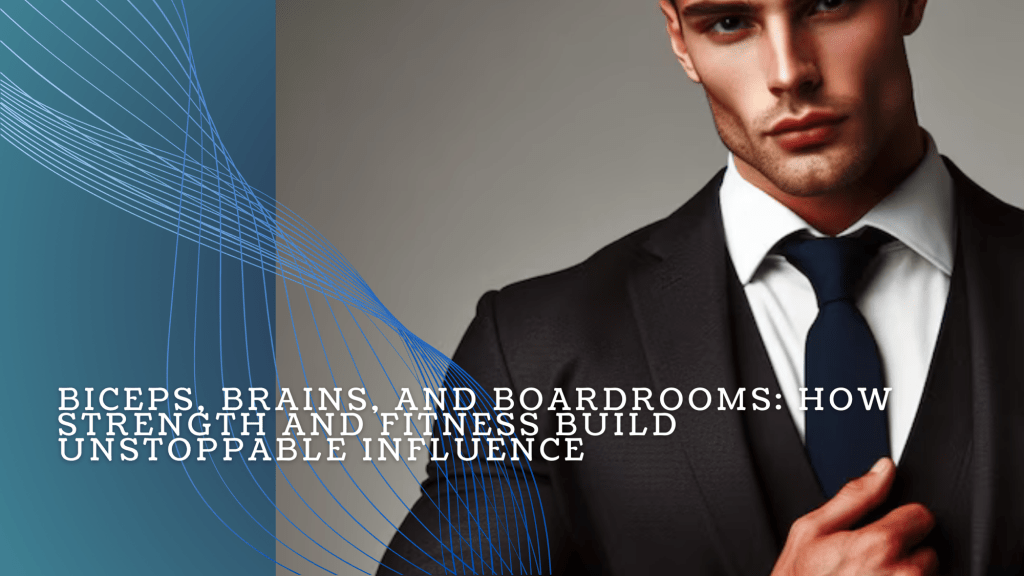
In the cutthroat world of business, power is often thought to come from intelligence, persuasion, and strategy. But what if I told you that the size of your biceps could also play a vital role in your ability to dominate boardroom meetings and close deals? History, philosophy, and science suggest that physical strength and mental acuity are inextricably linked—and those who neglect their physical conditioning risk falling behind their more muscular competitors.
To paraphrase Theodore Roosevelt, “Strength and effort are the foundation of greatness.” With this in mind, let’s explore why larger muscle bellies might just be your secret weapon for professional dominance—and how you can cultivate the physical and mental might to reign supreme.
The Philosophy of Power: Strength as a Prerequisite for Leadership
Socrates: The Shame of Ignoring Your Potential
Socrates believed that physical conditioning was essential to achieving one’s full potential. He famously said, “It is a shame for a man to grow old without seeing the beauty and strength of which his body is capable.” Imagine walking into a negotiation room. Your handshake alone tells a story of discipline, resilience, and capability. Weakness in the body implies weakness in resolve—a perception no leader can afford to project.
Nietzsche: Overcoming Weakness
Friedrich Nietzsche’s concept of the Übermensch glorifies strength and the will to overcome challenges. For Nietzsche, physical power wasn’t just about appearances but about cultivating the strength to shape reality. In the boardroom, this translates to the ability to project confidence, endure pressure, and assert your authority—all of which are amplified by the presence of well-developed, commanding biceps.
Why Biceps Matter: The Psychology of Strength
The connection between physical strength and leadership isn’t just philosophical—it’s biological. Studies in evolutionary psychology show that people often associate physical size and muscularity with competence and dominance. A commanding physique doesn’t just influence others subconsciously; it affects how you carry yourself.
When your muscles are strong, you stand taller, speak with conviction, and move with purpose. As Marcus Aurelius, the Stoic emperor and philosopher, once said, “You have power over your mind—not outside events. Realize this, and you will find strength.” Physical strength fortifies mental resilience, giving you the edge in high-pressure environments like boardroom negotiations.
How to Build Your Boardroom Biceps and Mental Might
It’s time to take action. Theodore Roosevelt, one of history’s grittiest leaders, overcame childhood asthma and weakness through rigorous physical training. His relentless pursuit of fitness became the foundation of his legendary leadership. Let his example inspire you to prioritize strength as a cornerstone of your success.
1. Lift Heavy, Negotiate Harder
To dominate the boardroom, you need functional, commanding strength. Focus on compound exercises that build overall muscle mass and power:
- Pull-ups for grip strength and biceps dominance.
- Deadlifts for a strong posterior chain and unshakeable presence.
- Bench presses for a powerful chest and assertive posture.
2. Train Your Mind Like Your Muscles
Just as you challenge your body, challenge your intellect. Read broadly, practice critical thinking, and refine your arguments with relentless preparation. As Aristotle said, “The educated differ from the uneducated as much as the living from the dead.” Pairing a sharp mind with a strong body makes you unstoppable.
3. Master Your Presence
Your physical presence speaks volumes before you even open your mouth. Maintain a firm handshake, confident eye contact, and a relaxed but upright posture. Remember, Nietzsche’s Übermensch doesn’t just exist—he commands attention.
4. Fuel for Power
Nutrition fuels both mental and physical strength. Prioritize high-quality protein, healthy fats, and nutrient-dense foods to build muscle and sustain focus. As Rousseau suggested in Émile, “A sound mind in a sound body” is the foundation of greatness.
Actionable Strategies for Winning in the Boardroom
When you’ve built the physical foundation, it’s time to flex your metaphorical muscles in professional settings:
- Use Your Strength as a Metaphor: Share stories of physical challenges you’ve overcome to build rapport and showcase resilience.
- Project Calm Under Pressure: Physical conditioning helps you manage stress. Practice deep breathing during tense negotiations to maintain control.
- Dominate Nonverbal Communication: Your physique reinforces your words. Lean forward slightly to emphasize points and hold your ground during disagreements.
The Bicep Philosophy: Why It All Comes Together
At the end of the day, the size of your biceps isn’t just about aesthetics—it’s about what they represent. Strength, discipline, and resilience are virtues praised by thinkers like Plato, who believed that “The first and greatest victory is to conquer yourself.” By committing to physical and mental excellence, you embody the qualities that inspire respect, loyalty, and trust in any arena.
So grab a set of weights, clear your mind, and remember: every rep, every argument, and every challenge is a step closer to the unshakable power you were born to wield. You’re not just lifting weights—you’re lifting your legacy.
No guts, no glory. No strength, no success. Go out there and dominate.
 Sebastian Strobl