Tag: strength training

  • Running and Strength Training for Men Over 35: A Synergistic Approach to Longevity and Performance

    Running and Strength Training for Men Over 35: A Synergistic Approach to Longevity and Performance

    For men over 35, integrating running with strength training provides a potent combination that enhances overall health, performance, and longevity. Both activities complement each other in ways that boost cardiovascular endurance, muscle strength, injury prevention, and metabolic health. Drawing from historical fitness practices and modern insights, this synergistic approach not only improves athletic performance but also supports a balanced, resilient physique that can withstand the demands of aging.

    The Synergy Between Running and Strength Training

    1. Enhanced Running Efficiency and Performance: Strength training plays a crucial role in improving running efficiency by increasing muscle strength and power. Historical fitness expert John McCallum emphasized the importance of strong legs for effective running. His advice still holds today: exercises like squats, lunges, and deadlifts strengthen the quadriceps, hamstrings, glutes, and calves, which are the primary muscles involved in running. Additionally, a strong core helps maintain proper running form, reducing the risk of injury and improving endurance.

    2. Improved Muscle Strength and Bone Density: As men age, maintaining muscle mass and bone density becomes critical. While running contributes to cardiovascular fitness, it doesn’t provide the resistance needed to prevent age-related muscle loss (sarcopenia). This is where strength training becomes essential. According to the insights of Jack LaLanne, a pioneer in combining aerobic exercise with strength training, building muscle through resistance exercises like weightlifting not only counters muscle loss but also strengthens bones, reducing the risk of osteoporosis.

    3. Enhanced Metabolic Rate and Fat Loss: Running is excellent for burning calories during the activity, particularly with high-intensity interval training (HIIT). However, strength training increases muscle mass, which in turn boosts your resting metabolic rate (RMR). This means you burn more calories even at rest. The combination of running and strength training, as described by fitness experts like Fred Grace, provides an optimal strategy for fat loss and weight management. Grace’s advice on mixing aerobic and resistance training emphasizes that this dual approach leads to a more defined, lean physique.

    4. Balanced Hormonal Response: Running, especially at high intensities, can elevate cortisol levels, a stress hormone that can lead to muscle breakdown if not managed. Strength training, particularly when it involves compound movements like squats and deadlifts, stimulates the release of anabolic hormones like testosterone and growth hormone. These hormones are crucial for muscle repair, growth, and recovery—especially important as natural testosterone levels decline with age​. By balancing these hormonal responses, you can optimize muscle gain and fat loss.

    5. Injury Prevention and Recovery: Regular strength training helps correct muscle imbalances and strengthens the connective tissues that support the joints. This is particularly beneficial for runners, who are prone to injuries such as shin splints and runner’s knee. As highlighted in historical fitness literature, incorporating exercises that target stabilizing muscles and improve joint stability can significantly reduce injury risk​. Furthermore, a balanced strength training regimen enhances recovery times, allowing for more consistent running without the setbacks caused by overuse injuries.

    6. Cardiovascular and Muscular Endurance: Running improves cardiovascular endurance, which is not only essential for overall health but also enhances performance in strength training. Improved cardiovascular fitness means better blood circulation and oxygen delivery to muscles, leading to improved performance during strength training sessions. Conversely, strength training improves muscular endurance, allowing you to sustain running for longer periods without fatigue. This dual benefit ensures that you maintain a high level of fitness across both disciplines​.

    Integrating Running and Strength Training into Your Routine

    To achieve the best results from both running and strength training, it’s important to plan your workouts carefully to avoid overtraining and ensure adequate recovery. Here’s a suggested weekly plan inspired by the routines of past fitness icons and modern training principles:

    Running Days:
    Monday, Wednesday, Friday: Moderate-intensity runs (30-45 minutes) or interval training (20-30 minutes). These sessions focus on improving cardiovascular endurance and running performance, following the advice of fitness pioneers like John McCallum​.

    Strength Training Days:
    Tuesday, Thursday: Full-body strength workouts that include compound exercises such as squats, deadlifts, bench presses, and rows. These workouts emphasize exercises that target the lower body, core, and stabilizing muscles to support running. Jack LaLanne’s philosophy of integrating strength with aerobic exercises can guide this balanced approach​.

    Rest and Recovery:
    Saturday or Sunday:
    Rest day or active recovery (such as walking, light cycling, or yoga) to promote muscle recovery and reduce the risk of overtraining. Fred Grace’s advice on low-intensity aerobics can be incorporated here to aid recovery without adding strain​.

    Cross-Training and Flexibility:
    Adding a day of cross-training (e.g., swimming, cycling) provides variety and enhances cardiovascular fitness without the impact stress of running. Incorporate flexibility training or yoga to improve range of motion and prevent stiffness, as recommended by historical fitness practitioners​.

    Final Thoughts

    For men over 35, the combination of running and strength training offers a holistic approach to fitness that not only improves physical health but also boosts mental well-being, productivity, and longevity. Start by scheduling your workouts into your weekly routine, gradually increasing the intensity and duration as your fitness levels improve. Consistency is key—by maintaining a balanced approach, you’ll enjoy the full spectrum of benefits these activities offer.

    Inspired by the practices of fitness legends and modern insights, now is the time to take action. Lace up your running shoes, pick up those weights, and commit to a routine that will support your body and mind for years to come. The journey to better health and longevity begins with a single step—or rep.

  • The Power of Cold Showers, Cold Plunges, and Sauna for Health, Longevity, and Strength

    The Power of Cold Showers, Cold Plunges, and Sauna for Health, Longevity, and Strength

    In the pursuit of a healthier, longer life, many focus on diet, exercise, and sleep. However, two often-overlooked practices—cold exposure and sauna use—can be powerful allies in this journey. These methods, rooted in ancient traditions and supported by modern science, offer significant benefits for physical strength, mental clarity, and overall well-being. This essay will explore the science behind cold exposure and sauna use, their integration into a busy life, and their synergistic effects when combined with strength training and a nutrient-rich diet.

    Cold Showers and Cold Plunges: A Refreshing Path to Health and Longevity
    Scientific Concepts and Health Benefits

    Cold exposure, through showers or plunges, triggers several beneficial physiological responses. When exposed to cold, the body activates the sympathetic nervous system, releasing norepinephrine, which boosts mood, energy, and focus. Cold exposure also promotes the production of brown adipose tissue (BAT), which helps burn calories and regulate body temperature. This process can support weight management and enhance metabolic health.

    Furthermore, regular cold exposure strengthens the immune system by increasing the production of cytokines—proteins involved in inflammation and immunity. Studies have shown that cold showers can reduce the incidence of common illnesses and improve resilience against stress. Additionally, cold exposure has cardiovascular benefits, including enhanced circulation and reduced blood pressure.

    Optimal Practices and Integration into a Busy Life

    For a busy middle-aged professional, integrating cold exposure can be straightforward. Start by incorporating cold showers at the end of a warm shower. Begin with 30 seconds of cold water and gradually increase to 2-3 minutes as your tolerance builds. For those with access to a cold plunge, aim for 2-5 minutes at a temperature between 50-59°F (10-15°C).

    Incorporating this into a hectic schedule can be as simple as starting your day with a cold shower or taking a plunge after a workout. These brief sessions provide an invigorating boost, helping you stay energized and focused throughout the day. Aim for at least three sessions per week to maximize the benefits.

    Sauna: Harnessing Heat for Strength and Longevity
    Scientific Concepts and Health Benefits

    Sauna use offers a range of benefits that complement those of cold exposure. Regular sauna sessions induce hyperthermia, which has been shown to improve cardiovascular health, enhance detoxification, and reduce inflammation. The heat stress from saunas stimulates the production of heat shock proteins (HSPs), which help repair damaged proteins and protect against oxidative stress.

    Sauna use also significantly impacts mental health. The deep relaxation induced by heat can reduce stress, anxiety, and promote better sleep. Furthermore, research has linked regular sauna use to a reduced risk of cardiovascular disease, neurodegenerative diseases like Alzheimer’s, and overall mortality, suggesting it can contribute to a longer, healthier life.

    Optimal Practices and Integration into a Busy Life

    For those with limited time, sauna sessions can be an impactful addition to the weekly routine. Aim for 15-30 minutes per session at a temperature of 150-175°F (65-80°C), with 2-4 sessions per week being ideal. Listen to your body, starting with shorter sessions and gradually increasing the duration and frequency as you acclimate.

    To integrate sauna use into a busy schedule, consider evening sessions to unwind after a long day. If your gym offers a sauna, it’s convenient to combine a workout with a sauna session, maximizing your time and enhancing the benefits of both activities.

    Synergistic Effects with Strength Training and a Balanced Diet
    Enhanced Recovery and Performance

    When combined with a strength training regimen, cold exposure and sauna use can significantly enhance recovery and performance. After intense workouts, cold exposure can reduce muscle soreness, decrease inflammation, and promote faster recovery by constricting blood vessels and flushing out metabolic waste. This allows you to train more consistently and with greater intensity over time.

    On the other hand, sauna use promotes muscle relaxation and increases blood flow, delivering oxygen and nutrients essential for muscle repair. This not only aids in recovery but also in building lean muscle mass. Additionally, the relaxation and detoxification effects of the sauna can reduce cortisol levels, mitigating the negative impact of chronic stress on muscle growth and overall health.

    Mental Health and Hormonal Balance

    Cold exposure builds mental resilience by enhancing your body’s ability to adapt to stress, improving focus and mental clarity—qualities that are invaluable both in training and daily life. Regular cold exposure can also boost levels of dopamine, a neurotransmitter associated with motivation and reward, which can positively influence your workout intensity and consistency.

    Sauna use supports mental well-being by promoting relaxation, reducing anxiety, and improving sleep quality—all critical factors for optimal hormonal balance. Better sleep translates to improved muscle recovery, enhanced mood, and better decision-making, particularly regarding dietary choices.

    Nutritional Synergy

    A nutrient-rich diet is the cornerstone of any health and fitness program. When combined with cold exposure and sauna use, the benefits of a balanced diet are amplified. For instance, the improved circulation from sauna use enhances the delivery of nutrients to muscles, while the increased metabolic rate from cold exposure can aid in maintaining a healthy weight. A diet rich in antioxidants, vitamins, and minerals will further support the body’s recovery processes, reducing inflammation and oxidative stress—especially when combined with the hormetic stress from cold and heat exposure.

    A Way Forward: Implementing Cold Exposure and Sauna into a Busy Schedule

    For those new to these practices, the key is to start small and gradually build up. Here’s an actionable plan:

    1. Start with Cold Showers:
      • Duration: 30 seconds to 1 minute at the end of a warm shower.
      • Frequency: 3 times per week.
      • Progression: Gradually increase to 2-3 minutes as your tolerance improves.
    2. Introduce Cold Plunges (if accessible):
      • Duration: 2-5 minutes at 50-59°F (10-15°C).
      • Frequency: 1-2 times per week, eventually increasing to 3 times per week.
      • Timing: Consider doing this after a workout for enhanced recovery.
    3. Begin Sauna Sessions:
      • Duration: 15-20 minutes per session.
      • Frequency: 2 times per week.
        • Progression: Increase to 25-30 minutes, 3-4 times per week as your body adapts.
      • Timing: Utilize evening sessions to relax and improve sleep quality.
    4. Combine with Strength Training:
      • Cold Exposure: Use after intense strength sessions to reduce inflammation and speed up recovery.
      • Sauna Use: Incorporate after strength training or as a standalone session to promote relaxation and muscle recovery.
    5. Maintain a Balanced, Nutrient-Rich Diet:
      • Focus on: Whole foods, lean proteins, healthy fats, and plenty of fruits and vegetables.
      • Hydrate: Drink plenty of water, especially when using the sauna to stay hydrated.
      • Supplement: Consider anti-inflammatory supplements like omega-3s or turmeric to support recovery.
    Conclusion

    Cold exposure and sauna use are powerful, scientifically-backed practices that can significantly enhance health, longevity, and strength. When combined with a balanced diet and strength training, these practices offer a comprehensive approach to improving physical and mental well-being. By starting small and gradually increasing duration and frequency, you can seamlessly integrate these practices into your busy life, reaping the benefits without feeling overwhelmed. Consistency is key—embrace the challenge, and over time, you’ll find these practices become an indispensable part of your routine, helping you achieve a healthier, stronger, and longer life.

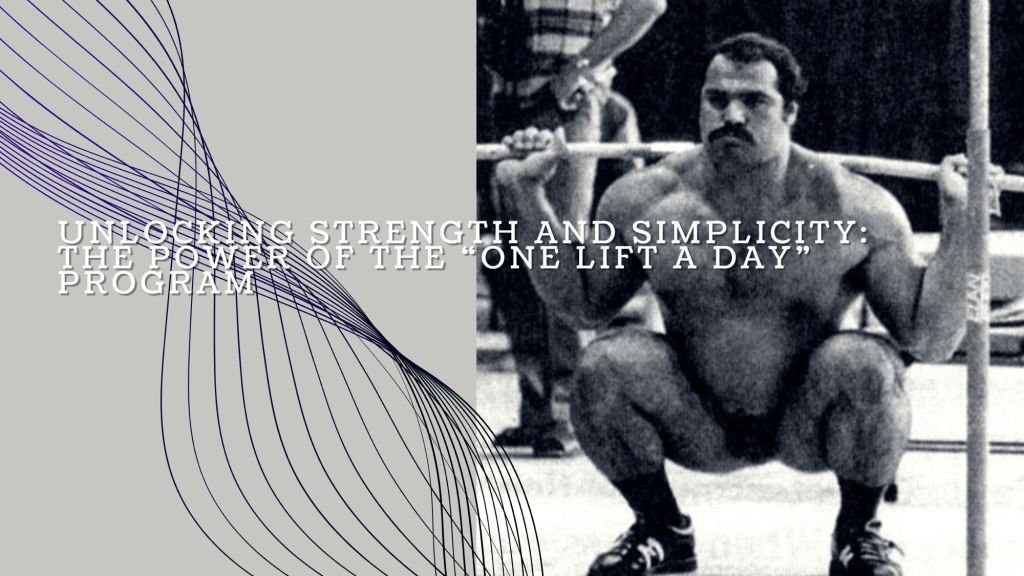
  • Unlocking Strength and Simplicity: The Power of the “One Lift a Day” Program

    Unlocking Strength and Simplicity: The Power of the “One Lift a Day” Program

    In the vast world of strength training, few names command the respect and admiration that Dan John does. A legendary figure in the realms of fitness and strength, Dan John has spent decades mastering the art and science of training, distilling that knowledge into practical wisdom that can be applied by anyone, from elite athletes to busy professionals. His straightforward, no-nonsense approach to strength training has made him a sought-after coach, author, and speaker. One of his most enduring contributions to the fitness world is the “One Lift a Day” program—a minimalist yet highly effective routine that speaks directly to those of us whose lives are full to the brim but who still want to prioritize our health and strength.

    Who Is Dan John?

    Dan John is not just another voice in the fitness industry; he is a coach with a rich history of competitive success and decades of experience helping people achieve their fitness goals. A former elite-level discus thrower and Olympic weightlifting competitor, Dan John has translated his athletic experience into practical training methodologies that cater to a broad audience. His work spans over 40 years, during which he has authored several books, delivered countless seminars, and trained thousands of athletes. His approach is rooted in simplicity, consistency, and the understanding that the best training plan is the one that fits seamlessly into your life, especially when life itself is anything but seamless.

    The “One Lift a Day” Program: A Lifeline for the Busy Professional

    Life is busy—there’s no denying it. Between demanding careers, family responsibilities, and the myriad of other commitments that fill our days, finding time for an hour or more at the gym can seem impossible. Enter the “One Lift a Day” program—a strength training routine that Dan John crafted with the busy professional in mind. This program distills your workout down to its most essential element, allowing you to maintain and even improve your strength with minimal time investment.

    The premise is simple: each day, you focus on just one lift. That’s right—one lift per day. This might sound too simple to be effective, but it’s precisely this simplicity that makes the program so powerful. When life gets demanding, and time is at a premium, the “One Lift a Day” approach allows you to stay consistent with your training, even when you can only carve out 15-20 minutes at a time.

    Why It Works

    The brilliance of the “One Lift a Day” program lies in its focus on Minimum Effective Dose (MED). This concept is about doing the least amount of work required to elicit a positive change in your strength and fitness levels. In a world that often equates more with better, this program flips the script by emphasizing quality over quantity. By honing in on one lift, you can give it your full attention, perfect your form, and push yourself to the limit without worrying about conserving energy for the next exercise.

    Another key advantage of this program is its adaptability. Whether you’re training in a fully equipped gym, a home gym, or even a hotel fitness center with limited options, the “One Lift a Day” program can be tailored to suit your environment. All you really need is access to a barbell, dumbbells, or even just your body weight, and you’re good to go. This makes it an excellent choice for those who travel frequently or have unpredictable schedules.

    Structuring Your “One Lift a Day” Program

    The “One Lift a Day” program typically runs over a 5-day cycle, focusing on different movement patterns each day. Here’s a sample structure:

    1. Monday: Bench Press or Incline Bench Press
      Start your week with a powerful push movement. The bench press or incline bench press targets the chest, shoulders, and triceps, making it an essential lift for upper body strength.
    2. Tuesday: Row or Row Variation
      Follow up with a pull movement like the barbell row or another row variation. This complements the push from Monday and targets the back, biceps, and rear deltoids, ensuring balanced development.
    3. Wednesday: Squat
      Midweek is dedicated to the king of all lifts—the squat. This full-body exercise primarily targets the quads, glutes, and lower back, but it also engages the core and upper body, making it indispensable for overall strength.
    4. Thursday: Off
      Take a well-deserved rest day to allow your body to recover from the intense lifting earlier in the week.
    5. Friday: Military Press
      End your workweek with the military press, focusing on shoulder strength and stability. This overhead press movement also engages the triceps and core, contributing to upper body power.
    6. Saturday (Fun Day): Curl, Deadlift, Whatever
      Saturday can be an optional “fun day” where you tackle whatever lift or exercise you feel like, whether it’s bicep curls, deadlifts, or any other movement you enjoy. This day is more flexible, allowing you to add variety or focus on any areas you want to give extra attention.

    This structure allows for a well-rounded approach to building strength, focusing on major compound lifts that engage multiple muscle groups. It also provides enough recovery time between heavy lifts, ensuring you can perform at your best each session.

    Reps and Sets Scheme

    To maximize the effectiveness of the “One Lift a Day” program, Dan John recommends a specific reps and sets scheme that evolves over the course of four weeks. Each week is designed to build on the previous one, gradually increasing intensity while managing volume to avoid burnout. Here’s how you can structure your training:

    Week One: 7 Sets of 5

    In the first week, you’ll perform seven sets of five reps for your chosen lift. This is a challenging workout, especially when performing big lifts like squats, bench presses, deadlifts, or overhead presses. To manage the intensity, Dan John suggests using a “wave” approach with your weight selection:

    • Set 1: 225 lbs for five reps
    • Set 2: 245 lbs for five reps
    • Set 3: 265 lbs for five reps
    • Set 4: 275 lbs for five reps (a tough lift, may not be able to get another set at this weight)
    • Set 5: 235 lbs for five reps (a refreshing drop in intensity)
    • Set 6: 255 lbs for five reps (a challenging but manageable set)
    • Set 7: Either 275 lbs or 285 lbs, depending on your energy and spotter availability

    For added intensity, especially with squats or bench presses, consider incorporating explosive movements immediately after your set, such as jumps for height or explosive push-ups. This combination has a powerful impact on both strength and conditioning.

    Week Two: 6 Sets of 3

    In the second week, you’ll reduce the volume to six sets of three reps. This week is designed to be about 50% of the volume of Week One, but you should aim to increase the weight slightly. The reduction in reps allows you to lift heavier while still maintaining focus and intensity.

    Week Three: 5-3-2

    Week Three introduces a 5-3-2 set and rep scheme, where the double at the end of your session is treated as a near-max effort. This week is an opportunity to push your limits while ensuring that your technique remains solid. The 5-3-2 scheme is particularly effective because it encourages you to go heavy while still maintaining control.

    Week Four: Off!

    After three weeks of progressively challenging workouts, Week Four is all about recovery. Take this week off to allow your body to fully recover and prepare for the next cycle. Although it may be tempting to skip the rest week, it’s crucial for preventing burnout and ensuring long-term progress.

    Perfect for Home Gyms and Travel

    For those with home gyms or who travel frequently, the “One Lift a Day” program is especially practical. The minimal equipment required means you don’t need to invest in a vast array of gear. A basic setup with a barbell, some weights, and a squat rack will cover almost everything you need. Even in a well-equipped hotel gym, you’ll likely find enough to complete a workout—if not, your body weight can always be used creatively. The simplicity of this program makes it ideal for maintaining consistency, no matter where you are.

    Why This Is Sufficient for Strength and Health Goals

    At first glance, the “One Lift a Day” program might seem too minimalist to address all aspects of fitness. However, its focus on heavy, compound lifts—such as squats, deadlifts, and presses—ensures that you’re working multiple muscle groups and improving your overall strength. These multi-joint exercises are incredibly effective for building muscle, which in turn increases your metabolic rate and helps you burn more calories even at rest. This shift in metabolic rate due to increased muscle mass is a key factor in long-term fat loss and weight management.

    Moreover, while the program doesn’t include traditional cardiovascular exercises, the intense nature of the lifts, particularly when performed with heavy weights and minimal rest, offers substantial cardiovascular benefits. Exercises like the back squat and deadlift require significant exertion, which elevates your heart rate and improves cardiovascular conditioning. This kind of strength training not only builds muscle but also supports heart health and enhances overall fitness.

    Conclusion

    Dan John’s “One Lift a Day” program is a testament to the power of simplicity in strength training. When life gets hectic and time becomes a precious commodity, this program offers a way to stay strong, healthy, and consistent without the need for elaborate routines or extensive time commitments. By focusing on the essentials and embracing the concept of Minimum Effective Dose, you can continue making progress even in the busiest of times. Remember, it’s not the duration, variation, or complexity of your workouts that lead to success—it’s the hard work, focus, and consistency that make all the difference.

  • On training down or how to get shredded for the summer

    On training down or how to get shredded for the summer

    With nearly endless information on the topic floating around the internet, why exactly should you bother reading yet another article on losing weight for the summer body and acquiring outstanding definition?

    Since there is nothing new under the sun, I want to recap a training regime that not only worked for hundreds of people including famous movie actors of several decades, but also worked quite well for me in different decades of my life. So let‘s start of with paying respects to the man who told Arnold the following straight to the face, right after Joe Weider brought him over to the US.

    You look like a at fuck to me

    I‘m obviously talking about the iron guru himself, Vince Gironda, how not only trained the first Mr. Olympia ever but a boatload of other bodybuilders and Hollywood actors and didn‘t look to shabby himself up till old age.

    So what’s the method, to get into shape the fastet way possible? Easy: train one exercise for every body part you want to improve with 8 repetitions for a total amount of 8 sets and repeat 3 times a week.

    There are nearly as many split schedules and exercise selections for 8by8 out there as there are fad diets, but I think the original schedule had you workout 5 days in a row, alternating upper and lower body days.

    Below is my selection of exercises, that is different from what Vince was prescribing, since I have limited choice (training from home) and I don‘t quite like the trap-less, v-shape look he was after.

    What to do

    Upper Body days (Monday, Wednesday and Friday)

    • Behind the neck press with a wide grip for triceps & shoulder girdle
    • Barbell Bicep Curls
    • Barbell Upright row with a very narrow grip (really feeling those in the traps during peak contraction)
    • Barbell Bench Press (narrower grip, arms nearly parallel to the torso, since wide grip is bothering my rotator cuffs)
    • Barbell Bent over Row (narrow or even underhand grip, try to feel it in the lower last, when the barbell hits your stomach)

    Lower body days (Tuesday and Thursday)

    • Barbell Squat (I‘m using front squats, since I don‘t have a squatrack in our new home yet)
    • Stiff-legged Deadlifts (try standing on a block for better stretch)
    • Standing Barbell Calf raises
    • Hanging Leg Raises

    How to do it

    As mentioned earlier , you will be doing 8 sets of every exercise for 8 reps, except for lower body days. Here Vince was suggesting 8 total sets per muscle group for 20 repetitions each.

    Choose a weight you can handle for 3 sets of 8 pretty comfortably. Move quickly and try to feel the muscles contracting, that you are working. No need for extreme yanking the weights, controlled movements with a full range of motion. But no need to think about timing or cadences. This isn‘t an overly scientific HIT workout!

    If you never trained some high volume program like 8×8, German Volume Training (10×10) or even a CrossFitesque schedule, I recommend easing into the workout by starting with 3 sets per exercise and moving up one set in each per workout for the first weeks.

    Once you are getting all the 8 reps in all the 8 sets, it‘s time to increase the weight slightly.

    Nutrition

    As for nutrition, you want to aim for maintenance calories or slightly less, stay active overall and maybe just reduce portion sizes a bit, or have less side dishes. You will need a whole lot of protein to really melt the fat but not overly loose the muscles you built during your personal winter arc. If you are over 30, I would recommend you do two easy runs a week, just for overall health benefits.

    And of course go easy on the drinking and partying, unless you are as legendary as Zabo Koszewski was in his days.

    Enjoy your lifting & enjoy your days, one never knows how many are left. Find bliss & happiness in the hardworking.