Tag: TeamPerformance

  • Simplicity reveals what truly matters.

    Simplicity reveals what truly matters.

    In today’s fast-paced project environments, complexity has become the default. We pile on tools, processes, reports, and meetings — hoping to gain control, but often ending up with noise.

    The result?

    Slower progress, unclear priorities, and teams spread thin trying to do everything at once.

    But here’s the truth: complexity is often the enemy of execution.

    In project management and productivity, simplicity isn’t just aesthetic — it’s a strategic advantage. It clears the path for meaningful outcomes and helps teams focus on what actually moves the needle.

    Here’s how to make it real:

    🔹 1. Clarify before you plan.

    Before drafting a timeline or task list, distill the “why” behind the project. If the objective can’t be stated in one sentence, it’s not yet clear enough. Clarity saves you from scope creep later.

    🔹 2. Use fewer tools, better.

    Too many apps create silos and friction. Choose one project management platform — and build a shared, standardized workflow. A good tool used consistently beats a dozen half-integrated ones.

    🔹 3. Replace zombie meetings with async updates.

    Audit recurring meetings monthly. If there’s no new decision to make or problem to solve, it doesn’t need to be a meeting. Tools like dashboards, shared docs, or Loom updates can deliver the same value in half the time.

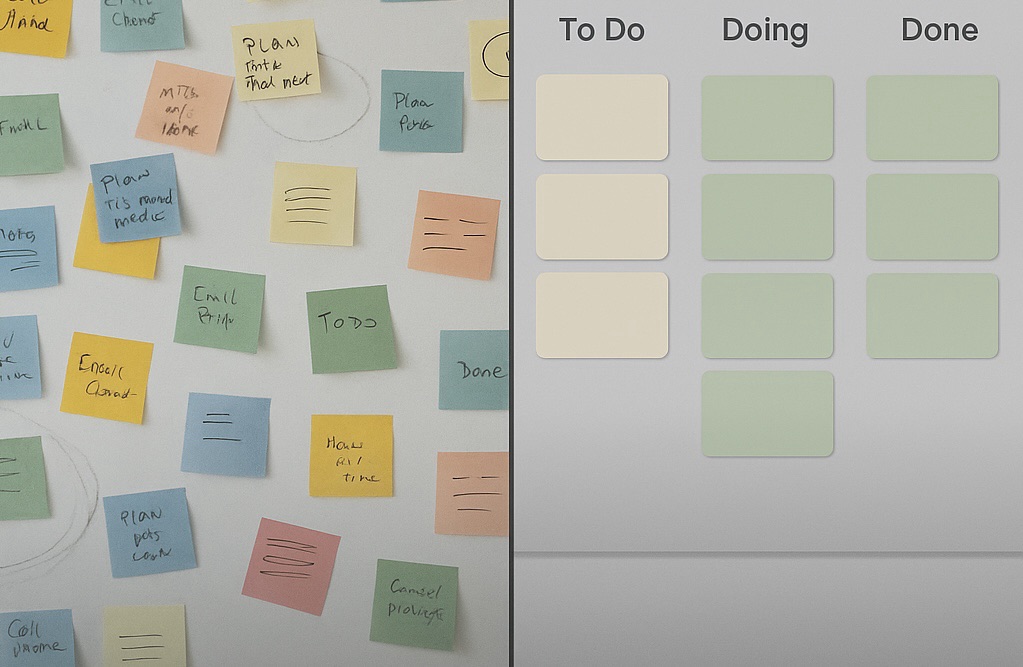
    🔹 4. Prioritize visually.

    A Kanban board, a visual timeline, or even a simple progress bar communicates faster than a 10-slide deck. Simplicity isn’t dumbing down — it’s speeding up understanding.

    🔹 5. Focus on one high-impact outcome at a time.

    Multitasking scatters attention. Sequence your team’s work around clear milestones, and make sure everyone knows the current priority. Simplicity helps people feel progress — and progress drives engagement.

    Why this matters:

    Simplicity improves decision-making.

    It reduces stress.

    It accelerates delivery.

    When you eliminate the unnecessary, you uncover what truly drives value — and give your team room to breathe, focus, and thrive.

    In leadership, simplicity is contagious. A streamlined process or a clear, concise brief sets the tone for execution with purpose.

    If your project workflow feels heavy, pause and ask:

    “What can I remove that no longer serves the goal?”

    Sometimes progress means doing less, but doing it better.

    Simplicity reveals what truly matters.

    🔄 Your turn:

    What’s one process, tool, or meeting you’ve simplified recently — and what impact did it have?

    👇 Share below and let’s build smarter, leaner projects together.

  • The Power of Transparent Communication in Leadership: Why Less Truly Is More

    The Power of Transparent Communication in Leadership: Why Less Truly Is More

    In leadership, complexity often masquerades as competence. Long-winded emails, endless meetings, cryptic strategies — many leaders think the more convoluted their communication, the more impressive they appear. But here’s the hard truth: leadership isn’t about sounding clever. It’s about being clear.

    After two decades in project management, leading cross-functional teams and steering complex initiatives, I’ve learned that the most respected leaders don’t clutter their message. They simplify it. They practice transparent communication — honest, direct, and minimalistic. They make leadership look effortless because they remove the noise.

    Let me share why transparent communication isn’t just another buzzword — it’s your most powerful leadership tool.

    1. Transparency Builds Trust — Fast

    Trust isn’t built through big speeches or elaborate reports. It’s built in the day-to-day moments where your team knows exactly where they stand.

    Be upfront about expectations. Don’t sugarcoat bad news. Share not just the “what” but also the “why.” Your team doesn’t want spin—they want the facts.

    Minimalist takeaway:
    Strip out the jargon. Say exactly what you mean. The fewer the filters, the stronger the trust.


    2. Clear Communication Cuts Through Chaos

    In today’s fast-paced business environment, teams are overloaded with information. Policies. KPIs. Changing priorities. It’s noise, and too much noise paralyzes action.

    Transparent communication is your decluttering tool. It aligns everyone without endless explanations. When your message is simple and honest, your team knows where to focus their energy — no second-guessing, no wasted effort.

    Minimalist takeaway:
    Distill your message down to the essentials. Need-to-know beats nice-to-know.


    3. Openness Encourages Ownership

    Micromanagement is the enemy of productivity. But what fuels micromanagement? A lack of transparency.

    When leaders withhold information, teams hesitate. They fill in gaps with assumptions. But when you share openly — about challenges, goals, and even your own decision-making process — you empower your team to take initiative confidently.

    Minimalist takeaway:
    Don’t hoard information. Give your team the whole picture and step back. Ownership thrives in open spaces.


    4. Transparent Leaders Are Resilient Leaders

    In tough times, the instinct may be to shield your team from the full truth. But uncertainty festers in silence. Teams can handle setbacks—they can’t handle being kept in the dark.

    Transparent communication, even when uncomfortable, creates resilience. Your honesty shows that setbacks are part of the process, not the end of it. You model composure, not panic.

    Minimalist takeaway:
    Cut the fluff. Lead with facts, tempered by calm confidence.


    How to Practice Effortless Transparent Communication

    Here’s a quick, actionable framework I personally use — my “Minimalist Leader’s Checklist”:

    1. One Message, One Goal:
      Every communication — email, meeting, presentation — should have one clear purpose. Strip away everything else.
    2. Use Simple Language:
      If an 8th grader wouldn’t understand it, rewrite it.
    3. Default to Open Sharing:
      Ask yourself: “Is there a reason NOT to share this?” If not, communicate it.
    4. Invite Honest Feedback:
      Transparency is two-way. Make it effortless for your team to tell you when they don’t understand — or disagree.
    5. Consistency Over Volume:
      Regular, small check-ins beat infrequent, overwhelming info dumps.

    Final Thought: Leadership is Not About Control. It’s About Clarity.

    Transparent communication, at its core, is a minimalist’s leadership philosophy. You clear away ambiguity, pretense, and unnecessary complexity. You lead not by exerting control but by fostering clarity and trust.

    And when you do that consistently, leadership stops being hard. It becomes, dare I say, effortless.


    Want to make the hard things in life look effortless? Start by saying exactly what needs to be said — and nothing more.