Tag: wheeloflife

  • The Minimalist Wheel of Life: A Simple Approach to Balance and Focus

    The Minimalist Wheel of Life: A Simple Approach to Balance and Focus

    In today’s world, we’re constantly asked to manage more — more goals, more categories, more tools to track our progress. The classic Wheel of Life method is a fantastic framework for self-reflection, but with its 8 to 12 categories, it can quickly feel overwhelming. For busy professionals, the last thing you need is another complex system that steals time instead of creating clarity.

    Minimalism offers a better way. Instead of trying to optimize every corner of life, a minimalist Wheel of Life helps you zoom in on what truly matters, giving you maximum clarity with minimum effort.

    🌐 What Is the Wheel of Life?

    The Wheel of Life is a personal development tool designed to visualize how balanced your life feels. Traditionally, you divide a circle into several segments (health, work, relationships, finances, hobbies, etc.) and rate each from 1–10. The resulting “wheel” shows where you’re rolling smoothly — or hitting bumps that throw you off course.

    ✨ The Minimalist Take: 4 Core Areas

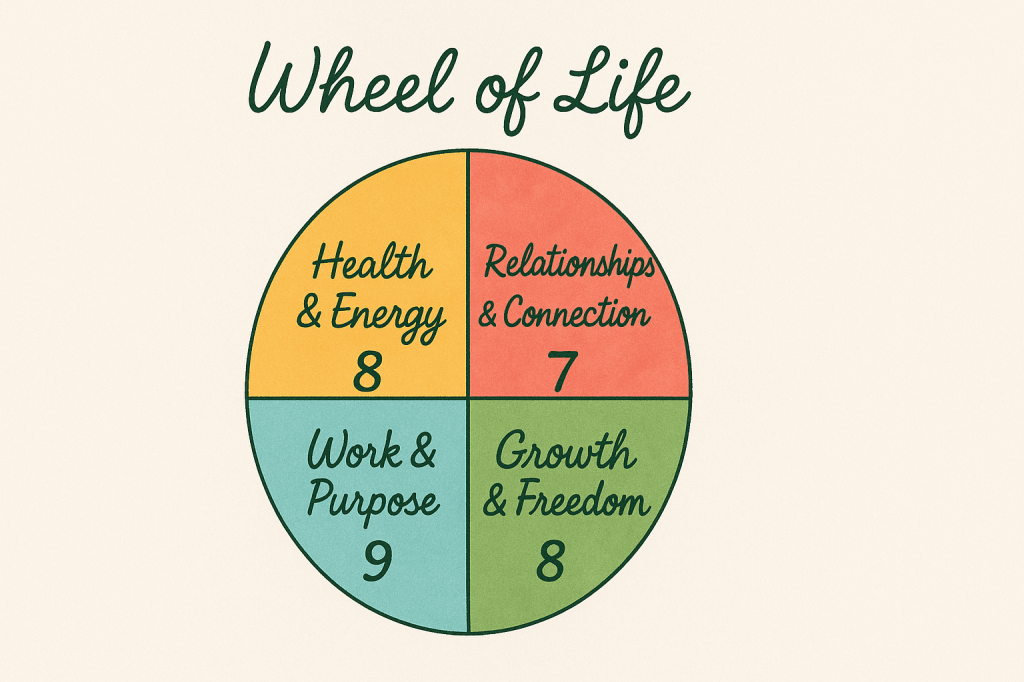
    Instead of juggling 8–12 categories, this streamlined version focuses on 4 key areas that influence everything else:

    1. 💪 Health & Energy: Your physical and mental foundation. Without good health, it’s nearly impossible to sustain performance anywhere else.
    2. 🤝 Relationships & Connection: Family, friendships, and colleagues. The quality of your connections shapes the quality of your days.
    3. 🚀 Work & Purpose: Your career, projects, or mission. Work provides structure, growth, and financial security — but also meaning.
    4. 🌱 Growth & Freedom: Personal growth, learning, hobbies, spirituality, and financial independence. These ensure you’re not just surviving but also expanding.

    With these four, you strip away the noise yet still capture the essence of a well-rounded life.

    🕒 How and When to Do It

    • Quarterly check-in: Once every three months is enough. Life doesn’t shift overnight, but this rhythm keeps you aligned.
    • Rate simply: Give each area a score from 1–10. No need for fancy visuals — four numbers on paper (or in your notes app) are enough.
    • Choose one focus: Instead of chasing improvement everywhere, ask: Which area, if improved, would create the biggest ripple effect?

    💡 Example: Getting consistent sleep and exercise (Health & Energy) will often boost your focus at work, patience at home, and motivation for growth.

    ⚖️ Why Balance Isn’t the Goal

    Here’s the key: life won’t always be balanced — and that’s okay. Sometimes one area will dominate your focus so you can make real progress. Maybe you’re pushing hard on a career project 🚀, or focusing on your health after a rough season 💪.

    The point isn’t to keep every category at a perfect 10 at all times. It’s about being aware, making intentional trade-offs, and then realigning when the time is right. Balance is dynamic, not static.

    🌟 Benefits of the Minimalist Wheel of Life

    • Clarity without overwhelm – Four categories are easy to reflect on.
    • Maximum leverage – Progress in one area cascades into the others.
    • Quick practice – Less than 10 minutes per quarter keeps it sustainable.
    • Intentional focus – Helps you decide where to lean in and where to accept “good enough.”

    Final Thought

    Minimalism isn’t about doing less for the sake of it. It’s about removing distractions so the essentials shine. The minimalist Wheel of Life does just that: it simplifies reflection, highlights your priorities, and gives you the clarity to act with purpose.

    Because in the end, life isn’t about juggling every category perfectly — it’s about knowing where to focus now, so you can move forward with balance in the long run. 🌿
  • The Wheel of Life Assessment: A Comprehensive Guide for Busy Professionals

    The Wheel of Life Assessment: A Comprehensive Guide for Busy Professionals

    The Wheel of Life is a powerful self-assessment tool designed to help individuals evaluate and achieve balance across different areas of their lives. Originating from life coaching and personal development practices, this tool visualizes life balance as a wheel with each segment representing a key area of life. By assessing these areas, you can identify where you’re thriving and where you may need to focus more attention, ultimately guiding you towards a more balanced and fulfilling life.

    Origins and Concept of the Wheel of Life

    The Wheel of Life assessment is rooted in holistic approaches to self-improvement. While its precise origins are unclear, it has gained widespread use in coaching, personal development, and therapy. The concept is simple yet profound: life is divided into various segments or categories, each representing a critical aspect of our existence. The wheel is balanced only when these areas receive appropriate attention and effort, allowing it to roll smoothly.

    What is the Wheel of Life?

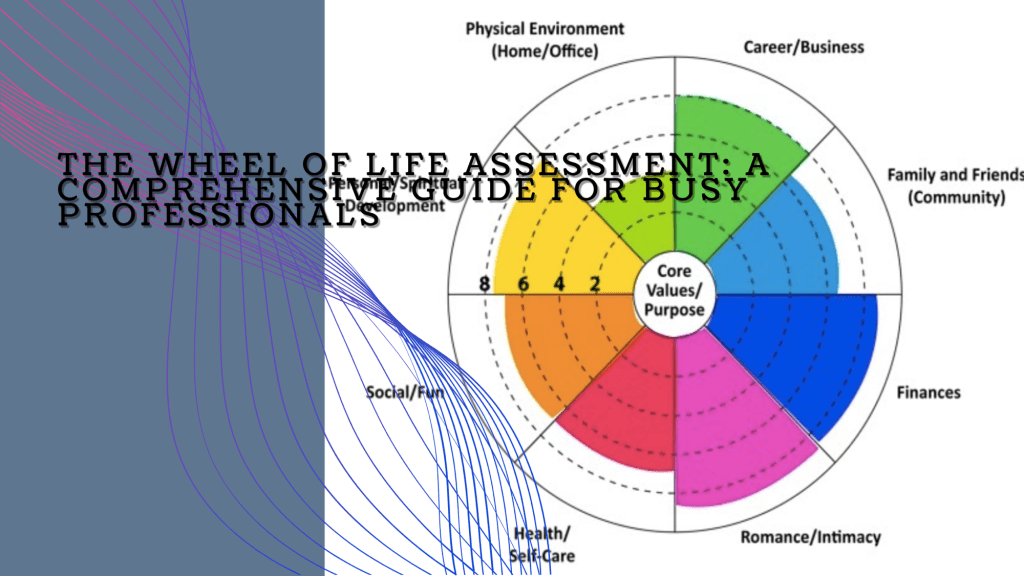
    The Wheel of Life typically includes 8 to 10 segments, each representing a significant area of life such as:

    • Career
    • Family and Friends
    • Significant Other/Romance
    • Health
    • Finance
    • Personal Growth
    • Fun and Recreation
    • Physical Environment

    These categories can be customized to reflect your unique life circumstances. For instance, if you’re an entrepreneur, you might add segments like “Business Growth” or “Leadership.” The goal is to rate your satisfaction in each area on a scale of 1 to 10, creating a visual representation of your life balance​ (Quenza, Scott Jeffrey).

    Conducting the Wheel of Life Assessment: A Step-by-Step Guide
    Step 1: Determine Your Categories

    Begin by defining the categories that are most relevant to your life. While there are standard categories like Career and Health, your personal circumstances might require custom segments. For example, if you’re a busy professional with a family, you might include categories such as “Parenting,” “Spouse Relationship,” “Career,” “Health,” “Finances,” “Personal Growth,” and “Leisure” ​(Scott Jeffrey).

    Step 2: Assess Your Current Situation

    Next, evaluate your satisfaction level in each category using a scale from 1 to 10, where 1 represents complete dissatisfaction and 10 signifies full contentment. Be honest in your assessment—this is crucial for identifying where improvements are needed. Consider what a “10” would look like in each category. For example, in “Health,” a 10 might mean regular exercise, a balanced diet, and overall well-being​ (Quenza, Scott Jeffrey).

    Step 3: Plot Your Ratings on the Wheel

    Once you’ve rated each category, transfer these scores onto the Wheel of Life template. This will give you a visual representation of your life balance. Ideally, the wheel should be evenly rounded, indicating balance. However, if it appears uneven, this highlights the areas of your life that require more attention ​(Quenza).

    Step 4: Analyze and Reflect

    Take time to reflect on your completed wheel. Ask yourself questions like:

    • Are there any surprises in the scores?
    • Which areas need the most improvement?
    • How do these imbalances affect other areas of your life?

    This reflection is crucial for understanding the interconnectedness of different life areas. For example, neglecting your health might lead to reduced productivity at work and strained relationships​ (Quenza).

    Deriving Topics to Work On Over the Year
    Step 5: Set SMART Goals

    After identifying the areas that need improvement, set SMART (Specific, Measurable, Achievable, Relevant, Time-bound) goals for each one. For example:

    • If your “Health” score is low, a goal might be: “Exercise three times a week for 30 minutes to improve overall energy and well-being.”
    • If your “Relationship” score is low, a goal could be: “Plan a date night with my spouse once a week to strengthen our connection.”

    Choose 2-3 key areas to focus on each quarter, ensuring that you don’t overwhelm yourself by trying to improve everything at once​ (Quenza, Scott Jeffrey).

    Step 6: Create an Action Plan

    Develop a clear action plan for each goal. Break down your goals into daily, weekly, and monthly tasks to make them more manageable. For example:

    • Daily Habits: Incorporate small, consistent actions like drinking more water or taking short walks.
    • Weekly Check-ins: Set aside time to review your progress each week. Are you staying on track? What obstacles are you facing?

    This structured approach helps ensure steady progress without becoming overwhelming ​(Scott Jeffrey).

    Measuring Success and Tracking Progress
    Step 7: Regular Reviews and Adjustments

    Tracking your progress is key to maintaining motivation and ensuring you’re on the right path. Here’s how to measure success:

    • Monthly Reviews: At the end of each month, revisit your Wheel of Life and reassess your scores. Have you made progress? This will indicate whether your efforts are effective.
    • Quarterly Reviews: Every three months, conduct a more thorough review. Adjust your goals and strategies based on any changes in your life circumstances or priorities ​(Quenza, Scott Jeffrey).
    Tools for Tracking

    Consider using a journal, an app, or a simple spreadsheet to log your activities and monitor your progress. This allows you to track patterns over time and stay accountable to your goals.

    Keeping Track and Staying on Course

    Consistency is essential for maintaining balance. Here’s how to stay on track:

    • Accountability Partner: Share your goals with someone you trust, like a partner, friend, or coach. This adds accountability and increases your likelihood of following through.
    • Adapt and Adjust: Life is dynamic, and your priorities may shift. Be flexible with your goals and willing to adjust your action plan as needed. Regularly revisiting your Wheel of Life ensures your actions remain aligned with your evolving circumstances​ (Scott Jeffrey).
    Conclusion

    The Wheel of Life is more than just an assessment tool — it’s a guide for ongoing personal development and life balance. By regularly assessing your life, setting SMART goals, and tracking your progress, you can maintain productivity while ensuring that all areas of your life receive the attention they deserve. Remember, the goal is not perfection but continuous improvement and balance across all aspects of your life.