Tag: workout

  • Minimalist Strength Training: Build Maximum Strength with Just 3 Exercises and Family-Friendly Nutrition

    Minimalist Strength Training: Build Maximum Strength with Just 3 Exercises and Family-Friendly Nutrition

    In the age of over-complicated fitness plans and endless diet trends, it’s easy to feel overwhelmed when starting or maintaining a strength training routine. But what if building strength, improving health, and staying consistent didn’t have to be so complex?

    With just three foundational exercises—the squat, bench press, and deadlift—and a family-friendly, protein-rich meal plan, you can create a simple, effective, and sustainable fitness lifestyle that works for you and your loved ones. This approach is perfect for busy professionals and parents who want to stay strong without sacrificing precious time with family.

    Why Minimalist Strength Training is a Game-Changer

    When life is busy, simplicity is key. Minimalist strength training focuses on quality over quantity. By using compound movements like the squat, bench press, and deadlift, you can engage multiple muscle groups, build functional strength, and maximize efficiency in the gym.

    Even with just two workouts per week, these exercises deliver full-body results. Forget the clutter of endless accessory movements—you’ll get stronger, fitter, and healthier while keeping your schedule intact.

    The Three Power Moves
    1. The Squat: The Foundation of Strength

    The squat isn’t just a leg exercise—it’s a total-body movement that builds powerful quads, hamstrings, glutes, and a rock-solid core.

    Why It Matters:

    Whether it’s carrying groceries, playing with your kids, or hiking with family, the squat builds the strength and mobility needed for real-life activities.

    How to Perform It Right:

    1. Stand with feet shoulder-width apart and toes slightly pointed out.
    2. Rest the barbell on your upper traps (not your neck).
    3. Keep your chest proud, engage your core, and lower your hips back and down.
    4. Aim to go deep enough that your thighs are parallel to the ground (or lower).
    5. Drive up through your heels to return to standing.

    Pro Tip: Start light to perfect your form before progressing to heavier weights.

    2. The Bench Press: Build an Impressive Upper Body

    The bench press is a classic and for good reason. It targets the chest, shoulders, and triceps, helping you build a balanced, strong upper body.

    Why It Matters:

    Whether pushing your child on a swing or lifting something heavy, the bench press improves upper body strength for both functional and aesthetic benefits.

    How to Perform It Right:

    1. Lie on the bench with your eyes directly under the bar.
    2. Grip the barbell slightly wider than shoulder-width.
    3. Lower the bar slowly to your chest, keeping your elbows at about a 75-degree angle.
    4. Press the bar back up until your arms are fully extended.

    Pro Tip: Focus on control — don’t rush. Controlled movements engage more muscle and reduce injury risk.

    3. The Deadlift: The Ultimate Strength Builder

    The deadlift is a full-body powerhouse exercise. It builds strength in the glutes, hamstrings, lower back, core, and even your grip.

    Why It Matters:

    The deadlift mimics everyday movements like picking up a child or moving furniture. Training this lift translates directly into your daily life.

    How to Perform It Right:

    1. Stand with your feet hip-width apart and the bar over your midfoot.
    2. Grip the bar outside your knees, keeping your back straight and chest up.
    3. Drive through your heels, keeping the bar close to your body as you lift.
    4. Lock your hips and knees at the top before lowering the bar in a controlled motion.

    Pro Tip: For added grip strength, alternate your hand grip (one palm up, one palm down).

    The Minimalist Training Plan
    Day 1: Squat + Bench Press
    • Warm-up: 5–10 minutes of dynamic stretches and mobility work.
    • Squat: 4 sets of 5–8 reps.
    • Bench Press: 4 sets of 5–8 reps.
    • Optional: Plank holds or hanging leg raises for core stability.
    Day 2: Deadlift + Bench Press
    • Warm-up: Same as Day 1.
    • Deadlift: 4 sets of 3–6 reps.
    • Bench Press: 4 sets of 5–8 reps.
    • Optional: Pull-ups or rows for upper back development.
    Rest Days:

    Take at least one full day between workouts to recover. Use these days for light activities like walking, yoga, or family-friendly games that keep you moving.

    Family-Friendly Protein-Rich Nutrition
    The Importance of Protein

    To fuel your strength gains, aim for 1.6–2.2 grams of protein per kilogram of body weight daily. A meat-based diet simplifies meal planning and is easy to adapt for the entire family.

    Tailored Meal Plan for Families

    Breakfast:

    • Scrambled eggs with turkey bacon and fresh fruit (e.g., berries).
    • Pancakes made with protein powder for kids who love a sweet start.

    Lunch:

    • Grilled chicken wraps: Use whole-grain tortillas with shredded chicken, lettuce, and cheese.
    • For kids, cut the wraps into bite-sized pinwheels for easier handling.

    Dinner:

    • Baked salmon with roasted potatoes and green beans.
    • Cook extra salmon to use for salads or sandwiches the next day.

    Snacks:

    • Beef jerky or meat sticks for on-the-go fuel.
    • Greek yogurt parfaits layered with granola and fruit for a kid-friendly option.
    Meal Prep Tips:
    • Batch-cook proteins (grill chicken, bake salmon, or roast a beef brisket) to save time.
    • Involve your kids in simple prep tasks, like seasoning meat or arranging side dishes.
    • Use one-pot recipes like slow-cooked stews or casseroles to feed the whole family with minimal effort.
    Keys to Long-Term Success
    1. Progress Slowly: Track your lifts and focus on adding small increments of weight over time. Progression is the foundation of long-term strength.
    2. Prioritize Recovery: Sleep, hydration, and rest are just as important as training. Set a family bedtime routine to ensure everyone gets enough rest.
    3. Stay Consistent: The beauty of this minimalist plan is its sustainability. By keeping workouts and meals simple, you’ll stay on track without feeling overwhelmed.
    Conclusion

    Minimalist strength training is about more than just efficiency — it’s a sustainable lifestyle that fits into the lives of busy professionals and families alike. With just three exercises and a simple, protein-rich diet, you can build strength, improve health, and set an example of fitness for your loved ones.

    Embrace simplicity, train with purpose, and nourish your body with wholesome meals. With this approach, you’ll not only achieve your fitness goals but inspire your family to live healthier, stronger lives as well.
  • Quick and Effective Workouts for Busy Professionals: Maximize Your Time

    Quick and Effective Workouts for Busy Professionals: Maximize Your Time

    For busy professionals, squeezing in a workout can often feel like a luxury. However, with the right approach, you can turn a brief workout session into a powerful tool for enhancing both your career and personal life. Imagine this: a high-powered executive who juggles board meetings, client calls, and family time. What if just 20 minutes of strength training could transform his energy levels, improve focus, and even strengthen family bonds?

    Intensity Approaches for Optimal Results

    Approach 1: High Load, Low Reps This strategy focuses on heavy weights and fewer reps, ideal for building raw strength and power. Think of it as the professional’s “secret weapon” for conquering the most demanding projects with a clear, focused mind.

    Approach 2: Lower Load, Higher Reps With moderate weights and higher reps, this method enhances muscle endurance and growth. It’s akin to maintaining the stamina needed for those long, unpredictable days in the office while staying sharp and efficient.

    Sample Workouts

    Workout 1: High Load, Low Reps

    • Squats: 3 sets x 3 reps
    • Bench Press: 3 sets x 5 reps

    Imagine this: You’re finishing your last set of squats, feeling the rush of adrenaline and focus. You walk back to your desk, feeling stronger and more capable. The result? Enhanced performance at work and a renewed sense of confidence that extends beyond the gym.

    Workout 2: High Load, Low Reps

    • Deadlifts: 5 sets x 2 reps
    • Overhead Press: 3 sets x 6 reps

    Picture this: As you power through your deadlifts, you’re not just lifting weights; you’re lifting the burden of stress off your shoulders. By the end of your workout, you’re not only physically stronger but mentally sharper, ready to tackle complex problems and lead your team with renewed vigor.

    Workout 3: Lower Load, Higher Reps

    • Front Squats: 6 sets x 8 reps
    • Weighted Dips: 6 sets x 6 reps

    Think of this: You complete your front squats and weighted dips with a sense of accomplishment. The endorphins kick in, and you’re now equipped to handle the daily grind with a more resilient mindset, making your professional life smoother and your evenings with family more enjoyable.

    Workout 4: Lower Load, Higher Reps

    • Romanian Deadlift: 4 sets x 12 reps
    • (Weighted Pullup): 6 sets x 8 reps

    Envision this: Your Romanian deadlifts and Pullups are not just exercises; they’re moments of mental clarity and strength building. You leave the gym feeling not just physically but emotionally revitalized, ready to be present and engaged at home.

    Training Frequency and Progression

    To maximize your results and integrate fitness seamlessly into your life:

    • Train 2 to 3 Times a Week: Rotate through the different workouts to ensure balanced muscle development and prevent overtraining. You’ll find that this consistency makes you more resilient and effective both at work and in your personal life.
    • Progressive Overload: Each time you return to a workout, challenge yourself to lift heavier or push harder. This continual progression not only enhances physical strength but also builds mental resilience, helping you tackle daily challenges with confidence.
    • Track Your Progress: Keeping a workout journal to monitor weights, sets, and reps allows you to see tangible progress. This sense of achievement can translate into greater satisfaction in your professional and personal life.
    The Broader Benefits

    Physical Health: Regular strength training boosts cardiovascular health, improves metabolic function, and supports better posture. For busy professionals, this means fewer sick days and increased overall vitality.

    Mental Health: Engaging in strength training releases endorphins, which can reduce stress, anxiety, and depression. This mental clarity and reduced stress can make you more effective at work and more patient and present with your family.

    Family Life: By investing in your health, you set an example for your family and ensure you have the energy and mental clarity to enjoy quality time with them. Imagine returning home from a workout not feeling drained but invigorated and ready to engage in meaningful activities with loved ones.

    Conclusion

    For the busy professional, a well-designed workout can be a game-changer. By focusing on high-impact compound exercises and utilizing strategic intensity approaches, you can enhance both your work performance and personal life. With just 20 minutes of efficient strength training a few times a week, you’ll not only see physical transformations but also experience improved mental clarity and resilience. So, take the plunge and make these quick, effective workouts a part of your routine. The benefits will ripple through your career, health, and family life, making every minute count.

  • Transform Your Fitness: The Ultimate Guide to Strength Training Success with “Beyond Brawn”

    Transform Your Fitness: The Ultimate Guide to Strength Training Success with “Beyond Brawn”

    “Train consistently hard enough, long enough, and smart enough to reap the rewards of progressive strength training.”

    “The most important variable in the training equation is the amount of effort you put into your workouts.”

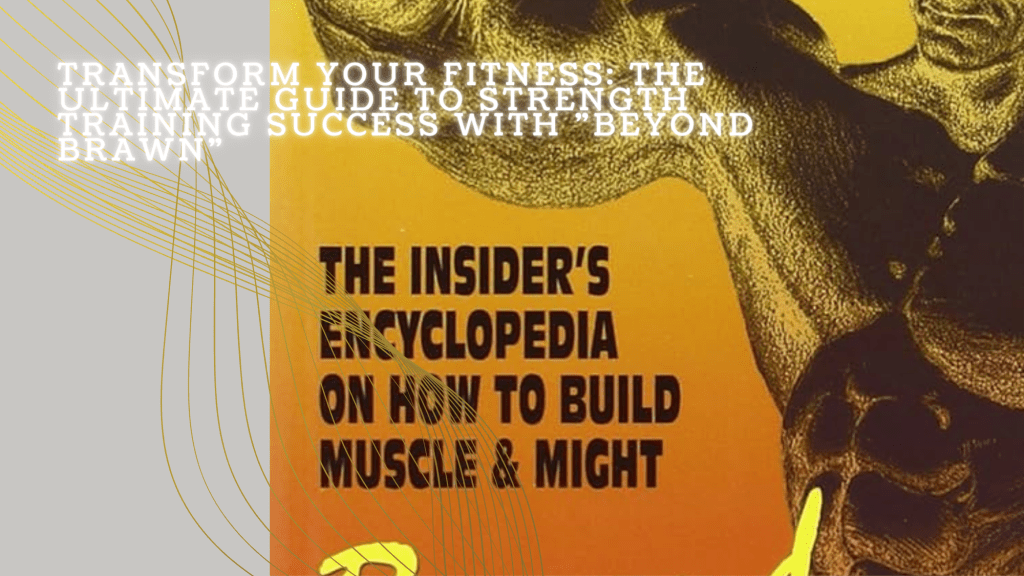
    Stuart McRobert is a well-known figure in strength training, particularly for advocating methods tailored to “hardgainers”—individuals who struggle to make significant progress with conventional training methods. His book “Beyond Brawn” is a comprehensive guide that focuses on practical, sustainable strength training. McRobert’s philosophy emphasizes simplicity, safety, and long-term progress, with a strong focus on personalized training and recovery strategies.

    Why “Beyond Brawn” is a Must-Read

    “Beyond Brawn” is not just for bodybuilders; it’s also ideal for busy professionals who want to stay in shape and maintain their health over their lifetime. The principles in the book are designed to help you achieve your fitness goals efficiently, even with a demanding schedule. McRobert’s approach helps you maximize your results with minimal time investment, making it perfect for those balancing a full-time job, family, and other responsibilities.

    McRobert’s Guidance on Strength Training
    Key Training Principles:
    1. Compound Exercises: Focus on basic, multi-joint exercises such as squats, deadlifts, bench presses, and rows.
    2. Progressive Overload: Gradually increase the weight you lift to continually challenge your muscles.
    3. Individualization: Customize your training program to suit your body type, genetics, and experience level.
    4. Recovery: Ensure adequate rest between workouts to allow for muscle recovery and growth.
    5. Safety and Technique: Prioritize proper form to prevent injuries.
    Exercises:

    Lower Body: Squats variations (hack squat), deadlift variations, leg presses (if you can‘t squat in a safe manner), lunges, standing calf raises, donkey calf raises.

    Upper Body: Bench presses, overhead presses, pull-ups, barbell rows bent over and upright, pullovers, skullcrushers.

    Training Intensity and Frequency:

    Intensity: Train with moderate to heavy weights that allow you to complete 6-12 reps per set. Focus on maintaining good form throughout each set.

    Frequency: Typically 1-3 days per week, allowing ample recovery time. Each muscle group is ideally trained every 7-10 days.

    Abbreviated Training Routine Examples:

    Example 1: Full-Body Routine (1-2 Days per Week)

    Day 1: Squats, Bench Press, Bent-over Rows

    Day 2: Deadlifts, Overhead Press, Pull-ups

    Example 2: Split Routine (3 Days per Week)

    Day 1: Squats, Bench Press

    Day 2: Deadlifts, Overhead Press

    Day 3: Pull-ups, Barbell Rows

    Consistency and Record Keeping:

    Consistency: Stick to your training schedule diligently, making workouts a non-negotiable part of your routine.

    Record Keeping: Track your workouts, noting the exercises, weights, sets, and reps. Also, keep a food diary to monitor your nutrition.

    Overall Guidelines on Eating:

    Balanced Diet: Consume a diet rich in protein, complex carbohydrates, healthy fats, and plenty of vegetables and fruits.

    Protein Intake: Aim for 2.2 to 2.6 grams of protein per kilogram of (desired) body weight.

    Caloric Surplus: For muscle gain, eat slightly more calories than your body needs to maintain weight.

    Hydration: Drink plenty of water throughout the day.

    Hard Work and Very Hard Work: The Core Theme of “Beyond Brawn”

    At the heart of “Beyond Brawn” lies the unwavering principle of hard work and very hard work. Stuart McRobert emphasizes that there are no shortcuts to achieving significant strength and muscle gains, especially for hardgainers. The book drives home the message that consistent, intense effort is crucial for progress. This means committing to every workout with maximum dedication, pushing yourself to lift heavier weights with proper form, and not shying away from the grueling nature of effective training. McRobert’s philosophy is that extraordinary results come from extraordinary effort. He advocates for embracing the grind and understanding that true success in strength training comes from perseverance, discipline, and an unwavering commitment to working very hard, session after session, year after year. This theme of relentless effort is what sets “Beyond Brawn” apart, making it a valuable guide for anyone serious about their fitness journey, regardless of their busy professional and personal lives.

    Periodization in “Beyond Brawn”
    Linear Periodization:

    Linear periodization involves gradually increasing the weight lifted from workout to workout using very small increments, often less than 1kg (microloading). This approach ensures continuous progress while minimizing the risk of overtraining and injury.

    Example:

    Workout 1: 3 sets of 12 reps with 50kg

    Workout 2: 3 sets of 12 reps with 51kg

    Continue increasing the weight by small increments each workout. Once you can not increase the weight for several workouts in a row, around week 15-20 depending on your starting point, it’s time for a deload or pause.

    After that start over with around 80% of your top weight from the last cycle.

    Double Periodization:

    Double periodization involves increasing the repetitions within a predefined range. Once you reach the upper end of the range, you increase the weight and start over at the lower end of the rep range. This method helps in building both strength and hypertrophy over time.

    Example:

    Cycle 1 (12 weeks):

    Weeks 1-4:

    Start with 3 sets of 8 reps with 50kg

    Increase reps each workout until you reach 12 reps

    Weeks 5-8:

    Increase weight to 55kg and start again with 3 sets of 8 reps

    Continue until you reach 12 reps

    Weeks 9-12:

    Increase weight to 60kg and repeat the process

    Cycle 2 (12 weeks):

    Repeat the same structure with adjusted weights and goals, ensuring continuous progress.

    How “Beyond Brawn” Helps Busy Professionals:

    McRobert’s principles are particularly beneficial for those with busy lives:

    Minimal Time Commitment: With low-frequency training (1-3 days per week), you can make significant progress without spending excessive time in the gym.

    Efficient Workouts: Focus on compound movements that provide the most benefit in the shortest time.

    Stress Reduction: Effective, structured workouts can help manage stress from a busy professional life.

    Health and Longevity: Sustainable training methods ensure long-term health and fitness, crucial for those with demanding careers and family responsibilities.

    Flexibility: The ability to adjust workout frequency and intensity according to your schedule helps maintain consistency even during busy periods.

    Where and How to Start: Actionable Advice from “Beyond Brawn”

    Starting your journey with “Beyond Brawn” begins with establishing a solid foundation. First, assess your current fitness level and set realistic, specific goals. Begin with a simple, full-body workout routine that focuses on compound exercises like squats, deadlifts, bench presses, and rows. Start with light weights to perfect your form and gradually increase the load using microloading techniques. Commit to training 1-2 days per week initially, ensuring ample recovery between sessions. Keep a detailed training log to track your progress, noting the exercises, weights, sets, and reps performed. Pair your training with a balanced diet rich in protein, complex carbohydrates, and healthy fats, and stay hydrated. Prioritize sleep and recovery to support muscle growth and overall health. Most importantly, approach each workout with the mindset of hard work and very hard work, understanding that consistent, intense effort is the key to long-term success.

  • So you ran yourself into the ground?

    So you ran yourself into the ground?

    So you wear eager on following through with your high intensity high volume approach, but somehow life got in the way. Kids birthday, working overtime, stressful projects, a vacation trip or even just a cold. Sometimes life has a habit of throwing panned or unplanned stuff at us, that tend to derail our efforts in the quest for size, strength and cuts.

    So maybe you tried really hard to workout 3-5 times a week, and everything was running smoothly for 2 or even 3 weeks, but for most of us, fully committed adults with kids one of the following things happens:

    • You run out of steam and get sick/tired
    • Your schedule implodes and training needs to take a setback

    But don‘t be to hard on yourself, those high commitment fitness routines are not really meant for you. Think of small spurts and enjoy them as long as they keep working. You can always throttle back a little, without losing progress and even continuing to progress along the way, if you change things up a bit and keep the effort high.

    I suggest you check out the writings of Stuart McRobert (Beyond Brawn) or Martin Berkhan form leangains.com or even Dan John’s blog. You can easily make progress no matter if on a diet or tying to bulk up, with just 2 to 3 short sessions in the week.

    High intensity, low volume training on an abbreviated routine that is. So for the zines when life is extra demanding, cut training days and training time but up the intensity and the weight lifted to get the most out of it.

    Exercise selection will be key, so I encourage you to look for one push and one pulling movement in the two major planes for upper and lower body and distribute those out evenly over two to three workout days.

    How does that look like? I‘ll give you two examples, so for a 3 day split routine, like leangains it might look somewhat like:

    Monday:

    • Deadlift 3 sets 5 to 8 reps
    • Standing Shoulder press 3 sets 8 to 12 reps

    Wednesday

    • Benchpress 3 sets 5 to 8 reps
    • Rowing movement 3 sets 8 to 12 reps

    Friday

    • Squat 3 sets 8 to 12 reps
    • Pullups (weighted) 3 sets 8 to 12 reps

    For me at least, I like to keep reps in deadlifts and benchpresses low, and the other exercises a bit higher, since it tends to feel good, but you might be different. Try it for 2 to 3 weeks, see if you can get stronger and how you feel, then adjust for the next 3 week block. High repetition benching hurts my rotator cuff more, than moving bigger weights for example. But low reps squats fry my my lower back completely, while I have no issue doing heavy singles in the deadlift. What can I say, touching 40 so maybe it’s good thing that nothing needed surgery just yet.

    If three days feel like a bit too Abiturient, even if you are only working out 30 minutes each session, you can always go with twice a week, think one of those days on the weekend, where you might have some time to yourself.

    Could look like this:

    Day one

    • Deadlift
    • Benchpress
    • Rowing movement

    Day two

    • Squat
    • Pull-up
    • Overhead press

    With 3 sets per exercise and 3 to 5 minutes rest, you should be out of the gym in under 45 minutes still.

    And of course, if you have a little extra time, or extra energy you can always add two exercises for arms per week, but don‘t let it impact the major movements!

    And with that, enjoy your lifting, give it a shot.

    There are a lot of ways to skin a cat. Main focus should be, to be in it for a lifetime!

  • Build your own Gym

    Build your own Gym

    Why to start..?

    We already discussed, why strength training is paramount, for dressing well. Now let‘s have a look how to do it as cost and time efficient as possible. If you are as busy as most people are in our era, you can save a lot of time and money building your own gym. No monthly fees, no commute to a gym, no waiting in line after work, to use one of the two squat racks that are available to 100 eager trainees.

    To start a new habit, in this case lifting consistently, you have to minimize resistance. Make it as easy as possible to get going, by having your personal gym in your own place. You don’t need a lot of space, cellar, balcony, spare room, terrace everything works, if you want to.

    But where to start..?

    Cheapest way to get going and get the most out of your first investment, buy/ make yourself a pull-up and a dip bar. You can go a long way with pull-ups, dips and air squats before you need to add any weight.

    Next up would be a sturdy Olympic barbell, even if you don’t want to learn the Olympic lifts, the spin is pretty nice for power cleans, and those will give you a lot in reward, easy to learn, easy to progress, pretty low risk & huge potential for overall body mass & speed. if you have very limited space, you can go with a 1.5m or 1.8m long bar as well, search for one that can be loaded for ~250kg that will be sufficient for a long time.

    Get some bumper plates next, 50mm bore with a metal socket to fit the Olympic bar. The rubber coating will keep training more quiet & your neighbors will stay your friends, even after picking of lifting as your new favorite pastime. Get enough weights to do challenging deadlifts and rows, get smaller plates for curls and extensions as well (5kg or sth.) but try to get those in the same diameter as the heavier ones, this makes changing and adding weights easier. Don‘t worry about the money you spend on weights to much, those are better than gold or silver. Price only goes up over time, so when you decide to sell your equipment, you will make some profit and in the meantime they will support you on your way to become your best self.

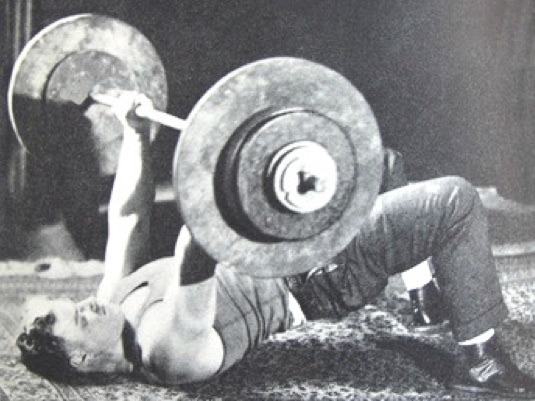
    After having a bar and weights you can already do most of the stuff that will get you jacked, joked or toned or whatever you want. You can substitute benchpresses for floorpresses like the Oldtimers, you can do front or zercher squats instead of back squats.

    If you want more variety in your training and make things easier and safer, if you are pushing yourself with maximum weights, I suggest you look into getting a power-rack or squat stands and a bench next. Lock for sturdy stuff, don‘t be so cheap, that you hurt yourself because you saved some 20€!

    With that you can workout for years to come and make progress forever.

    If you are stalled after reaching an intermediate level, you might want to add fractural plates, to keep progressing in weight. 0.25kg 0.5kg and so one, make small additions in weight possible when the next 5 or 10kg jump just is not manageable.

    If having a barbell gets boring start looking into kettlebells and dumbbells or even rubber bands. Depending on space available of course. But a barbell and some plates might be all you need. Simple always trumps complicated and keep in mind consistency is key here, enjoy the way to your dream physique, enjoy clothes starting to fit better, enjoy the additional strength in your day to day life, be it when helping a friend move, or throwing you kids around in the pool. Being physically capable is the one capability improving all the others, and all other aspects of your life, if you are in it till the end.

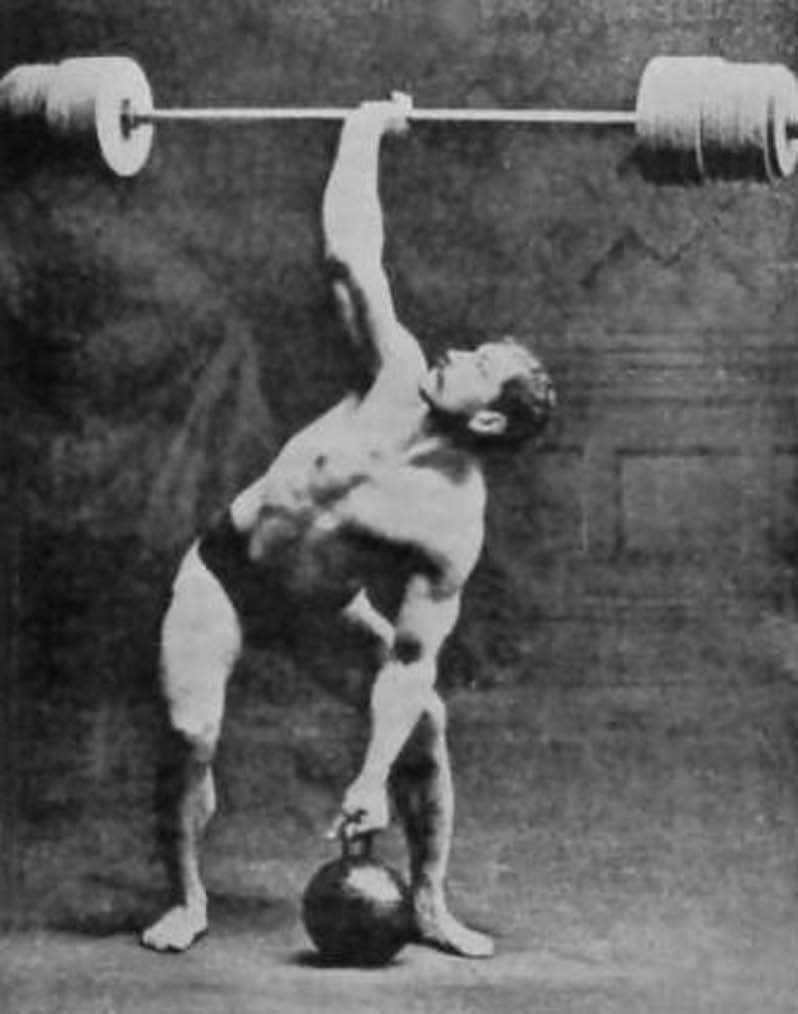
    And with another motivational picture of Arthur Saxon, enjoy your lifting!