Tag: WorkSmarterNotHarder

  • Tough Lessons in Project Management: What ‘If You’re Gonna Be Stupid, You Gotta Be Tough’ Teaches Us About Leadership

    Tough Lessons in Project Management: What ‘If You’re Gonna Be Stupid, You Gotta Be Tough’ Teaches Us About Leadership

    It’s a phrase that’s equal parts funny, blunt, and uncomfortably true: “If you’re gonna be stupid, you gotta be tough.” Popularized by author John Grisham, this quote has become a tongue-in-cheek anthem for everyone who’s ever learned something the hard way. While it might sound like the punchline to a bar story, it’s also quietly profound—especially if you’re managing complex projects, tight timelines, and high-stakes outcomes.

    Let’s be honest: in project management, no matter how skilled you are, mistakes happen. Bad calls are made. Sometimes you skip a process to save time, only to watch things go sideways weeks later. In those moments, toughness isn’t a bonus—it’s a survival skill.

    In this article, we’ll explore what this gritty little quote can teach us about leadership, accountability, and how to build teams that get stronger with every challenge.

    What the Quote Really Means

    On the surface, “If you’re gonna be stupid, you gotta be tough” is a jab at people who make reckless choices and then suffer the consequences. But let’s break it down:

    “Stupid” doesn’t necessarily mean intellectually lacking — it often means acting without foresight, rushing decisions, or ignoring best practices. “Tough” means resilient, adaptive, and strong enough to fix the mess you created without giving up.

    It’s not just about enduring pain. It’s about learning fast, bouncing back, and owning your part in what went wrong. In the project management world, that mindset is priceless.

    5 Project Management Lessons Hidden in the Quote
    1. Risk Ignored is Pain Deferred

    We’ve all been tempted to fast-track a project by skipping the risk register or brushing off stakeholder alignment. After all, what’s the worst that could happen?

    Plenty.

    When we ignore potential risks, we’re not eliminating them — we’re simply deferring the pain. A minor oversight in the early stages can balloon into a full-blown crisis in execution. The tough project manager isn’t just a fire-fighter; they’re a risk-spotter who prevents the fire in the first place.

    Pro tip: Build in a “pre-mortem” at project kickoff. Ask your team, “If this project failed six months from now, what went wrong?” Then plan to prevent those scenarios.

    2. Toughness is a Core Competency

    Every project faces bumps: budget overruns, vendor delays, last-minute scope changes. What separates good PMs from great ones is how they handle adversity.

    Toughness doesn’t mean powering through with brute force. It means staying calm under pressure, navigating politics with grace, and keeping the team focused when things go wrong. It’s about emotional resilience, not ego.

    When the pressure’s on, your team will look to you. Be the calm in the storm.

    3. Don’t Confuse Hustle with Strategy

    Too many project managers wear their stress as a badge of honor — working nights, sending emails at 2 a.m., fixing problems caused by bad planning.

    That’s not leadership. That’s burnout.

    Being “tough” shouldn’t be about cleaning up after poor decisions. It should be about preventing them with smart strategy and clear priorities. Hustle is overrated if it’s compensating for a lack of structure.

    Remember: Your job isn’t to suffer through the chaos. It’s to design a system that avoids chaos in the first place.

    4. Own Your Mistakes Publicly and Early

    Project leaders who try to hide or deflect mistakes often create a toxic culture of blame. The best PMs do the opposite: they own their decisions, admit errors early, and invite their teams into the solution.

    This creates trust, accelerates course correction, and models what real accountability looks like.

    Toughness isn’t about pretending to be perfect. It’s about being honest and brave enough to lead through imperfection.

    5. Learn Fast or Repeat Pain

    Pain is a great teacher — if you let it be.

    After every project (especially the messy ones), carve out time for a “lessons learned” session. Not just to document what went wrong, but to implement changes in your process, team culture, or decision-making criteria.

    Every mistake is a tuition payment. Make sure you get your degree.

    Tools to Prevent ‘Stupid’ Decisions

    The good news? We’re not at the mercy of trial and error. Project management offers powerful tools to reduce the “stupid” and strengthen the “tough”:

    1. RAID Logs (Risks, Assumptions, Issues, Dependencies): Keep your threats visible and manageable.
    2. Decision Logs: Track why certain paths were chosen — it helps defend your logic later and improve future calls.
    3. Stakeholder Maps: Identify who needs to be involved before surprises happen.
    4. Psychological Safety: Create a culture where team members can challenge bad decisions before they turn into costly problems.
    5. Retrospectives: Don’t just look back — plan forward with the insights gained.
    The Upside: Why Toughness Builds Legendary PMs

    We tend to remember great project managers not for their smoothest projects, but for how they handled the toughest ones. When the stakes were high, the budget was low, and everything went wrong — they showed up with calm, clarity, and courage.

    Toughness, in this sense, isn’t brute strength. It’s emotional intelligence, proactive leadership, and the refusal to let a bad day become a bad outcome.

    Every crisis you manage well increases your influence and trust capital. Toughness is the seed of leadership growth.

    Closing Thoughts: Embrace the Quote, But Don’t Live By It

    The quote “If you’re gonna be stupid, you gotta be tough” should make you laugh — but also think. Yes, it’s a reminder that toughness is vital. But the real win is minimizing the “stupid” decisions through systems, foresight, and humility.

    Don’t make toughness your only strategy. Make preparation, reflection, and clarity your daily habits — and let toughness be your last line of defense, not your first.

    Call to Action

    Think back to your last project misstep — what would’ve helped you avoid it? A clearer plan? A stronger team conversation? A simple checklist?

    Take one step today to tighten your process — and make life a little less tough down the road.

  • The Minimalist Leader: Focusing on What Truly Matters in Management

    The Minimalist Leader: Focusing on What Truly Matters in Management

    The Leadership Burden: Why More Isn’t Better

    Modern leadership is plagued by complexity. The more we try to optimize, the more we add—meetings, reports, tools, processes. In the pursuit of efficiency, leaders often find themselves drowning in decision fatigue and overwhelmed by trivial tasks. Yet, the most effective leaders don’t do more. They do less, better.

    Minimalist leadership is the art of subtraction. It is about stripping away the unnecessary to focus on the essential. It is about clarity, simplicity, and effortlessness—the true marks of mastery. But achieving this simplicity is not about being passive; it requires active discipline and deliberate choices.

    The Minimalist Leadership Mindset

    At its core, minimalist leadership is a discipline of focus. Great leaders operate with a refined sense of what truly matters and let go of everything that doesn’t. They follow a principle as old as wisdom itself: the Pareto Principle (80/20 rule).

    • 80% of your results come from 20% of your efforts.
    • The key to effective leadership is identifying and doubling down on that 20%.

    Minimalist leaders are ruthless editors—not just of their own time, but of their organization’s priorities. Their job is not to micromanage or overcomplicate but to remove obstacles, streamline decision-making, and empower others to act with autonomy.

    The Three Pillars of Minimalist Leadership

    1. Clarity: The Power of Simplicity in Communication

    A leader’s most underrated skill is their ability to communicate with clarity. Confusion creates inefficiency. Simplify the message, and execution becomes effortless.

    • Reduce unnecessary emails. If it takes more than five sentences, consider a call instead.
    • Cut the jargon. Speak in simple, actionable language.
    • Define a clear mission. Every team member should know the one thing that matters most.
    • Set concise and specific goals that drive real action rather than vague, broad objectives.

    2. Delegation: Trust and Empowerment Over Control

    Minimalist leaders trust their teams. They own only the decisions that truly require them and delegate the rest. Micromanagement is the enemy of impact.

    • Empower decision-making at lower levels.
    • Set clear expectations, but don’t dictate the process.
    • Measure outcomes, not hours worked.
    • Allow your team to take ownership and make mistakes—it fosters growth and responsibility.

    3. Ruthless Prioritization: Cutting the Noise

    Leadership is not about doing everything—it’s about knowing what not to do. Minimalist leaders are laser-focused on the few critical tasks that drive real impact.

    • Eliminate half of your meetings—keep only those that drive real decisions.
    • Limit your daily focus to 1–3 high-value tasks.
    • Ask yourself daily: “If I could only accomplish one thing today, what would it be?”
    • Remove the temptation to multitask—focus on deep work and give undivided attention to the task at hand.

    Application: How to Implement Effortless Leadership

    Minimalism in leadership is a habit, not just a philosophy. Here’s how to start applying it immediately:

    • Start the day with a defining question: “What is the one thing that, if done well, makes everything else easier?”
    • Simplify decision-making: Use first-principles thinking—strip decisions down to their core truths.
    • Reduce meeting overload: Cut 50% of unnecessary meetings and replace them with asynchronous updates.
    • Optimize your environment: Remove distractions—whether digital (email clutter) or mental (overcommitting to tasks that don’t align with your core focus).
    • Create no-excuse time blocks: Dedicate parts of the day to uninterrupted work and reflection, free from distractions.

    The Hidden Benefits of Minimalist Leadership

    By focusing only on what truly matters, leaders free up their mental bandwidth for creativity and strategic thinking. Instead of firefighting through a cluttered schedule, they create space for:

    • Better decision-making: With fewer distractions, leaders make sharper, more thoughtful decisions.
    • A stronger team culture: Employees thrive when they are trusted, empowered, and not micromanaged.
    • Reduced stress and burnout: A lighter cognitive load allows leaders to stay energized and resilient.
    • Greater adaptability: A streamlined organization can pivot faster and respond more effectively to change.

    When leadership is done well, it looks effortless—because the hard work is in the discipline of subtraction, not addition.

    Leading Effortlessly: The Ultimate Competitive Advantage

    Simplicity is powerful. Leaders who master the art of subtraction create organizations that are nimble, focused, and impactful. They avoid burnout, make better decisions, and cultivate a culture of trust and autonomy.

    Minimalist leadership isn’t about doing less for the sake of it—it’s about doing less of what doesn’t matter and more of what truly does.

    As a leader, your job isn’t to juggle everything. It’s to create clarity, remove obstacles, and make the hard things in leadership look effortless.

    Call to Action: What Can You Subtract Today?

    Ask yourself: What’s one thing you can stop doing today that will create more clarity and focus in your leadership? The first step to becoming a minimalist leader is simply deciding what no longer serves your mission—and letting it go.

    In a world where busyness is mistaken for effectiveness, true leaders stand out by mastering the art of focus. Minimalism isn’t a restriction—it’s a superpower.

  • Mindfulness Hacks for Busy Professionals: Boost Focus, Beat Distractions, and Get More Done

    Mindfulness Hacks for Busy Professionals: Boost Focus, Beat Distractions, and Get More Done

    In the fast-paced world of knowledge work, where deadlines loom and inboxes overflow, many of us are stuck in a loop of constant multitasking and mental chaos. The irony? In trying to do everything, we accomplish less. Enter mindfulness — the not-so-secret weapon that can transform your productivity and make the hard things in life look effortless.

    Mindfulness isn’t about meditating for hours on a mountaintop. It’s about being fully present in the moment, especially when you’re drowning in tasks. Let’s explore how adopting mindfulness can sharpen your focus, banish distractions, and supercharge your efficiency.

    1. Mindfulness: Your Brain’s Productivity Upgrade

    Mindfulness is about paying attention to what you’re doing right now — without judgment or distraction. It’s not just a wellness buzzword; it’s a scientifically backed practice that strengthens your prefrontal cortex (the decision-making part of your brain).

    Why does this matter? Because when your brain is less scattered, you can process information faster, make better decisions, and actually enjoy what you’re doing. Think of it as upgrading your mental software for smoother multitasking-free operations.

    Takeaway: Mindfulness won’t slow you down — it will fine-tune your focus to get things done faster and with less stress.

    2. Stop Multitasking: Why Doing One Thing at a Time Wins Every Time

    Spoiler alert: multitasking is a productivity killer. Switching between tasks can reduce your efficiency by up to 40% (yes, forty). When you multitask, your brain uses extra energy to refocus each time you switch — like a computer running a dozen tabs at once.

    The fix? Single-tasking, aka doing one thing at a time with laser focus.

    • Start your day with priorities: Identify 1-3 must-do tasks and tackle them in order of importance.
    • Block distractions: Silence notifications, close unnecessary tabs, and set specific focus periods.
    • Give tasks your full attention: Whether it’s a report or a quick email, commit to seeing it through before moving on.

    Takeaway: Single-tasking is mindfulness in action — it helps you work smarter, not harder.

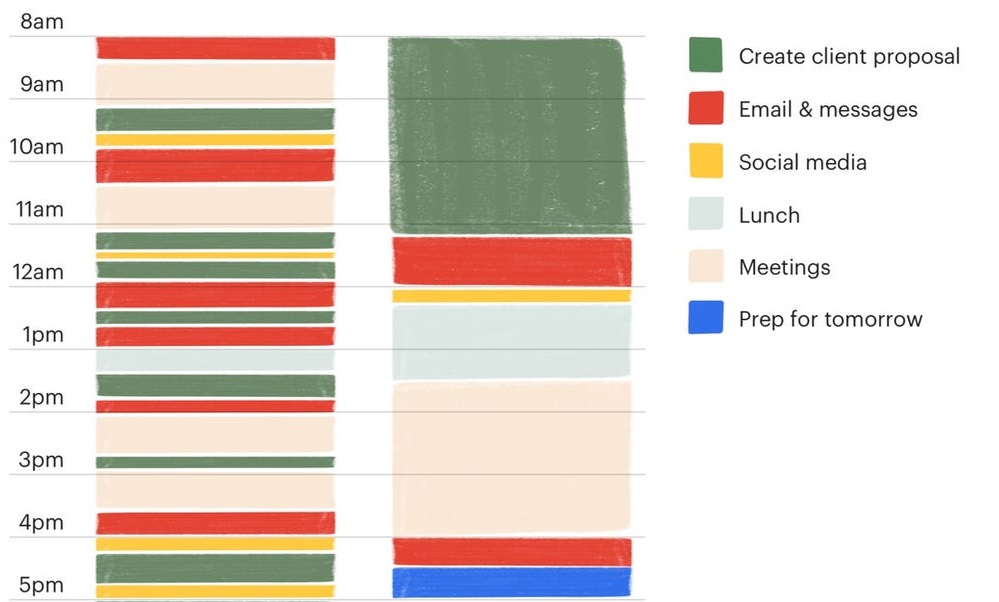
    3. Manage Emails and Messages Like a Pro

    Let’s face it: nothing kills your flow like the constant ding of emails and messages. Did you know the average person checks their inbox 96 times a day? That’s productivity suicide.

    Instead, embrace the art of communication windows: dedicated time slots to read and reply to emails and messages.

    • Morning: Check your inbox once after starting your top-priority task.
    • Midday: Use your lunch break to catch up.
    • End of day: Wrap up loose ends and log off.

    Set boundaries by informing colleagues of your availability. Apps like Spark and Superhuman can help prioritize emails so the urgent ones get handled first.

    Takeaway: Stop being a slave to your inbox. Own your schedule, and you’ll find extra hours in your day.

    4. Tech That Helps You Stay Mindful

    Mindfulness is easier when you have the right tools at your fingertips. Here are a few game-changers:

    • Meditation Apps: Start with 2-5 minutes of guided breathing using apps like Calm, Headspace, or Insight Timer.
    • Focus Apps: Try Forest (grow trees while you work!) or Freedom to block distracting websites and apps.
    • Pomodoro Timers: Apps like Focus Booster break work into 25-minute intervals, keeping you energized and mindful.

    Want to go deeper? Use wearable tech like the Muse Headband to monitor brain activity and improve focus over time.

    Takeaway: Leverage technology to train your mind to stay present and productive.

    5. Why Mindfulness Works for Knowledge Workers

    Mindfulness isn’t just trendy — it’s transformational. Here’s why:

    • Increased Focus: Staying present means less mental clutter and more precision in your work.
    • Improved Creativity: A clear mind is more open to innovative ideas and solutions.
    • Reduced Stress: Mindfulness lowers cortisol levels, making you calmer and more resilient.

    Plus, the benefits extend beyond work. Mindfulness helps you enjoy your downtime — whether it’s with family, hobbies, or simply decompressing after a long day.

    Takeaway: A mindful worker is a productive and happy worker.

    6. Easy Ways to Add Mindfulness to Your Day

    Ready to get started? You don’t need to overhaul your life—just a few tweaks will do:

    • Morning Kickstart: Begin your day with a 2-minute breathing exercise to set the tone.
    • Mindful Breaks: Take short, tech-free breaks to stretch or walk.
    • End-of-Day Reflection: Spend 5 minutes journaling what went well and what you learned.

    Pro tip: Use the Pomodoro Technique to mix focused work with intentional breaks, creating a rhythm that balances productivity and mindfulness.

    Takeaway: Small, consistent mindfulness habits can lead to big productivity wins over time.

    Conclusion

    Mindfulness isn’t just a nice-to-have; it’s a must-have for knowledge workers navigating the chaos of modern work life. By single-tasking, managing communication mindfully, and using focus-enhancing tools, you can reclaim your time, reduce stress, and make your workday not only more productive but also more enjoyable.

    So, take a deep breath, close those extra tabs, and commit to being fully present in your next task. Mindfulness won’t just make you more productive — it’ll make your life feel effortless.

    Are you ready to give it a try? Start small, stay consistent, and watch your focus and productivity soar.

  • The Role of Exercise in Enhancing Productivity: How Physical Activity Boosts Efficiency

    The Role of Exercise in Enhancing Productivity: How Physical Activity Boosts Efficiency

    Discover how regular physical activity can skyrocket your productivity and transform your workday.


    Introduction: Sarah’s Struggle with Productivity

    Meet Sarah, a marketing manager for a busy startup. Despite her passion for her job, Sarah found herself battling afternoon slumps, struggling to focus on her projects, and working late into the night just to meet deadlines. Her productivity hit rock bottom, and so did her energy. She tried different techniques—time management tools, productivity apps, even cutting down on distractions—but nothing seemed to work.

    One day, a colleague invited her to join an early morning fitness class. At first, Sarah was skeptical. How could squeezing exercise into her already packed schedule help her productivity? But after just a few weeks of regular workouts, Sarah noticed a shift. She had more energy, could focus for longer periods, and she was wrapping up her tasks much earlier in the day. The correlation between her exercise routine and her newfound productivity was undeniable.

    This transformation led Sarah to research the science behind it, and she discovered what many experts have proven: exercise is one of the most effective ways to boost productivity.

    The Science Behind Exercise and Productivity

    The benefits Sarah experienced aren’t just anecdotal. Research shows that regular physical activity has a profound impact on brain function, energy levels, and overall productivity.

    1. Increased Energy Levels: Exercise boosts circulation and oxygen flow to the brain, which helps increase energy and reduce fatigue. This means you’ll feel less sluggish throughout the day and more energized to tackle your tasks.
    2. Enhanced Focus and Cognitive Function: Regular physical activity increases the production of neurochemicals like dopamine, norepinephrine, and serotonin, which are critical for improving attention, focus, and cognitive function. Studies show that people who exercise regularly experience better concentration, memory retention, and problem-solving skills.
    3. Reduced Stress and Anxiety: Exercise is one of the most effective ways to reduce stress, anxiety, and the mental clutter that can drain productivity. Physical activity helps regulate cortisol levels, the body’s primary stress hormone, leaving you with a clearer mind to focus on important tasks.
    4. Improved Mood: The endorphins released during exercise can improve mood and motivation, making you feel more positive and driven throughout the day.
    5. Better Sleep: Regular exercise promotes better sleep, which is crucial for maintaining high productivity levels. Quality sleep enhances cognitive function, mood stability, and physical energy—key elements for staying sharp and efficient at work.
    How Physical Activity Boosts Efficiency

    Exercise doesn’t just improve physical health; it sharpens mental agility and emotional resilience. Here’s how it enhances your work performance:

    1. Sharper Focus: Physical activity helps clear mental fog. Whether it’s a brisk walk during lunch or an early morning jog, exercise boosts mental clarity, allowing you to maintain focus on tasks for extended periods.
    2. Enhanced Problem-Solving Skills: Exercise stimulates creative thinking. When you engage in physical activity, your brain gets a chance to unwind, making it easier to approach challenges with fresh perspectives.
    3. Increased Motivation: Completing a workout gives you a sense of achievement, which can set a positive tone for the rest of the day. This heightened sense of accomplishment drives you to tackle other tasks with more enthusiasm.
    4. Time Management: Regular exercise improves self-discipline, helping you manage your time better. By making exercise a priority, you’ll find that you can fit more into your day by structuring your schedule around it.
    A Story of Transformation: David’s Experience

    David, a project manager, was caught in the vicious cycle of burnout. Long hours, tight deadlines, and back-to-back meetings had taken their toll on his physical and mental health. Despite working overtime, his productivity was plummeting. Tasks that once took an hour now stretched out for half a day, and his motivation was at an all-time low.

    One evening, David decided to hit the gym after work, hoping it would help him relieve stress. To his surprise, he felt rejuvenated afterward, both physically and mentally. Encouraged by this, David started making exercise a regular part of his routine, starting his mornings with a quick workout.

    In just a few weeks, his productivity surged. He found himself more focused during meetings, less overwhelmed by his to-do list, and more energized throughout the day. Instead of dreading work, David began to approach his tasks with renewed enthusiasm. He finished projects ahead of deadlines and even had time to spare in the evenings for personal hobbies. Exercise had become the catalyst for his productivity transformation.


    Actionable Steps: How to Implement Exercise to Boost Productivity

    Ready to experience a productivity boost like Sarah and David? Here’s how you can incorporate exercise into your routine:

    1. Start Small: If you’re new to exercising, begin with small, manageable activities like a 10-minute walk or a quick bodyweight workout at home. Gradually increase the intensity and duration as you build the habit.
    2. Schedule Exercise Like a Meeting: Block time for exercise in your calendar, just like you would for an important meeting. Commit to it daily, whether it’s in the morning, during lunch, or after work.
    3. Find What You Enjoy: Exercise doesn’t have to be a chore. Whether it’s jogging, swimming, yoga, or dancing, find an activity you enjoy, so it becomes something you look forward to rather than dread.
    4. Incorporate Active Breaks: Take short, active breaks throughout your workday. A quick stretch, a walk around the block, or even a five-minute desk workout can refresh your mind and increase your focus.
    5. Pair Exercise with Productivity Tasks: Try walking meetings, or listen to a podcast or audiobook while on the treadmill. This way, you’re staying active while getting work-related tasks done.
    6. Join a Group or Class: Accountability is key to sticking with an exercise routine. Join a workout class or find a friend or colleague to exercise with regularly.
    7. Track Your Progress: Use a fitness tracker or app to monitor your activity. Seeing your progress over time can be incredibly motivating.
    8. Make Recovery a Priority: Don’t forget the importance of rest and recovery. Adequate sleep and proper nutrition are crucial for maintaining high energy and productivity levels.

    Conclusion: Move to Achieve More

    The connection between exercise and productivity is undeniable. As Sarah and David’s stories illustrate, incorporating regular physical activity into your daily routine can transform not only your health but also your work performance. Whether you’re striving to meet deadlines, enhance your focus, or simply maintain energy throughout the day, exercise can be the secret weapon that fuels your productivity.

    Start small, stay consistent, and watch as your efficiency soars.


    By making exercise a non-negotiable part of your routine, you’ll find that you’re not just moving more, but you’re also achieving more

  • Mastering Time Management: Proven Strategies for Project Managers to Get More Done in Less Time

    Mastering Time Management: Proven Strategies for Project Managers to Get More Done in Less Time

    Time management is one of the most critical skills for a project manager, where juggling multiple tasks, deadlines, and team responsibilities is the norm. This guide will explore key methods like time blocking, prioritization, and other actionable techniques that can help you streamline your workday and boost productivity without adding hours to your schedule.

    Key Concepts for Getting More Done with Less Time
    1. Time Blocking

    What It Is: Time blocking involves scheduling dedicated chunks of time for specific tasks or categories of work. Instead of multitasking, you focus intensely on one task during a set period.

    Pros:

    • Reduces context switching, leading to more focus.
    • Helps prevent burnout by scheduling breaks and work boundaries.
    • Gives a clear overview of how your day will unfold.

    Cons:

    • Requires discipline and sticking to the schedule.
    • Unexpected events may force you to rearrange blocks

    How to Implement: Use a digital calendar or a planner to block out chunks of time for key project activities—e.g., team meetings, deep work sessions, and communication with stakeholders.

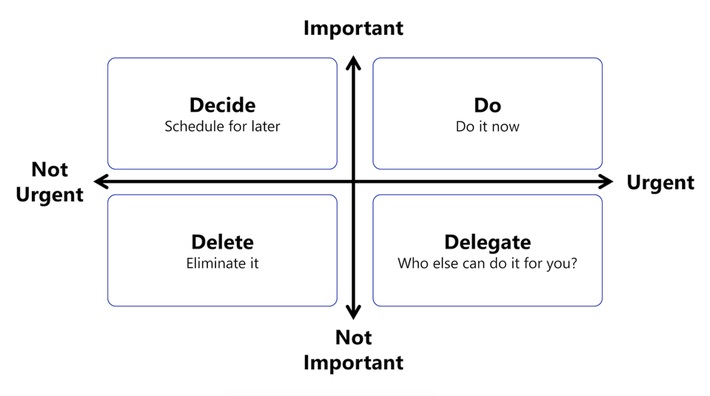
    2. Prioritization (Eisenhower Matrix)

    What It Is: Prioritization frameworks like the Eisenhower Matrix allow you to categorize tasks into four quadrants based on urgency and importance:

    • Urgent and Important (Do first)
    • Important, Not Urgent (Schedule)
    • Urgent, Not Important (Delegate)
    • Not Urgent, Not Important (Eliminate)

    Pros:

    • Ensures you focus on high-impact tasks.
    • Helps you delegate less important tasks.
    • Encourages eliminating unnecessary work.

    Cons:

    • Takes time to categorize tasks correctly.
    • May overlook tasks that could evolve into high-priority issues.

    How to Implement: Review your to-do list daily and categorize each task based on urgency and importance. Focus on high-priority tasks early in the day.

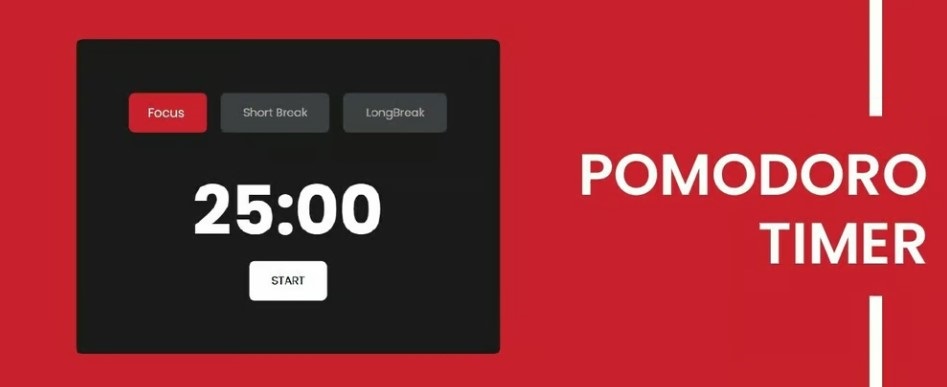
    3. Pomodoro Technique

    What It Is: A time-management method where you work in 25-minute intervals (Pomodoros) with 5-minute breaks in between. After four sessions, take a longer break.

    Pros:

    • Encourages focused work while preventing burnout.
    • Forces regular short breaks to refresh your mind.
    • Can make overwhelming tasks seem more manageable.

    Cons:

    • Not ideal for tasks requiring deep, prolonged concentration.
    • Interruptions can break the flow, making it hard to resume the Pomodoro session.

    How to Implement: Use a timer to break work into Pomodoros. Adjust the work intervals if necessary (e.g., 25 minutes of work followed by a 5-minute break).

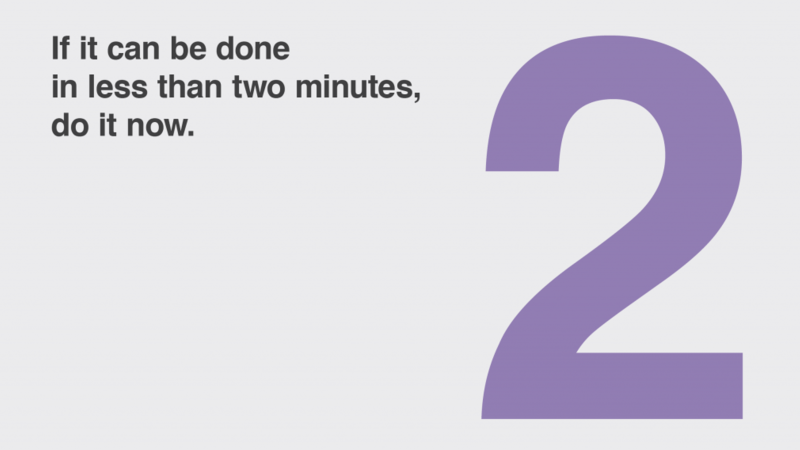
    4. The Two-Minute Rule

    What It Is: If a task takes less than two minutes, do it immediately. This method is part of the Getting Things Done (GTD) system and helps prevent small tasks from accumulating.

    Pros:

    • Quickly clears low-effort tasks off your list.
    • Keeps your task list leaner and more focused.

    Cons:

    • Overusing this method can distract from larger, more important tasks.
    • Not suitable for complex tasks or deep work sessions.

    How to Implement: Regularly review your task list and immediately handle any tasks that take less than two minutes. For larger tasks, schedule time to complete them.

    5. Batching Tasks

    What It Is: Batching involves grouping similar tasks (like replying to emails, updating project statuses, or doing administrative work) into one block of time, reducing task-switching fatigue.

    Pros:

    • Increases efficiency by handling repetitive tasks together.
    • Minimizes distractions from switching between different types of work.

    Cons:

    • Some tasks may not fit neatly into a batch.
    • Requires careful scheduling to avoid task pile-ups.

    How to Implement: Identify recurring tasks that can be batched and schedule them into specific time blocks (e.g., answering emails twice a day instead of checking constantly).

    Pros and Cons of These Methods:

    Pros:

    • Greater productivity and focus by minimizing multitasking.
    • More structured workdays with dedicated time for priority tasks.
    • Less mental fatigue by grouping similar tasks or using time-based intervals like Pomodoros.

    Cons:

    • These methods require discipline and consistency to maintain.
    • Unexpected events can disrupt carefully planned schedules.
    • Some methods, like time blocking or task batching, can feel restrictive if not implemented flexibly.
    Implementation Plan:

    Step 1: Choose Your Core Method
    Start by picking one method that resonates with your work style. For example, if you struggle with multitasking, begin with time blocking. If decision-making is the challenge, start with prioritization using the Eisenhower Matrix.

    Step 2: Set Up Your Tools
    Utilize digital calendars, task management apps, or even simple spreadsheets to organize your time and tasks. Tools like Asana, Trello, or Google Calendar can make time blocking, task batching, and prioritization easier to manage.

    Step 3: Begin Small, Then Scale
    Start by implementing your chosen technique for just one or two days a week. Once you get comfortable, scale it to more days and integrate additional methods like Pomodoros or task batching.

    Step 4: Review and Adjust
    At the end of each week, review your time management strategy. What worked? What didn’t? Adjust your approach to suit your work style, priorities, and project demands.

    Scaling Time Management for Maximum Efficiency

    Mastering time management takes practice, but the rewards are clear. By implementing a mix of strategies like time blocking, prioritization, and batching, you can significantly enhance your productivity while maintaining a healthy work-life balance. Start small, be consistent, and scale your approach as your comfort grows — soon, you’ll find that you’re getting more done in less time, with less stress.